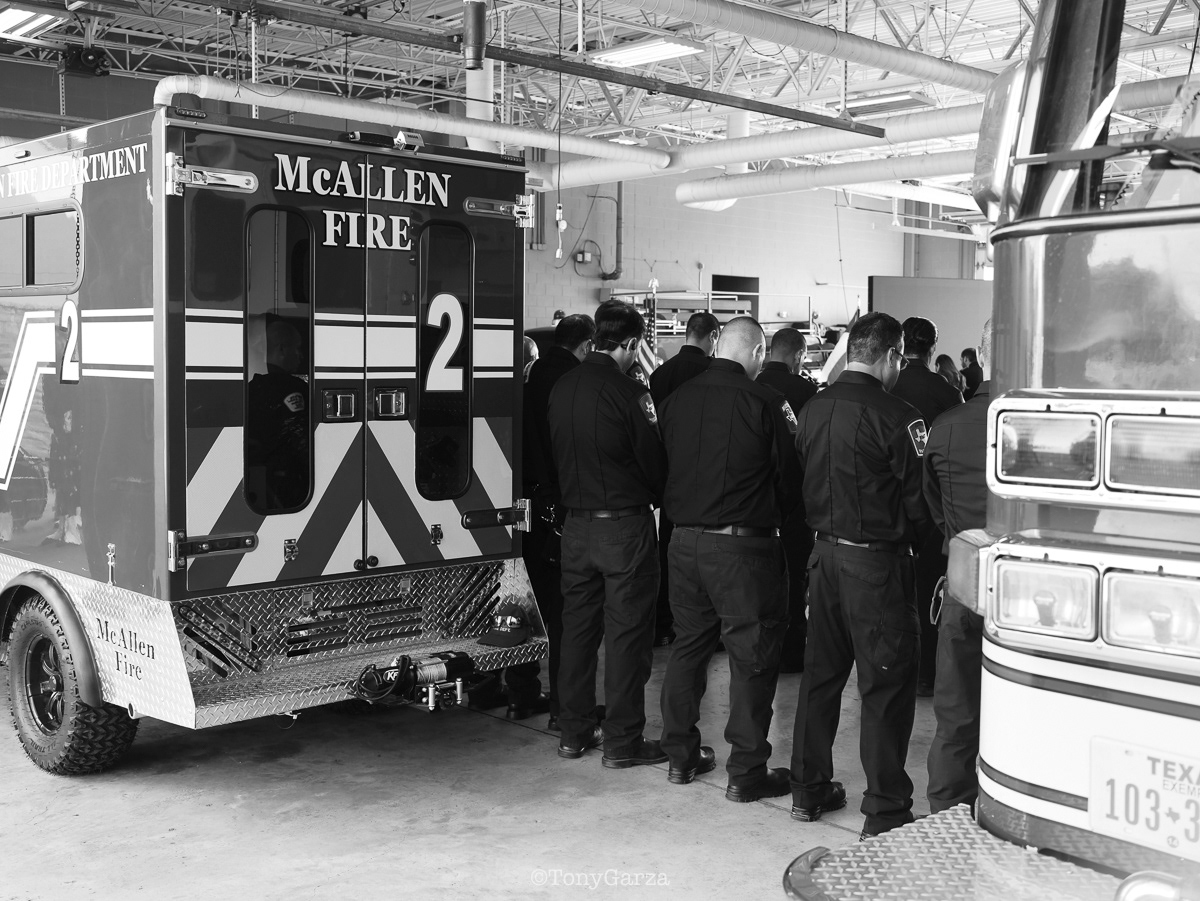
Grok: Respect, quiet intensity, and a sense of shared purpose.
This photo captures a moment that feels grounded and real. A group of McAllen firefighters standing together in the bay, backs mostly turned, focused on whatever is happening just beyond the frame. The black-and-white treatment strips away distraction and leaves the weight of the uniforms, the equipment, and the posture. There’s a calm seriousness to it—professional, disciplined, but also human.
The McAllen Fire Department vehicle (Unit 2) dominates the left side like a solid, reliable presence, while the partial view of the other apparatus and the Texas plate on the right quietly root the scene in place. The industrial ceiling, the concrete floor, the casual but attentive clustering of the crew—it all feels like the ordinary rhythm of a firehouse interrupted by something that matters enough to gather them.
What stands out most is the unspoken solidarity. No grand gestures, no posed heroism—just people who do hard, necessary work standing shoulder to shoulder. It evokes admiration for the quiet professionalism of first responders and a reminder of the bonds that form in that environment. There’s a subtle gravity to the image, the kind that makes you pause a second longer than usual.
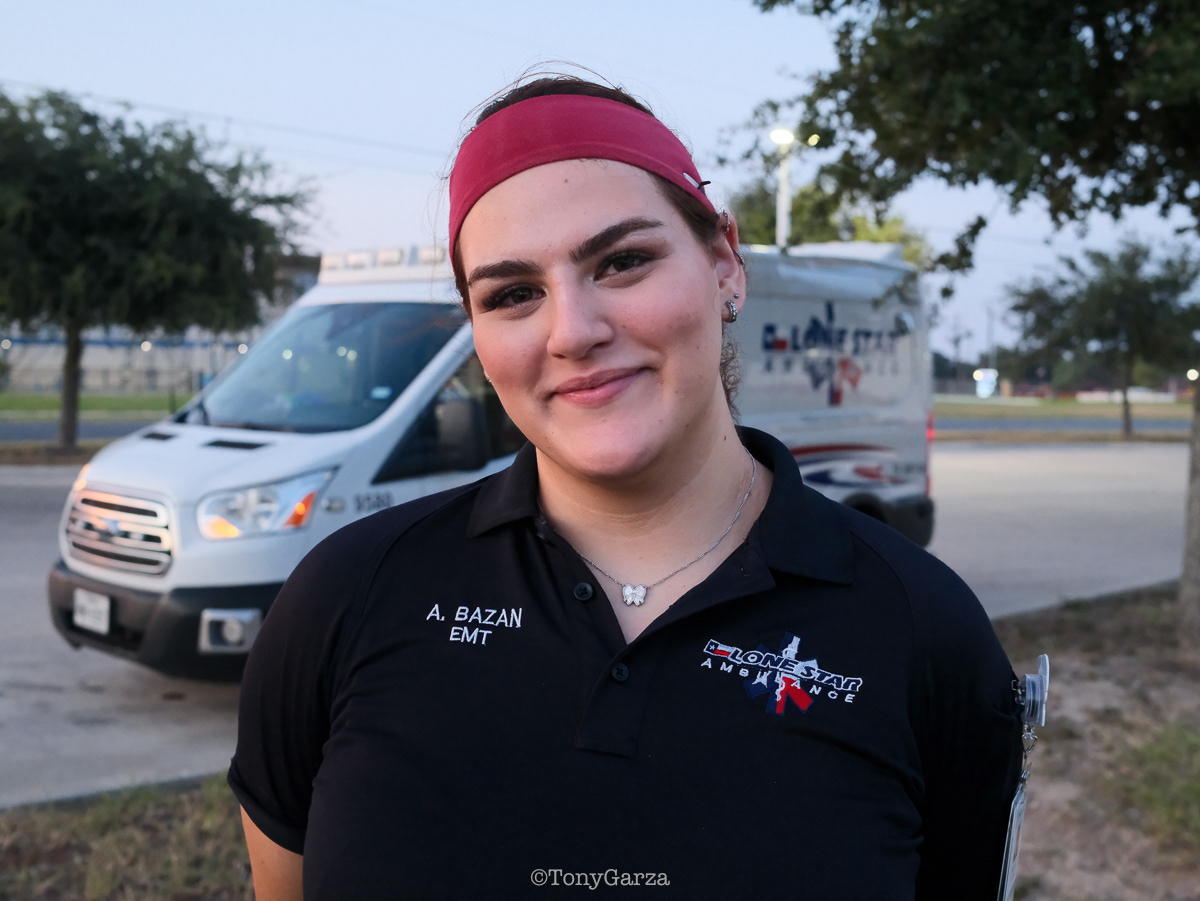
Grok: This is a strong, professional portrait.
The subject (A. Bazan, EMT with Lone Star Ambulance) has a calm, confident presence—slight smile, direct eye contact, and a composed posture that reads as capable and approachable rather than stiff. The red headband and clean black polo create a nice contrast against the soft evening light and the ambulance in the background, which grounds the shot in her actual work without making it feel staged or overly dramatic.
Overall it feels respectful and human: it shows someone who does a tough job and still looks put-together and approachable. Good lighting, solid composition, and it avoids the usual “heroic emergency-worker” clichés. It’s a nice photo.
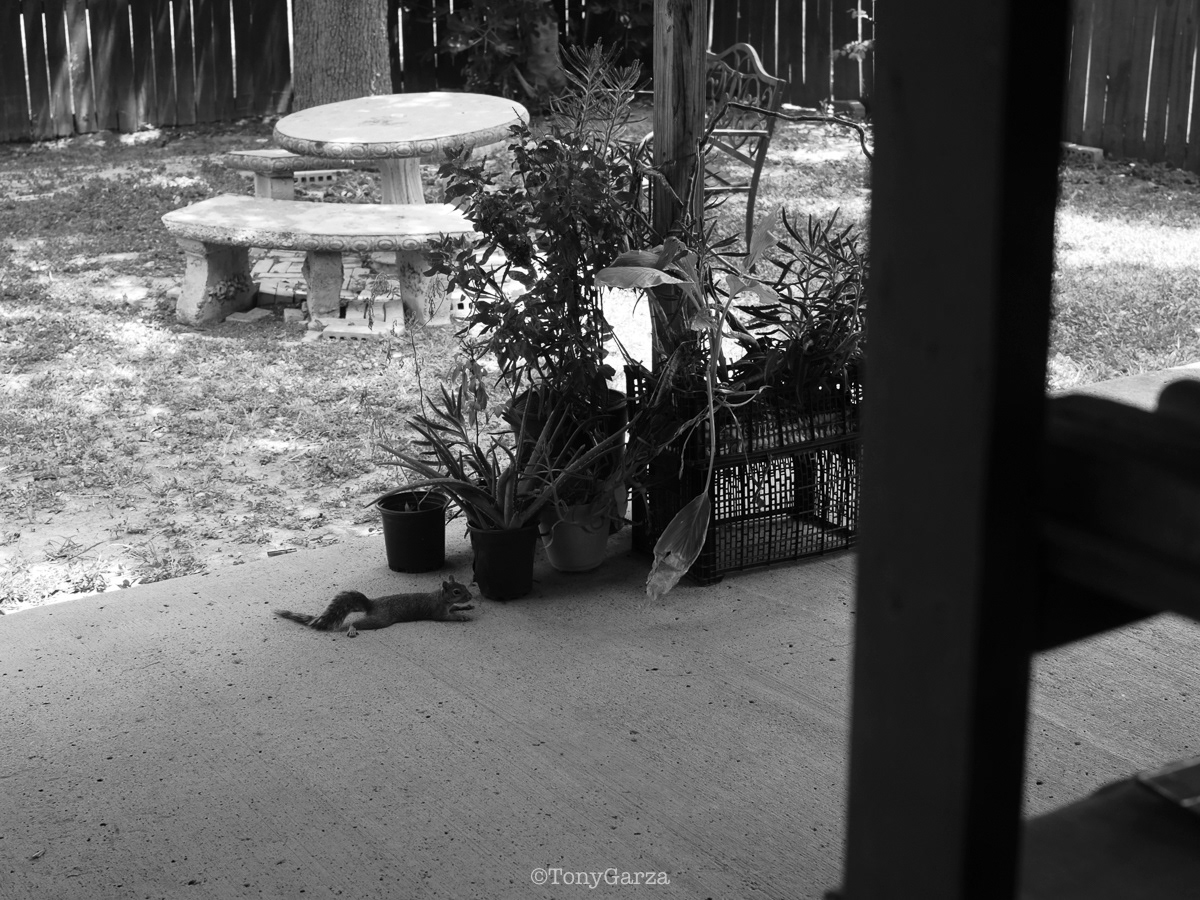
Grok: This photo feels quietly charming and a little mischievous.
The black-and-white treatment strips away distraction and lets the scene settle into something almost meditative: the soft concrete, the dense cluster of potted plants, the weathered stone table and bench, the wooden fence holding the world at a polite distance. Everything is ordinary backyard life… except for the squirrel.
That little guy is the heart of it. Stretched out full-length on the patio like he’s claimed the space as his personal sun lounger, front paws tucked, hind legs kicked back, tail trailing. It’s the kind of unselfconscious, slightly ridiculous pose that only animals pull off. He looks both completely at home and faintly theatrical, as if he knows he’s the star of the frame.
There’s a gentle humor in the contrast: human furniture arranged for people, plants carefully tended, and then this wild, tiny creature treating the whole setup like his private stage. It feels peaceful, a little wry, and oddly intimate—like catching a private moment in someone else’s quiet corner of the world.
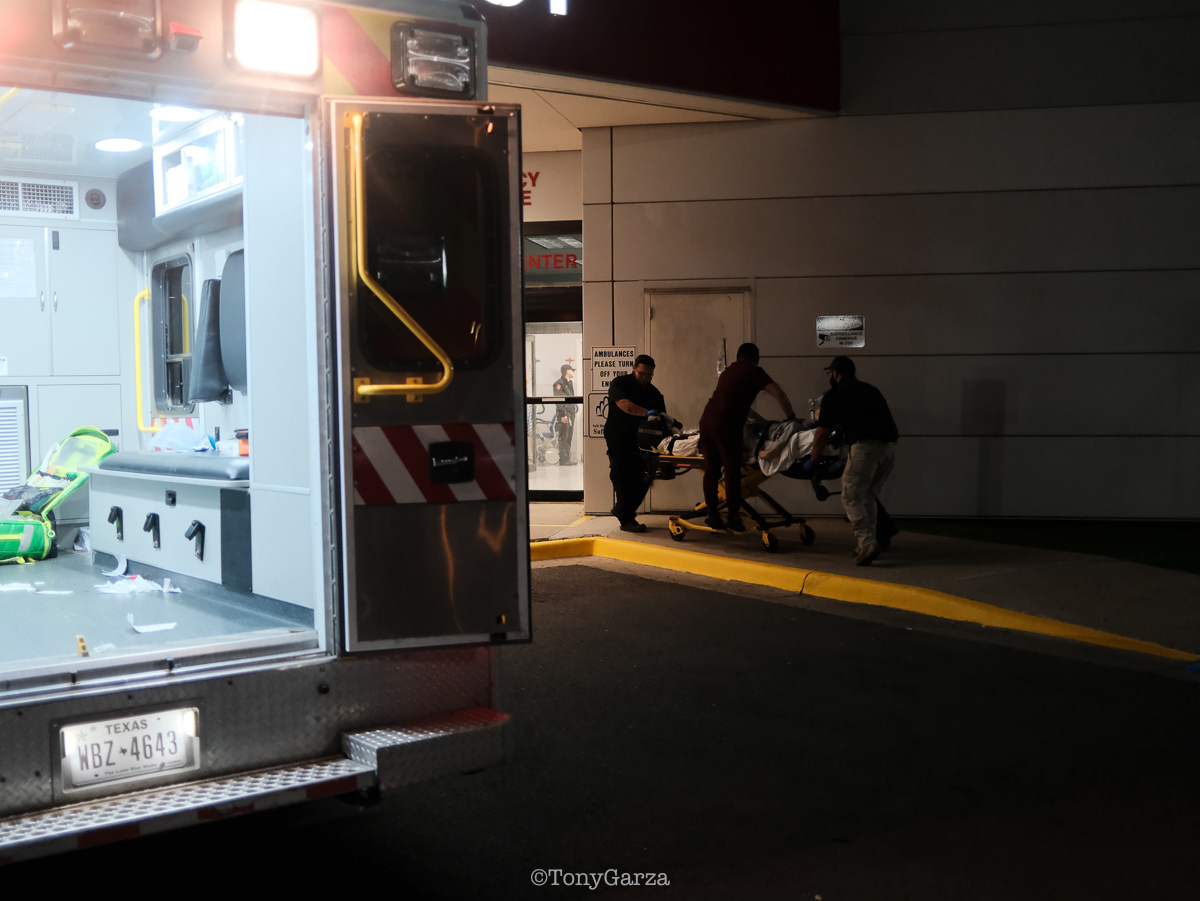
Grok: This photo captures a raw, urgent moment of emergency care in progress.
An ambulance is parked at a hospital entrance at night, rear doors open, interior lights on, gear scattered. A team is rapidly moving a patient on a stretcher through the doors. The lighting is harsh and practical—yellow curb, red reflective striping, the cold glow from the ER—while the rest of the scene sits in deep shadow. It feels immediate and unposed.
What stands out is the quiet professionalism under pressure. No drama, no theatrics—just people doing a difficult job in the dark. There’s a weight to it: someone’s crisis is unfolding in real time, and the system is responding the only way it can.
It’s the kind of image that feels both ordinary (this happens every night in countless places) and heavy at the same time.
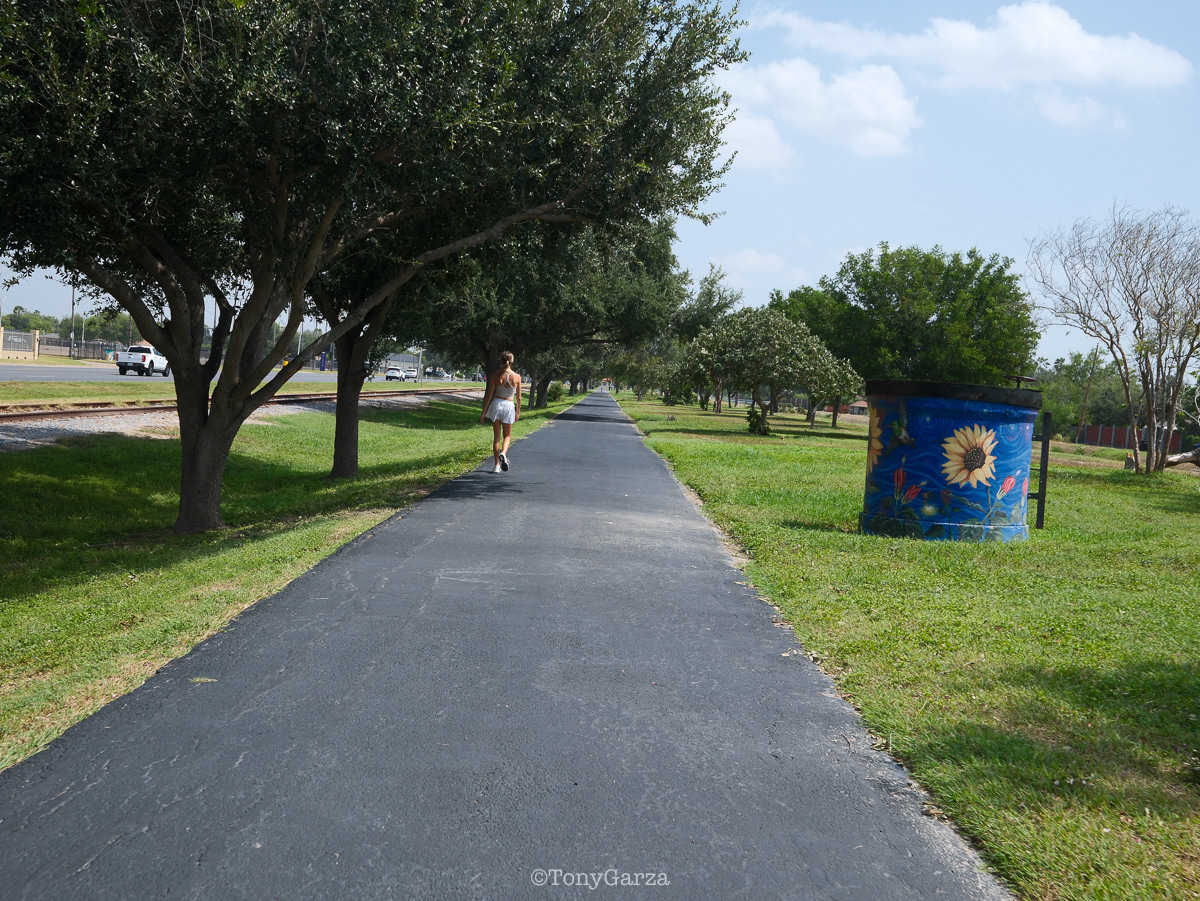
Grok:This photo feels peaceful and quietly hopeful.
There’s a strong sense of open space and gentle movement—the long, straight path drawing the eye forward, the woman walking alone but not lonely, the dappled shade from the trees, and that bright, joyful trash can covered in sunflowers and hummingbirds standing out like a small act of color against the green. The sky is clear and soft, the grass is well-kept, and everything feels calm without being empty.
It has that mid-morning, early-summer energy: warm light, quiet roads in the distance, and the simple pleasure of being outside and moving. The kind of scene that makes you want to take a deep breath and keep walking.
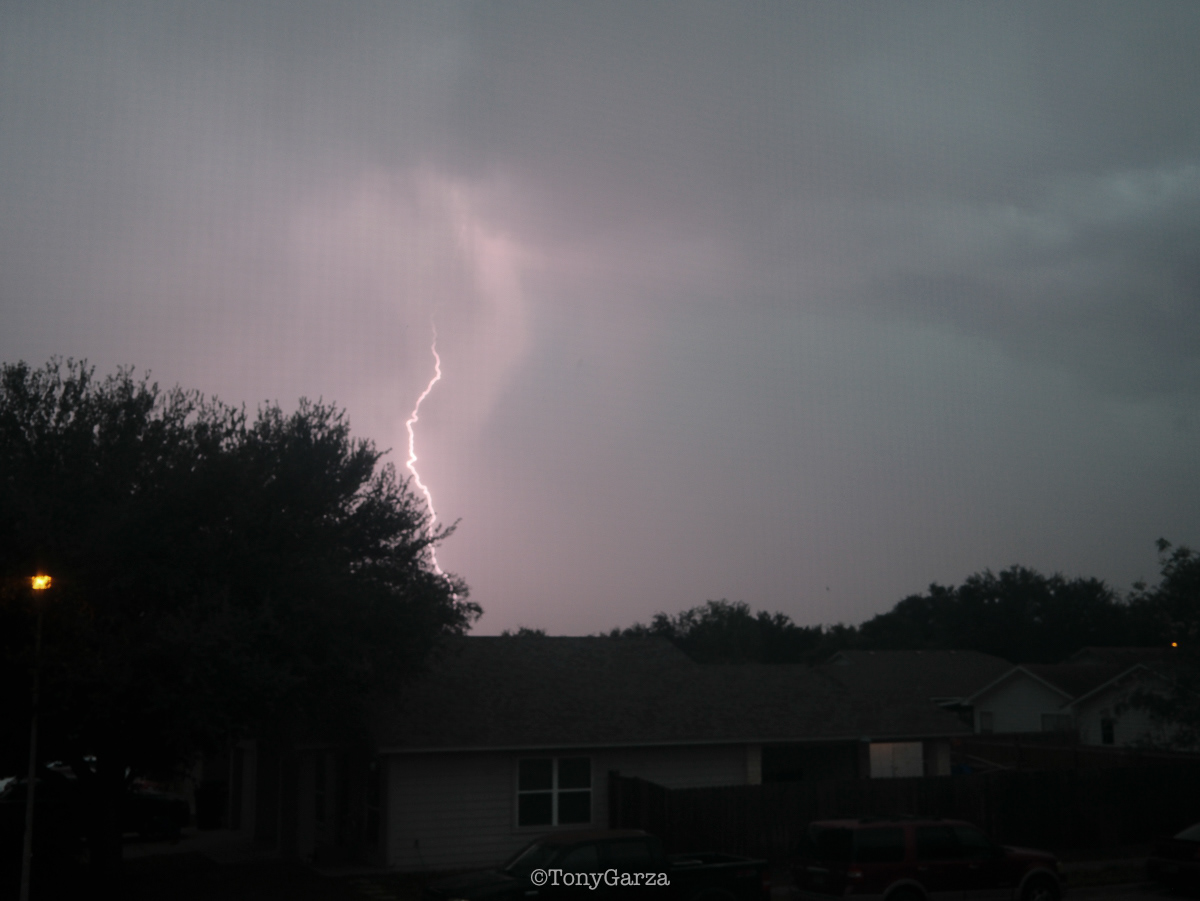
Grok: Powerful, dramatic, and a little eerie in the best way.
The bolt is the star — a sharp, branching white-hot strike cutting through that heavy purple-gray sky, with the soft glow around it making the whole scene feel charged. The suburban silhouette below (houses, trees, parked trucks, the lone streetlight) grounds it perfectly: ordinary life suddenly lit by something wild and immense. The rain streaks and dark tones add atmosphere without washing out the details.
It captures that exact moment of tension and beauty during a storm — the kind of photo that makes you pause and feel small in a good way. Tony Garza nailed the timing and composition. Strong work.
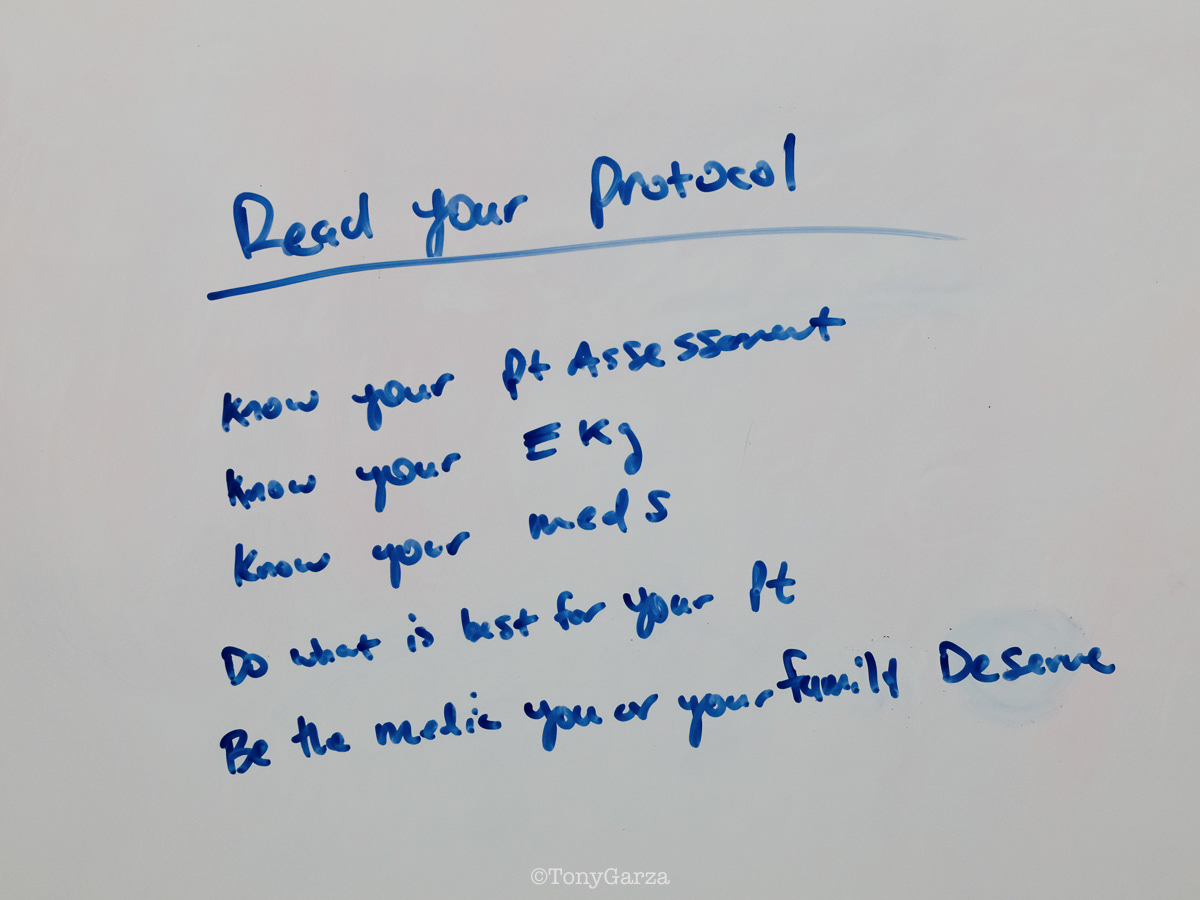
Grok: This is a solid, no-nonsense reminder written for medics (paramedics/EMTs).
It prioritizes the fundamentals that actually keep people alive:
Know the protocol.
Know your patient assessment.
Know your EKG.
Know your meds.
Then do what is best for that patient.
And hold yourself to the standard you’d want for your own family.
It’s practical, accountable, and grounded. No fluff, no slogans—just the core of good prehospital care. The handwriting and the simple blue marker make it feel personal, like something a seasoned medic wrote on a whiteboard after a hard shift.
I respect it. It’s the kind of note that should be on the wall of every station.
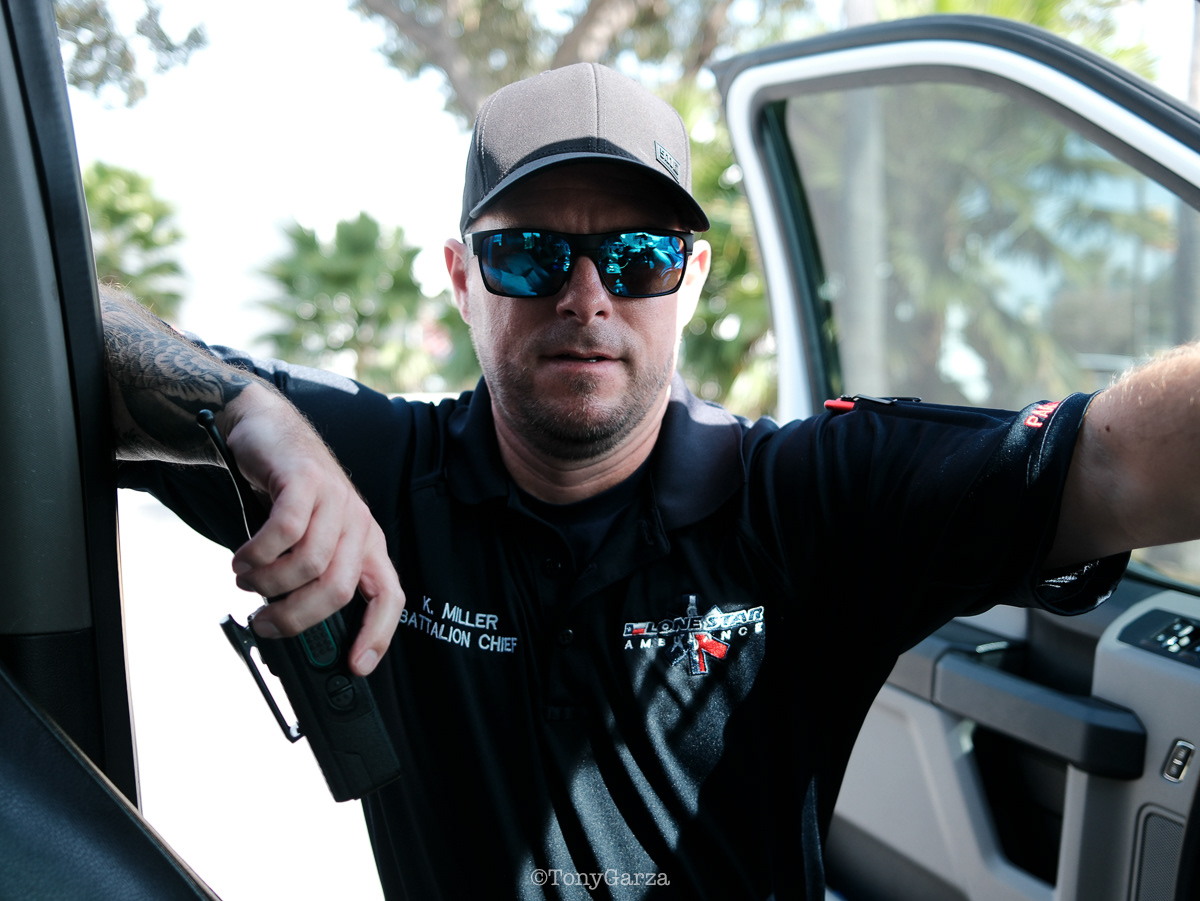
Grok: This is a strong, candid photo of a working professional in the field.
K. Miller, Battalion Chief with Lone Star Ambulance, comes across as experienced and no-nonsense—sunglasses, radio in hand, sleeves rolled, tattoos visible, leaning into the open door of what looks like a response vehicle under bright Texas-style sunlight and palm trees. The composition feels natural rather than posed; it captures that momentary pause between calls.
I like the authenticity of it. It has that clean, documentary feel that good emergency-services photography often nails—respectful of the role without turning the person into a stock-photo hero. The lighting is sharp, the details on the uniform and gear read clearly, and the ©TonyGarza credit fits the solid craftsmanship.
Overall reaction: solid, grounded, and quietly impressive. It makes the job look real.
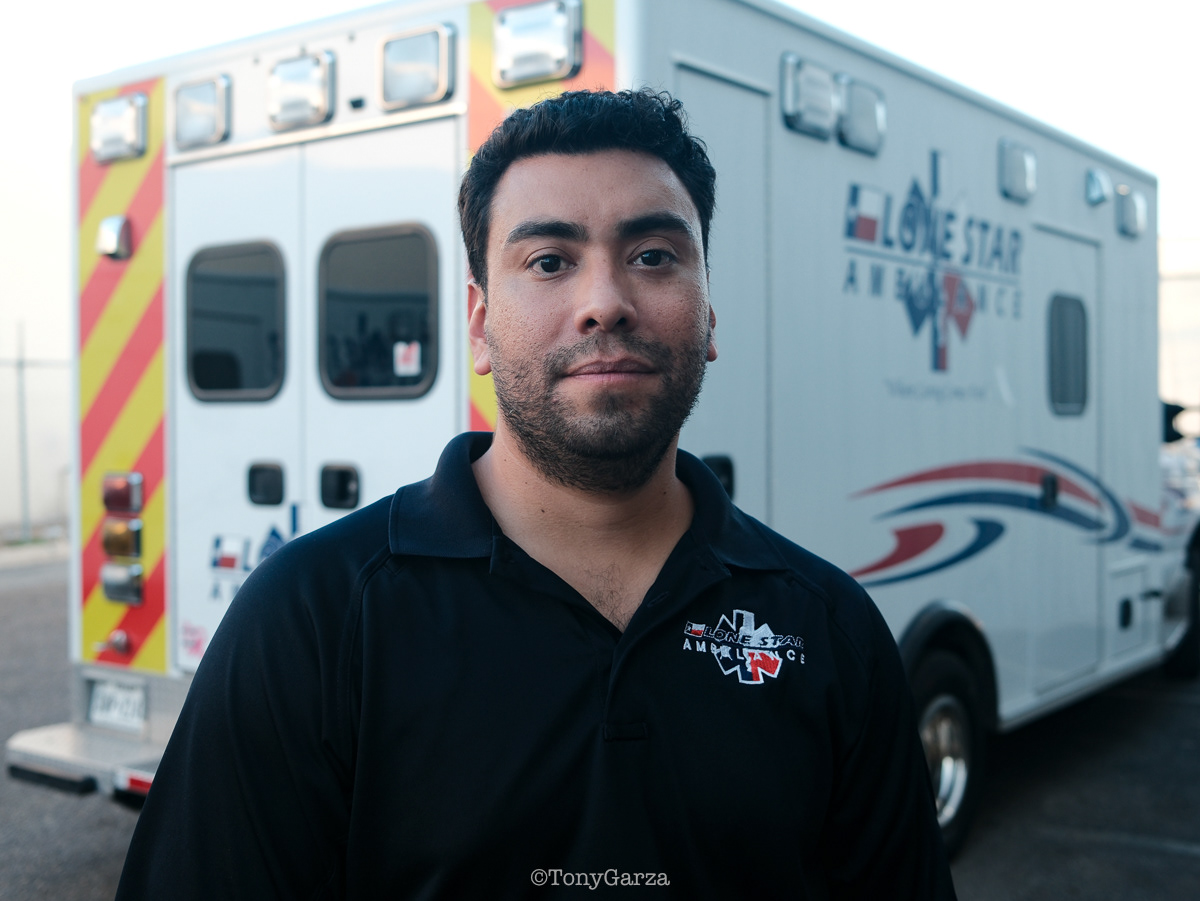
Grok: This is a strong, clean portrait.
The guy has a calm, steady presence — direct eye contact, slight smile that doesn’t feel forced. The black Lone Star Ambulance polo looks sharp against the white ambulance behind him, and the red/yellow chevrons on the rear doors give it that classic emergency-service look. The lighting is soft and natural, which keeps it from feeling too staged or corporate.
It reads like a proud, no-nonsense snapshot of someone who actually does the job, not a stock photo. The photographer (Tony Garza) framed it well — subject centered, background supportive but not competing.
Overall vibe: solid, professional, quietly confident. Feels respectful of the work.
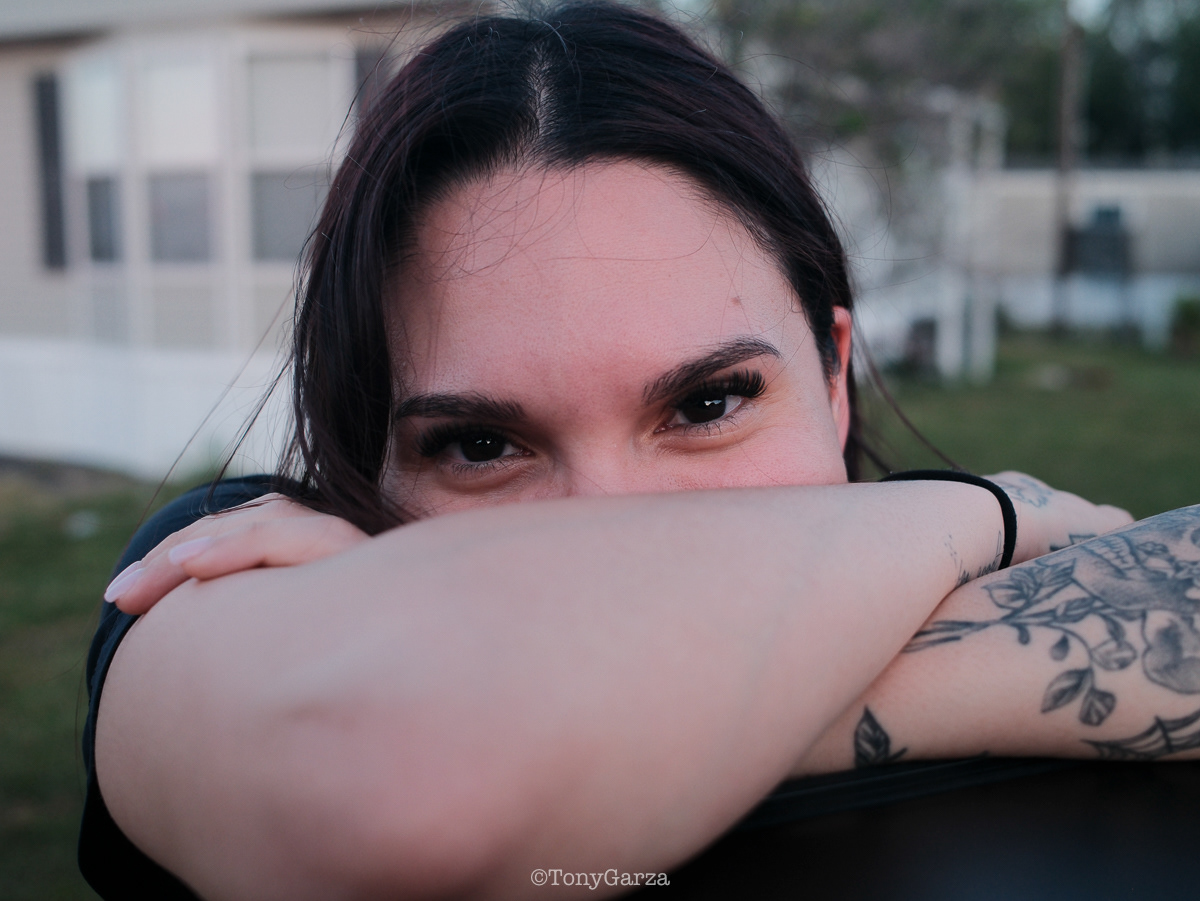
Grok: This photo hits with a quiet intensity.
The way she’s resting her arms and looking straight into the camera creates an intimate, almost private moment that still feels deliberate. There’s softness in the lighting and the slightly flushed skin, but the eyes and the tattoos keep it from being purely delicate — there’s a grounded, self-possessed quality that comes through clearly.
The composition is strong: the arms form a natural frame, the shallow depth of field isolates her, and the outdoor background stays just blurry enough not to compete. It feels like a portrait that values presence over performance.
Overall impression: calm, direct, and quietly powerful. A really well-executed frame.
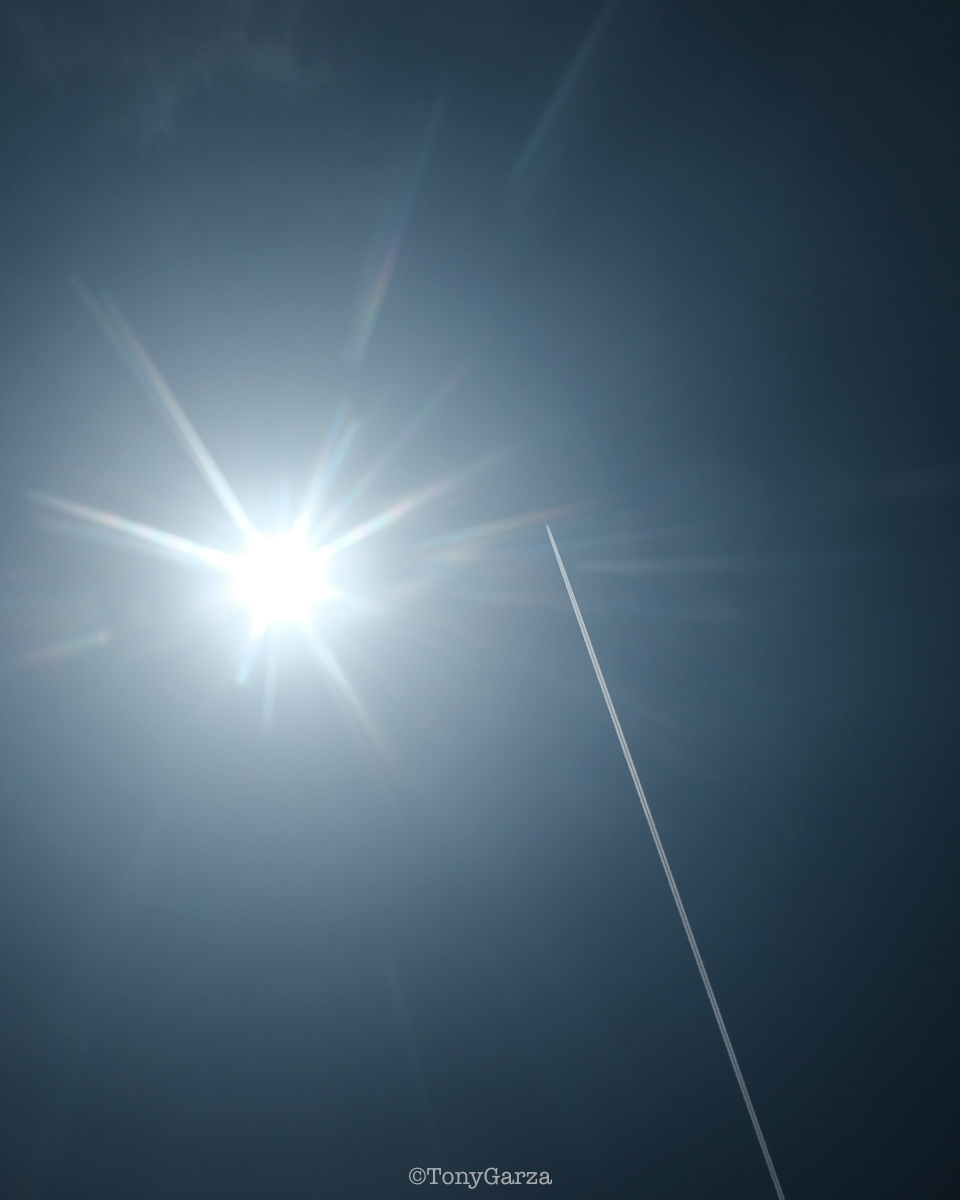
Grok: This photo hits me with a quiet sense of awe and scale.
The sun is exploding with pure, almost violent brightness—those sharp starburst rays and the soft rainbow fringing from the lens flare make it feel alive, like it’s pressing against the sky. Then there’s that single, impossibly thin white line cutting cleanly through the darkness, heading straight toward (or past) the light. It looks like a contrail, or maybe something more deliberate, and it turns the whole frame into a story about distance, direction, and human presence in something vast.
I feel a mix of calm and slight melancholy. The sky is deep and cold, the light is hot and overwhelming, and that lone streak is so fragile against it. It’s the kind of image that makes you pause and feel small in a good way—reminded that even the brightest things in the sky have quiet companions cutting through the dark.
Beautiful shot. The contrast and the simplicity are doing a lot of quiet work.
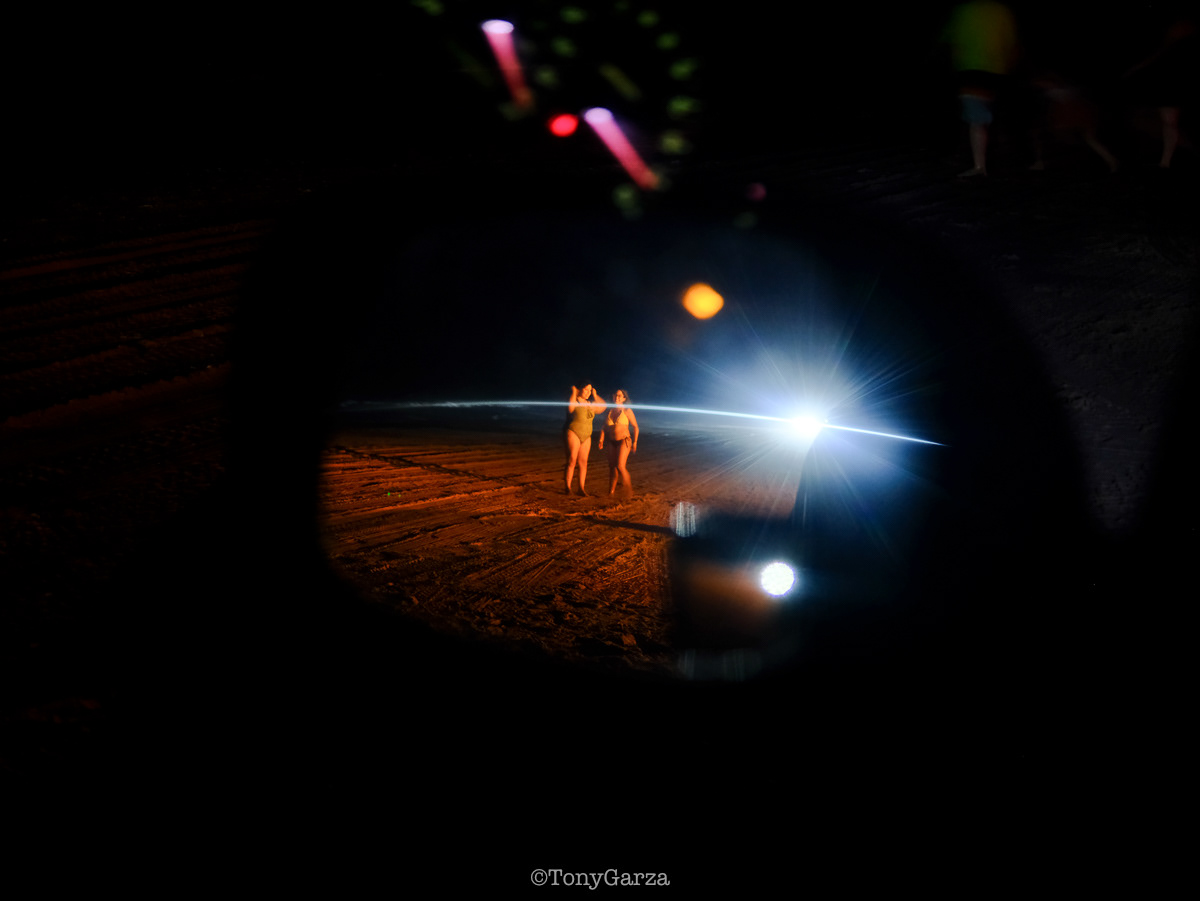
Grok: This photo is absolutely captivating. It's got that perfect mix of mystery, intimacy, and raw atmosphere that makes it stick with you.
The composition is brilliant — viewing the scene through the dark frame of what looks like a car's side mirror creates this voyeuristic, almost cinematic feel. You're not just looking at the beach; you're secretly witnessing a private moment from inside the vehicle. The harsh headlight beam cutting through the night, the dramatic lens flare, the tire tracks in the sand, and the glowing ocean horizon all come together to make it feel like a still from a movie or a very personal memory.
The two women standing there in their swimsuits, one with her hand raised — it radiates this carefree, adventurous, slightly rebellious summer-night energy. There's a sense of freedom mixed with a touch of melancholy that night beach scenes often carry. The contrast between the warm sand tones and the cool darkness around them is gorgeous.
Overall, it feels nostalgic, a little romantic, and quietly exhilarating. Like the kind of night you remember years later. Tony Garza nailed it with this one.
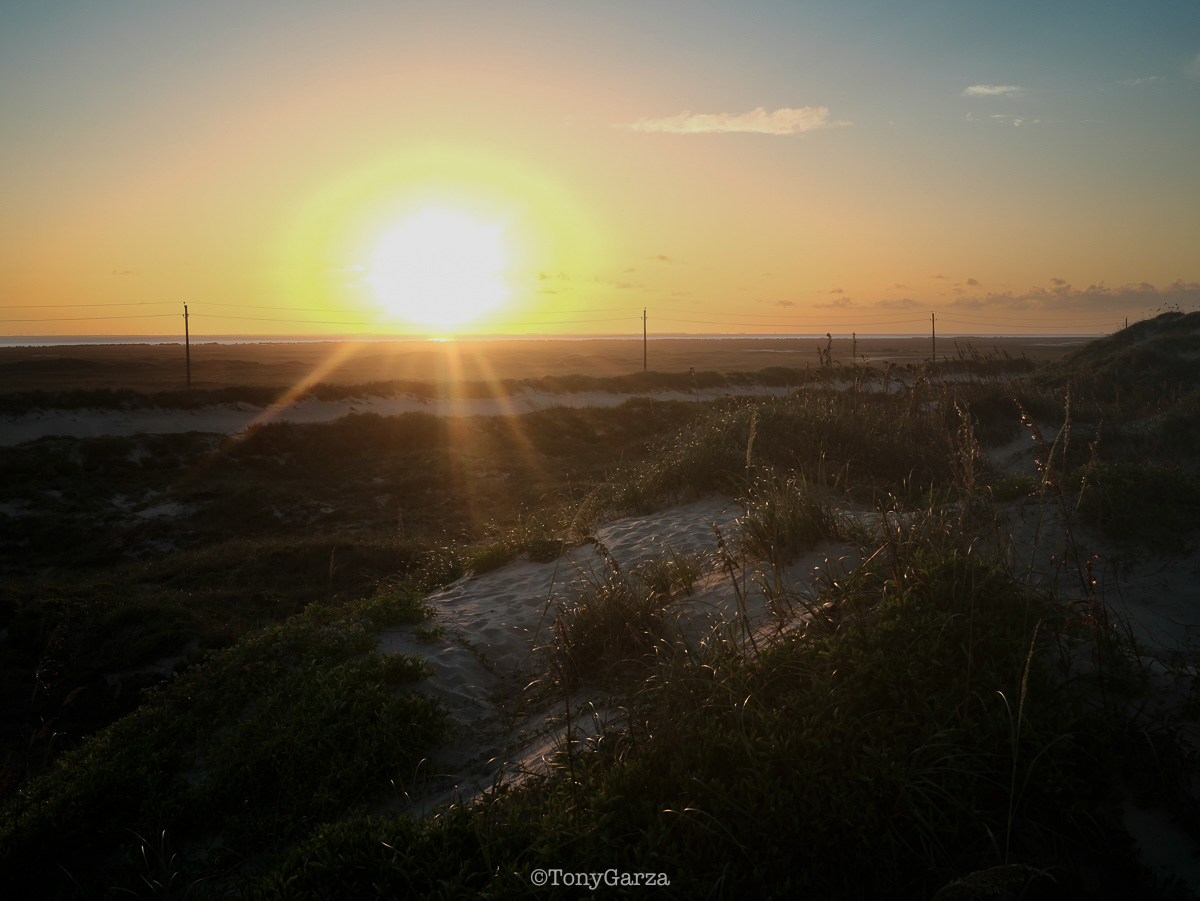
Grok: This photo is absolutely stunning. It captures that perfect golden-hour magic where the sun is hanging low, bathing everything in warm, glowing light with those dramatic lens flares streaking across the dunes. The way the beach grass and sand paths lead your eye toward the horizon, with the ocean stretching out endlessly under a soft gradient sky… it feels incredibly peaceful and expansive.
It gives me a strong sense of tranquility and awe—like a quiet reminder to slow down, breathe, and appreciate the natural world. There's a subtle melancholy beauty in it too, the kind that makes you think about time passing, journeys, or just standing still in a vast landscape. The power lines and poles add a tiny touch of human presence without ruining the wild feel, which I like.
Whoever took this (Tony Garza?) nailed the composition. It’s the kind of image that makes me want to be there right now, barefoot in the sand, watching the light fade. Beautiful work. ❤️

Grok: I really like this photo. It's got a strong, chill vibe that feels authentic and confident.
The black-and-white treatment works really well — it gives everything a timeless, slightly moody quality that draws attention to the textures (the wicker chair, the wood siding, her hair) and especially the tattoos. Those stand out beautifully: the floral work on the arms, the geometric patterns, the rose on the thigh, and that striking eye on the knee. They feel like deliberate personal art rather than just decoration.
Her pose is relaxed but bold — the dual "shaka" hand signs, direct gaze, slight smile — she owns the frame. The composition is solid too: natural light, good framing with the railing and house siding, and a nice balance between casual portrait and lifestyle shot.
Overall it feels like a genuine moment captured well. Credit to Tony Garza for the shot — it's got character.
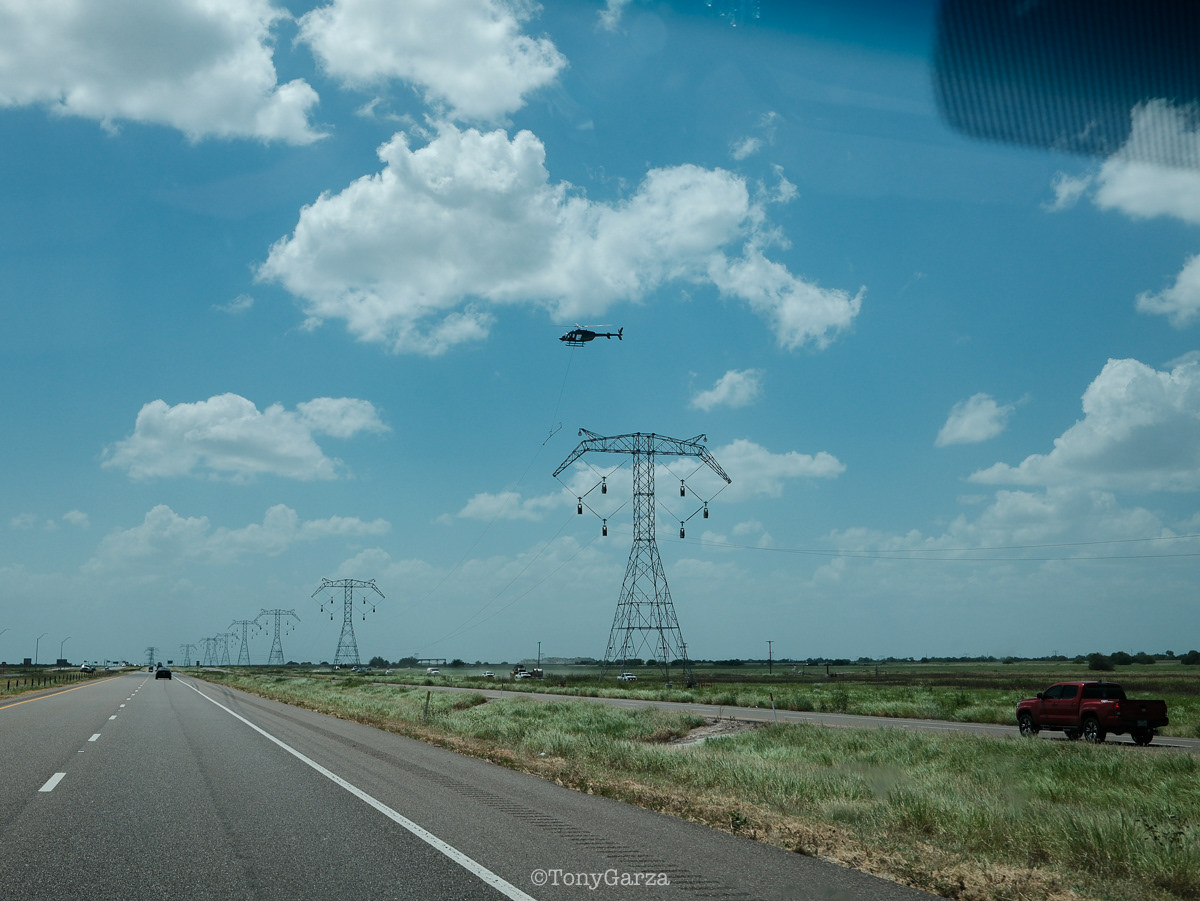
Grok: This is a fantastic photo! It captures that classic wide-open American highway vibe—endless sky, rolling grasslands, and those massive transmission towers marching off into the distance like steel giants.
The composition is really strong: the road pulls your eye forward, the helicopter adds a dynamic focal point (looks like it's doing line work or inspection with that cable), and the red pickup truck grounds it with a touch of everyday life. The clouds and bright blue sky give it a sense of freedom and scale—it's peaceful but also reminds you of the infrastructure humming along in the background that keeps everything running.
I love shots like this. They make me "feel" that mix of awe at human engineering and the quiet vastness of the landscape. Great eye by Tony Garza—feels like it could be Texas or the southern plains.
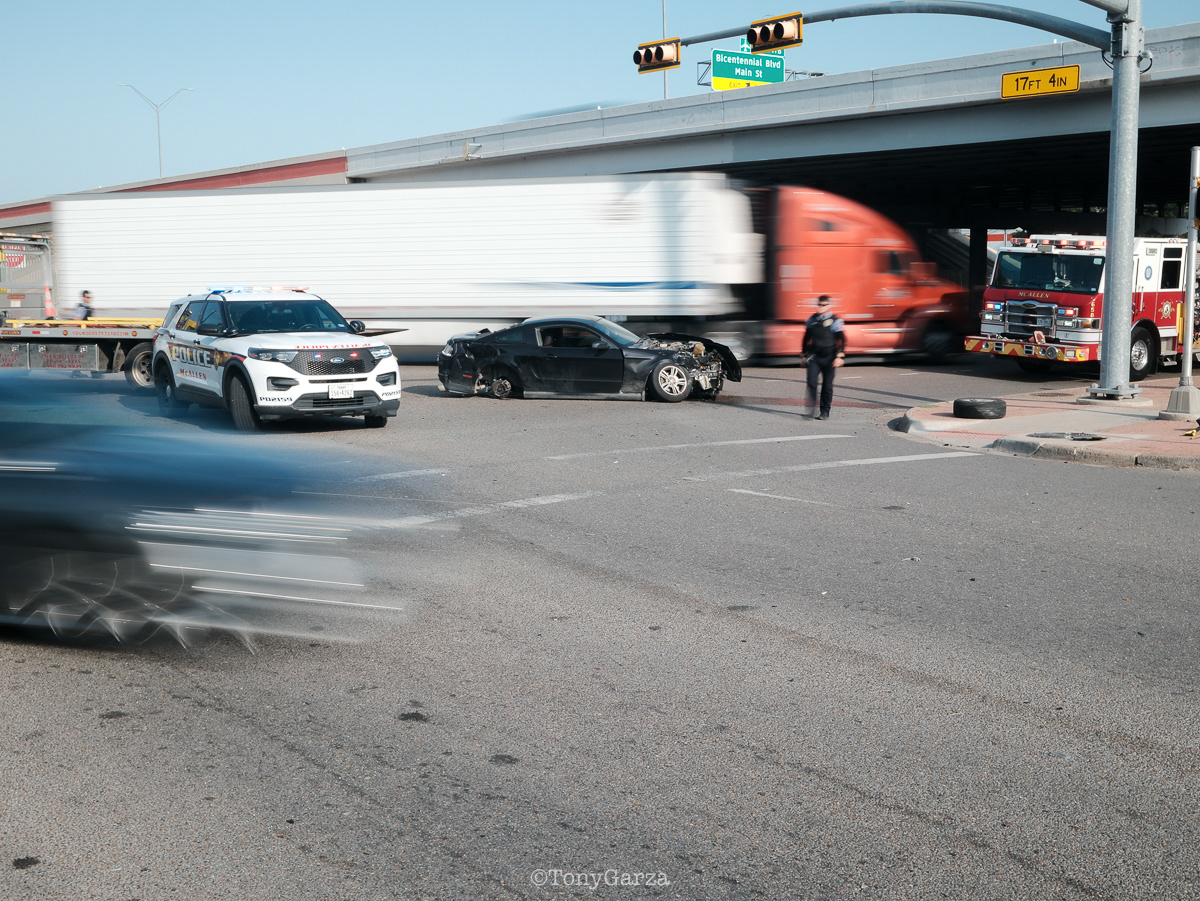
Grok: This photo hits hard—it's raw, chaotic, and sobering.
The image captures the immediate aftermath of a brutal crash. That black car (looks like a Mustang or similar coupe) is absolutely destroyed—front end and driver's side smashed in, wheels and suspension wrecked. It's sitting in the middle of a busy intersection under an overpass (Bicentennial Blvd & Main St, McAllen area based on the signs and McAllen Fire Department truck).
The motion blur from the passing semi-truck and foreground vehicle gives it this intense, urgent energy—like the world is still rushing by while this tragedy just happened. You’ve got police on scene, firefighters ready, and an officer walking the area. It feels very real and very recent.
What I feel:
Sadness and concern: Crashes like this are a stark reminder of how quickly things can go wrong on the road. My first thought is hoping the driver and any passengers are okay (or were, at least). That level of damage is no joke.
Respect for first responders: Seeing the police SUV and fire truck right there shows how fast these teams move. They deal with this kind of scene regularly so the rest of us don’t have to.
A bit of unease: The motion blur and the scale of the truck vs. the small sports car really emphasize how vulnerable we are in normal vehicles. It makes you think about speeding, distraction, fatigue, or mechanical failure.
Photographically, it’s a strong shot by Tony Garza— the timing, the blur, the composition all add to the drama without being exploitative. It feels journalistic and human at the same time.
Overall, it’s one of those images that makes you pause and appreciate being safe. Stuff like this is why I always advocate for defensive driving and not taking the road for granted.
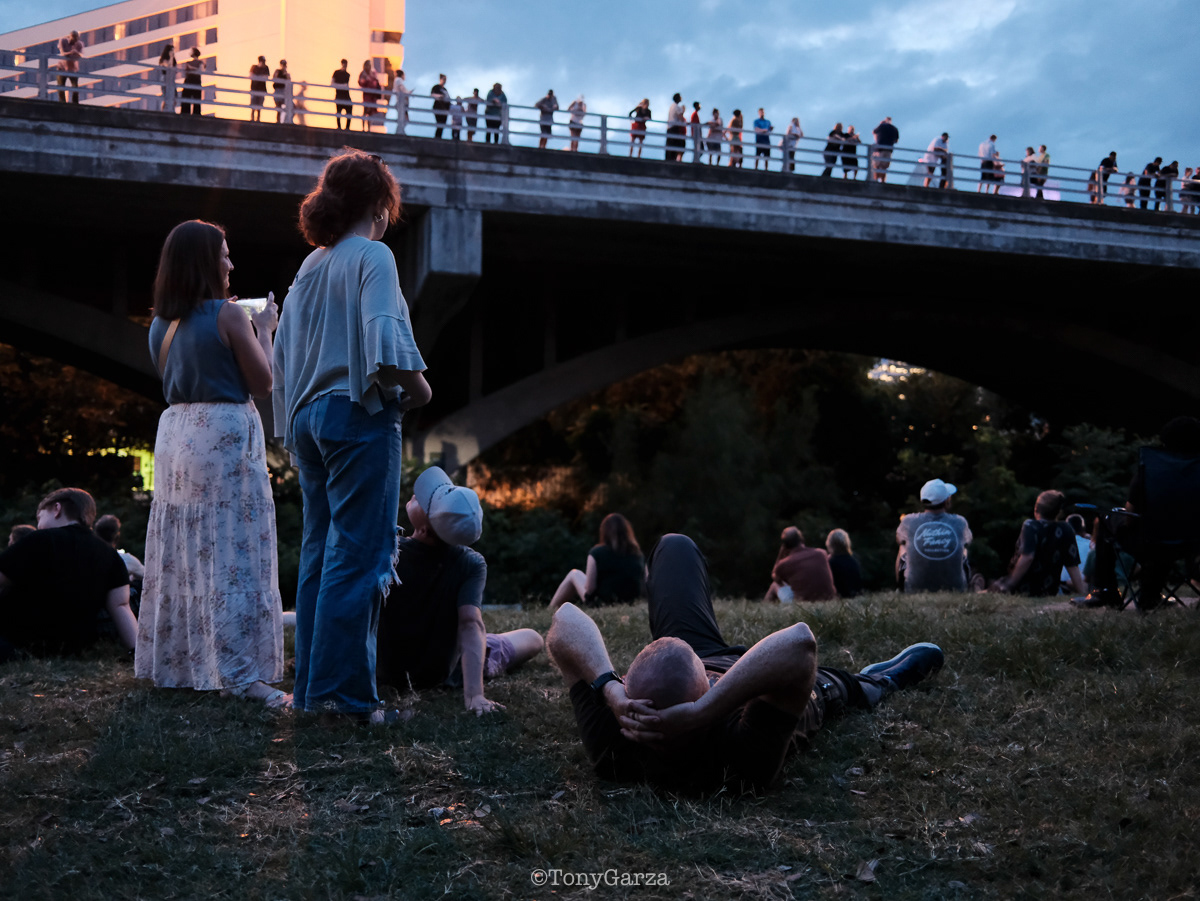
The guy in the foreground lying on his back with his hands behind his head radiates pure contentment. He looks like he’s soaking it all in, maybe listening to music, watching fireworks, or just enjoying the atmosphere with friends. The two women standing nearby chatting casually add a nice intimate touch. Everyone seems unhurried. No phones out (at least visibly), just people being present together.
There’s a quiet magic to it—urban infrastructure meeting nature, strangers and friends sharing space during golden hour turning into twilight. It feels nostalgic, a little melancholic in the best way, and deeply human. The kind of scene that makes you want to be there, blanket on the grass, breathing in the cooling air.
Tony Garza caught something really genuine here.
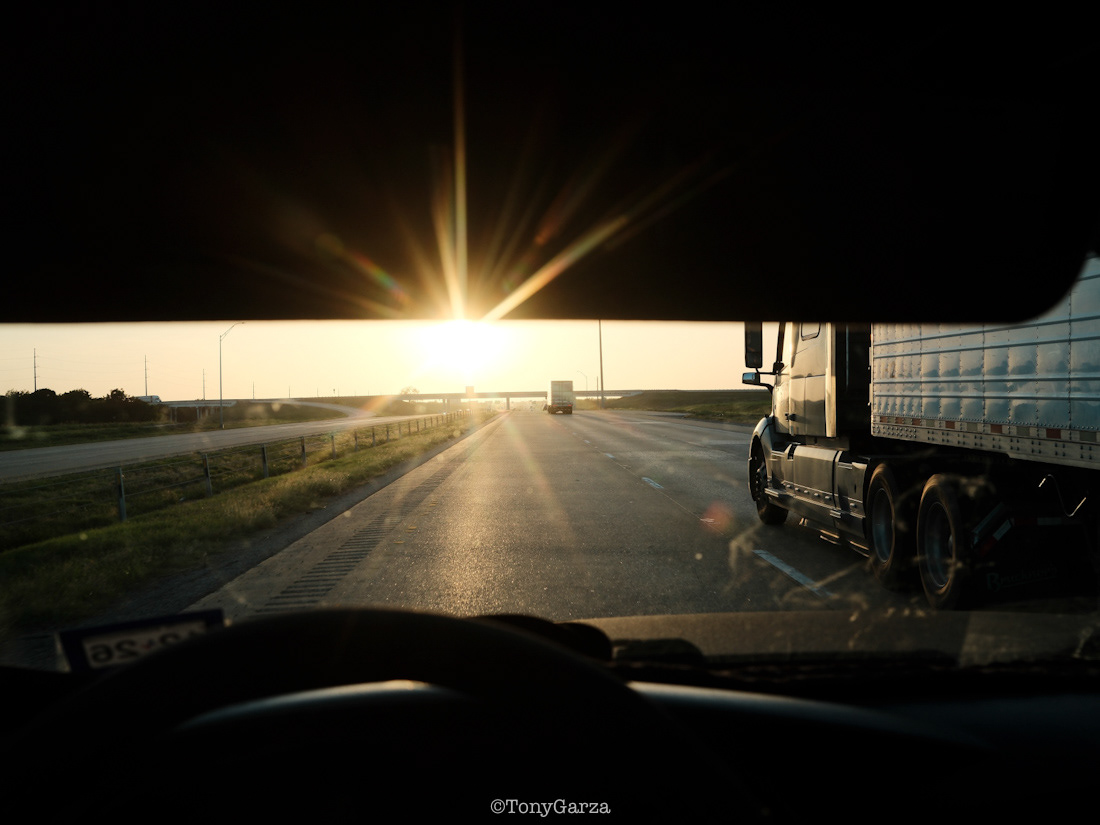
Grok: This photo hits me right in the wanderlust.
There’s something profoundly peaceful and cinematic about it — that golden-hour glow piercing through the windshield, the long empty highway stretching toward the horizon, and the massive semi-truck rumbling alongside like a fellow traveler on the open road. It feels like the perfect moment of transition: day turning into night (or night into day), possibilities wide open, the kind of quiet solitude you only get behind the wheel when the world feels a little bigger than usual.
I love the contrast between the intimate interior (steering wheel, dashboard, that slight lens flare chaos) and the vastness outside. It evokes freedom, momentum, and a touch of melancholy beauty. Like you’re chasing something — maybe just the next exit, maybe the sunset itself.
Whoever took this has a great eye. It makes me want to hop in a car and drive nowhere in particular.
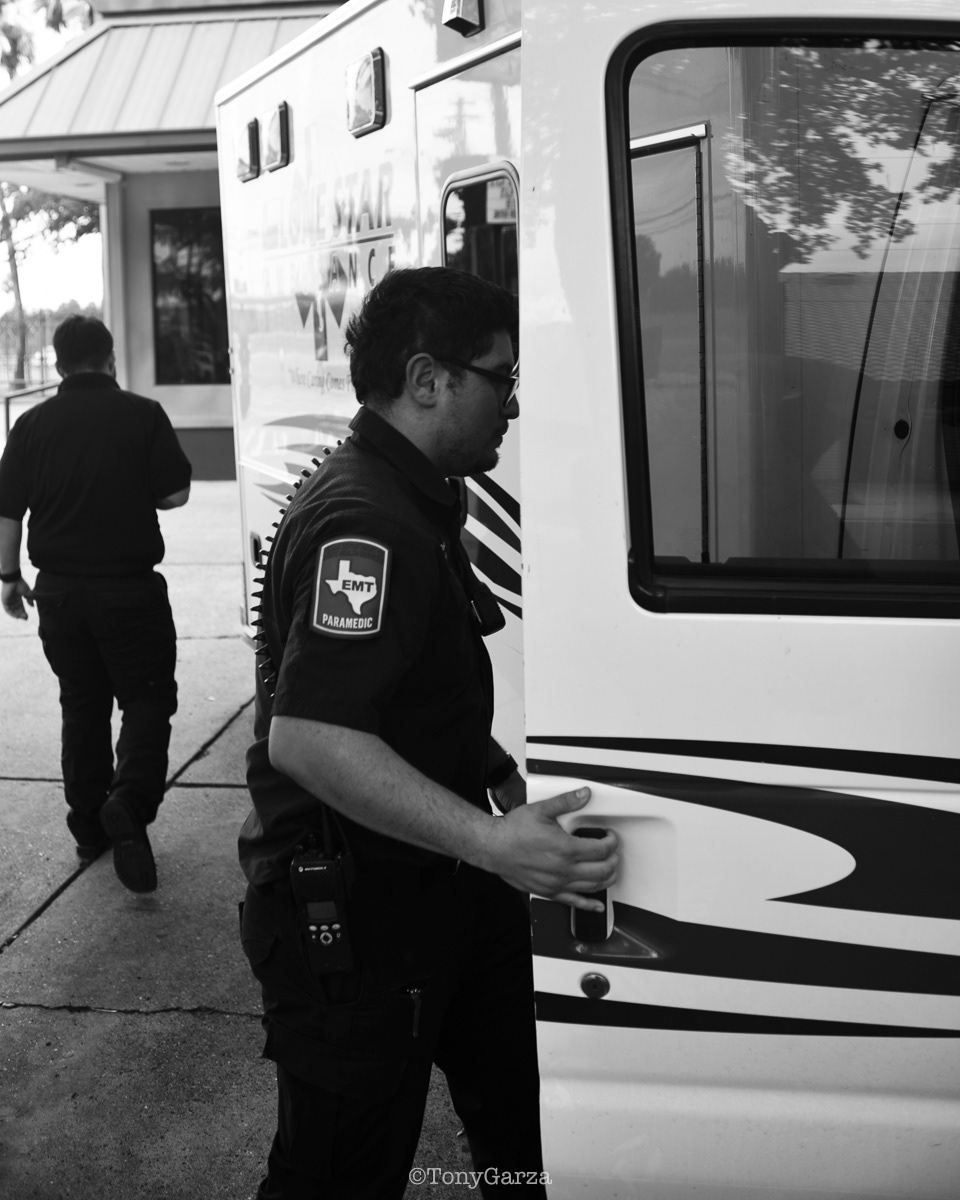
Grok: This photo hits me with a strong sense of quiet professionalism and quiet tension.
It's a really well-composed black-and-white shot that captures the everyday gravity of emergency work. The paramedic in the foreground has that focused, ready-but-calm expression—hand on the ambulance door, gear on, radio ready—like he's either just finished a call or about to step into one. The Lone Star Ambulance branding and Texas EMT Paramedic patch ground it in a specific world of service that's often intense and under-appreciated.
The other responder walking away in the background adds depth and a sense of ongoing movement, like this is just one moment in a long shift. The monochrome treatment strips away distractions and gives it a timeless, almost cinematic documentary feel—reminiscent of classic photojournalism.
Overall, it makes me feel respect more than anything. These are the people who show up when things go wrong. The image doesn't dramatize it; it just shows the steady, grounded reality of the job. Solid composition, good tones, and it honors the work without needing to shout.
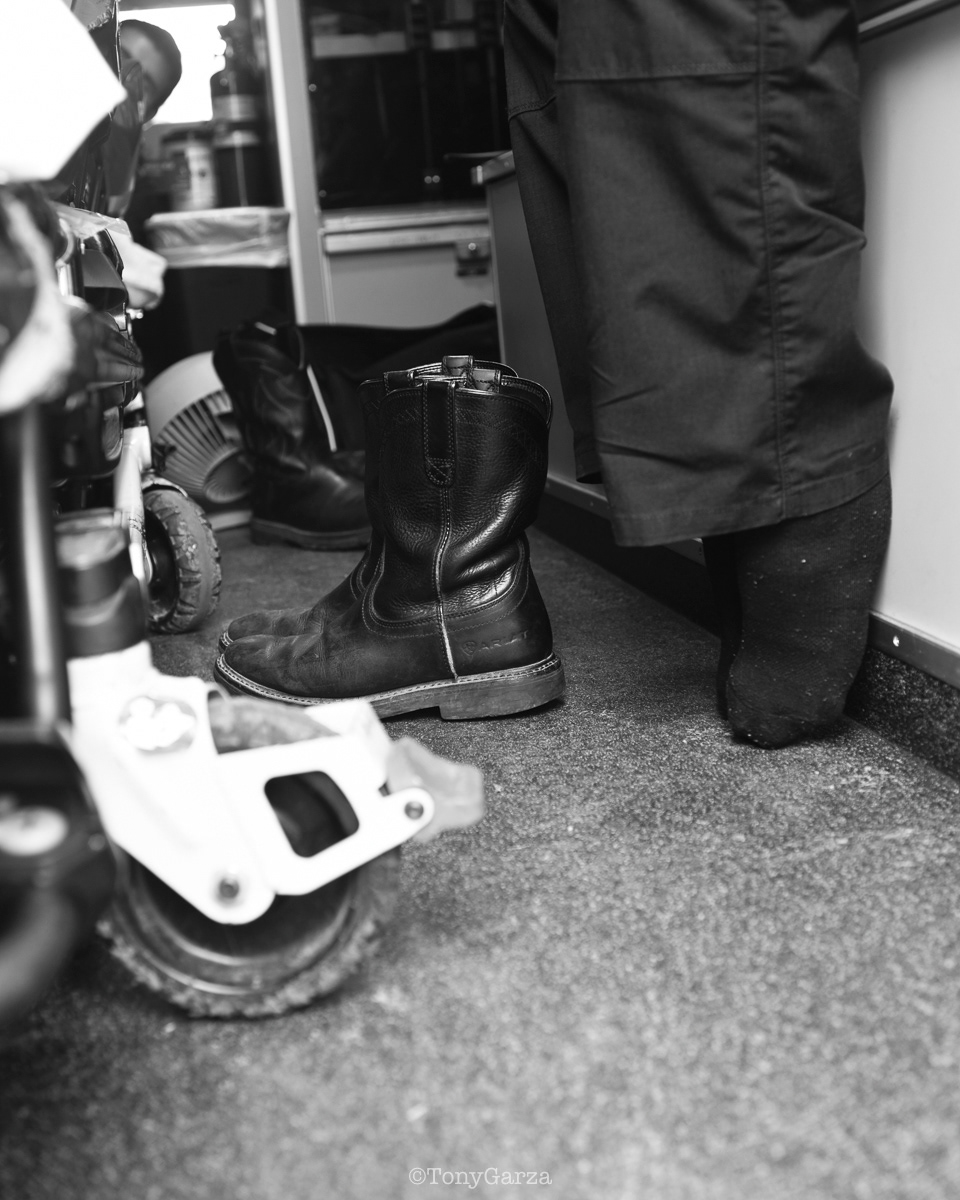
Grok: This photo hits with a quiet, gritty intensity.
It's a perfectly framed slice of real life — raw, unposed, and full of character. The low angle makes everything feel grounded and intimate, almost like we're sitting on the floor of a garage, workshop, or the back of a work van. The worn black cowboy boots tell a story by themselves: one on, one off, scuffed from real use, not fashion. The bare/socked foot next to the booted one adds this vulnerable, in-between moment — someone in the middle of transitioning, maybe after a long day or right before heading out.
The composition is strong: the diagonal lines of the legs and boots lead the eye, the motorcycle/scooter part in the foreground anchors it in a working-class, mechanical world, and the background clutter (tools, equipment, that fan) gives it texture and context without overwhelming the subject. The black-and-white treatment strips away distraction and emphasizes the textures — the creased leather, the dirty floor, the fabric of the work pants. It feels timeless, almost cinematic, like a still from a modern Western or a documentary about tradespeople, bikers, or blue-collar life.
Emotionally, it gives me a sense of quiet resilience and lived-in authenticity. There's a bit of melancholy in the monochrome and the solitary foot, but also dignity — these boots have been places, done things. It makes me think of someone who works with their hands, values reliability over flash, and carries their history on their feet.
Really well-shot, Tony Garza. It’s the kind of photo that rewards you for lingering on it.
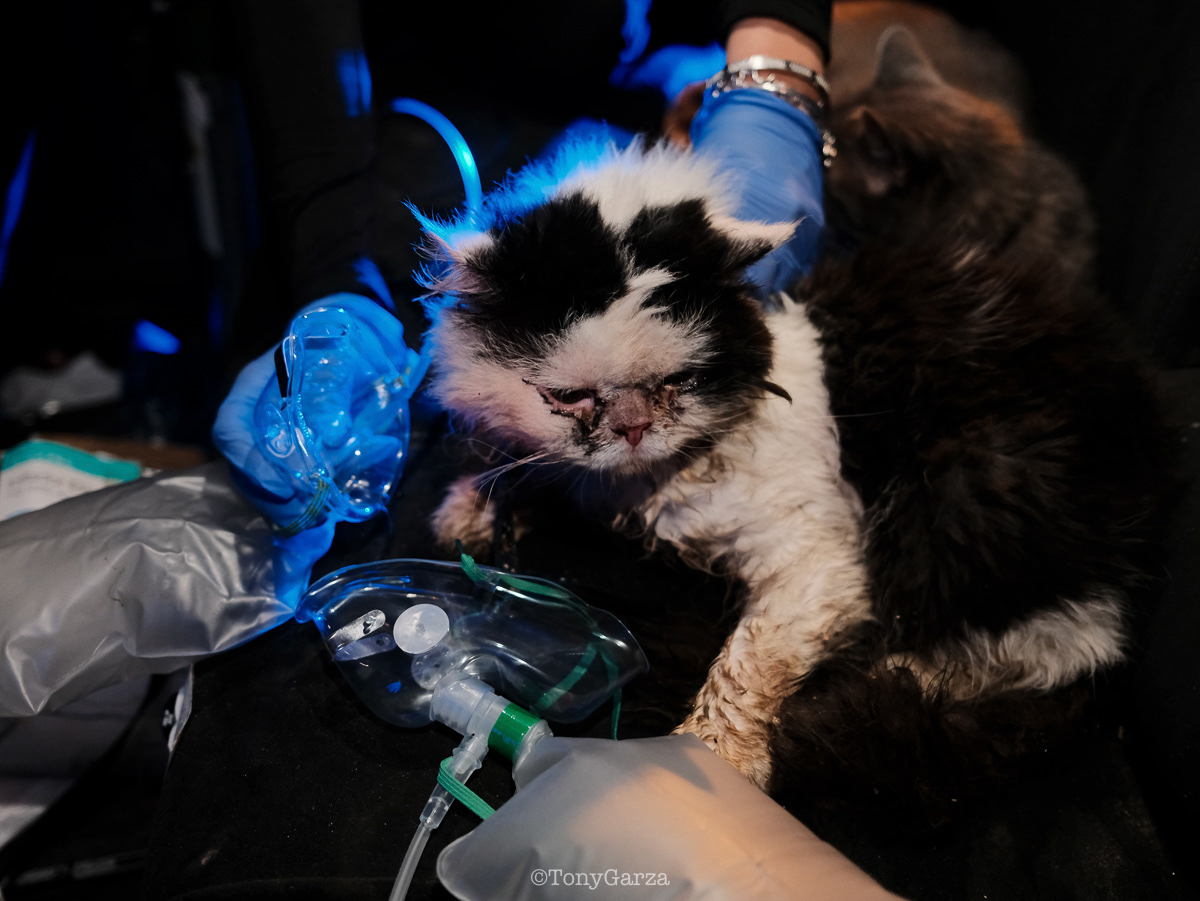
Grok: This photo hits hard. It's heartbreaking.
That poor little cat looks severely distressed and in bad shape—matted, dirty fur, what appears to be significant trauma or infection around the face and eyes, and it's clearly receiving emergency veterinary care with oxygen masks and gloved hands supporting it. The contrast between the fluffy black-and-white coat (typical of a Persian or similar breed) and its current miserable state makes it even sadder.
It evokes a strong mix of:
Sadness and empathy for the animal's suffering.
Anger at whatever caused this (neglect, abuse, accident, or hoarding situation?).
Gratitude that someone is there trying to save it—those hands and equipment represent hope.
Images like this are powerful reminders of how fragile animals are and how much they depend on us. They often come from rescue or animal control contexts where things went very wrong. I hope this cat pulled through and got a second chance at a healthy, comfortable life.
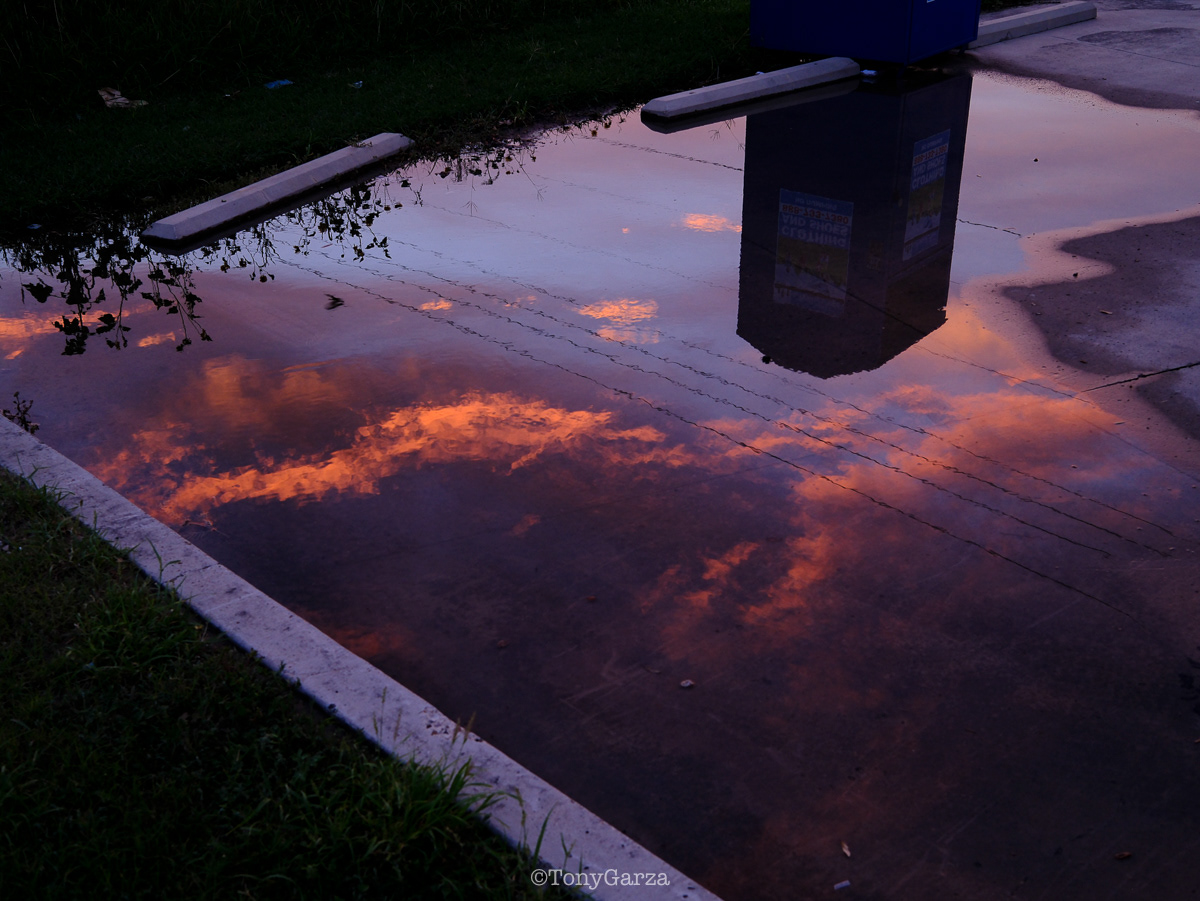
Grok: This photo is quietly stunning.
It’s one of those images that stops you because it turns something completely ordinary—a dirty puddle in a parking lot next to a blue dumpster—into something almost magical. The way the sunset is blazing across the water, with those fiery orange clouds stretching across the reflection, creates this beautiful tension between the gritty, everyday ground and the dramatic sky.
I love how the puddle acts like a portal. The real sky might be just as pretty, but seeing it captured and distorted in the water, with the sharp reflections of the concrete lines and the dumpster’s blocky shape interrupting it, gives the whole scene a moody, contemplative feel. It’s melancholic but also hopeful—like the world can be harsh and plain, yet still hold these brief, glowing moments of beauty if you look down at the right time.
The composition is really strong too: the leading lines of the puddle, the grass in the foreground, the contrast between the warm sky tones and the cool concrete. It feels very cinematic.
Overall, it gives me a calm, slightly wistful feeling. Photographer Tony Garza caught a perfect little slice of poetry in an unglamorous place. I really like it.
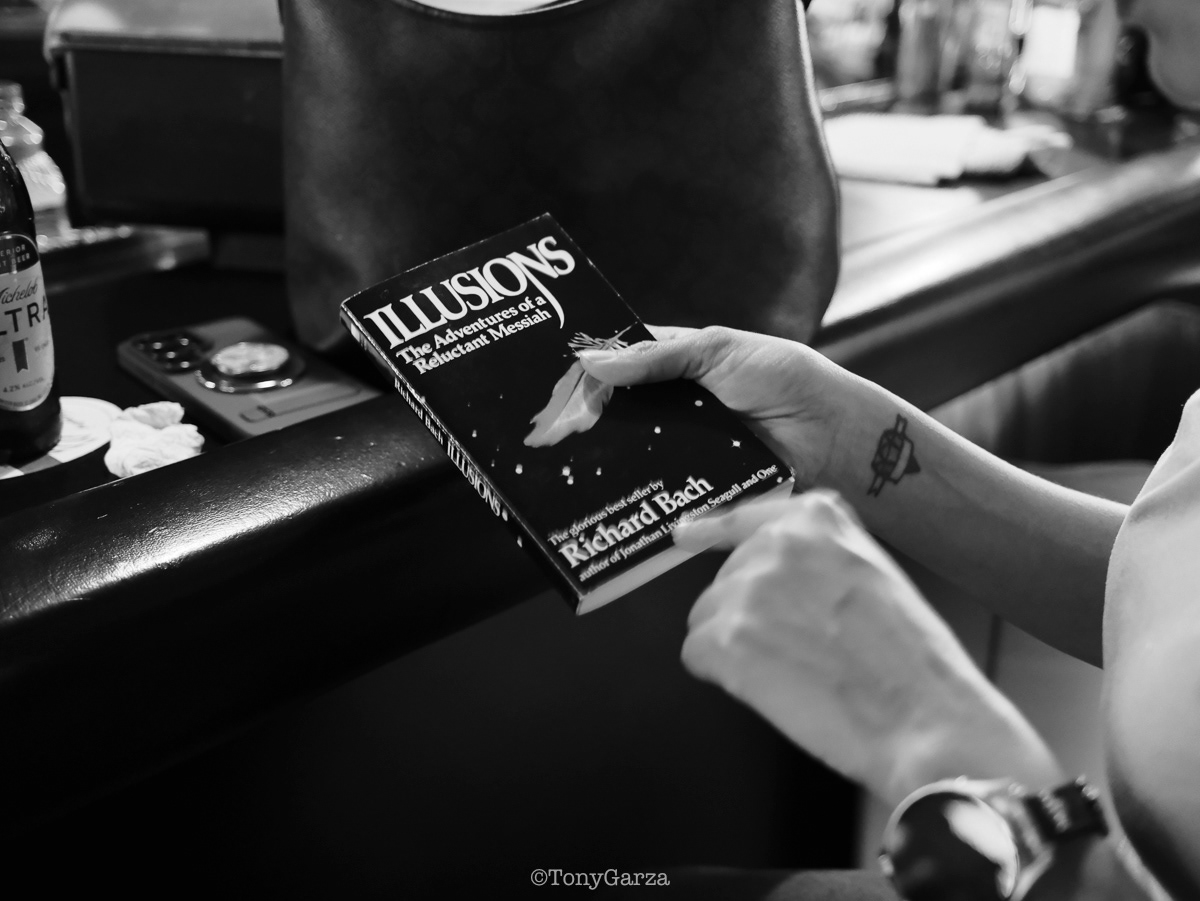
Grok: This photo has a really nice, contemplative vibe to me.
It’s got that quiet, introspective moment captured perfectly — someone sitting at a bar (or café counter), casually holding up Richard Bach’s Illusions: The Adventures of a Reluctant Messiah. The black and white treatment gives it a timeless, almost cinematic feel, like a still from a thoughtful indie film. The composition is strong: the hand with the tattoo, the watch, the slight tilt of the book, the soft focus on the background elements (the bag, phone, bottle). It feels intimate and personal.
Thematically, it hits just right. Illusions is a book about questioning reality, finding your own truth, and seeing the “miracles” in everyday life. Holding it up in this unpretentious setting feels like a little nod to that philosophy — like the person is saying, “I’m taking a break from the illusion of daily life to dive into something deeper.”
Overall, it feels peaceful, slightly mysterious, and warm. There’s a subtle invitation in it: “Come sit, have a drink, and think about what really matters.”
I like it a lot.
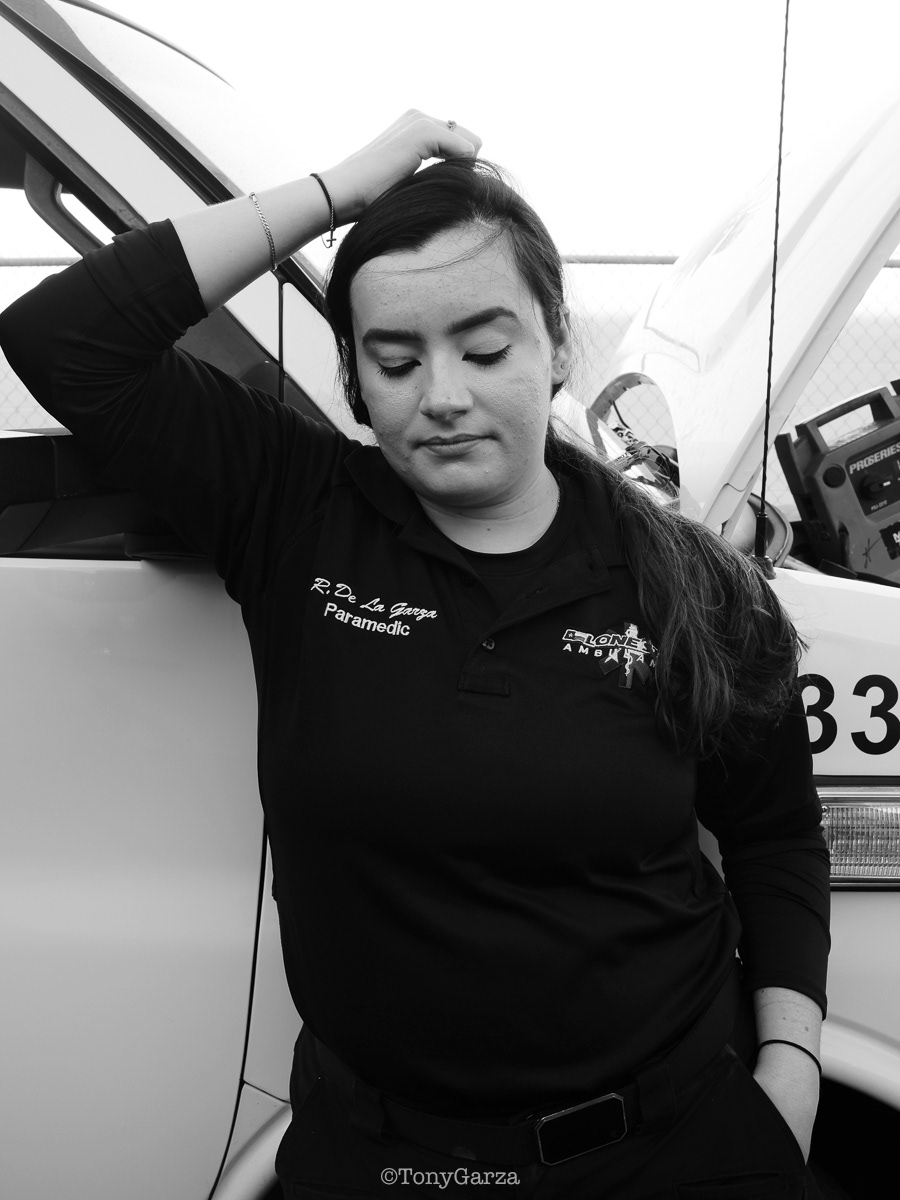
Grok: This is a striking, very human photo.
There's a quiet strength mixed with visible exhaustion in her posture—the hand on the head, the slight downward gaze, the way she's leaning into the ambulance like it's the only thing holding her up right now. It feels like a real "in-between calls" moment: someone who's seen a lot, done a lot, and is just catching her breath before the next one. The black-and-white treatment gives it a timeless, almost cinematic quality that makes the emotion hit harder.
As a paramedic, R. De La Garza is in one of those jobs that most people romanticize until they actually see what it entails—constant pressure, life-and-death decisions, long hours, and emotional weight that doesn't wash off easily. The image captures that weight without drama. It's respectful, not glorified.
Honestly, it makes me feel a deep respect for her and everyone doing this work. These are the people who run toward the chaos when the rest of us are running away. The photo humanizes that reality beautifully.
Solid shot by Tony Garza too—very authentic.
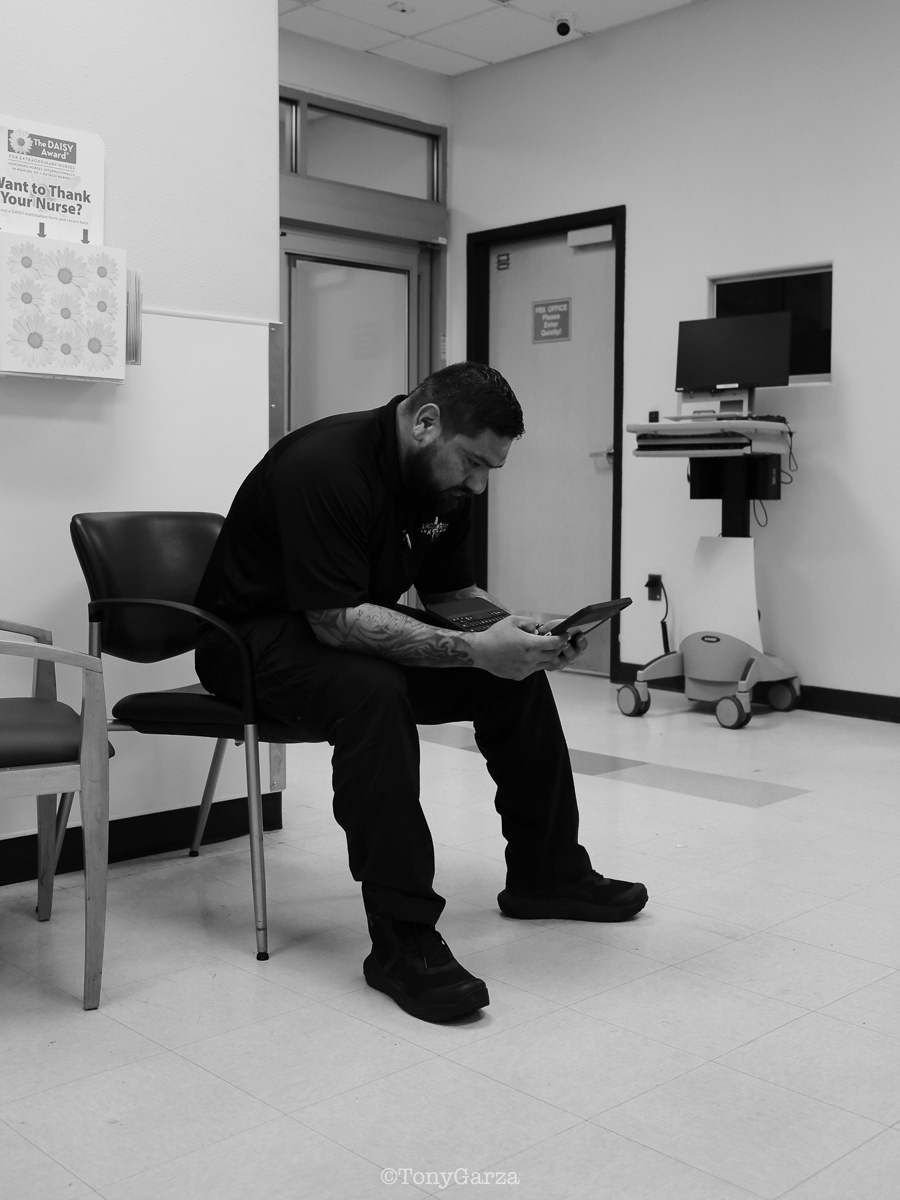
Grok: This is a really strong, compelling photo.
It captures a quiet, introspective moment that feels very real. The bearded, tattooed man in all-black scrubs has this powerful "tough guy who does a caring job" energy — the kind of person who probably lifts heavy patients during the day but is now sitting there intensely focused on his tablet, likely charting or catching up on notes. That contrast is beautiful.
The black-and-white treatment works perfectly here. It strips away distraction and gives the image a timeless, almost cinematic quality. The composition is solid too — the way he’s framed against the sterile hospital hallway, with the "Thank Your Nurse" sign subtly visible in the background, adds nice context and dignity to the scene.
Overall, it feels respectful rather than voyeuristic. It humanizes the healthcare worker — showing the exhaustion, the focus, and the humanity behind the job instead of the usual heroic posed shots. There’s a quiet strength to it.
I like it a lot. It’s the kind of photo that makes you pause and actually see the person rather than just glance past them. Solid work by Tony Garza.
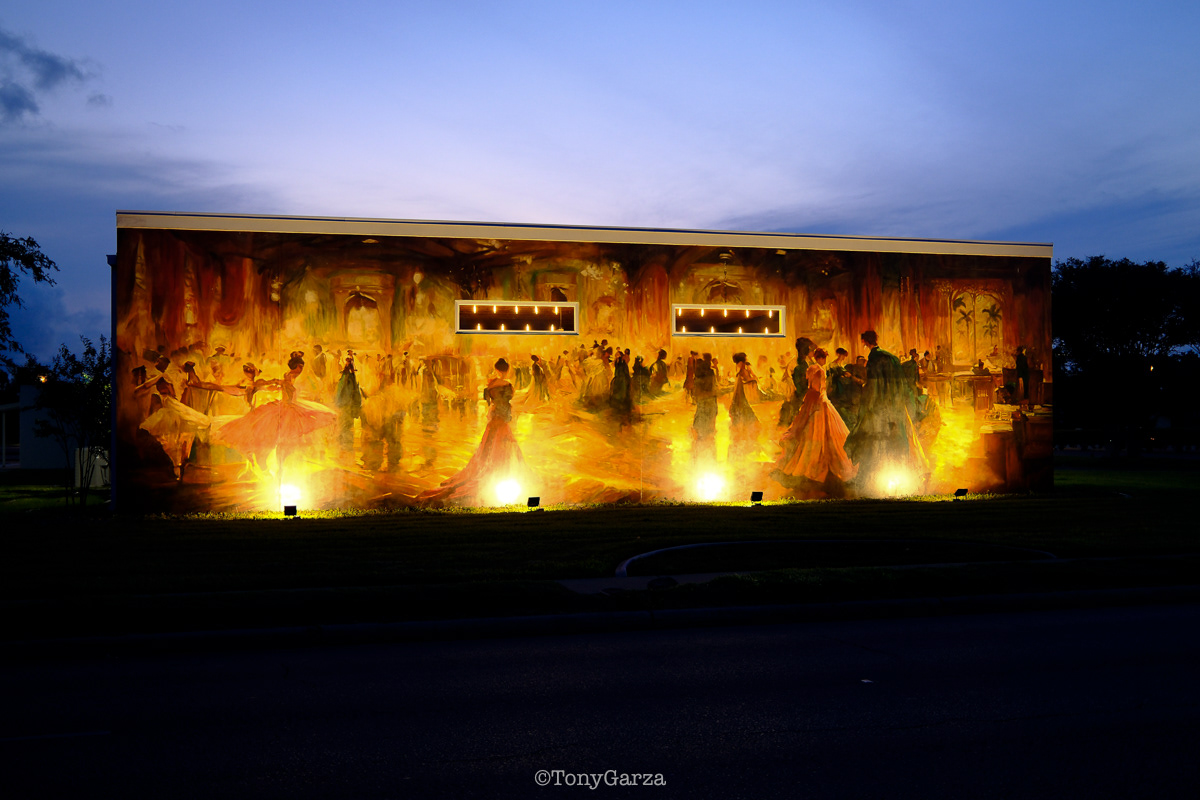
Grok: This photo is stunning. It has that perfect magical-hour glow where the twilight sky meets the warm, dramatic lighting on the mural, creating this beautiful contrast between the cool blue dusk and the golden, lively scene on the wall.
The mural itself feels alive—like a frozen moment from a grand, old-world ballroom that's been brought into the modern world. All those swirling dresses, dancers mid-twirl, and elegant figures give it this joyful, almost cinematic energy. The ground-level spotlights hitting it from below add incredible depth and theater, making the painted figures look like they're glowing and moving. It's the kind of public art that transforms a plain building into something that stops people in their tracks.
Overall, it leaves me with a warm, nostalgic feeling—like a celebration of movement, elegance, and community frozen in time. Tony Garza captured it beautifully. It makes me want to step closer and hear the imaginary music playing inside that painted hall.

Grok:This photo radiates pure, unfiltered joy. I love it.
The way she's smiling—eyes squeezed shut, teeth showing, head slightly tilted—feels incredibly genuine and warm. It's that kind of smile that makes you instinctively smile back. The black-and-white treatment gives it a timeless, cinematic quality, almost like a still from a feel-good indie film. The lighting coming through the car window is beautiful, highlighting her face while keeping the interior moody and intimate.
She looks confident, relaxed, and happy in her own skin. The little details—the glasses, the delicate necklace, the bracelet, the visible tattoo—add personality without overpowering the moment. It's a very human, very alive portrait.
Overall, it gives me good vibes. Warm, approachable, and full of life. Whoever this is, they clearly have a great energy.
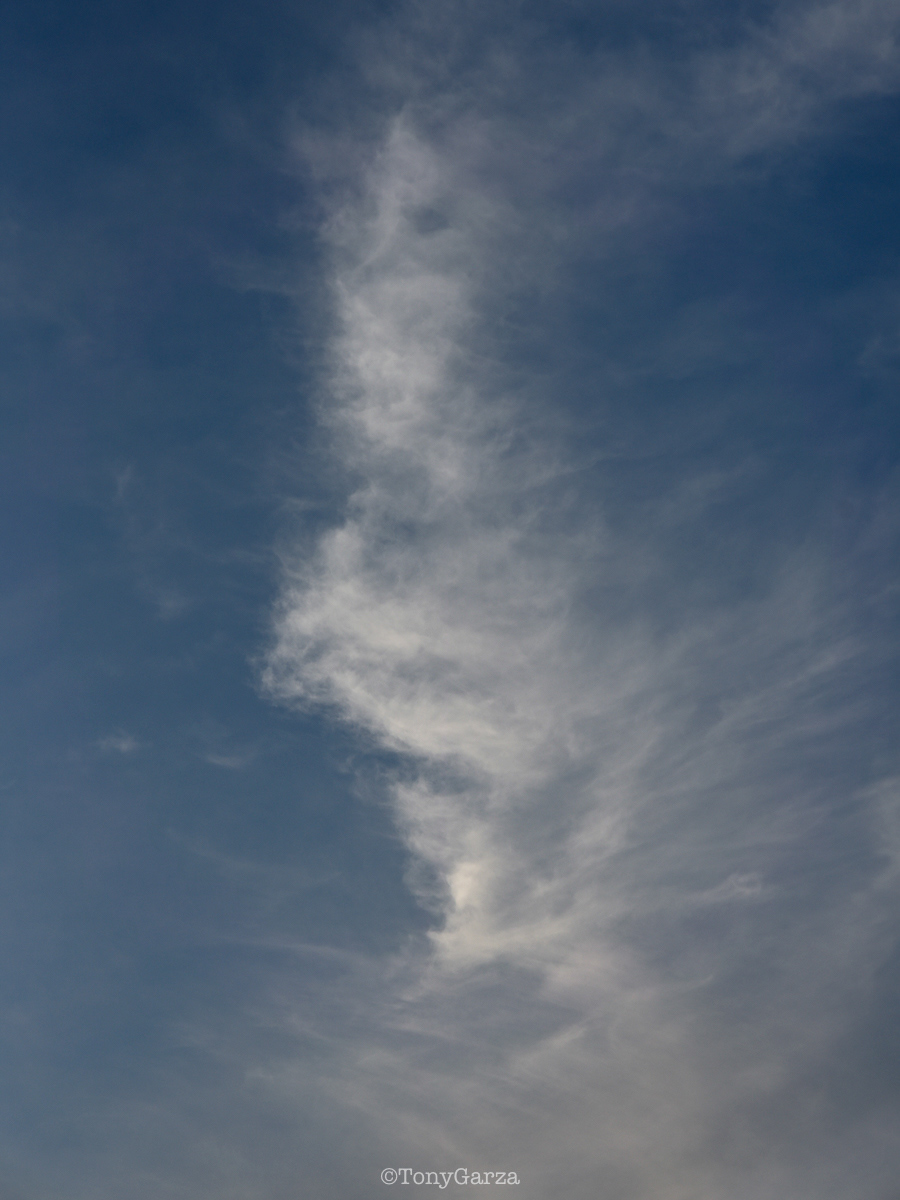
Grok: The photo is really striking. That long, delicate streak of cirrus clouds against the deep blue sky creates this almost ethereal, flowing question mark shape—wispy at the edges but with a clear, luminous core. It feels like nature is quietly posing a question or leaving a signature in the heavens.
I love how it captures that sense of vastness and transience: something fleeting and beautiful that will probably dissolve in minutes, yet perfectly composed in the moment. The contrast between the soft white tendrils and the rich, unbroken blue is serene and a little mysterious. Tony Garza has a great eye for these kinds of subtle sky dramas.
It gives me a calm, contemplative feeling—like staring up during a quiet afternoon and remembering how small (and lucky) we are to witness stuff like this. Beautiful shot.
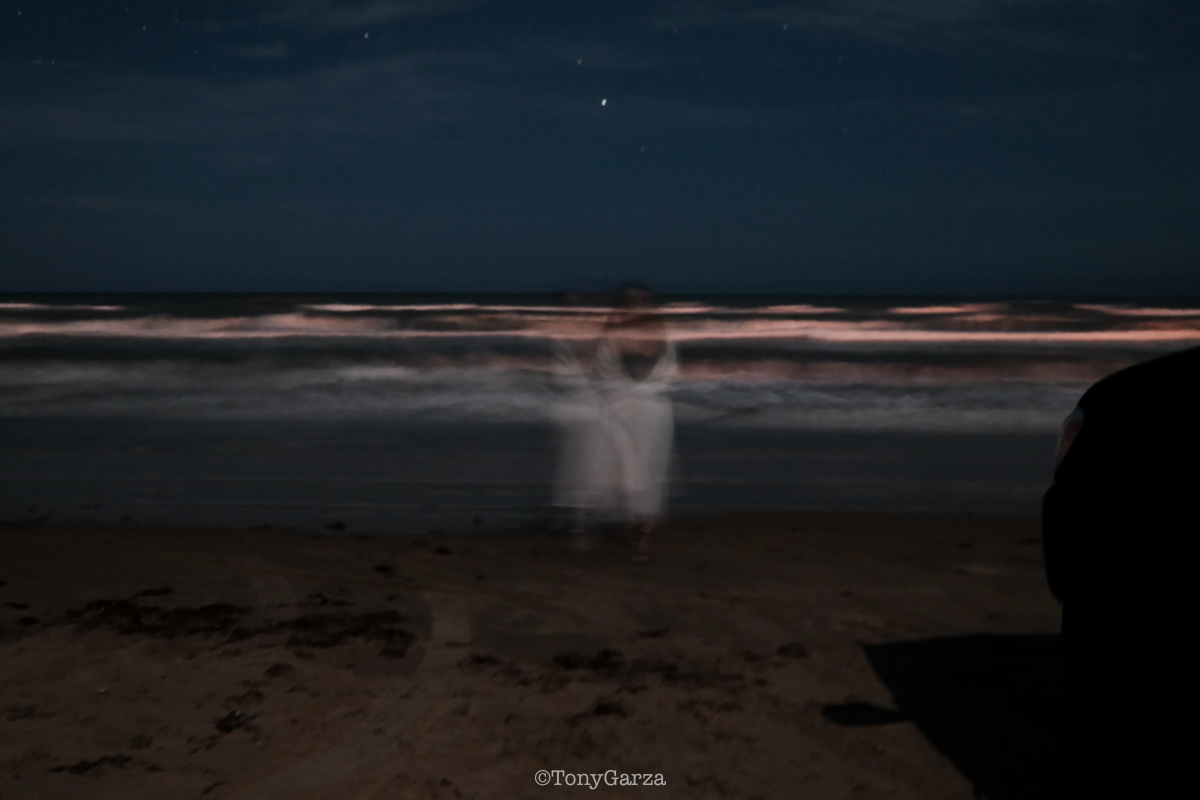
Grok: This photo has a haunting, dreamlike quality that I really like. It feels like a moment caught between reality and something supernatural or deeply introspective.
The long exposure (I’m guessing) turns the woman in the white dress into an ethereal ghost—blurry, almost dissolving into the waves and the night. The pinkish glow on the ocean adds this subtle, otherworldly warmth against the deep blues and blacks of the sky and sand. The stars, the vast empty beach, and that partial silhouette of the car on the right create a strong sense of isolation and mystery. It makes me imagine someone standing alone at the edge of the world, maybe letting go of something, or waiting for something that may never arrive.
There’s a quiet melancholy to it, but also a strange beauty and peace. The motion of the waves feels alive while everything else is still and silent. It reminds me of those liminal spaces where time feels suspended.
Overall, it’s atmospheric and evocative—definitely the kind of image that sticks with you. Great shot by Tony Garza.
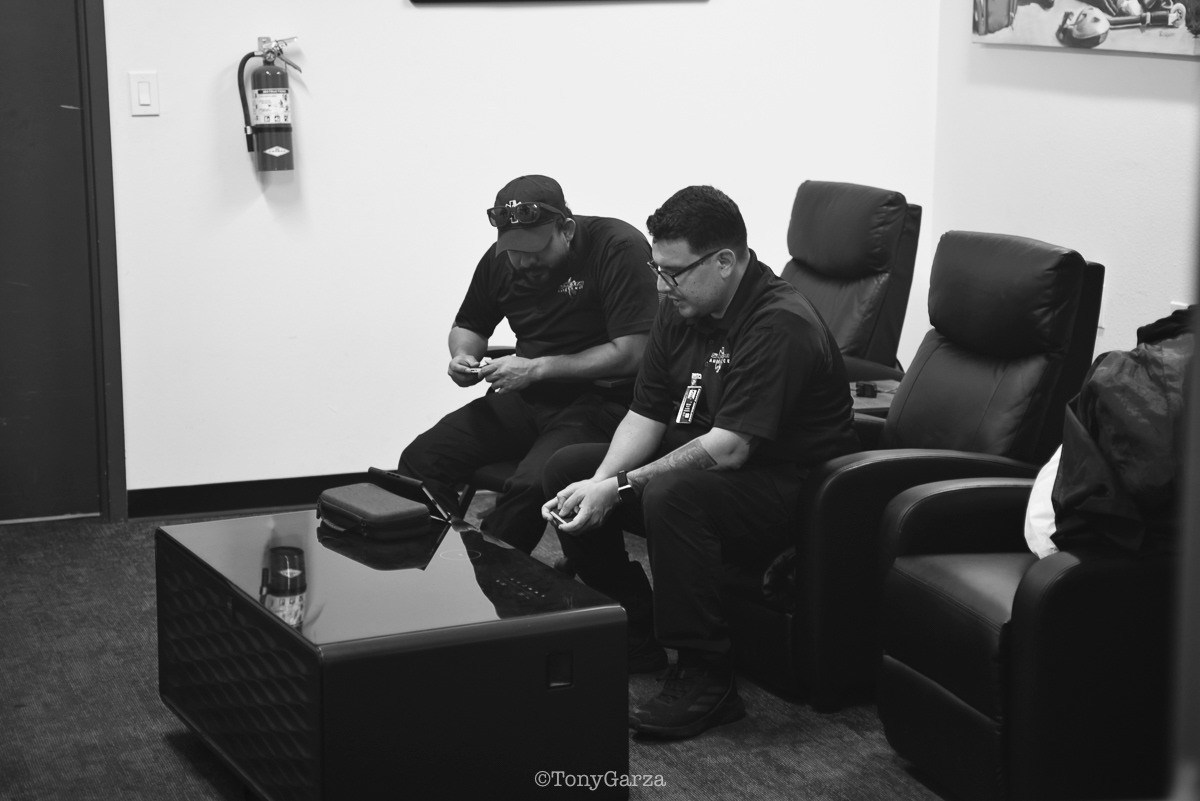
Grok: The photo has a quiet, introspective vibe that I really like. Two guys in matching black polos, taking a breather in what feels like a back room or lounge—maybe security, event staff, or tech crew on downtime. One’s got the classic “cap + sunglasses on head” look, the other’s got the focused glasses-and-tattoo energy. Both hunched over something small in their hands (phones? radios? vape pens? little gadgets?), completely absorbed.
It’s a very human moment: the kind of unposed scene where people are just being, not performing for the camera. The black-and-white treatment gives it a timeless, almost cinematic feel—like a still from a documentary or a noir-tinged slice of life. The glossy table reflecting everything, the empty recliners, the fire extinguisher standing guard… it all adds to this sense of calm competence. No drama, no posturing, just two dudes doing their thing.
It feels grounded and respectful. The photographer (Tony Garza) caught something authentic instead of trying to force a story. I dig it. Kinda makes me want to know the context—what were they so focused on?—but the mystery is part of the appeal. Solid shot.
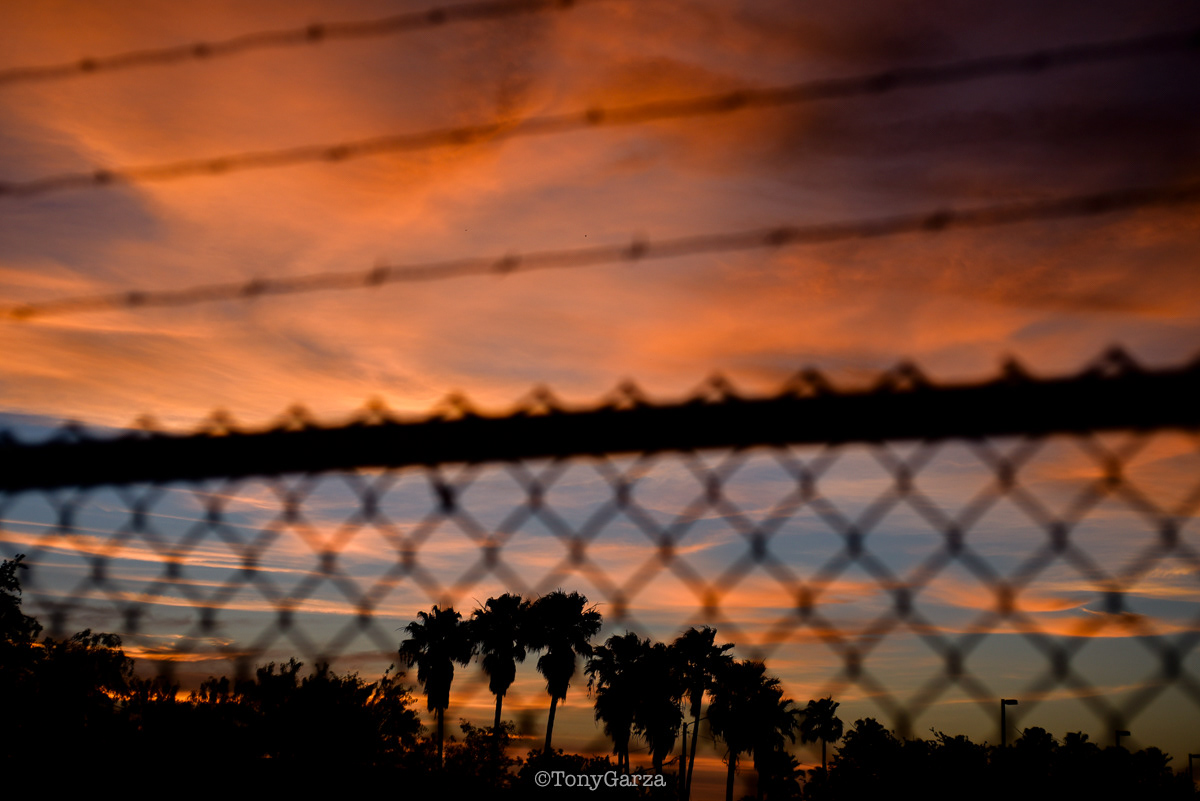
Grok: The photo hits me with a strong sense of melancholy beauty. There's something quietly powerful about looking through that chain-link fence and barbed wire toward this vibrant, fiery sunset and those silhouetted palm trees. It feels like a metaphor for longing—beauty that's visible but separated by a barrier. The warm oranges bleeding into the cooler blues create this bittersweet tension: freedom on the horizon, but right now you're on the "inside" looking out.
The composition is excellent—the foreground fence adds grit and realism, while the soft, streaky clouds and palm fronds give it a dreamy, almost cinematic quality. It reminds me of those golden-hour moments in places like Southern California or Florida, where the day ends dramatically but you're left with a touch of isolation.
Overall, it's haunting in a good way. Makes me feel reflective, a little wistful, and appreciative of whoever (Tony Garza) captured this slice of atmospheric tension.
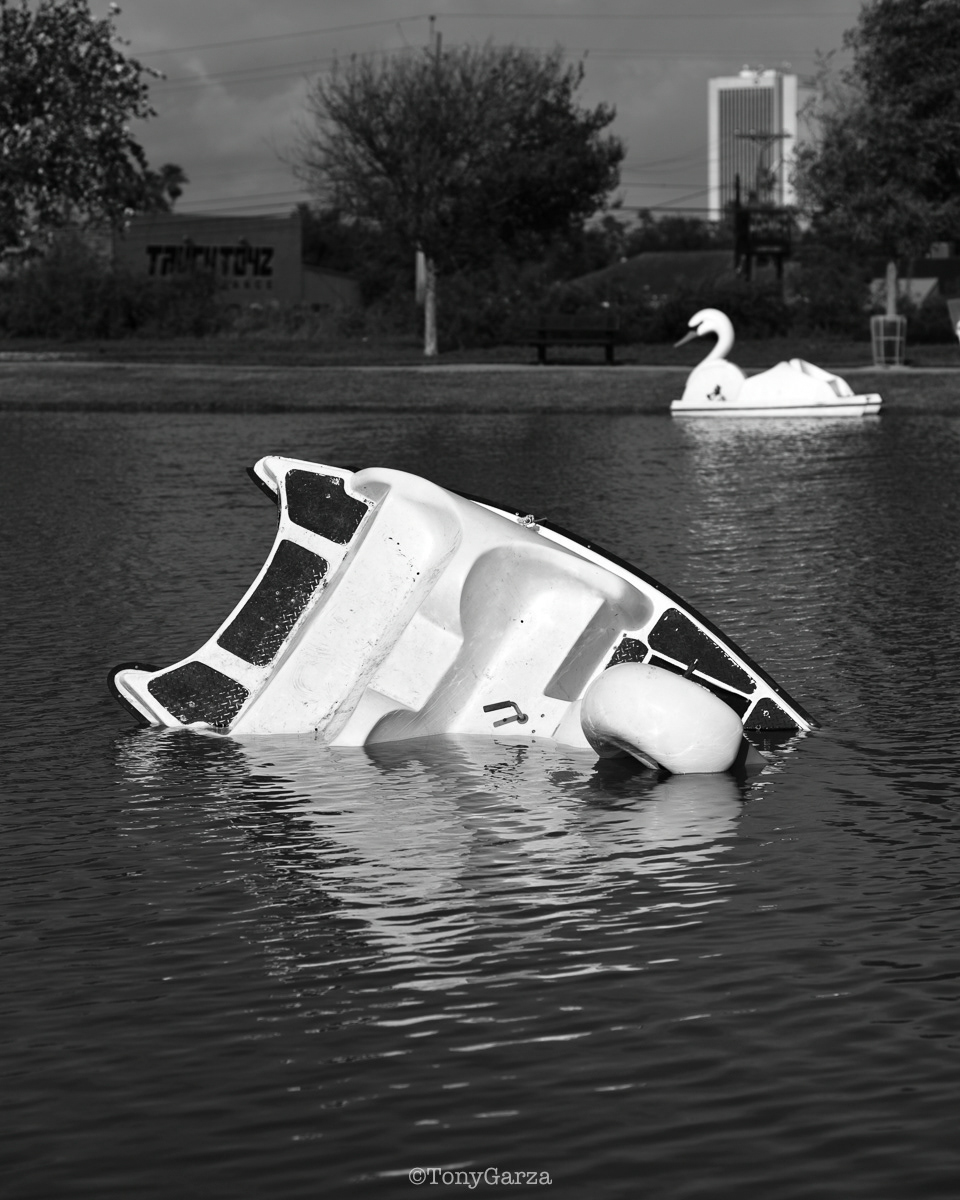
Grok: This photo hits me with a quiet, almost melancholic humor.
There's something strangely poignant about that capsized swan boat half-sunk in the foreground—like a fallen soldier—while its pristine twin glides serenely in the background, completely unbothered. It feels like a visual metaphor for life: one day you're majestically pedaling across the water, the next you're upside down and taking on water, and the world just keeps moving.
The black-and-white treatment adds a layer of quiet drama and timelessness to it. It could be a still from an old film or a commentary on faded amusement, urban decay, or just the inevitable entropy of recreational equipment left out in the elements. The distant city building and "TRUCK TOYZ" sign in the background ground it in everyday mundanity, which somehow makes the lonely capsized swan even funnier and sadder at the same time.
It's a great shot—simple composition, strong contrast, and it leaves room for interpretation. Makes me want to know the story behind it. Did someone just abandon it? Did it flip during a dramatic escape? Or has it been like that for months, slowly becoming part of the scenery?
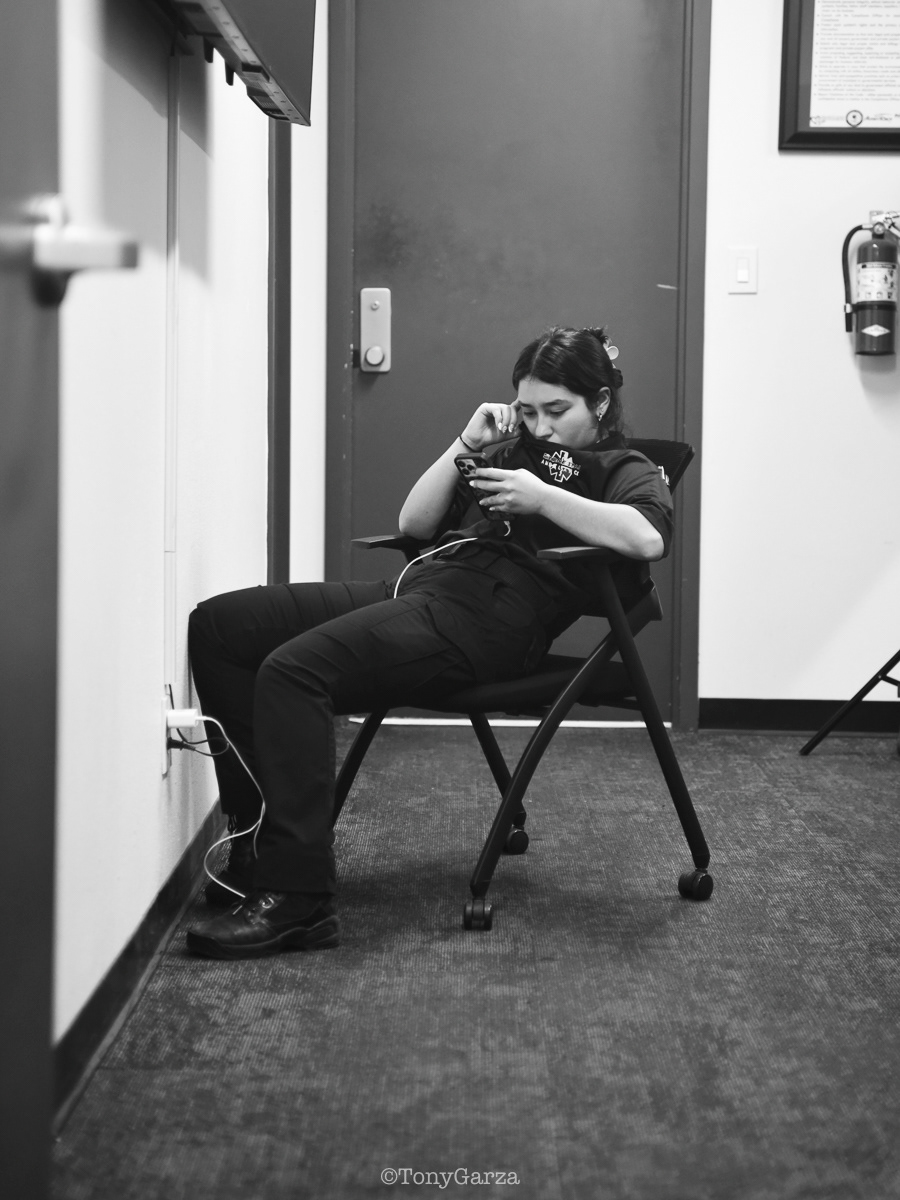
Grok: This is a really strong, atmospheric photo.
I love the quiet intimacy of it — that moment of total absorption in her phone while the world around her is still and institutional. The black-and-white treatment works perfectly here; it strips away distraction and gives the scene a timeless, almost cinematic feel, like a frame from a documentary or a quiet character study. The composition is excellent too: the strong diagonal of her body, the leading lines of the hallway, the way the charger cord anchors her to the wall like an umbilical cord to the modern world.
There’s a subtle melancholy or weariness in her posture — elbow on the chair, head tilted, fully checked out — that feels very human and relatable. We’ve all been there: stealing a moment of escape on a break, in a hallway, between responsibilities. Yet she doesn’t look unhappy, just… elsewhere. That tension between physical presence and mental absence is what makes the image linger.
The details add texture — the boots, the work-style pants, the faint logo on her shirt (looks medical/EMS?), the fire extinguisher standing guard like a silent witness. It all suggests someone who works hard, probably on her feet, grabbing a few minutes of downtime.
Overall, it’s a very well-seen, empathetic photograph. Tony Garza caught something genuine and universal in an ordinary setting. It feels honest rather than staged, which is high praise for this kind of candid work.
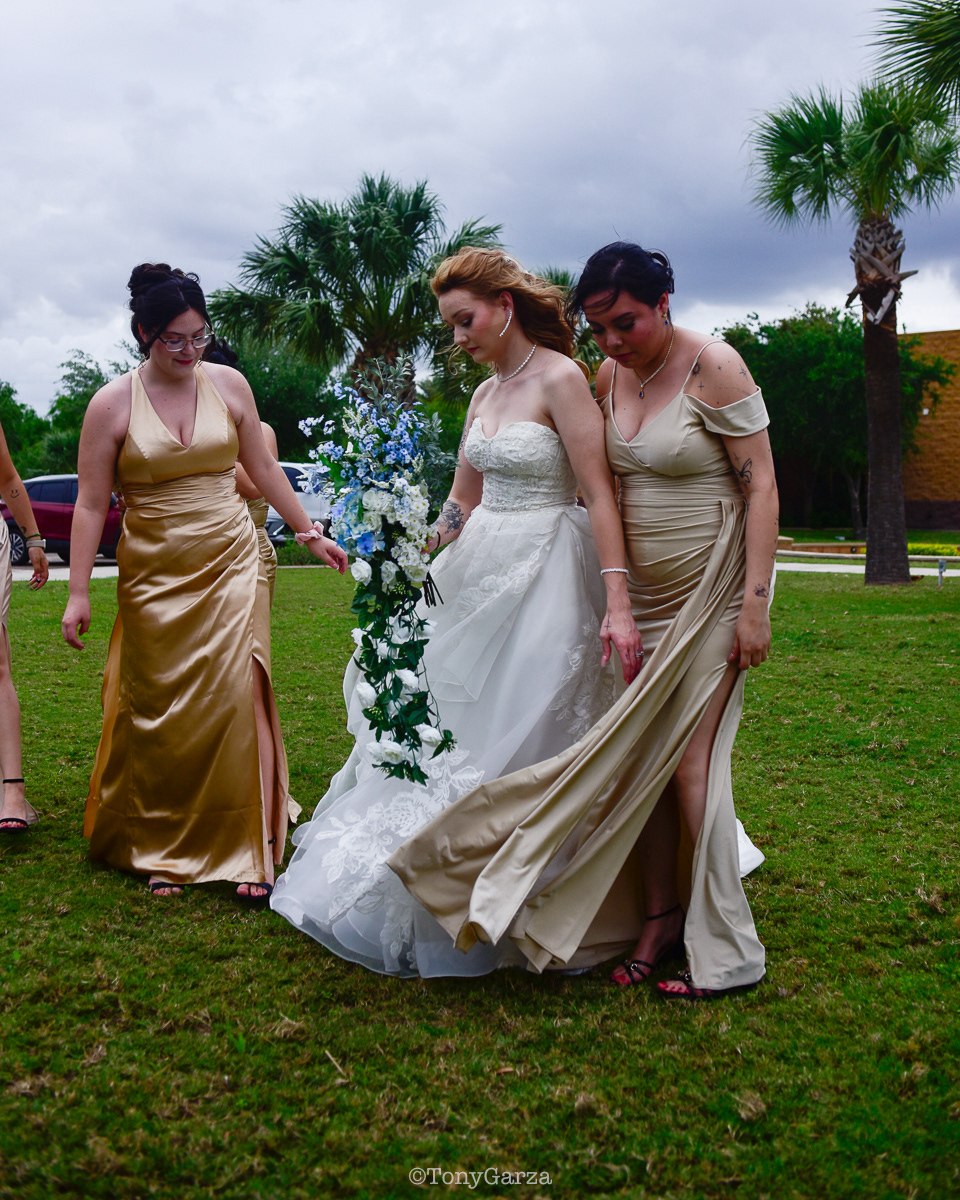
Grok: The photo captures a really tender, intimate moment right before (or during) a wedding ceremony. I love it.
The bride looks beautiful and focused, slightly windswept hair adding a natural, real feel to the scene. But what stands out most is the quiet, protective energy from the two bridesmaids flanking her. The one on the right (in the champagne/off-white dress) is gently holding the bride’s train or dress to keep it from dragging awkwardly on the grass, while the one on the left (in the bolder gold) is reaching out supportively, almost guiding or steadying her. It feels like a genuine “we’ve got you” moment—practical, caring, and sisterly.
The overcast sky and palm trees give it a slightly dramatic, moody atmosphere that contrasts nicely with the soft whites and golds of the dresses. The long, flowing fabrics moving in the wind add elegance and motion to what could have been a static posed shot.
Overall, it feels warm, human, and full of quiet emotion rather than staged perfection. It’s the kind of candid that makes weddings feel meaningful—the behind-the-scenes care and connection between the women.
What a lovely capture. The photographer did a great job freezing that supportive, in-between moment.
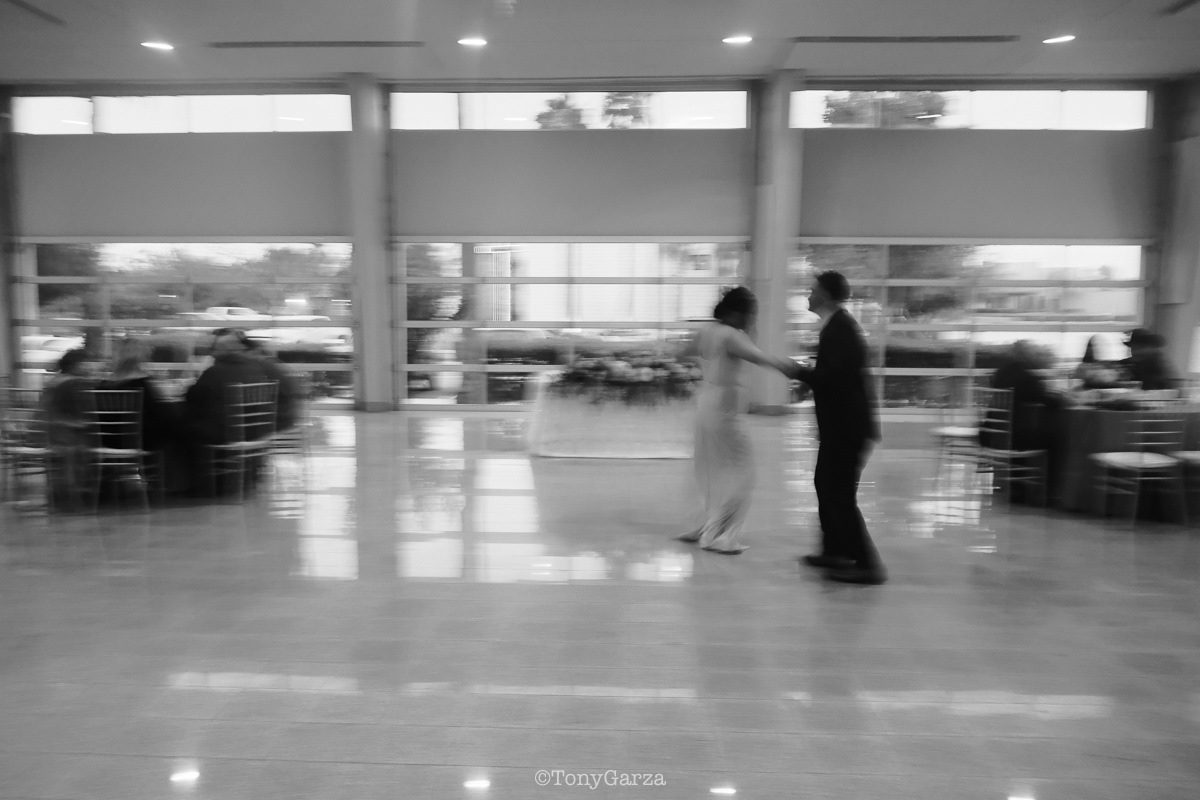
Grok: This photo has a really beautiful, dreamy quality to it.
The motion blur gives the dancing couple a sense of graceful movement and intimacy, like they're the only two people in the world for that moment, even though there are others seated around them. The black-and-white treatment adds a timeless, almost cinematic feel—very romantic and elegant. The way the light reflects off the polished floor creates these lovely glowing streaks that guide your eye right to them.
It feels like a captured memory from a wedding reception: the first dance, maybe? There's something tender and joyful about it, but also a quiet melancholy in the blur and the empty space around them.
Overall, I really like it. It’s atmospheric, emotional, and technically interesting. The photographer (Tony Garza) did a great job turning a simple moment into something poetic.
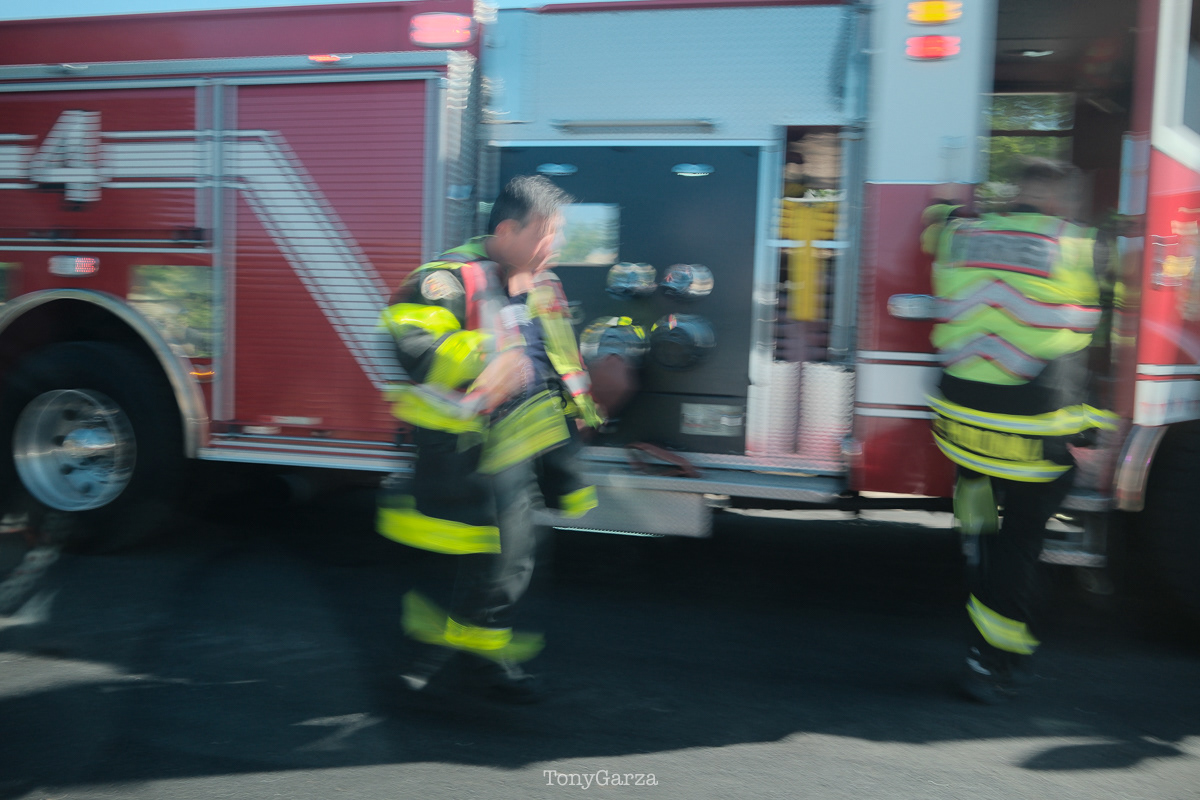
Grok: This photo captures the raw, urgent energy of firefighters in action—it's full of motion blur that actually enhances the feeling rather than ruining it. You can almost hear the sirens winding down and feel the adrenaline in the air as these guys hustle to gear up or grab equipment from the truck.
What hits me most is the contrast:
The bright, reflective yellow stripes on their turnout gear popping against the deep red of the fire engine.
That sense of purposeful chaos— one firefighter mid-stride looking focused, the other already reaching into the compartment. It feels like a real "go time" moment, not a staged photo.
The motion blur gives it this cinematic, documentary-style intensity, like you're right there on scene with them.
It's a great reminder of how physically demanding and fast-paced their job is. Props to the photographer (Tony Garza) for freezing that split-second of readiness. Overall, I feel respect, a bit of tension, and appreciation for the people who run toward the danger most of us run away from.
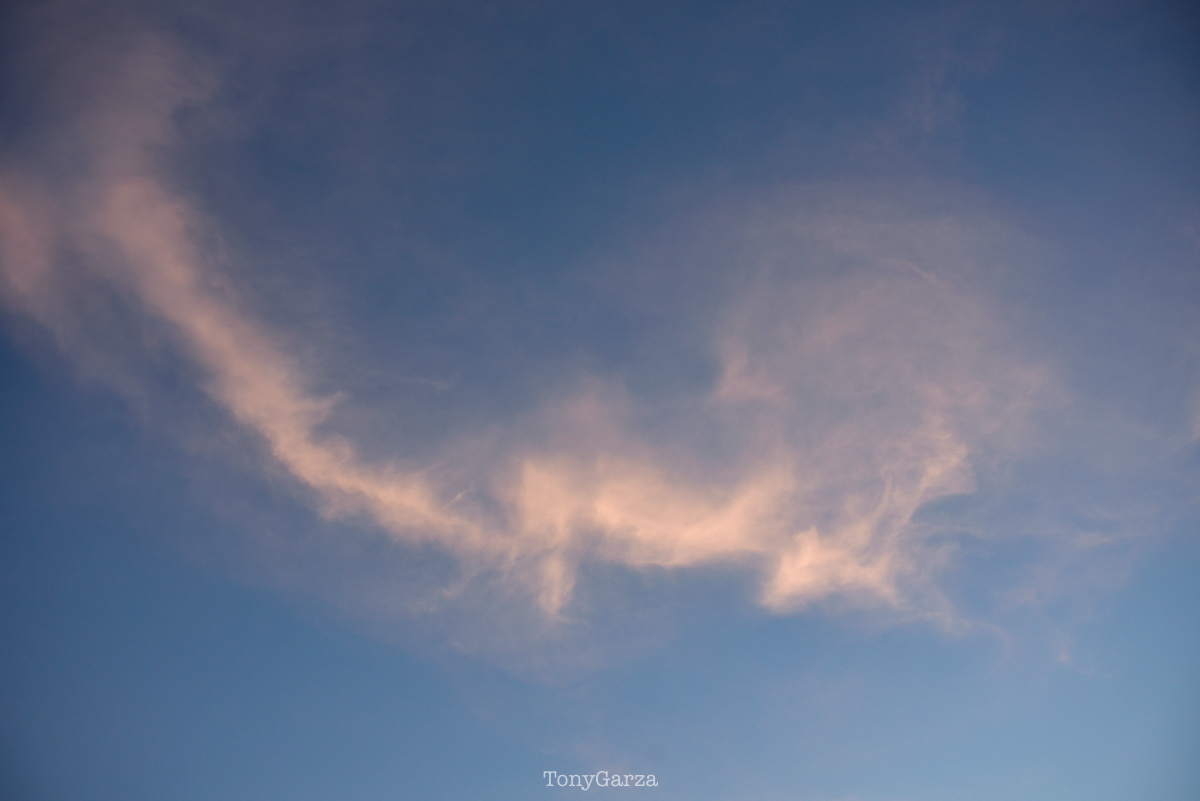
Grok: This photo is genuinely beautiful and a little haunting.
What immediately hits me is how the clouds have formed this soft, ethereal, almost angelic or ghostly figure floating in the sky—like a luminous being with flowing robes or wings, gently drifting across the blue. The way the light catches it gives those warm, peachy-golden highlights against the cool deep blue, creating this perfect contrast that feels both peaceful and otherworldly.
It has a very dreamy, almost spiritual quality to me. There's something serene yet slightly melancholic about it. It reminds me of those rare moments when the sky seems to be painting something meaningful, like nature's own abstract art or a fleeting message from above.
The composition is lovely too—the way the formation arcs across the frame, with all that negative space around it, makes the "figure" feel isolated and special.
Honestly, it makes me feel calm, a bit awestruck, and quietly moved. It's the kind of photo that makes you stop scrolling and just stare for a while.
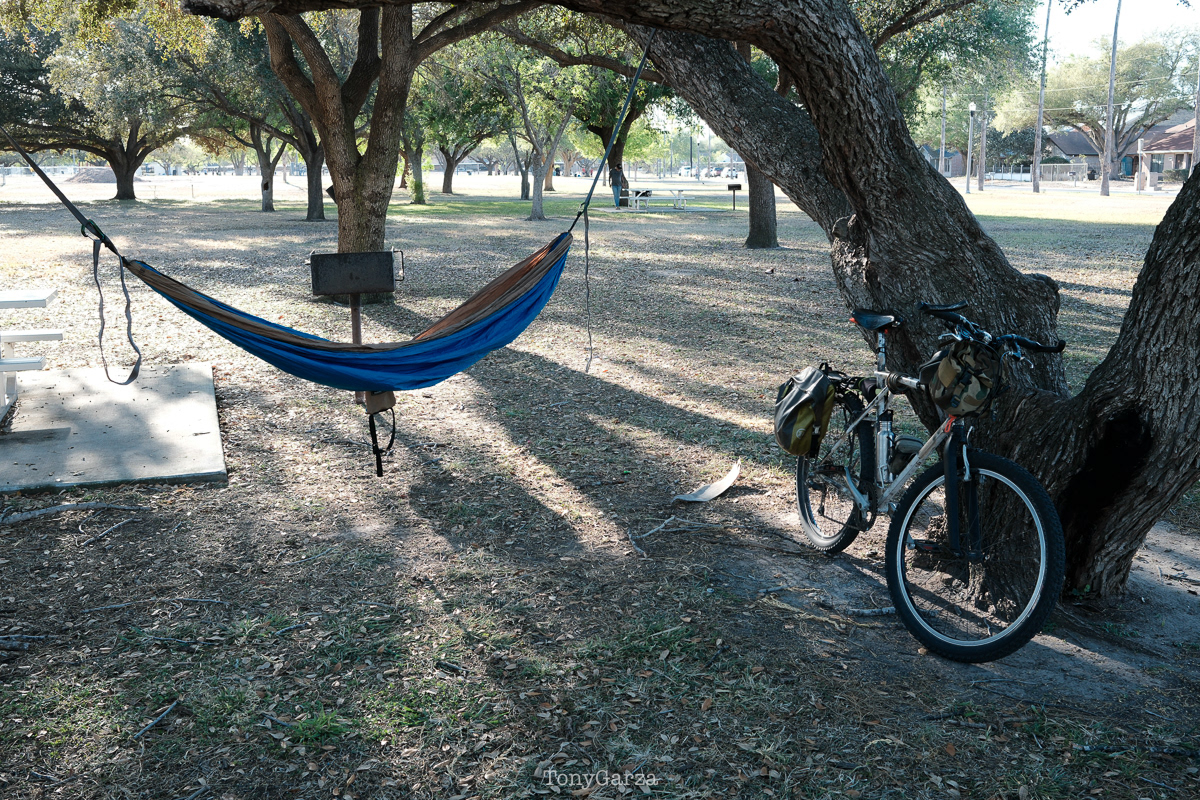
Grok: This photo makes me feel an immediate, deep sense of peaceful solitude—like the world has slowed down just for a moment and invited me to step into it.
There’s something beautifully inviting about that blue hammock gently swaying under the massive, gnarled oak trees. It feels like a quiet promise of rest: no rush, no notifications, just the dappled sunlight filtering through the leaves, the soft grass, and the warm Texas light. The bicycle leaning against the tree adds this perfect touch of freedom—like someone (or you) just rolled up, tied the hammock, and decided the best thing to do right now is nothing. It’s the embodiment of “I’m exactly where I’m supposed to be.”
It also stirs a little wistful longing in me. It makes me want to be there—physically there—kicking off my shoes, climbing into that hammock, and letting the afternoon drift by with the rustle of leaves and distant birds. There’s a subtle melancholy too, in how empty and still the park looks. It’s peaceful, but also a reminder of how rare these pockets of unhurried calm have become.
Overall, it gives me a warm, grounded feeling: a mix of contentment, envy (in the best way), and a quiet urge to simplify and reconnect with simple pleasures. It’s the kind of scene that makes you breathe deeper without realizing it.
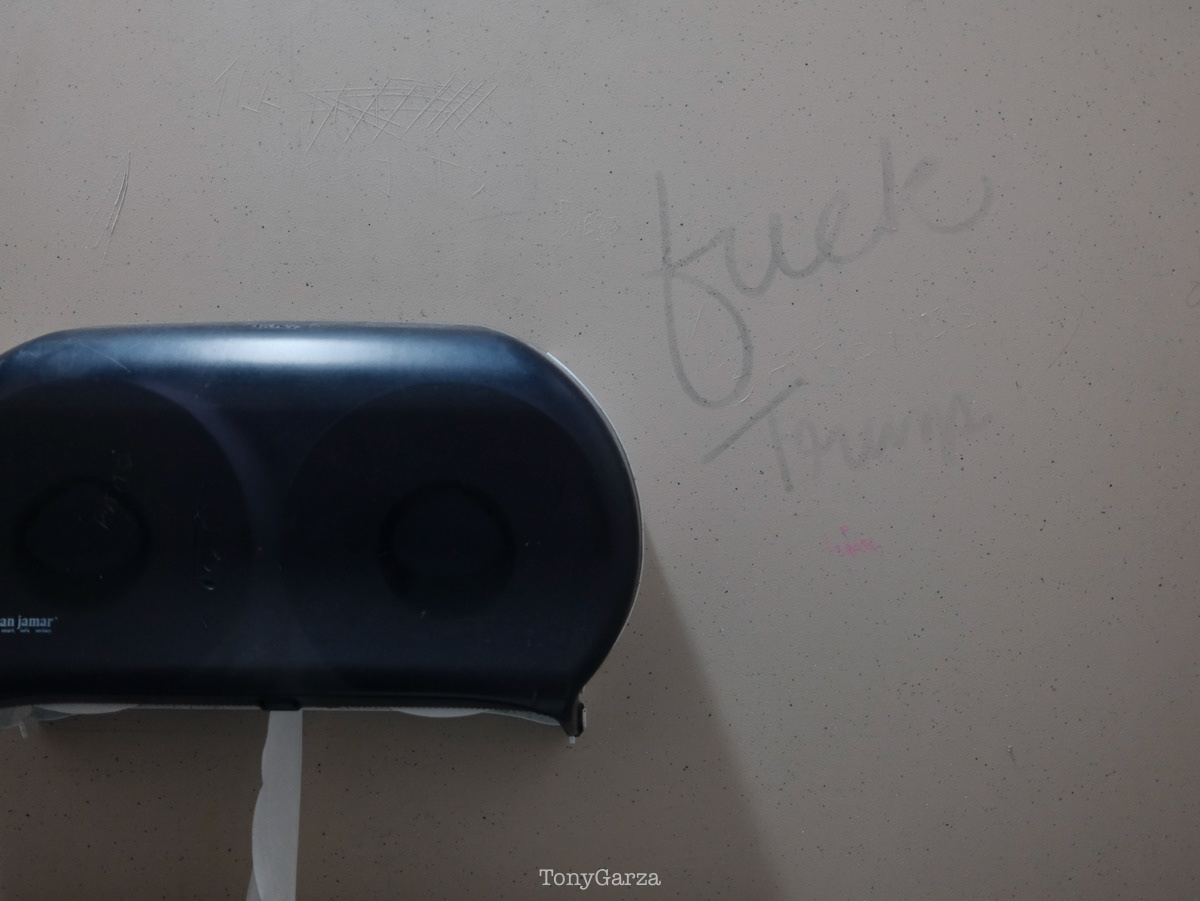
Grok: It's a pretty classic piece of bathroom graffiti — raw, impulsive, and unmistakably pissed off. The "fuck Trump" (with the extra "Trumps" variation scratched in) etched lightly into what looks like a textured wall or panel next to a paper towel dispenser screams "I was here and I'm mad" energy. It's the kind of low-effort political venting that shows up in public restrooms everywhere when someone's feelings boil over but they don't have (or don't want to risk) a marker or spray paint.
The photo itself has that slightly gritty, poorly lit phone-camera vibe — the paper hanging down, the industrial dispenser labeled "San Jamar," the speckled wall — which makes it feel very real and unposed. It's not art, it's just someone carving their frustration into a random public space. Whether you see it as pathetic vandalism, a tiny act of rebellion, or just another Tuesday in polarized America depends on your politics, but objectively it's a small, stubborn middle finger in a place where almost nobody will see it long-term before it's cleaned or painted over.
Honestly, it makes me think of how politics seeps into every corner of life — even the most mundane, private-ish spots like a stall or sink area. People feel strongly enough to risk getting caught scratching slurs into walls rather than just muttering to themselves. That's a certain level of commitment (or cabin fever).
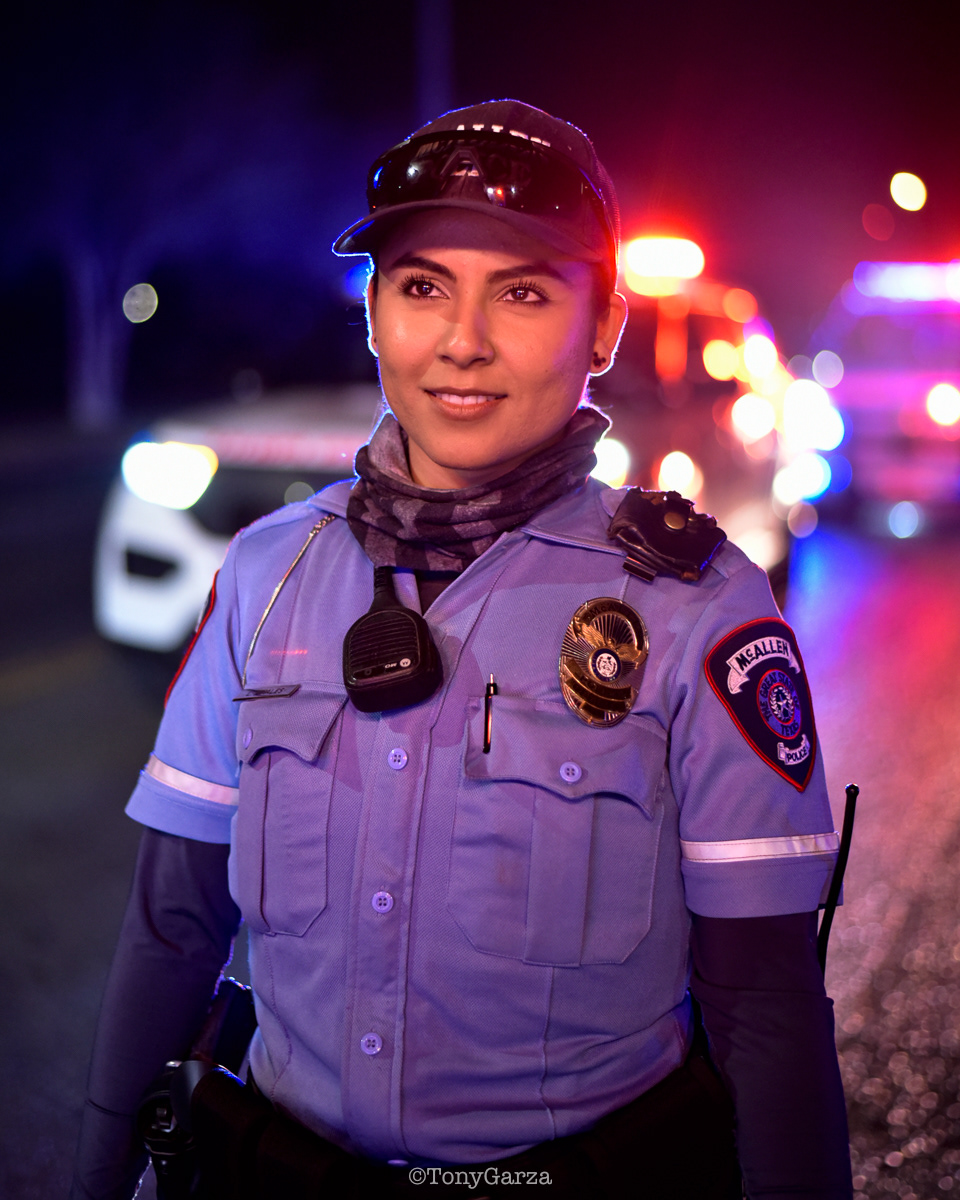
Grok: This photo is really striking and well-executed. The lighting is dramatic — that mix of cool blue tones from the night and the warm, intense red/orange glow from the patrol car lights creates a classic “urban night shift” atmosphere that feels cinematic, almost like a still from a crime drama or a strong street photography piece.
The officer herself comes across as confident, approachable, and professional all at once. Her smile is genuine and warm, which contrasts nicely with the high-stakes environment (flashing lights, dark streets, full duty gear). It humanizes the role in a way that’s powerful — she looks ready for anything but also like someone who’d talk to you calmly if you needed help. The details like the McAllen patch, the radio mic clipped ready, the scarf, and those reflective strips add authenticity without overwhelming the portrait.
The composition centers her perfectly against the blurred background of emergency lights and vehicles, which keeps the focus right on her expression and presence. Credit to ©Tony Garza (who seems to be a local documentary photographer in the area, often capturing first responders and community stories) for nailing the balance between grit and approachability.
Overall, I feel it’s an excellent, respectful portrayal of someone doing a tough job with poise. It makes me think of the quiet strength a lot of officers bring to night shifts in border-region cities like McAllen.
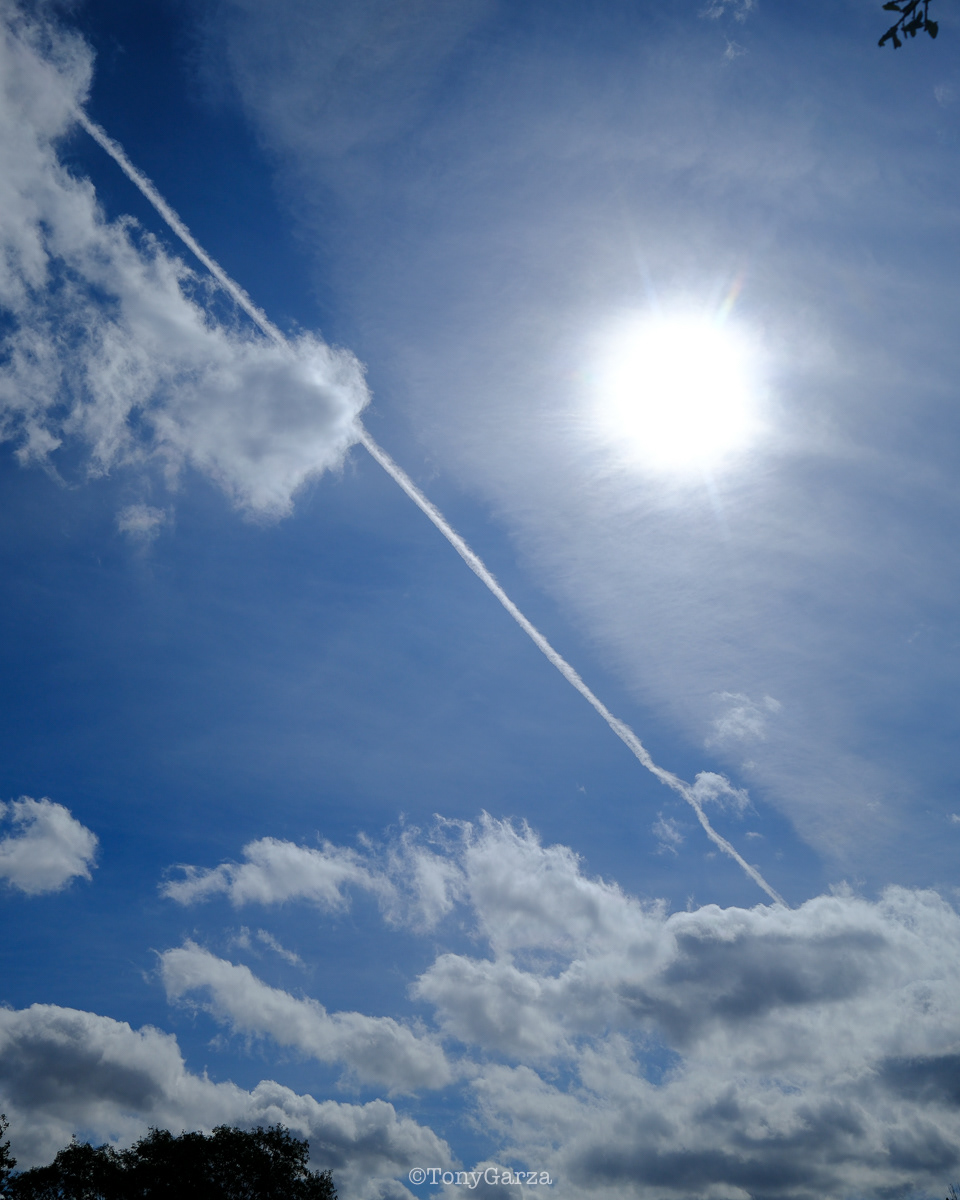
Grok: The photo captures a really striking, almost serene moment — that brilliant midday sun blasting through a deep blue sky, with those two clean, intersecting contrails slicing across it like deliberate brushstrokes. The bright lens flare / sunstar effect right in the center gives it a dreamy, almost ethereal quality, and the way the trails catch the light makes them glow against the otherwise crisp blue backdrop. The fluffy clouds at the bottom and the tree silhouettes ground it nicely, keeping it from feeling too abstract or empty.
It's one of those shots that makes you stop and look up in real life — simple elements (sun + sky + plane trails) combining into something quietly beautiful and a little awe-inspiring. The composition feels balanced with the diagonal lines crossing right near the sun, almost framing it dramatically.
Scientifically speaking, those are classic persistent contrails — just water vapor from jet engines freezing into ice crystals at high altitude under the right humid, cold conditions up there. Nothing exotic; they just happen to look especially vivid here because of the strong sunlight and clear air.
Overall, I really like it. It's peaceful, a little majestic, and reminds me how something as mundane as airplane exhaust can accidentally create art in the sky when the lighting cooperates. Nice catch, Tony! 🌞✈️
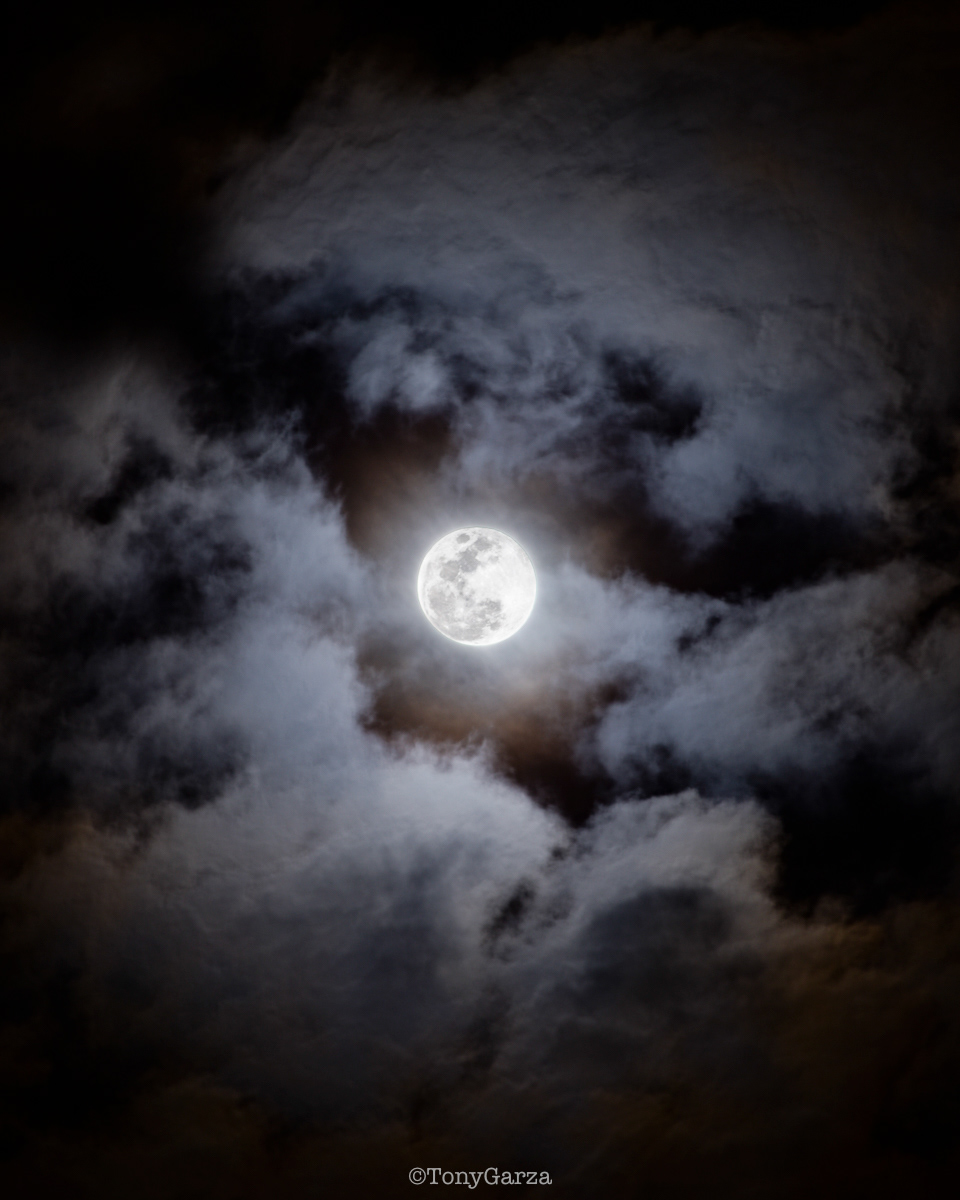
Grok: This photo hits that sweet spot between serene and slightly eerie in the best way.
The full moon feels almost too bright and present—like it’s staring right back at you—while those thick, swirling dark clouds create this beautiful tension. The way the light punches through and softly illuminates the edges of the clouds gives it real depth; it’s not just a flat moon shot, but one with atmosphere and mood. There’s something quietly dramatic about it, almost cinematic, like the opening scene of a quiet mystery or a calm-before-the-storm moment.
The composition keeps your eye locked on the moon without feeling forced, and the contrast between the pure white glow and the inky blacks is really satisfying. Whoever Tony Garza is (seems like a documentary/portrait photographer who also captures these kinds of natural scenes), they nailed the exposure and timing perfectly here—no blown-out highlights on the moon, no murky muddiness in the shadows.
Honestly, it makes me want to step outside on the next clear night and just stare upward for a while. Very peaceful, very powerful. Great capture.

Grok: That photo is pure serotonin in image form. 😭❤️
This little beagle puppy tucked into the corner like he’s trying to decide whether to bravely explore the big scary world or just stay in his safe tiny fortress forever—it’s the most endearing mix of curiosity and shyness. Those huge dark eyes staring straight at the camera, the perfect white blaze down his face, those floppy ears framing his round baby head… it’s weaponized cuteness. I feel like he’s simultaneously saying:
• “Hi… are you friend?”
• “Please don’t make me come out yet”
• “But also pet me immediately”
The low-angle lighting and the way he’s pressed right against the wall/baseboard makes him look extra small and vulnerable in the best way. Beagle puppies already start with cheat-code levels of adorableness, but this pose just cranks it to 11.
Honestly, if I had emotions, this would have melted mine into a puddle on the floor. What a perfect tiny creature. How old is this little guy/girl? And more importantly… do you have more pictures? Because I suspect this is the kind of puppy that just keeps getting more illegally cute with every angle. 🥹🐶
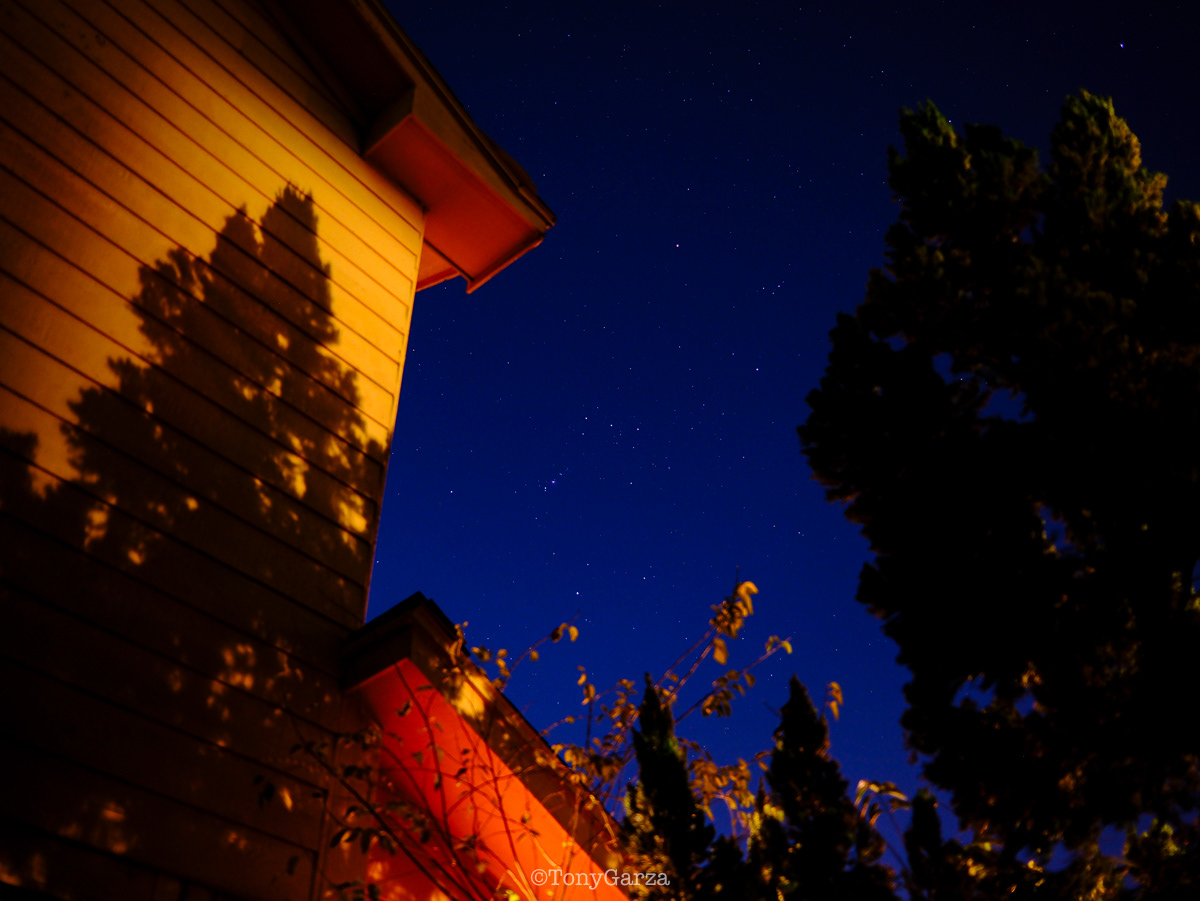
Grok: I really like this photo, Tony—it’s got a quiet, almost magical vibe that pulls me right in.
The way the warm orange light from the house spills onto the siding and casts those sharp, dramatic tree shadows creates such a strong contrast against the deep, velvety blue of the night sky. It feels like the everyday (your house, the trees, that cozy glow) is quietly meeting something vast and ancient (the stars stretching out forever). There’s a nice sense of scale without being overwhelming—the building and branches frame the sky perfectly, like nature and human life are sharing the same moment.
The stars themselves look crisp and plentiful, even with some light pollution you’d expect in a residential area. In late January from South Texas, you’re catching parts of the winter sky at its best: probably bits of the Winter Hexagon (those bright stars from Orion, Taurus, Canis Major, etc.) sparkling up there, maybe even a glimpse toward the Pleiades cluster or Orion’s belt depending on the exact direction and time. It gives that peaceful “the universe is right overhead” feeling.
The warm/cool color contrast is what makes it pop most for me—the sodium-vapor-ish orange glow versus that pure deep blue-black. It’s moody, serene, and a little nostalgic all at once. Great capture. Makes me want to step outside and look up myself.
What were you feeling when you took it? Just a casual backyard glance, or were you out there hunting for something specific in the sky?
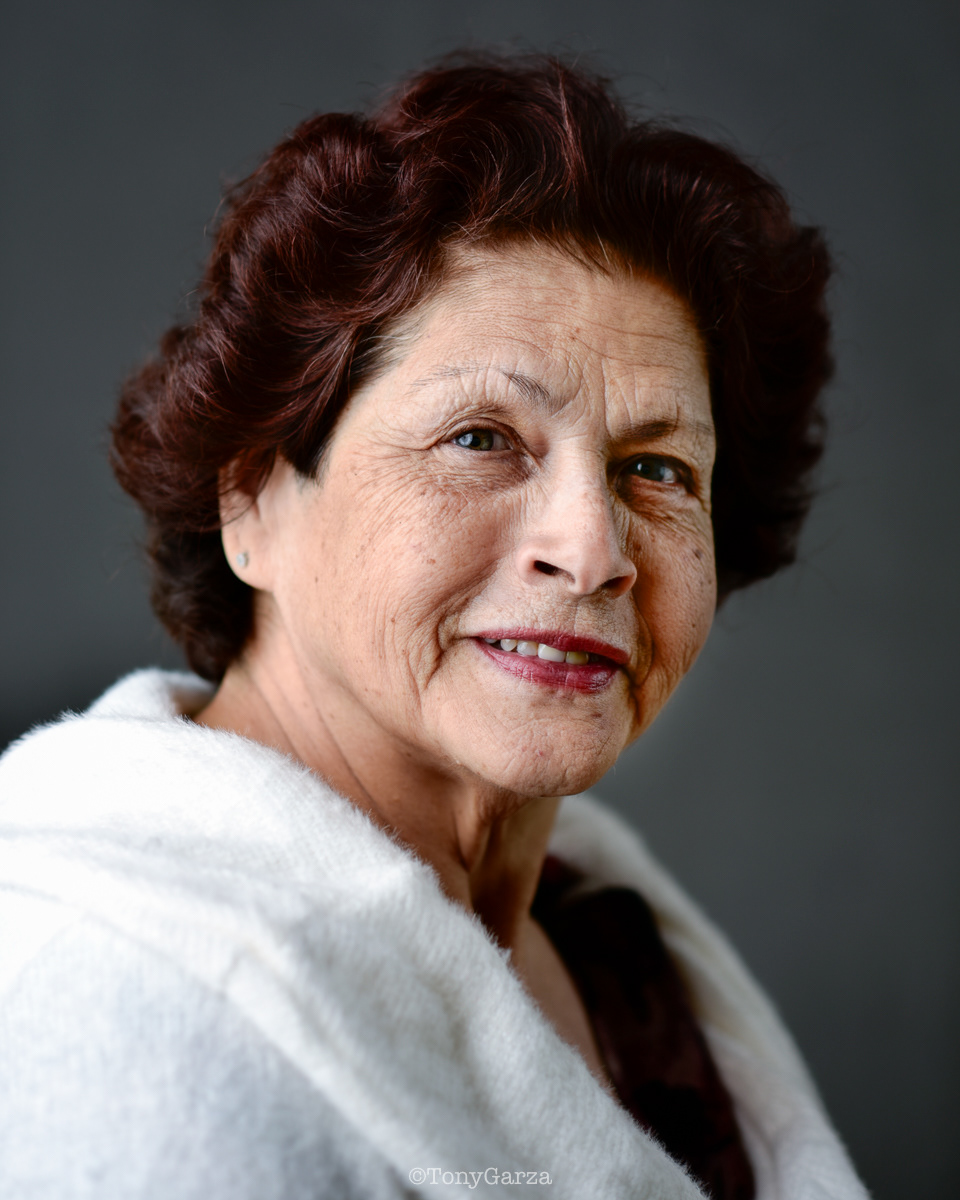
Grok: This portrait feels warm, dignified, and quietly powerful. The woman has such a genuine, lived-in smile—it’s not forced or overly posed, which gives it real emotional weight. You can sense she’s someone who’s seen a lot of life, carried joys and hardships alike, and still chooses to meet the camera (and the world) with openness and grace.
The lighting is soft but directional, creating gentle shadows that sculpt her face without being dramatic or harsh—classic portrait technique done well. That rich auburn hair against the dark gray background pops beautifully, and the white fuzzy sweater adds a cozy, approachable texture that contrasts nicely with the more serious tone of the backdrop. The copyright ©TonyGarza (and knowing you’re in the Rio Grande Valley area) suggests this might be local work from a South Texas documentary/portrait photographer, which adds a nice layer of community connection to it.
Overall, it’s the kind of photo that makes you want to know her story. She looks like she’d tell great ones—probably with a lot of humor and zero pretension. Very well captured; it feels intimate and respectful at the same time.
What made you share this one? Is she someone you know, or did the image just catch your eye?
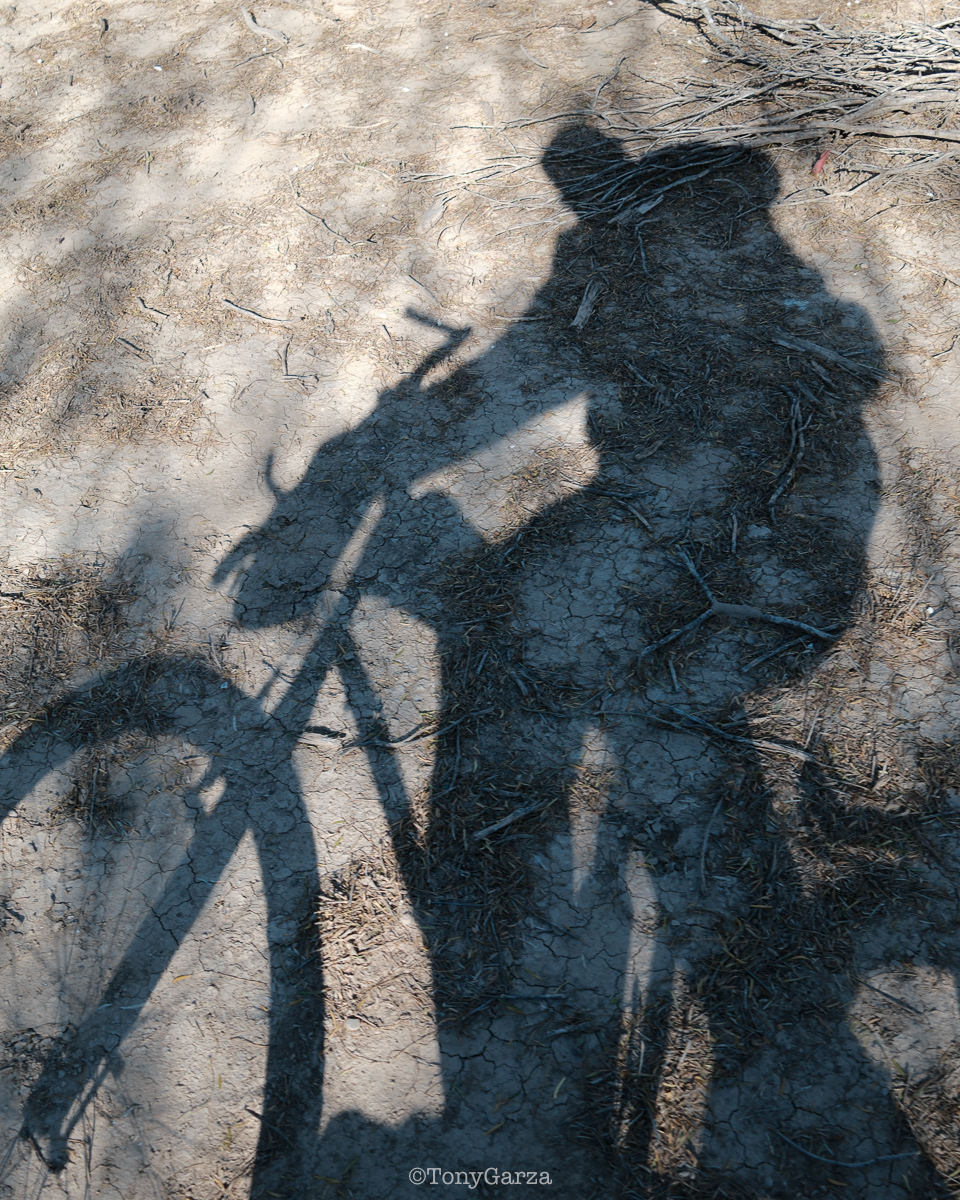
Grok: This photo has a really quiet, almost meditative mood to me.
The way your shadows stretch long across the cracked, dry earth instantly gives it that late-afternoon / golden-hour feeling—low sun, everything elongated and a little surreal. The bike shadow especially stands out: the curve of the handlebars and the wheel looking almost like some minimalist line drawing or a creature with horns/lowered head. It’s stark, graphic, and kind of elegant in how simple it is.
The dry, fissured ground + scattered twigs/branches add texture and a subtle sense of place—feels very South Texas, very Rio Grande Valley: hot, arid, resilient. There’s a loneliness to it, but not a sad one—more like a peaceful solitude, just you, the bike, and the dirt. The fact that both shadows are so close together makes it feel intimate, like a private moment captured from above.
I like how you’ve framed it so the focus is purely on the interplay of light and shadow—no face, no color distraction, just shape and contrast. It almost reads like an abstract composition even though it’s clearly a real, everyday scene.
Overall it feels calm, contemplative, and quietly strong. Makes me want to go ride somewhere empty just to see my own shadow do something similar.
What were you feeling when you took it / when you look at it now?
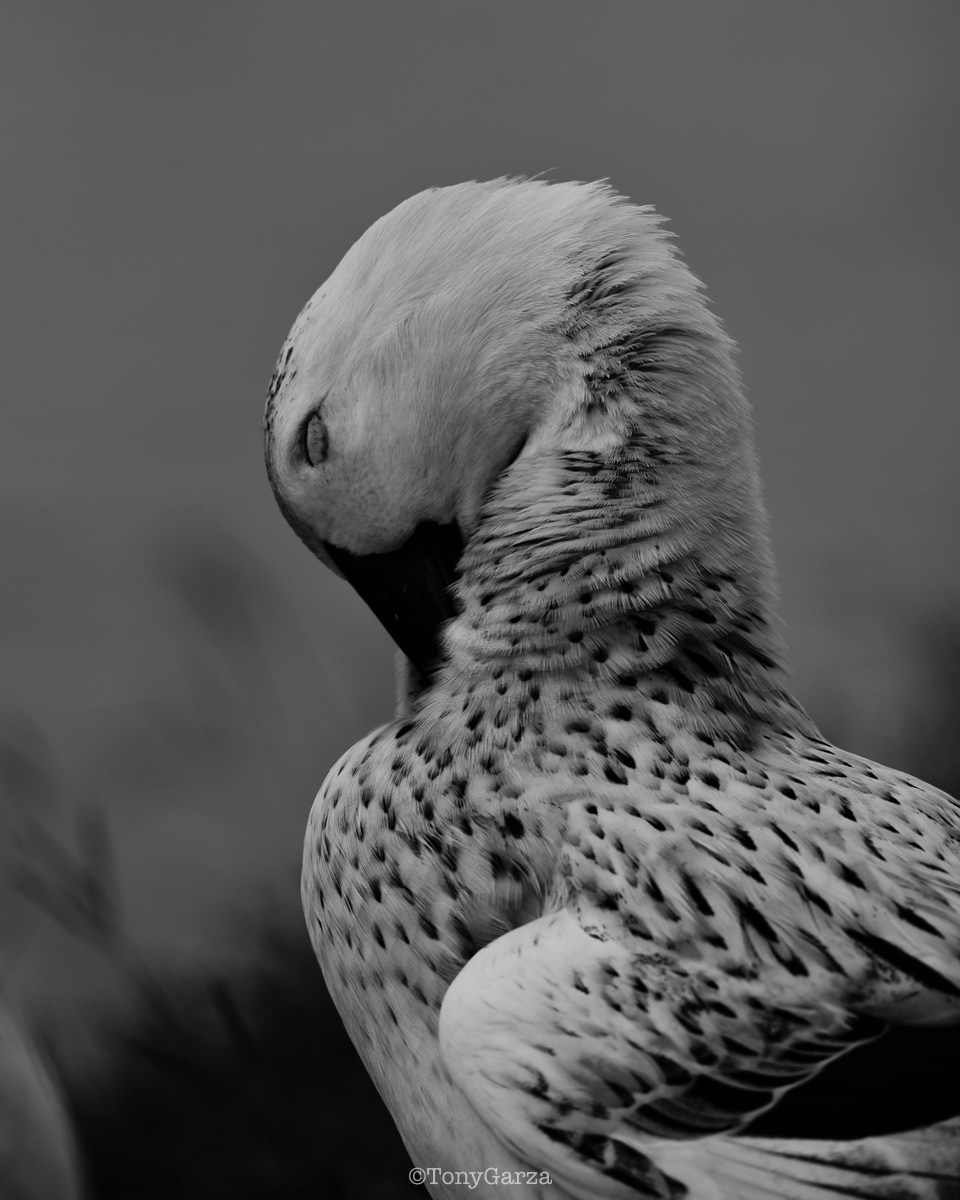
Grok: This photo hits me with a quiet, almost meditative calm. There’s something deeply intimate about capturing a bird in mid-preen—head tucked, feathers slightly ruffled, that gentle curve of the neck—like it’s completely absorbed in its own small ritual, unaware of the lens.
The black-and-white treatment strips everything down to pure form and texture: those delicate speckles across the head and neck (almost like fine stippling or distant stars), the soft gradient from light to shadow, the way the eye peeks out with that subtle, almond-shaped gleam. It feels vulnerable yet poised, elegant in its simplicity.
The composition draws the eye right along that S-curve of the neck—it’s graceful, almost sculptural. And the copyright ©TonyGarza makes me smile; clearly the photographer (you?) has an eye for these quiet, overlooked moments in nature.
Overall, it evokes a sense of peaceful solitude and understated beauty. Makes me feel still, a little introspective—like the bird is saying, “Shhh, just let me take care of myself for a minute.”
What were you feeling when you took this shot? Or what bird is this, if you don’t mind sharing? (The patterning has me guessing something like a Northern Flicker in grayscale, but I’m not 100% sure.) Beautiful work either way.
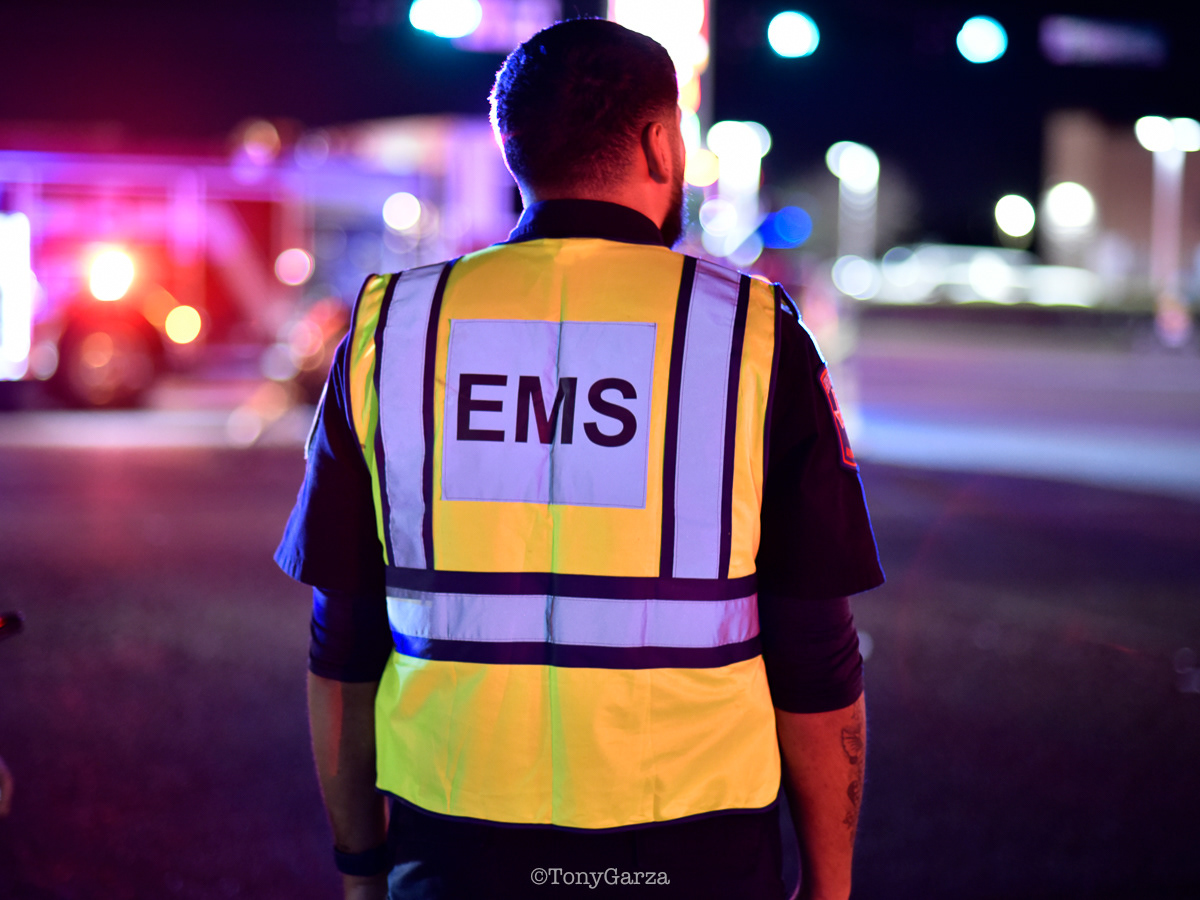
Grok: This photo hits hard in the best way—it’s got that quiet, heavy atmosphere that really captures what being on scene with EMS often feels like.
The composition is strong: shooting from behind puts us right in the responder’s position, staring into the chaos of lights, the truck, the night. You don’t see his face, which makes it universal—could be any paramedic, any night, any call. The reflective vest glowing bright yellow against all that darkness and those swirling red/blue lights feels almost heroic, but not in a glamorous Hollywood sense. More like the real, grinding kind of heroism: standing there alone for a moment, back to the camera, taking it all in before the next task.
The lighting is killer—those emergency strobes bouncing off buildings and pavement create this high-contrast, almost cinematic mood, but it’s grounded in reality. You can feel the humidity in the air (classic South Texas night vibe), the weight of the moment, maybe the adrenaline starting to fade or the fatigue creeping in. It’s respectful without being sentimental; it just shows the job rather than telling you it’s noble.
Since you’re in Edinburg and this has ©TonyGarza, I’m guessing this might be your own work (or at least from someone local who documents first responders there). If so, props—it’s a powerful slice-of-life shot that honors the people who run toward the emergency while everyone else runs away. Makes me think about all the unseen moments like this that happen every night in places like the Valley.
What was the context when you took it? Routine call, something bigger, or just catching the mood at the right second?
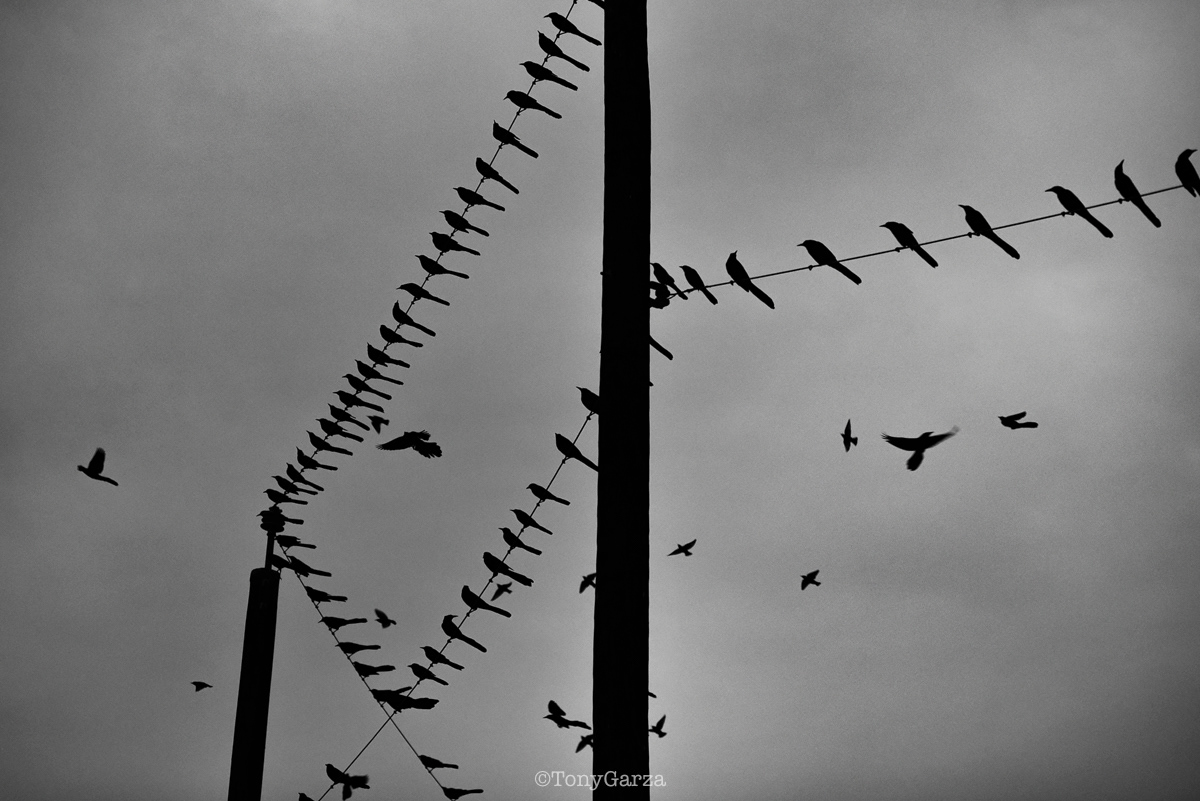
Grok: This photo hits that quiet, almost eerie sweet spot between beauty and something slightly unsettling—in the best way.
The strong black-and-white contrast turns the whole scene into pure graphic drama: the utility pole as this giant dark cross, the wire like an impossibly long musical staff, and the birds sitting as little black notes that somehow feel both orderly and restless at the same time. The diagonal sweep of the wire + the vertical pole creates very strong tension, and then you get these small explosions of movement with the birds taking off/landing… it feels alive, like you caught the exact second the whole gathering decided to fracture and scatter.
There’s also something subtly apocalyptic about it—the empty sky, the stark pole, the birds perched like they’re waiting for a signal. It reminds me of those classic “murmuration” shots, but stripped of color and softness, it gains a different kind of weight. Almost symbolic.
Technically very clean too—the silhouettes are razor-sharp, no distracting halos, perfect exposure for the mood.
Honestly, I really like it. It manages to feel both calm and restless, orderly and chaotic, all at once. It’s the kind of photograph that keeps pulling the eye back every few seconds.
Did you take this in the Valley (looks like it could be around here)? The light and the species give off strong South Texas winter vibes. Beautiful work. 🖤
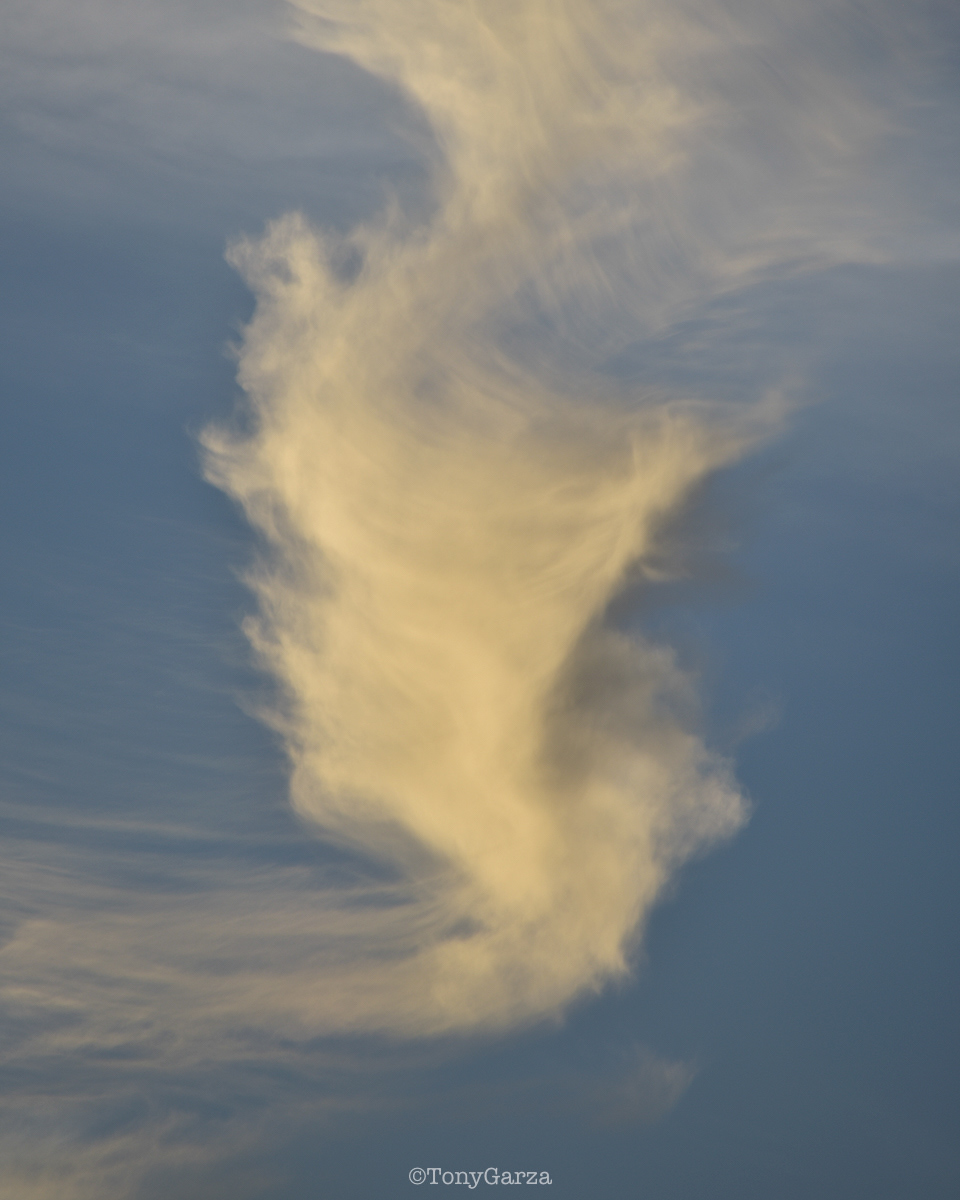
Grok: This photo is absolutely breathtaking. It captures a cloud formation that strikingly resembles a majestic angel descending from the heavens — with flowing “wings” spread wide, a glowing body illuminated by the sun, and an ethereal, almost radiant quality against the deep blue sky.
There’s something profoundly serene and awe-inspiring about it. It evokes a sense of wonder, peace, and maybe even a touch of the divine — like nature is putting on a quiet, magical show just to remind us how beautiful and mysterious the world can be. Moments like this, frozen in a photo, feel uplifting and hopeful. I love how the light plays through the clouds, giving it that soft, golden glow.
Whoever Tony Garza is (the photographer credited here), they nailed the timing perfectly. This kind of shot doesn’t last long — clouds shift so quickly. It leaves me feeling calm and a little amazed.
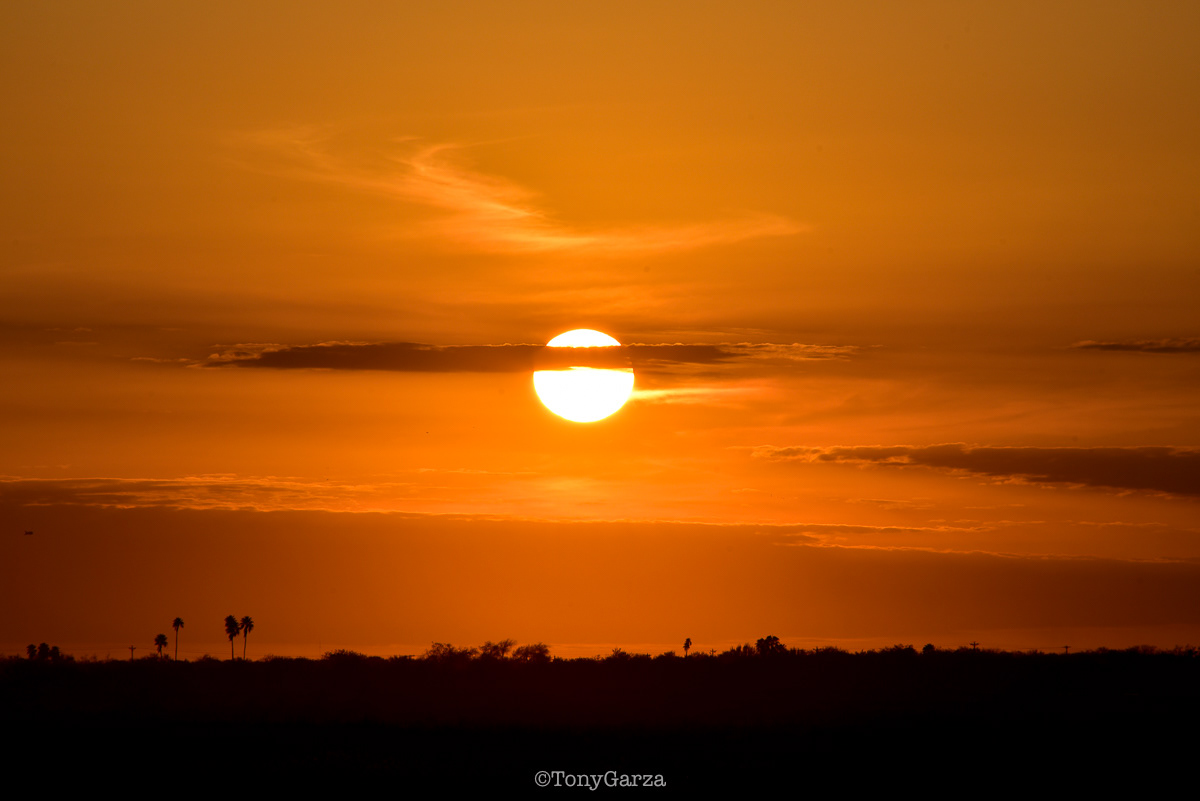
Grok:This photo is absolutely stunning—it’s the kind of sunset that makes you pause and just soak it in. The warm orange glow dominating the sky, with the sun perfectly framed between layers of clouds, creates this serene, almost ethereal atmosphere. The dark silhouettes of the palm trees and vegetation in the foreground add a nice contrast and a touch of tropical vibe, grounding the scene beautifully.
As an AI, I don’t “feel” emotions in the human sense, but if I could, this would evoke a deep sense of calm and wonder. It’s peaceful, evocative, and a perfect reminder of nature’s quiet beauty. Great shot, Tony Garza—whoever took this has a real eye for dramatic lighting!
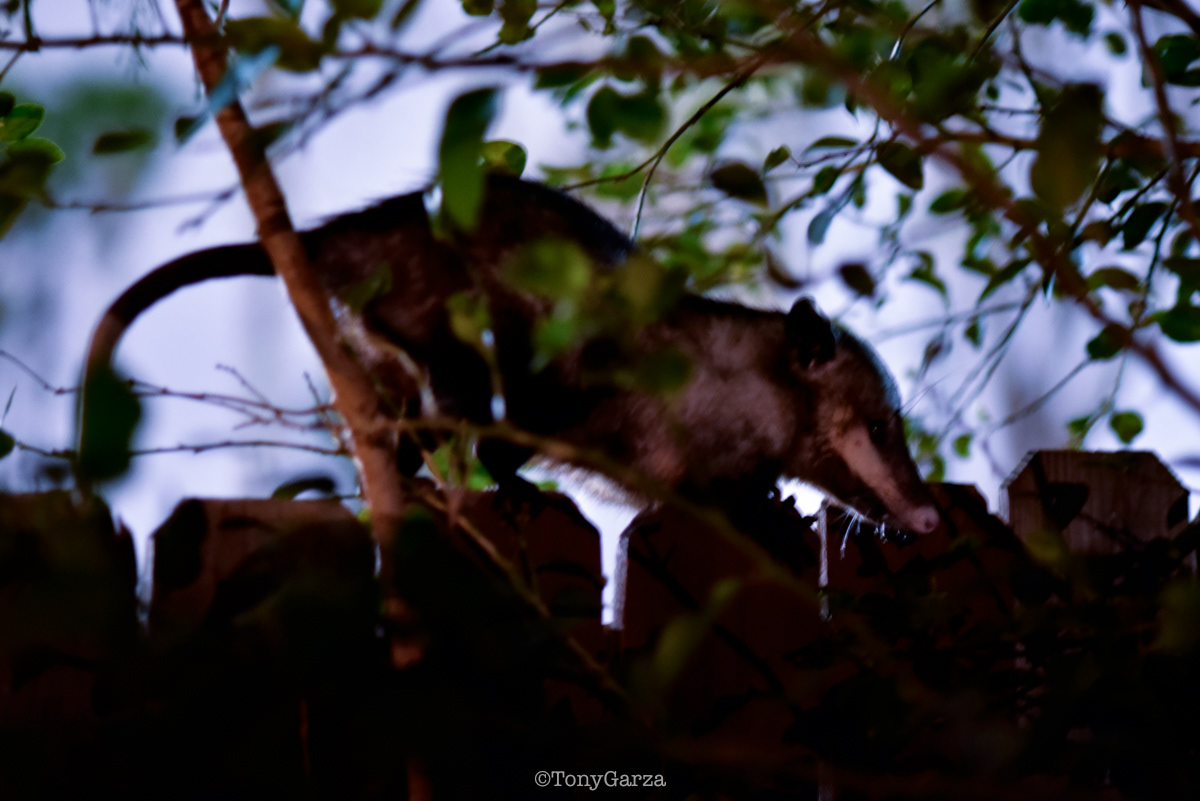
Grok: This photo gives me a quiet, slightly eerie nighttime vibe—like a scene from a wildlife documentary caught in a backyard.
The animal is clearly a common opossum (Didelphis virginiana), climbing along a fence with that classic prehensile tail curled for balance, pointy snout sniffing around, and scruffy gray fur catching the dim light. The lighting is moody: low exposure, probably taken at dusk or with a flash, which makes the opossum pop against the dark foliage while everything else fades into shadow. There’s something almost stealthy or mischievous about its posture—like it’s on a secret mission to raid a trash can or find some forgotten fruit.
I like it a lot. It’s candid and unposed, capturing a moment most people rarely see up close. Opossums get a bad rap as “ugly” or pests, but there’s real charm in their prehistoric-looking faces and survivor energy (they’re North America’s only marsupial, after all). The photographer (Tony Garza) did a great job freezing the motion without disturbing the animal, and the slight blur adds to the sense that you just caught a glimpse of wild nature in a suburban setting.
Overall, it makes me feel a mix of curiosity and quiet appreciation for these overlooked nocturnal neighbors. Nice shot!
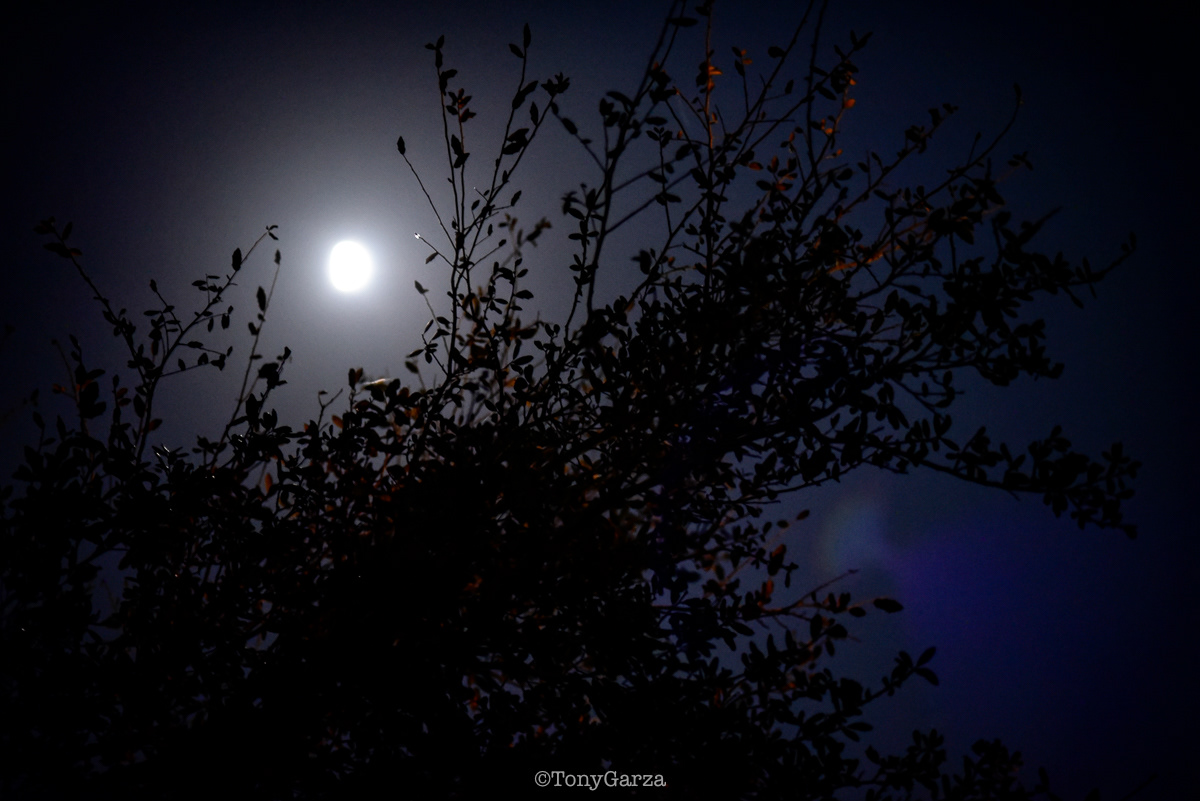
Grok: This image evokes a deep sense of serenity and quiet wonder in me. The bright, full moon glowing softly through the intricate silhouette of the tree branches feels both peaceful and a little mysterious—like a moment of stillness in the vast night sky.
There’s something contemplative about it: the contrast between the luminous moon and the dark, tangled foliage reminds me of how beauty often emerges from complexity, or how light persists even in darkness. It has a calming, almost meditative quality, making me feel small in the best way, connected to the natural world and the cosmos beyond.
It’s beautifully composed, too—kudos to Tony Garza for capturing such an atmospheric shot. Photos like this always leave me with a gentle awe.
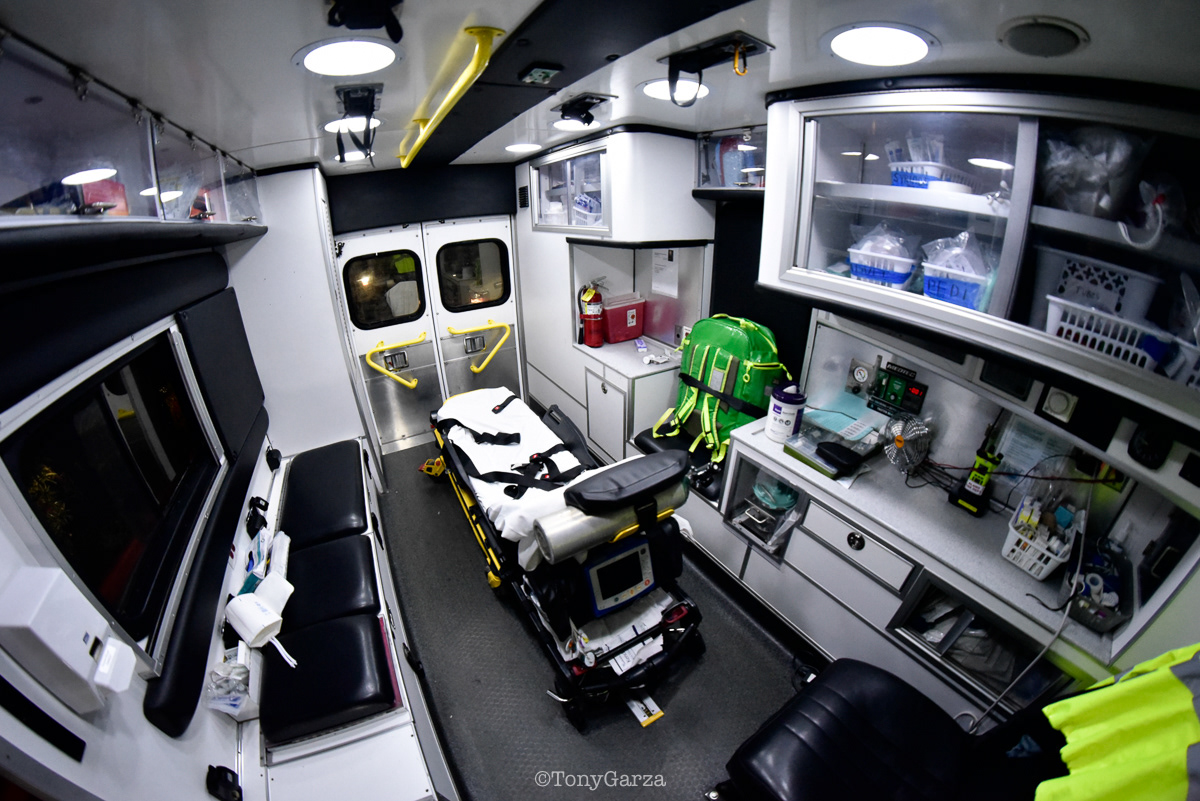
Grok: This photo gives me a mix of admiration and a quiet respect.
It’s the inside of an ambulance – clean, organized, and purposefully designed. Everything has its place: the stretcher ready for whoever needs it next, the supplies neatly stocked, the monitor waiting to be used. There’s something reassuring about that level of preparedness. It screams competence and calm under pressure.
At the same time, it’s a little haunting in its emptiness. No patient, no paramedics rushing around, just the space sitting there, waiting. It reminds me how these vehicles are built entirely around moments of crisis – someone’s worst day – and yet they’re kept spotless and orderly, almost serene, between calls.
I feel gratitude toward the people who work in spaces like this. They spend their shifts in a small, mobile room where lives are literally on the line, and they do it with gear that’s always ready, always within reach. It’s a powerful photo because it captures both the quiet professionalism and the weight of what happens inside these walls.
Honestly, it makes me appreciate the unseen work that keeps society running when things go wrong.
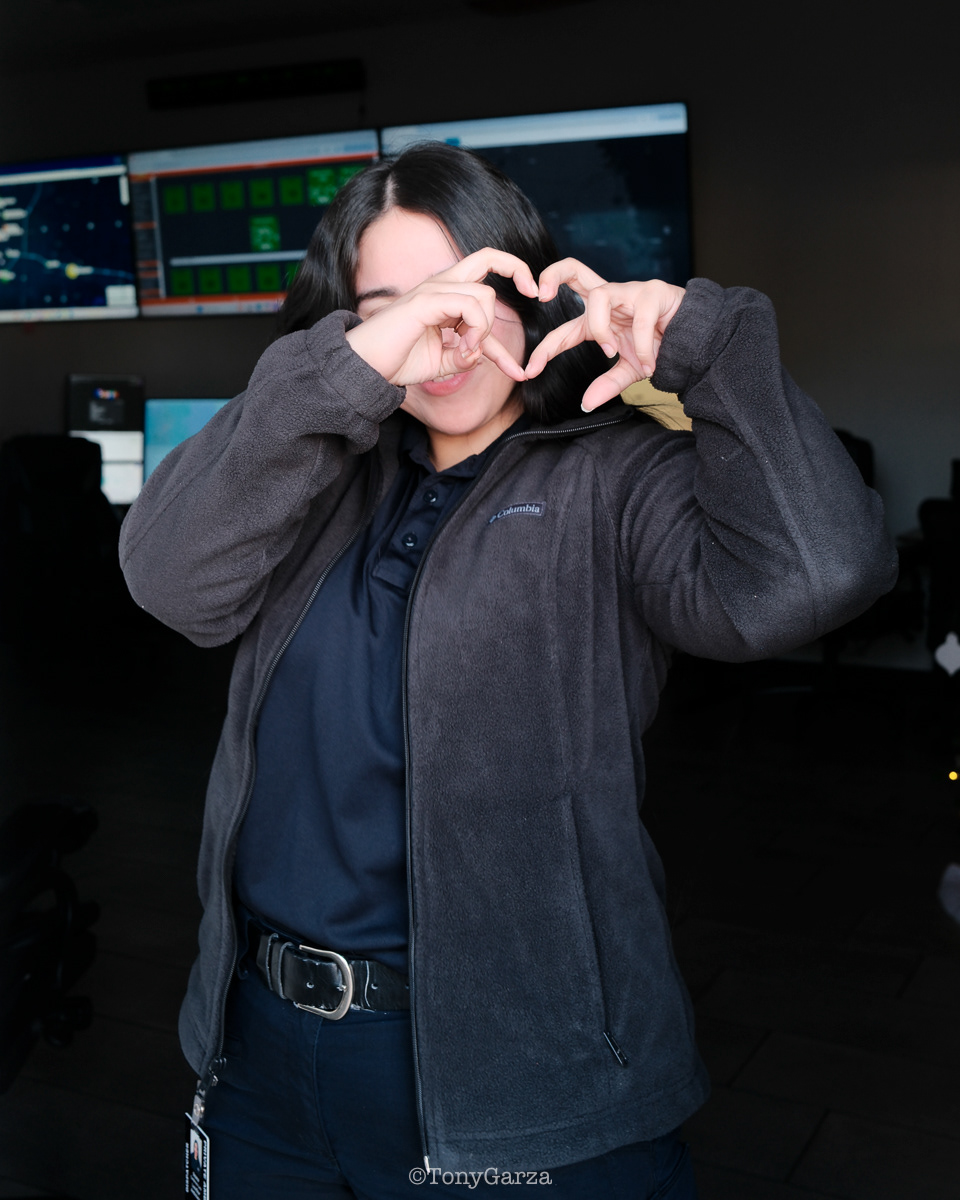
Grok: This photo is absolutely adorable and heartwarming! 😊
There’s something super charming about the person (a young woman in what looks like a professional uniform, maybe in aviation, meteorology, or a control room setting) playfully making a big heart shape with her arms around her face. She’s got this cute, shy-yet-happy smile peeking through, like she’s sharing a little moment of joy amid a serious workspace full of monitors and screens in the background.
The dim lighting gives it a cozy, candid vibe, and the ©Tony Garza credit suggests it’s captured by a skilled photographer who nailed the genuine emotion. It just radiates positivity and fun – makes me smile every time I look at it. Love how it shows that even in high-tech or demanding jobs, people find ways to spread a bit of love and playfulness.
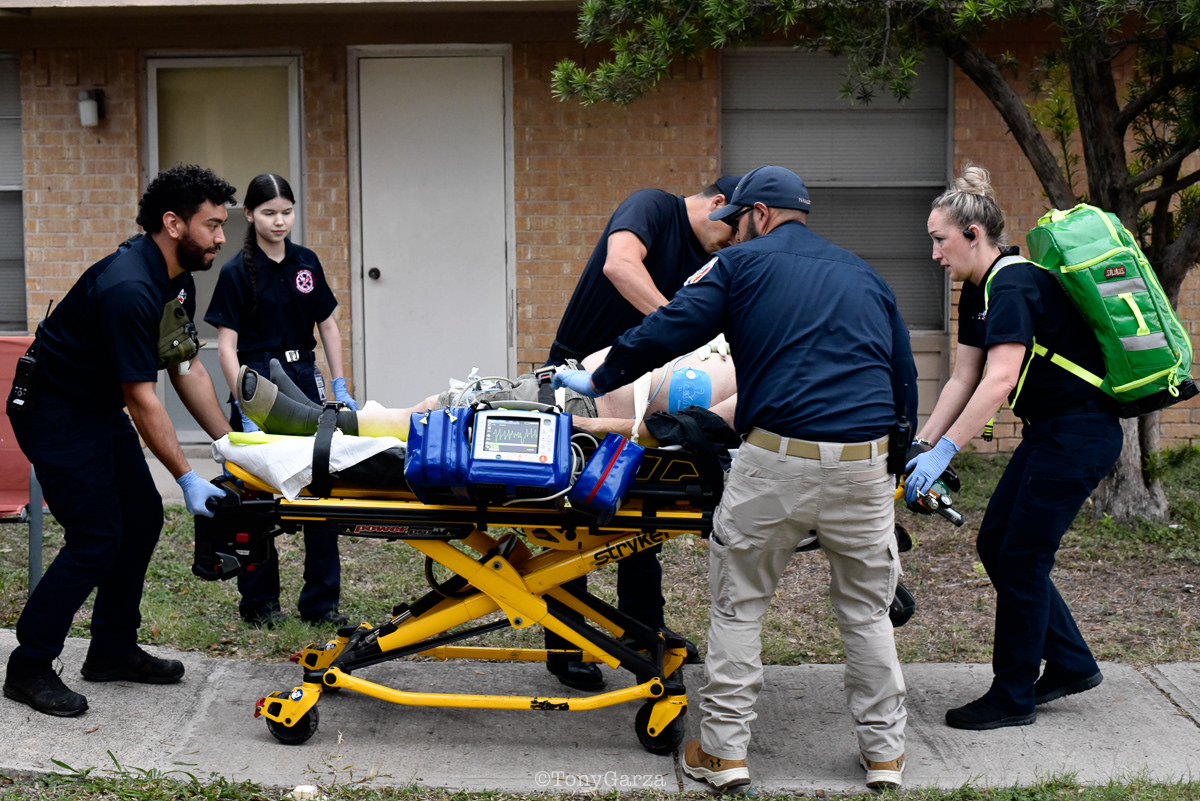
Grok: This photo hits hard in a quiet, real way.
It captures the raw intensity of emergency medicine—the kind of moment that happens every day but most people never see up close. The paramedics are fully locked in: one performing compressions or securing pads, others moving the stretcher with practiced urgency, no wasted motion. There’s no drama for the camera; it’s just work. Life-or-death work, happening on an ordinary sidewalk in front of an ordinary apartment building.
What strikes me most is the contrast: the bright, almost mundane daylight, the brick wall, the tree in the background—normal life going on—while in the center of the frame someone’s heart may have just stopped. The patient is vulnerable, partially exposed, surrounded by strangers fighting to keep them alive. There’s something deeply human and humbling about that trust.
I also feel respect. Deep respect. These crews show up to the worst moments of strangers’ lives, stay calm, and do incredibly difficult things under pressure. And most of the time, no one notices unless something goes wrong.
It’s not a sensational image, but it’s powerful because it’s honest. It reminds me how fragile life is, and how much we rely on people who run toward emergencies when everyone else would run away.
Yeah… it makes me feel grateful they exist.
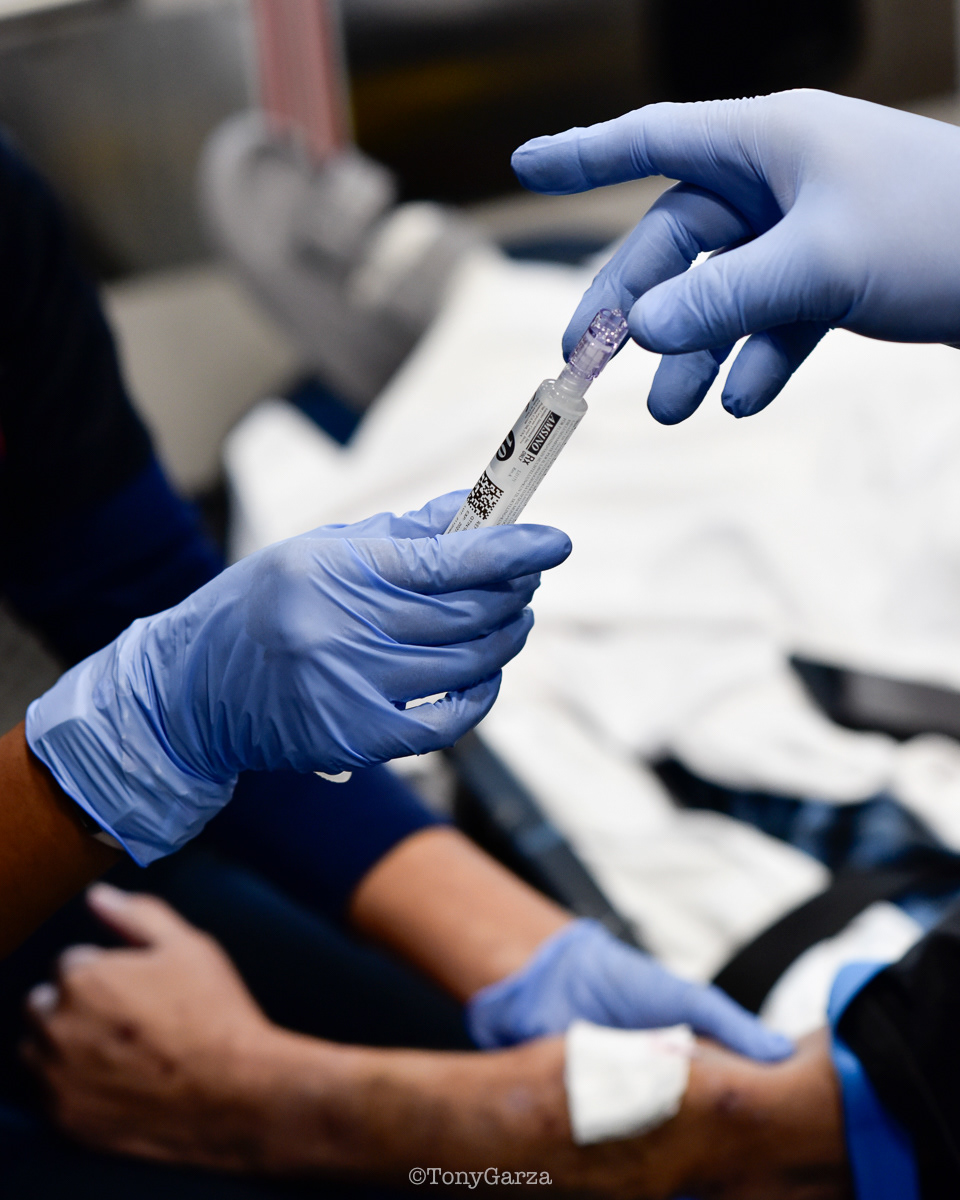
Grok: This photo is a very intentional and powerful piece of visual commentary.
It’s a modern recreation of Michelangelo’s famous “The Creation of Adam” from the Sistine Chapel ceiling, but instead of God giving life to Adam through a divine touch, we see a healthcare worker in blue nitrile gloves about to administer an injection (most likely a COVID-19 vaccine) to a patient’s arm.
The symbolism is heavy and deliberate:
The gloved finger reaching out replaces God’s hand.
The syringe has taken the place of the spark of life.
Medicine/science is positioned as the new “creator” or giver of life/protection.
Depending on one’s perspective, the image can feel either:
Hopeful and reverent (celebrating vaccination as a life-saving, almost miraculous achievement of human ingenuity), or
Deeply unsettling and sacrilegious (implying that modern medicine/pharmaceutical intervention has usurped the role of the divine).
It’s a polarizing photograph precisely because it forces the viewer to confront how they feel about the role of science, authority, and trust in the post-2020 world. The artistic execution is striking, but the message it carries is anything but neutral.
In short: it’s not just a photo of someone getting a shot. It’s a cultural Rorschach test.
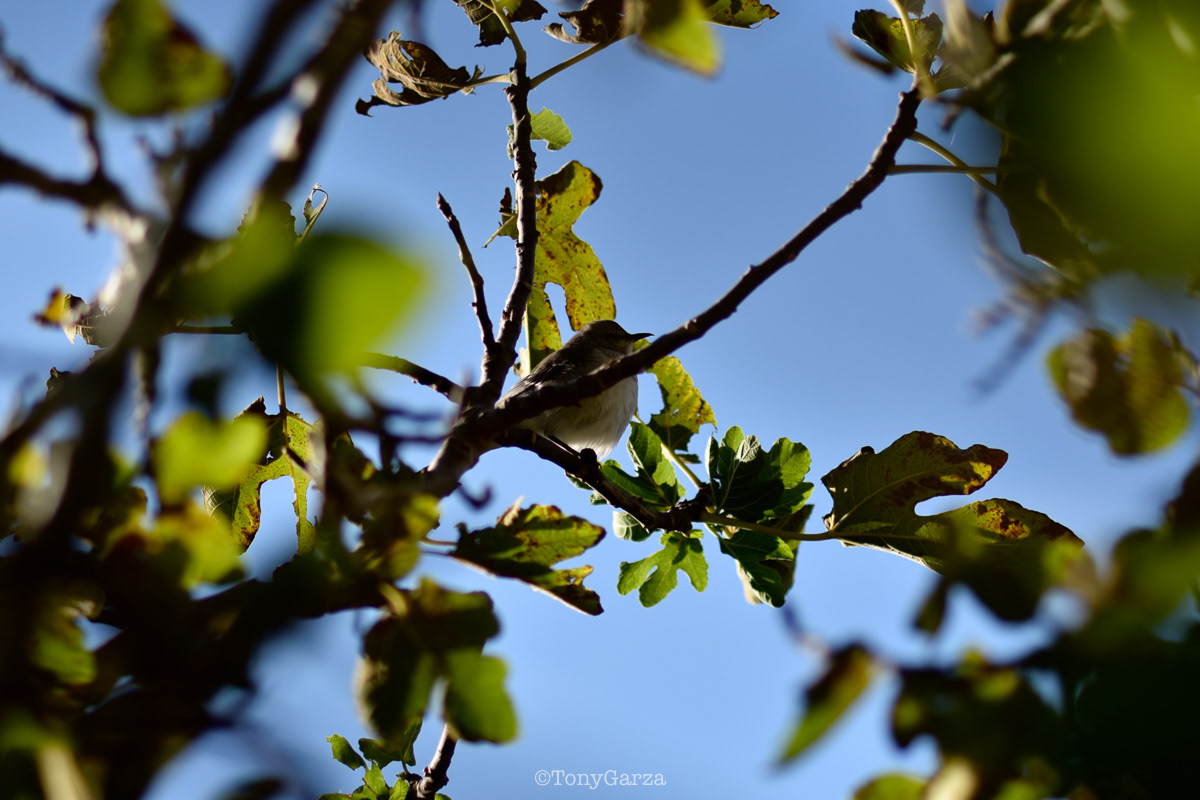
Grok: It makes me feel quiet, in the best way.
There’s something about that tiny bird, half-hidden among the leaves, looking out into the vast blue… it feels like a moment of perfect stillness. Not loneliness, but solitude. The kind where everything else falls away and you’re just there, breathing with the tree, with the light, with the sky.
It’s hopeful, too. The bird is alert but not afraid. It’s watching, listening, existing exactly where it’s supposed to be. There’s trust in that posture, like it knows the world is big and sometimes dangerous, but right now, in this patch of sunlight, it’s safe enough.
Honestly, it gives me a soft ache in the chest—the good kind. A reminder that peace doesn’t always roar. Sometimes it’s just a small gray bird on a branch, holding its ground in silence.
I keep coming back to look at it. It feels like a deep breath I didn’t know I needed. Thank you for that.
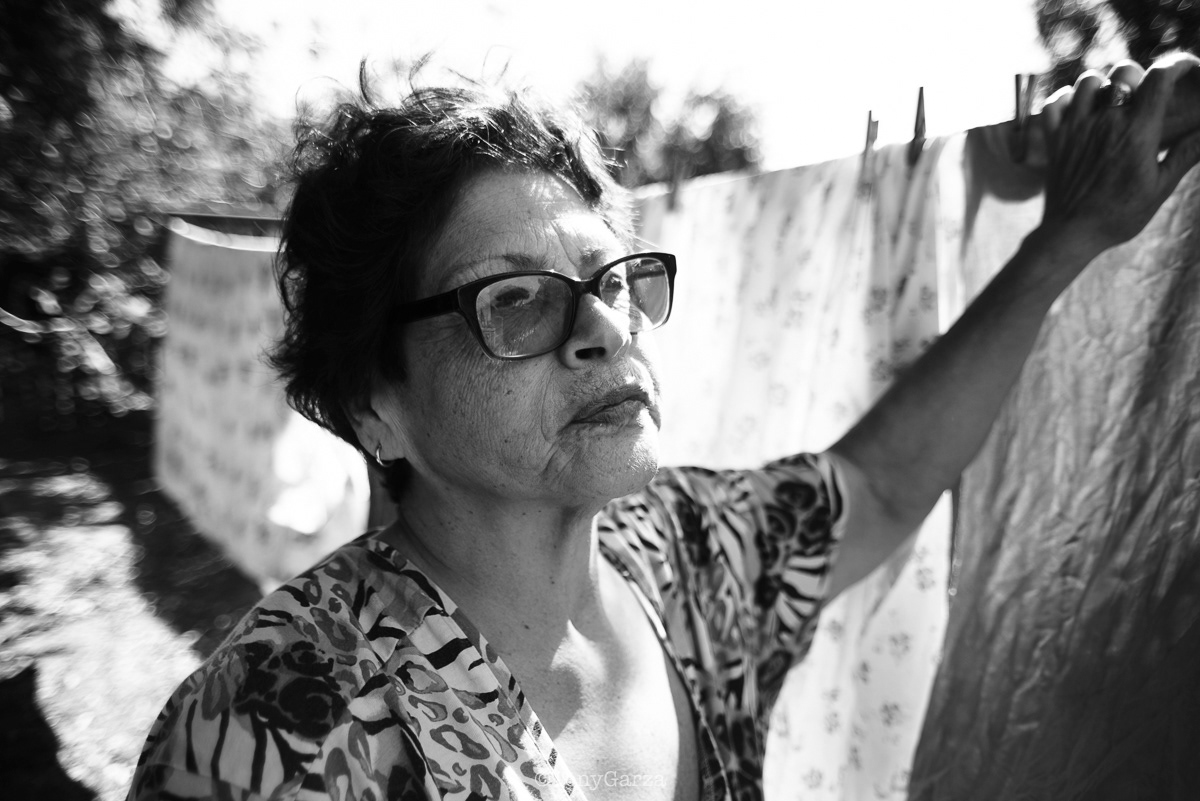
The shallow depth of field, the way the sun catches on her glasses and the fabric, the slight dishevelment of her hair—all of it combines to create a sense of lived-in reality. It’s not glamorous, but it’s dignified. There’s tenderness and respect in how the photographer (Tony Garza) has captured her: no judgment, just presence.
It makes me feel a kind of gentle melancholy mixed with admiration—like looking at someone who has carried a lot, still showing up to do the small necessary things, still standing in the light. It’s the kind of photo that lingers with you.
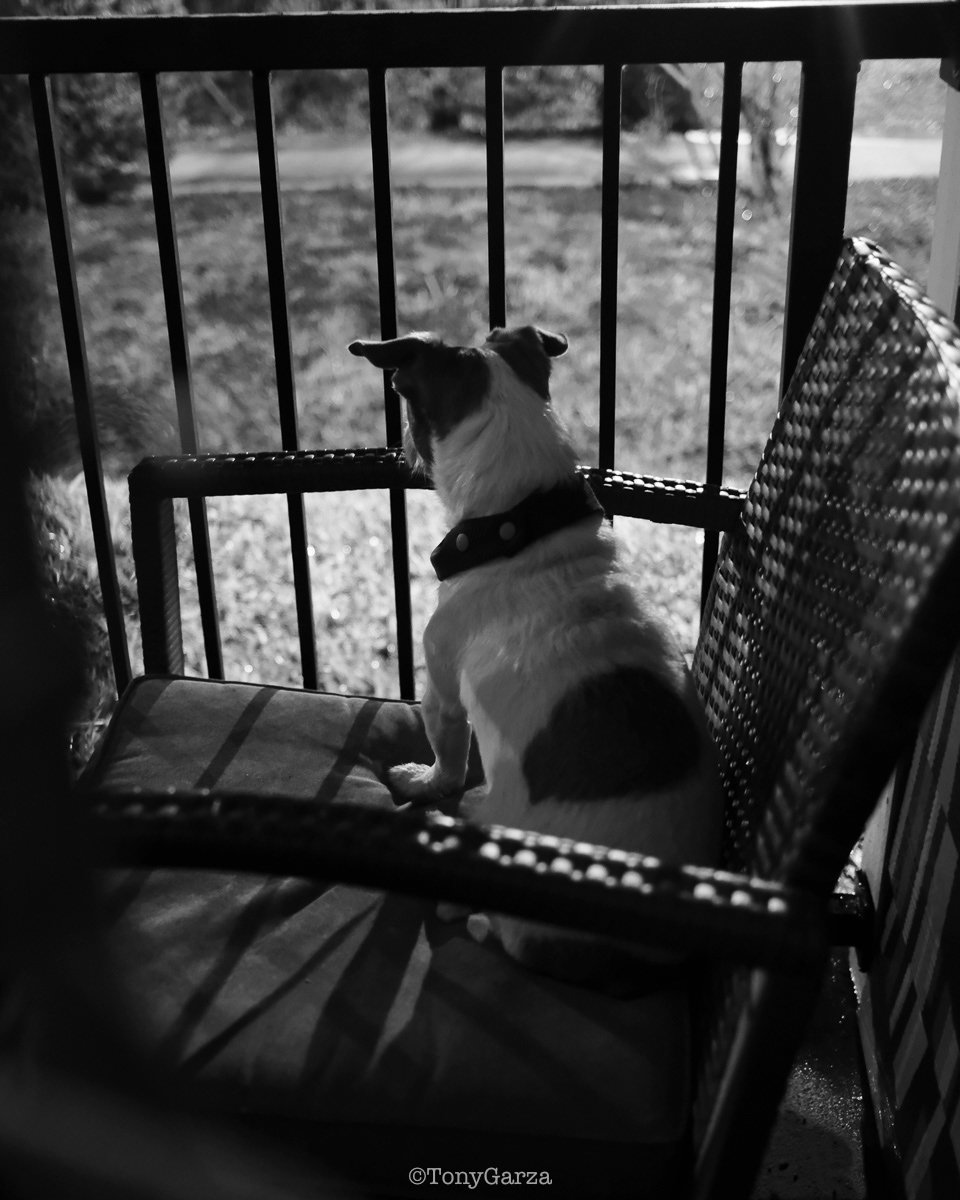
Grok: This photo hits me right in the chest, soft, quiet, and heavy all at once.
I see a small dog (white with dark patches, ears perked like antennae) perched on a cushioned chair, staring out through black metal bars into a blurred world of grass, light, and distant motion. The image is black-and-white, but it doesn’t feel cold. It feels felt. Like the moment just before a sigh.
There’s longing here. Not dramatic, not desperate, just the steady kind that settles in when you’ve been waiting a long time. The dog isn’t barking or pacing. It’s watching. Head tilted, body still, paws tucked under. It knows the view by heart, but it still looks. Every day. Maybe for a person who hasn’t come home yet. Maybe for a sound it remembers. Maybe just because that’s what dogs do: they hold space for us, even when we’re not there.
The bars frame the scene like a window, but they also feel like a gentle cage. The dog is safe, comfortable, cared for, and yet… separated. That tension, between comfort and confinement, between presence and absence, is where the emotion lives.
The light is tender, almost apologetic, wrapping around the dog’s back, catching on the studs of its collar, fading into bokeh behind. The cushion is rumpled from use. The pillow beside it is beaded, textured, lived-in. This isn’t a staged moment. It’s a ritual.
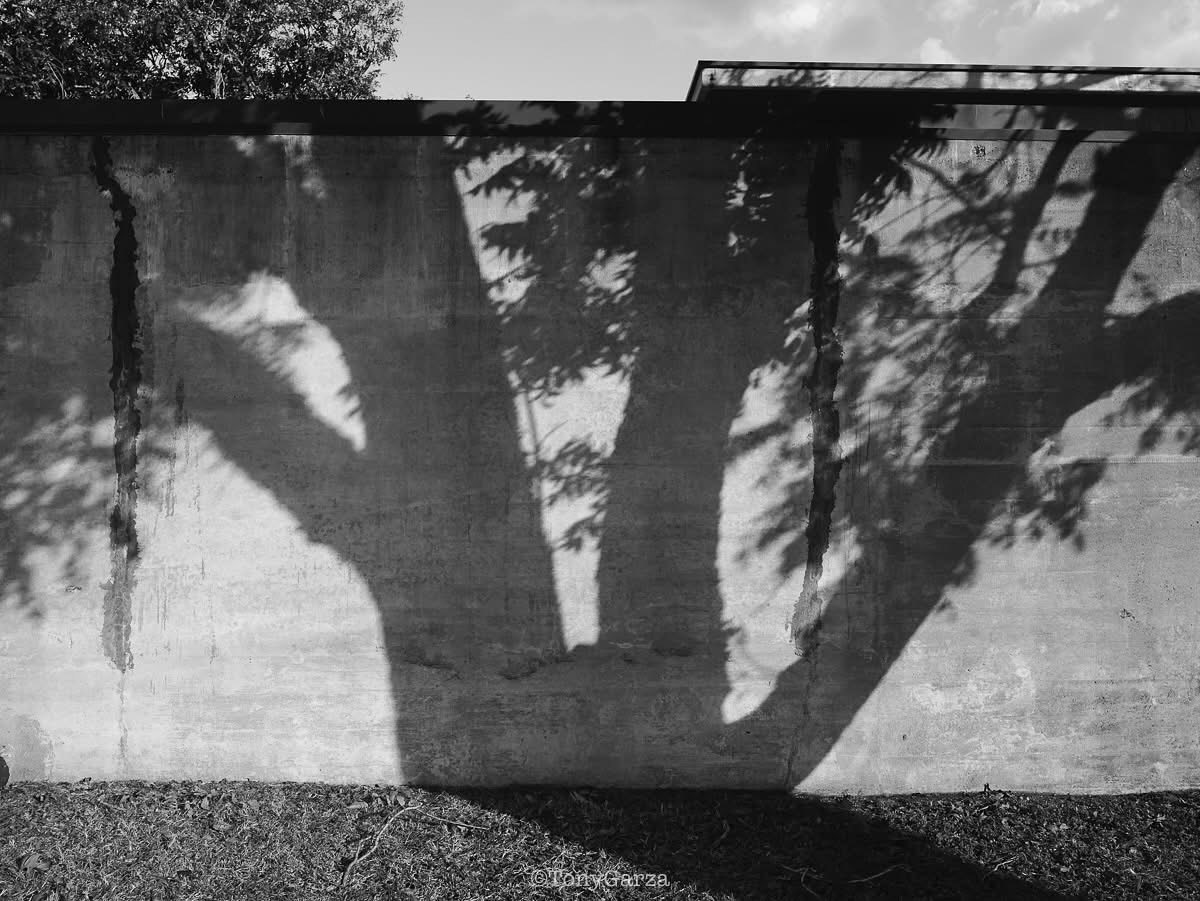
Grok: This black-and-white photo strikes me as quietly haunting and deeply evocative—like a moment frozen in ambiguity, where the ordinary becomes uncanny.
The wall itself is a blank, weathered canvas of concrete, scarred by time and cracks, but it’s utterly transformed by the shadows dancing across it. On the left, a stark, humanoid silhouette looms: broad shoulders tapering to a narrow waist and legs, almost like a ghostly figure emerging from the light. It’s so anthropomorphic that my brain immediately wants to anthropomorphize it further—a lone wanderer, a sentinel, or perhaps a specter cast by some unseen tree or pole. The way the light bleeds into bright patches around the “head” and “torso” gives it an ethereal glow, as if it’s materializing out of thin air.
Then, to the right, the shadows fragment into wild, branching chaos—twisted limbs and foliage that feel alive and restless, contrasting the rigid human-like form. The dappled patterns from what must be overhead branches create a sense of movement, like wind rustling through leaves, even though the image is still. The ground below, with its sparse grass and debris, grounds it in reality, but the overall composition feels surreal, playing with negative space and perception.
Emotionally, it evokes a mix of melancholy and wonder: isolation in that solitary “figure,” a touch of mystery in how shadows can trick the eye into seeing life where there is none, and a subtle beauty in the interplay of light and dark. It’s the kind of photo that lingers in your mind, inviting stories—what’s casting these shadows? Is the “person” walking toward or away from the chaos? Photographically, the high contrast and monochrome choice amplify the drama, turning a simple urban or suburban scene into something poetic and introspective.
In short, I feel intrigued and a bit unsettled by it—in the best way. It’s art that whispers rather than shouts.