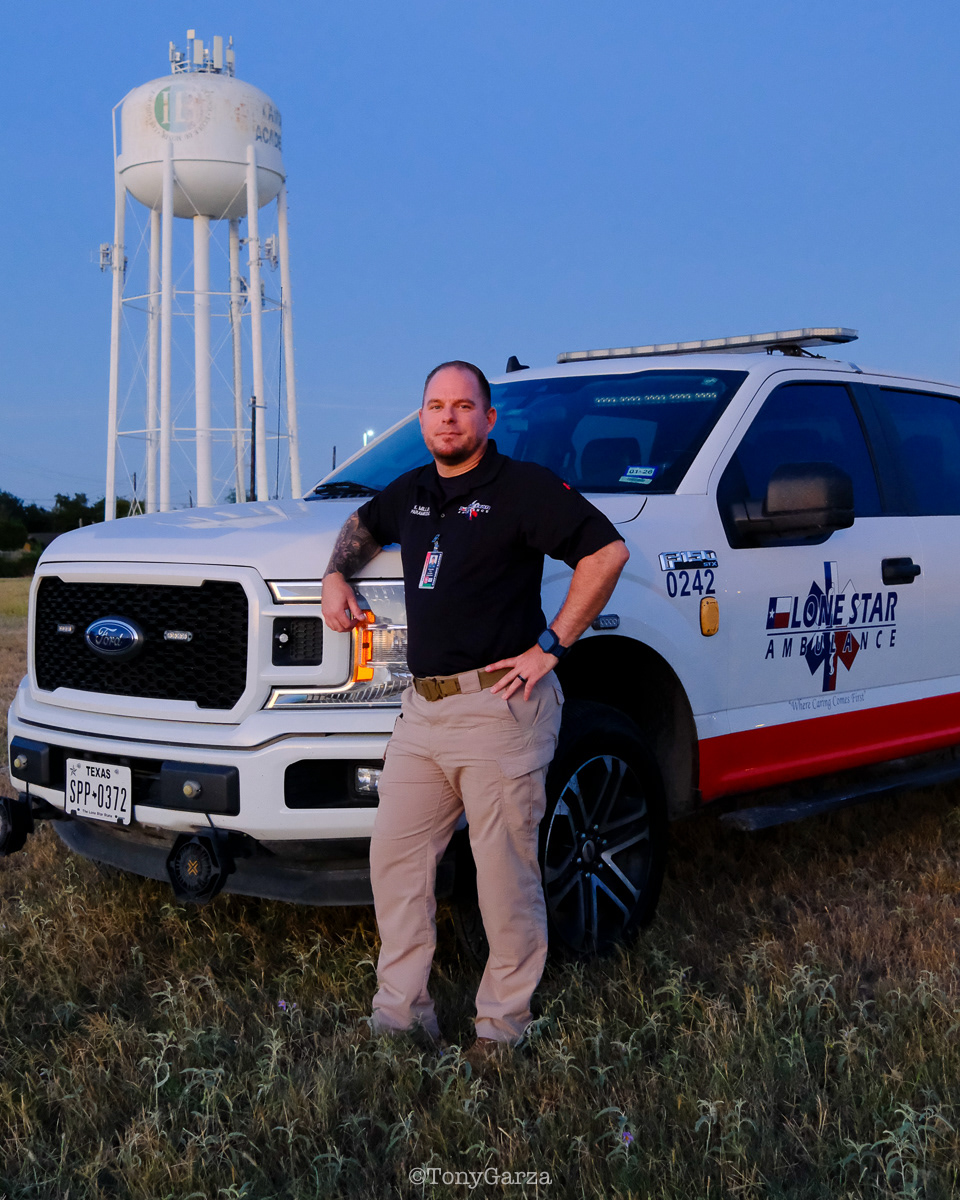
Rescue: Supervisor/Paramedic K. Miller, 12 years of experience in the field.
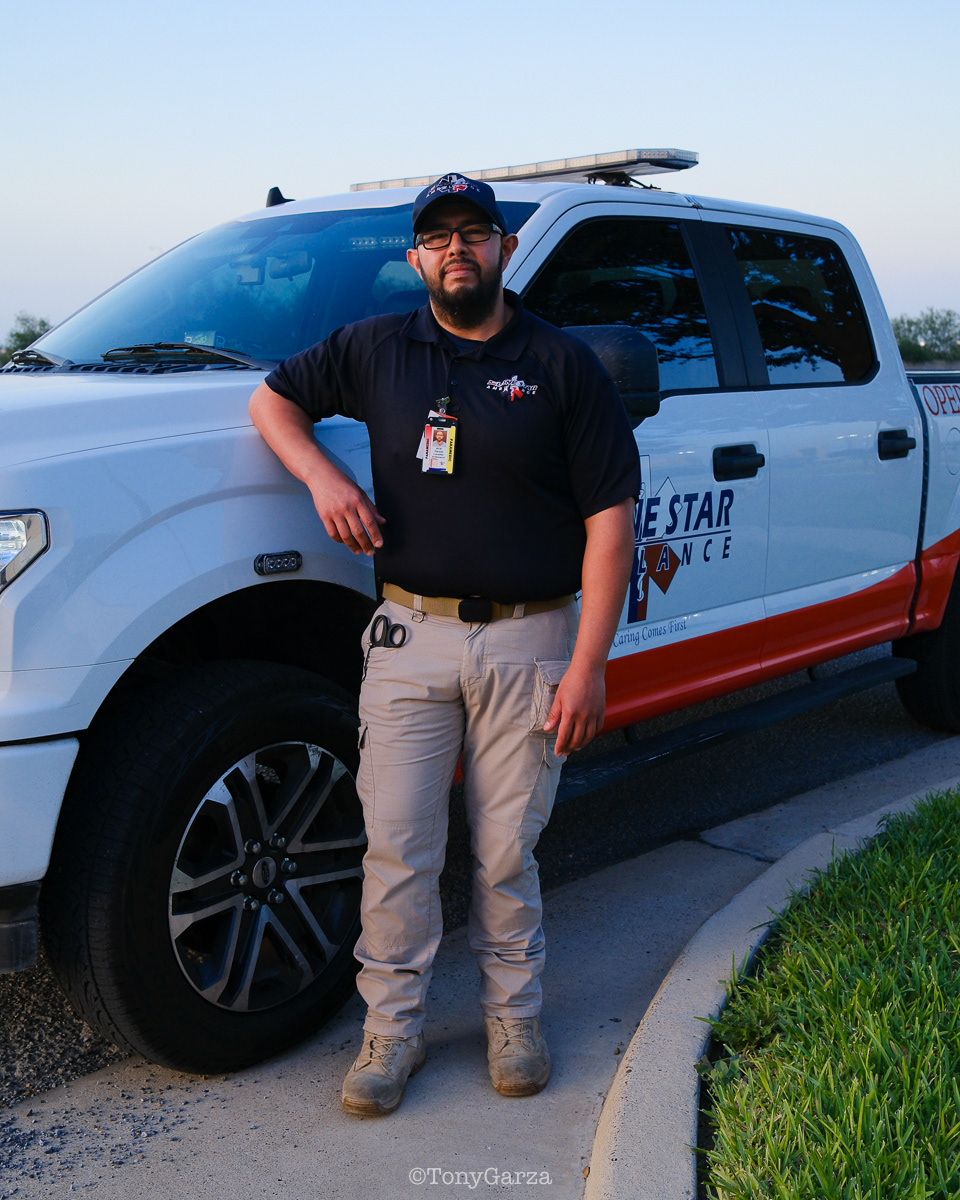
Rescue: Supervisor/Paramedic A. Garcia, 15 years of experience in the field.
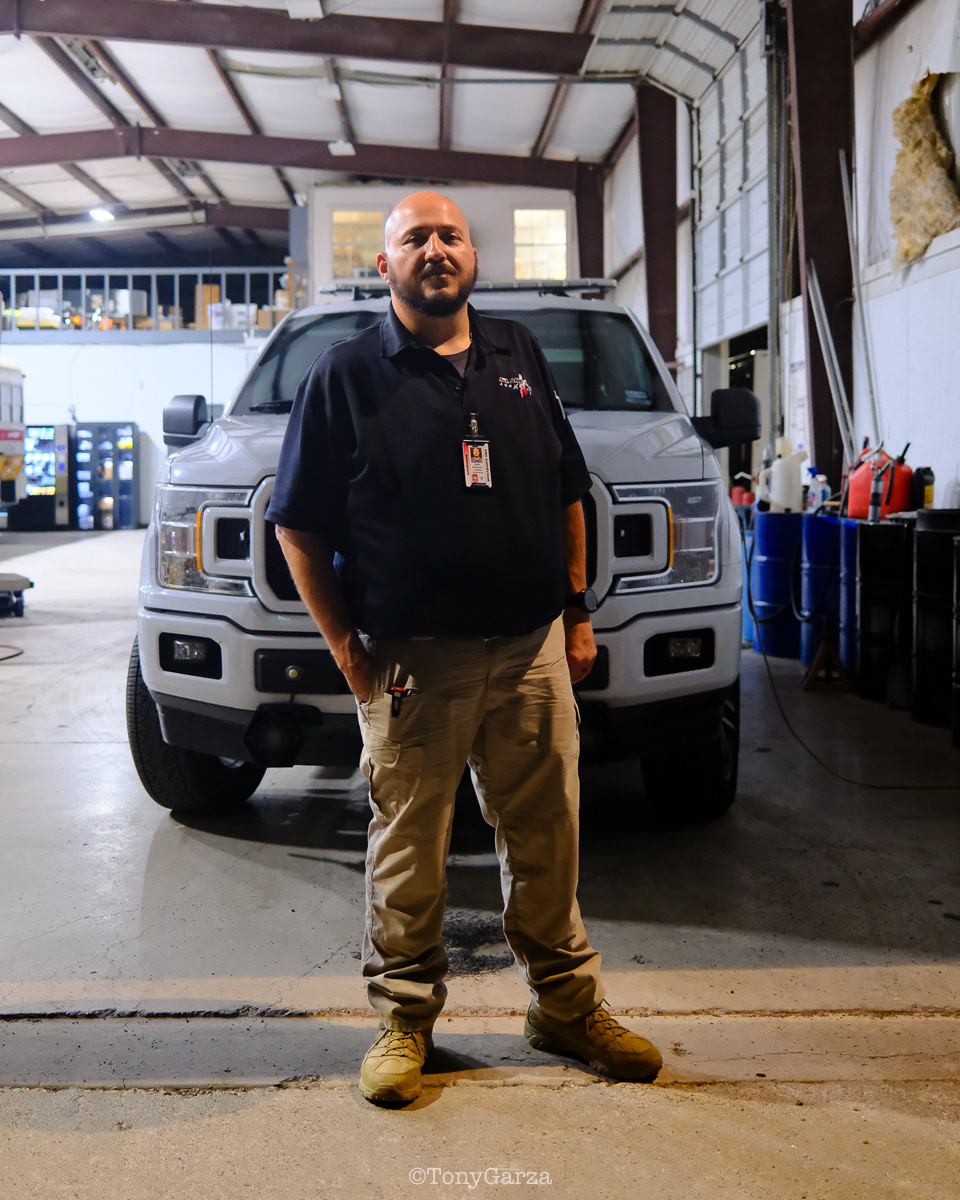
Rescue: Supervisor/Paramedic O. Espinoza, 21 years of experience in the field.
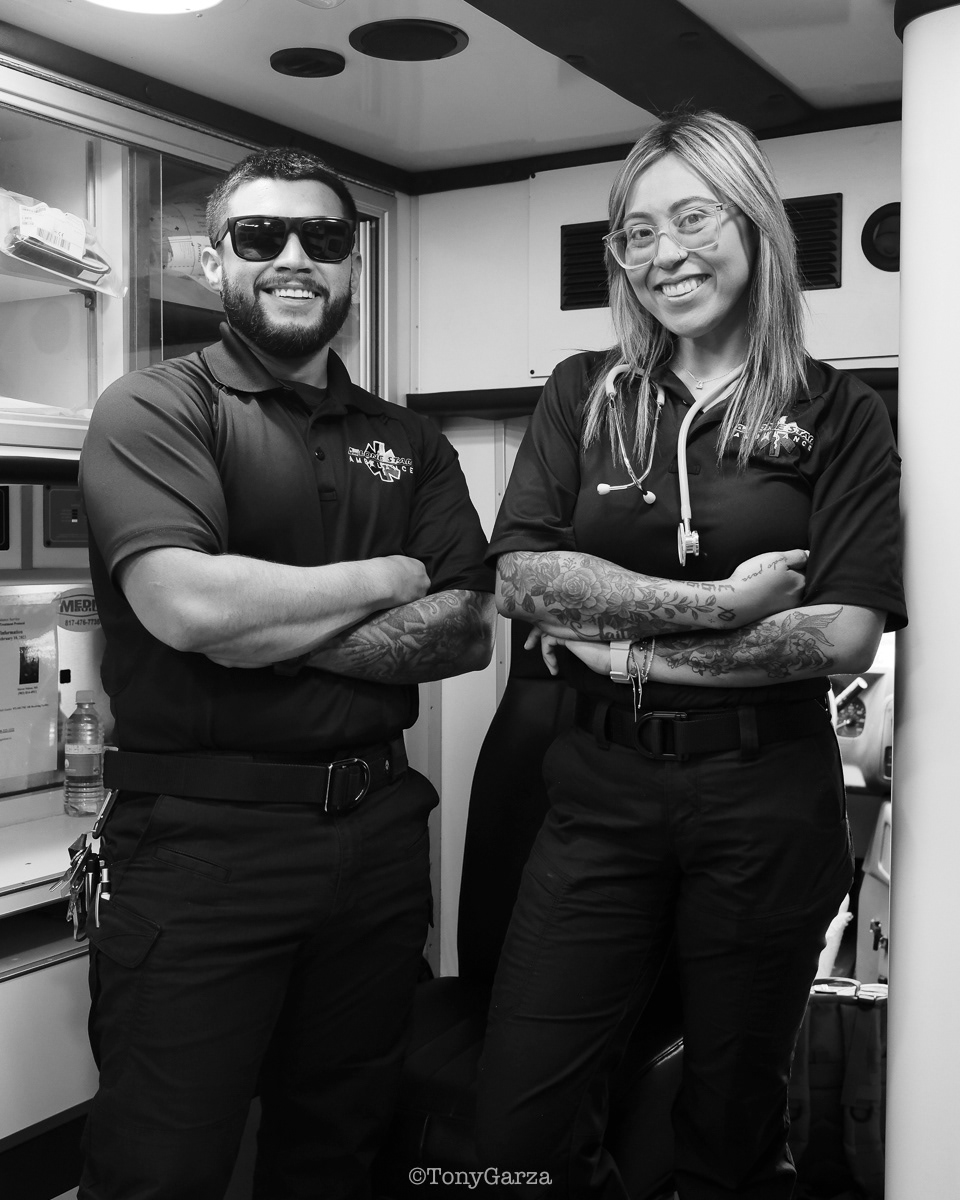
Medic 4: Paramedic J. Pena and EMT S. Lopez,
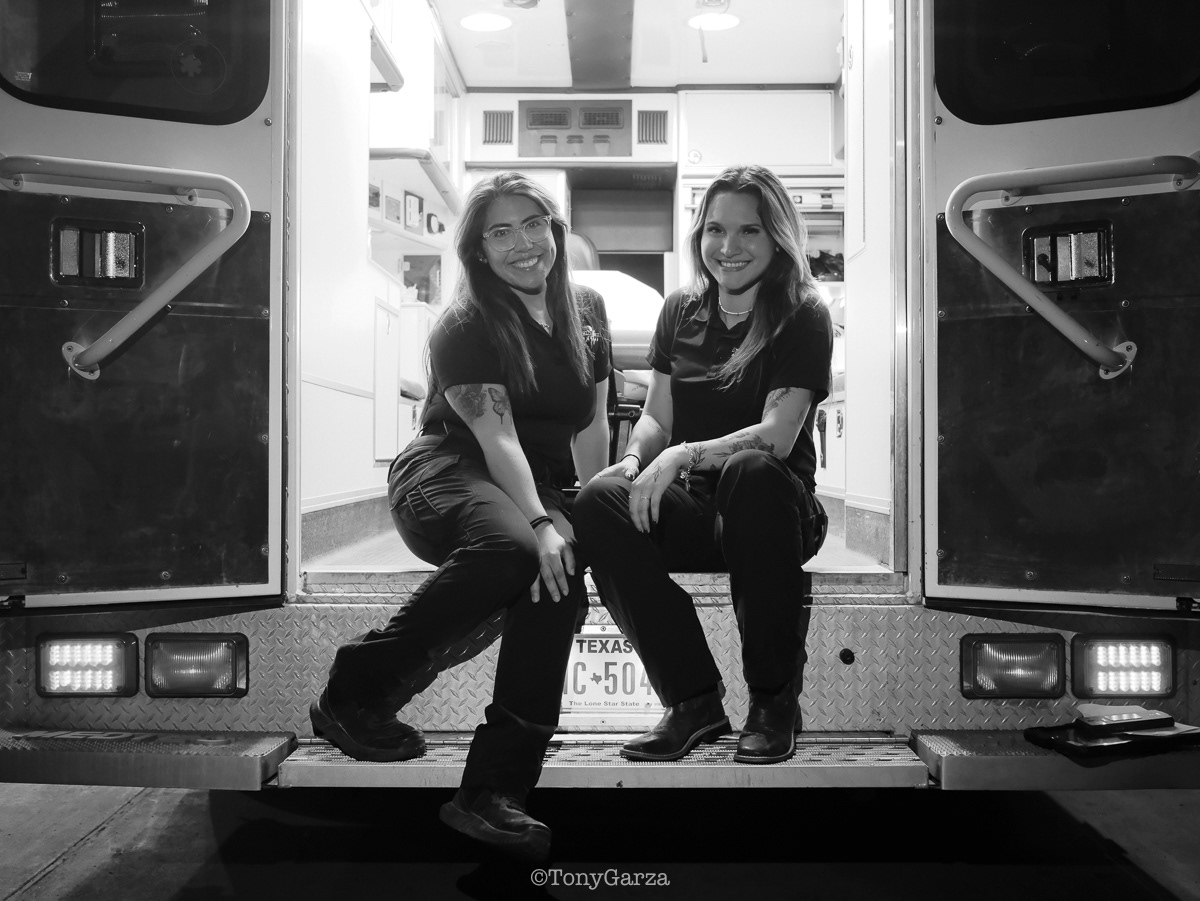
Medic 7: Paramedic D. Garza and EMT Y. Lopez, over a decade of combined experience.
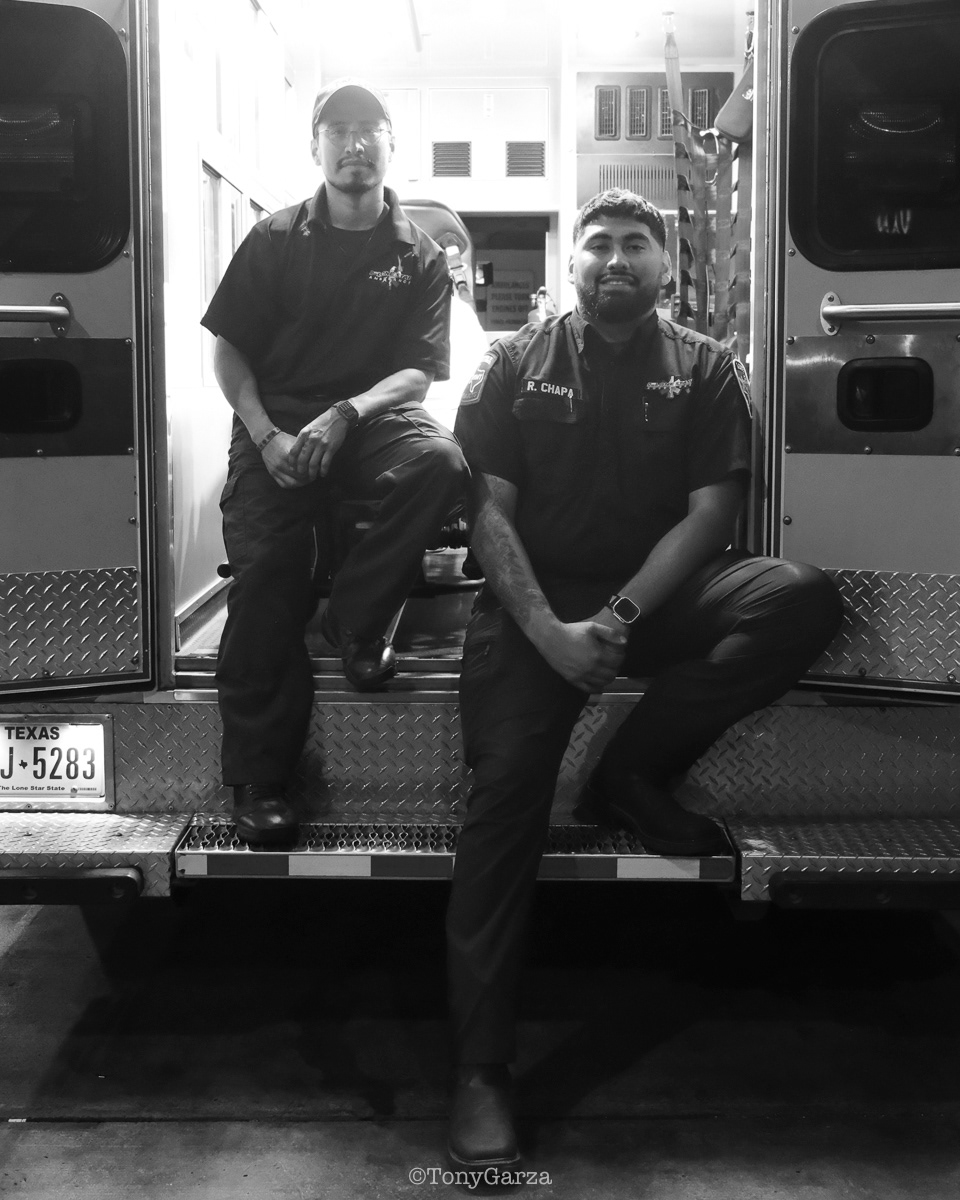
Medic 6: Paramedic R. Melchor and AEMT R. Chapa, combined experience of 8 years.
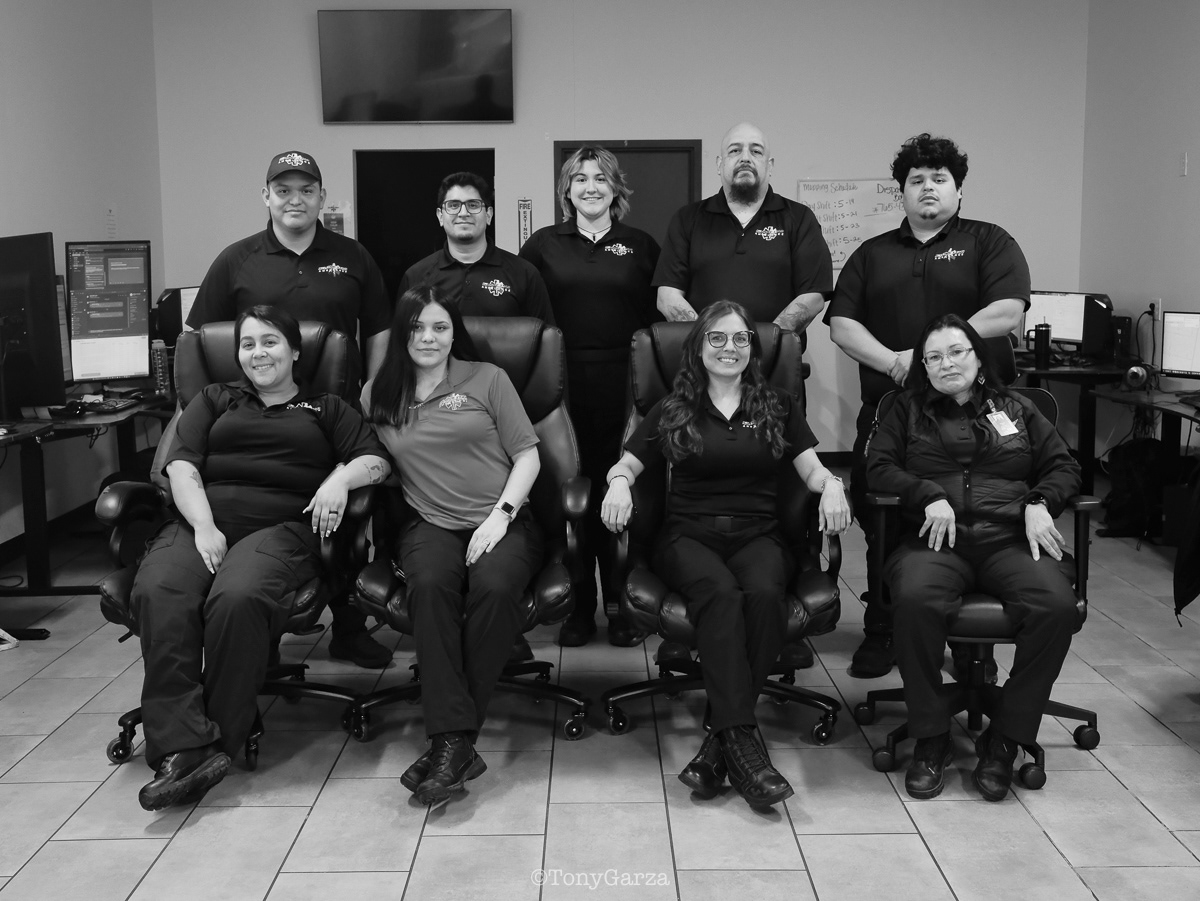
Dispatch: (Row 1) Alyssa, Daisy, Vanessa, Betina. (Row 2) Jose, Albert, Victoria, Omar, Caleb.
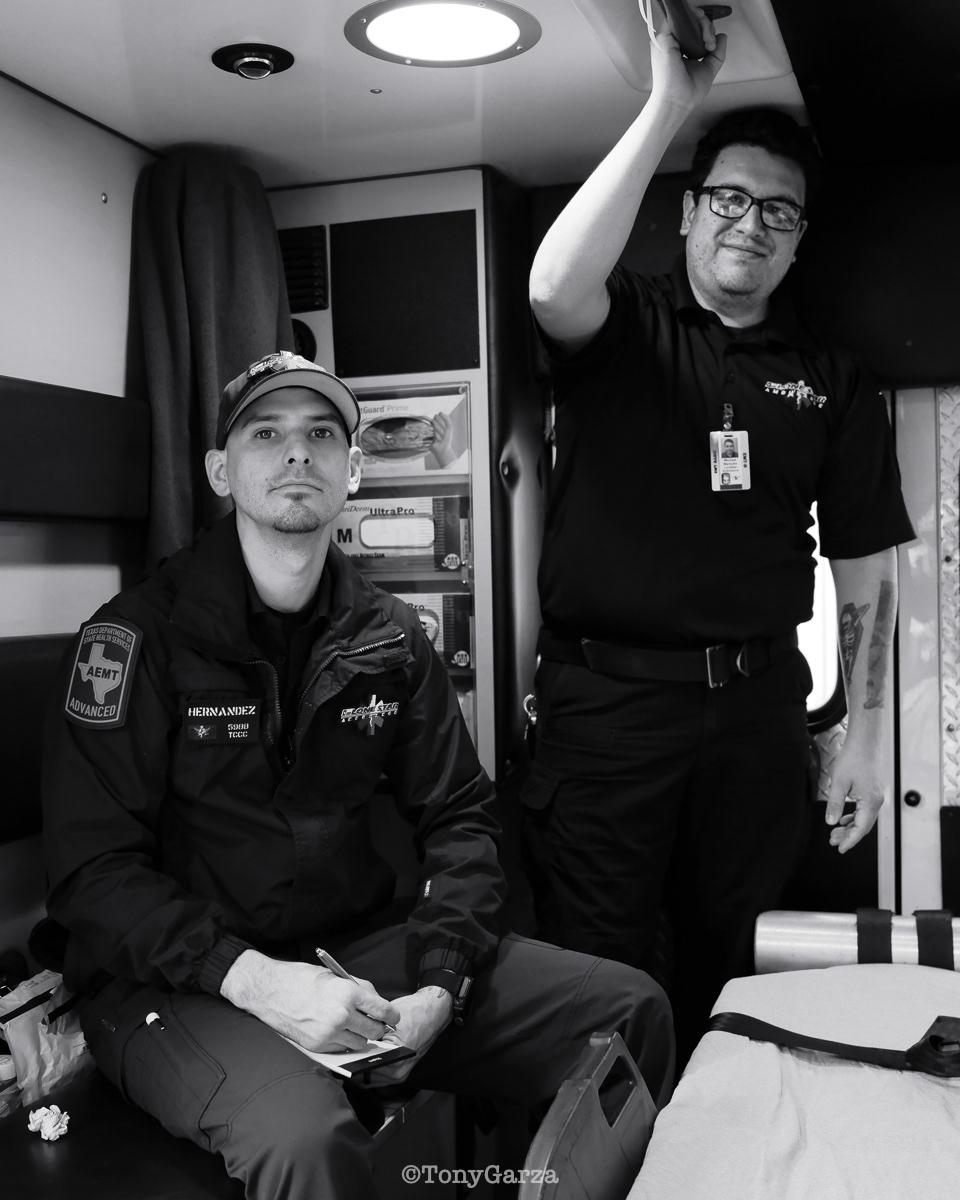
Alpha 3: AEMT J. Hernandez and EMT M. Marquez, on a 12 hour shift, with a combined experience of 22 years.
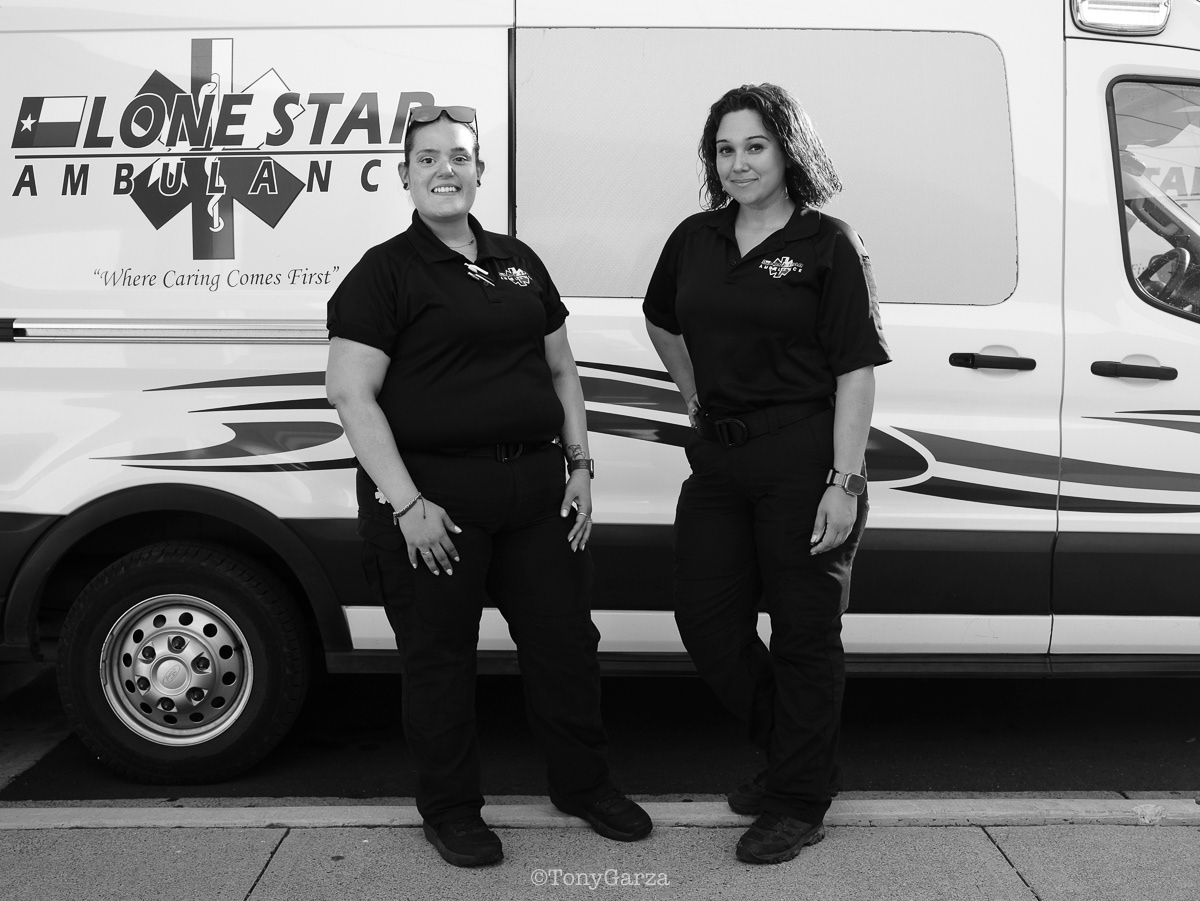
Alpha 2: AEMT M. Rodriguez and AEMT A. Pena. combined experience of 12 years.
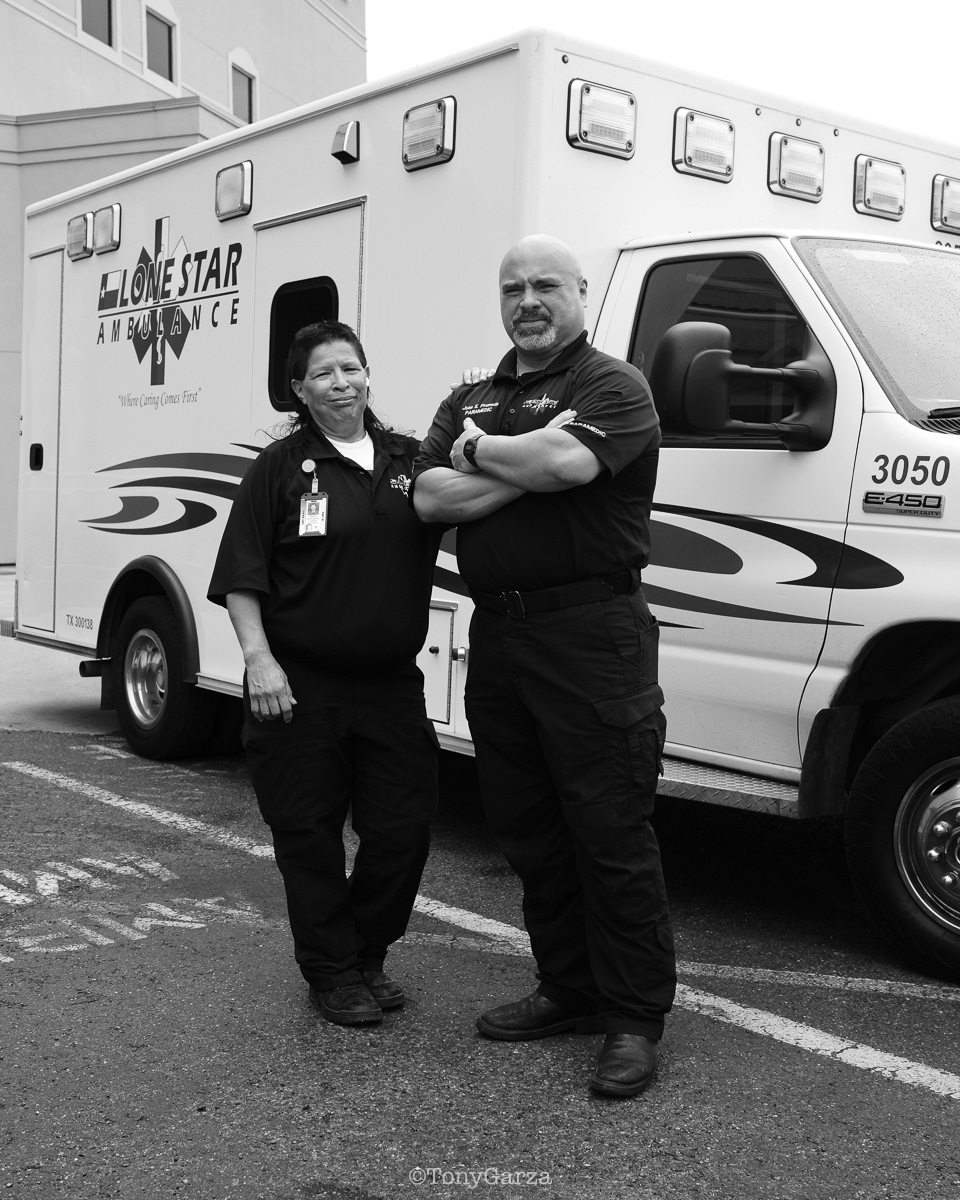
Medic 1: Paramedic J. Pruneda and EMT N. Dominguez, combined experience of 43 years.

Paramedic I. Valencia, on Medic 4, 3 years of experience in the field
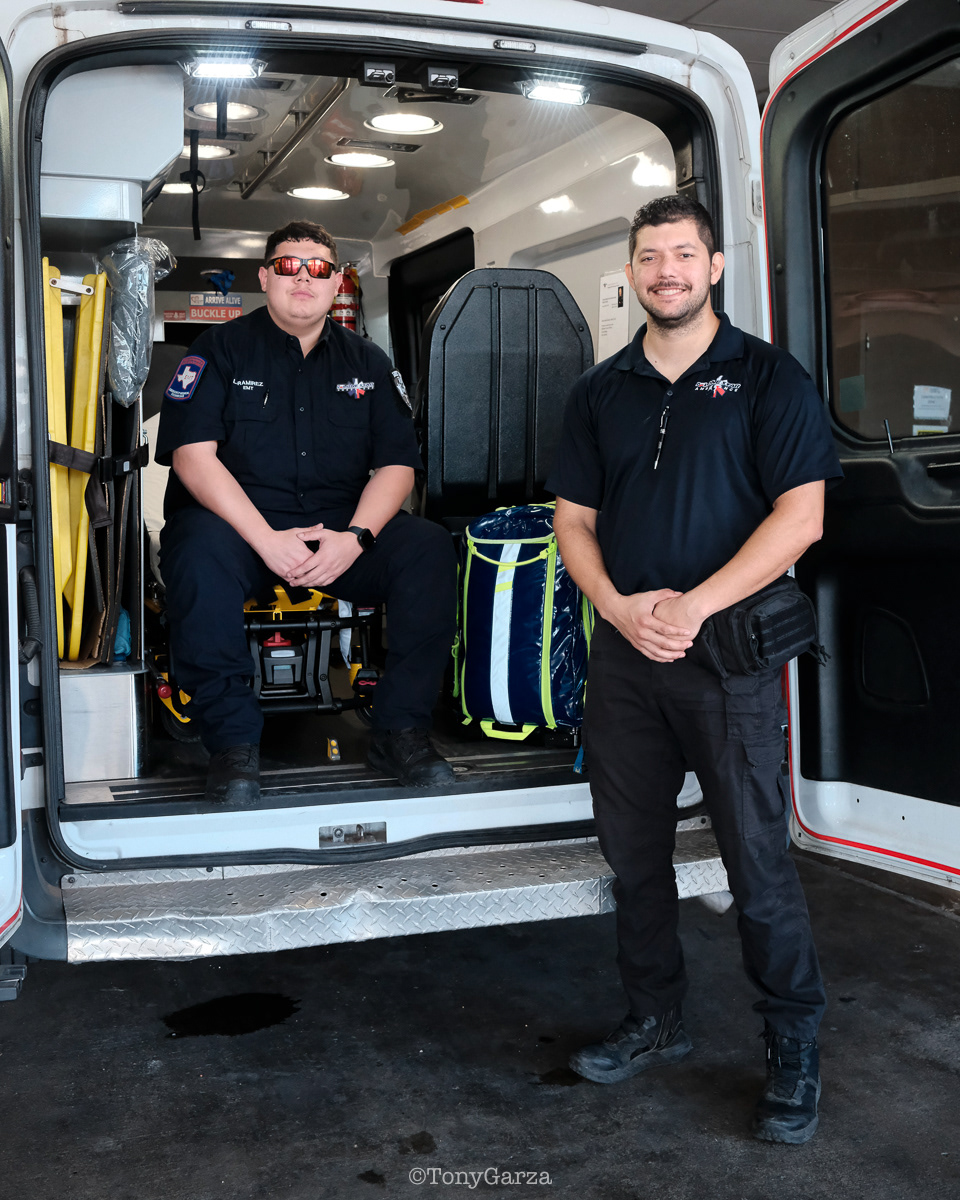
Alpha 3: Paramedic R. Maciel (11 years) and EMT L. Ramirez (5 years), on a 12-hour shift, both joined EMS to get 911 experience and save lives.
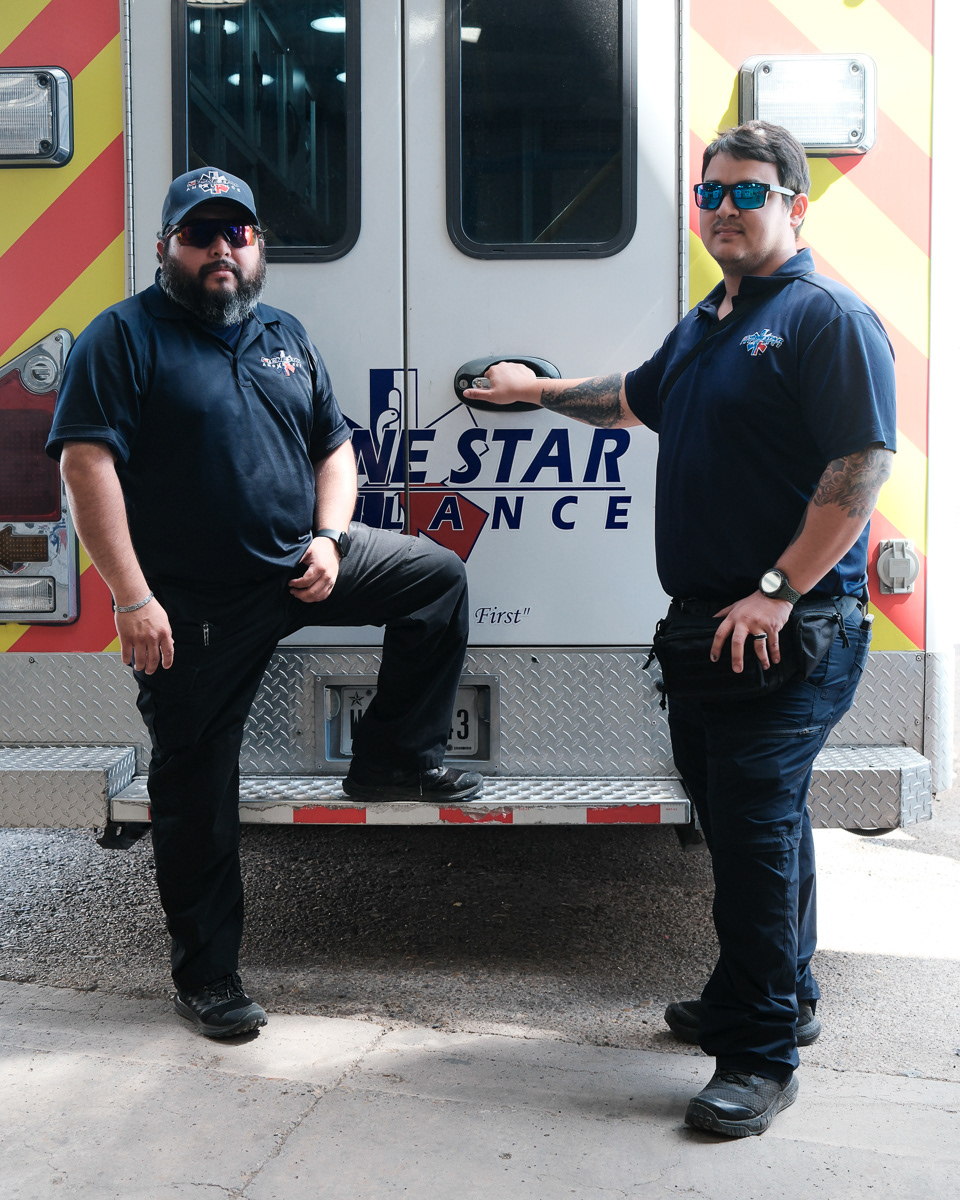
Medic 11: Paramedic A. Munoz (6 years) and EMT L. Gaytan (14 years)
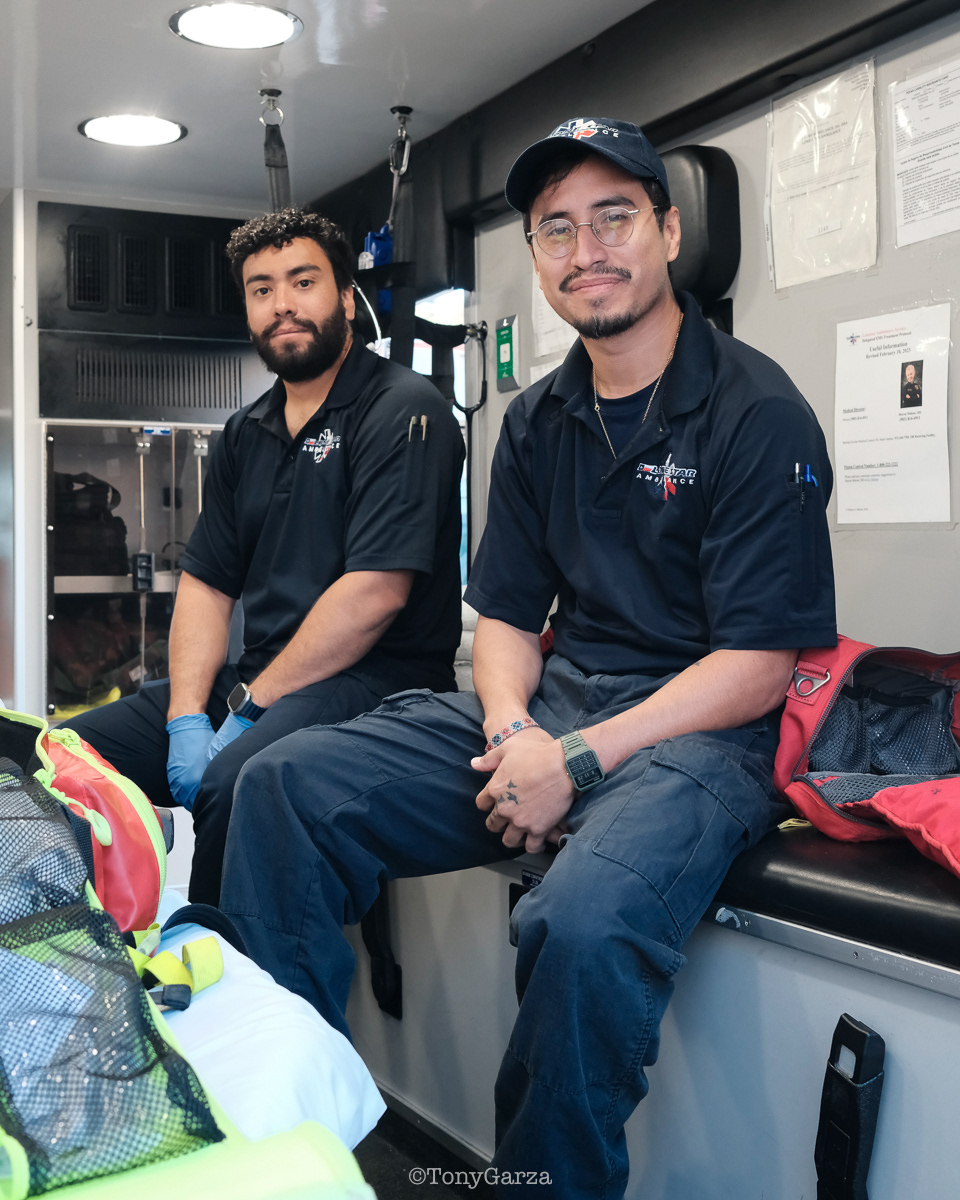
Medic 6: Paramedic R. Melchor ( 7 years) and EMT R. Longoria ( 6 years)
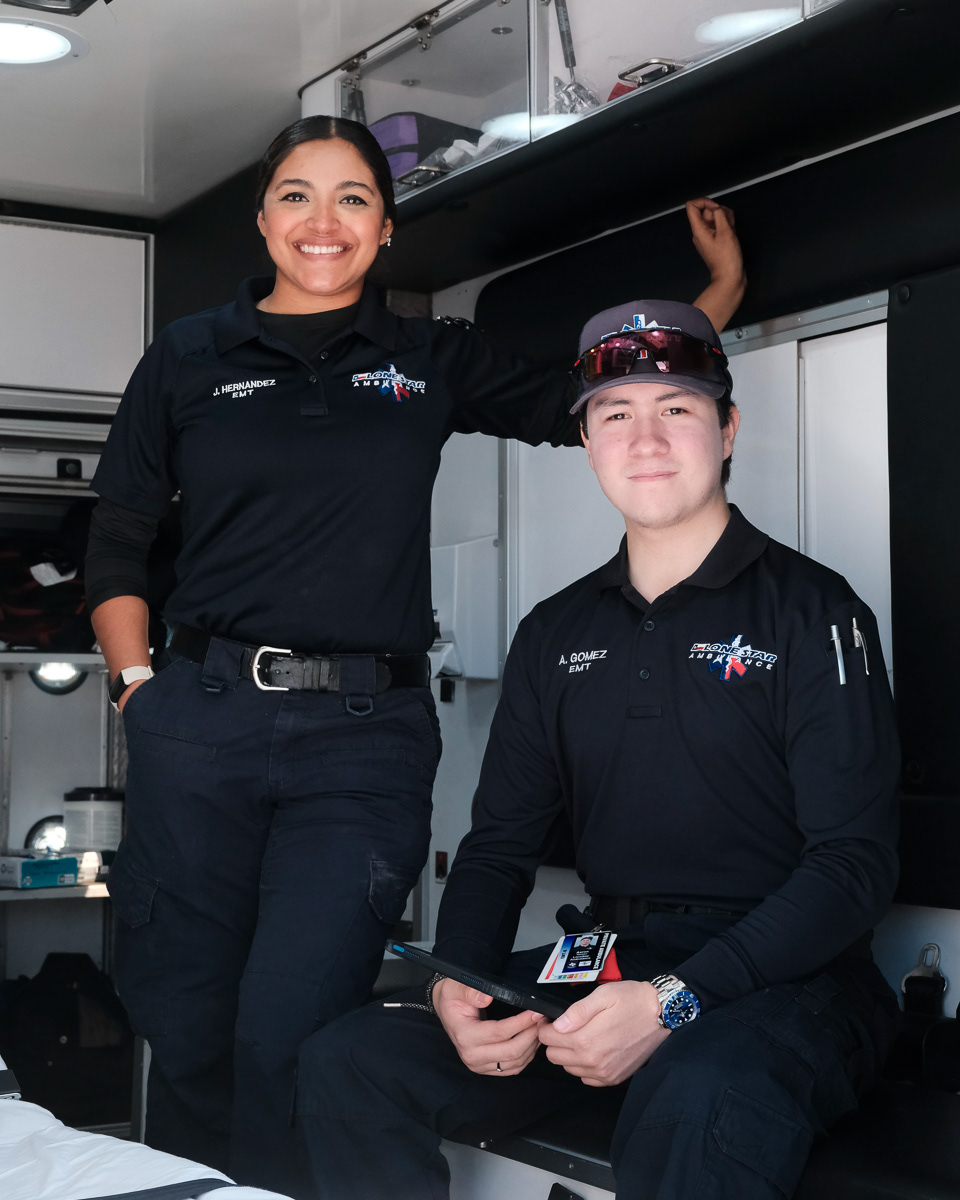
IFT Medic 32: EMT J. Hernandez and EMT A. Gomez
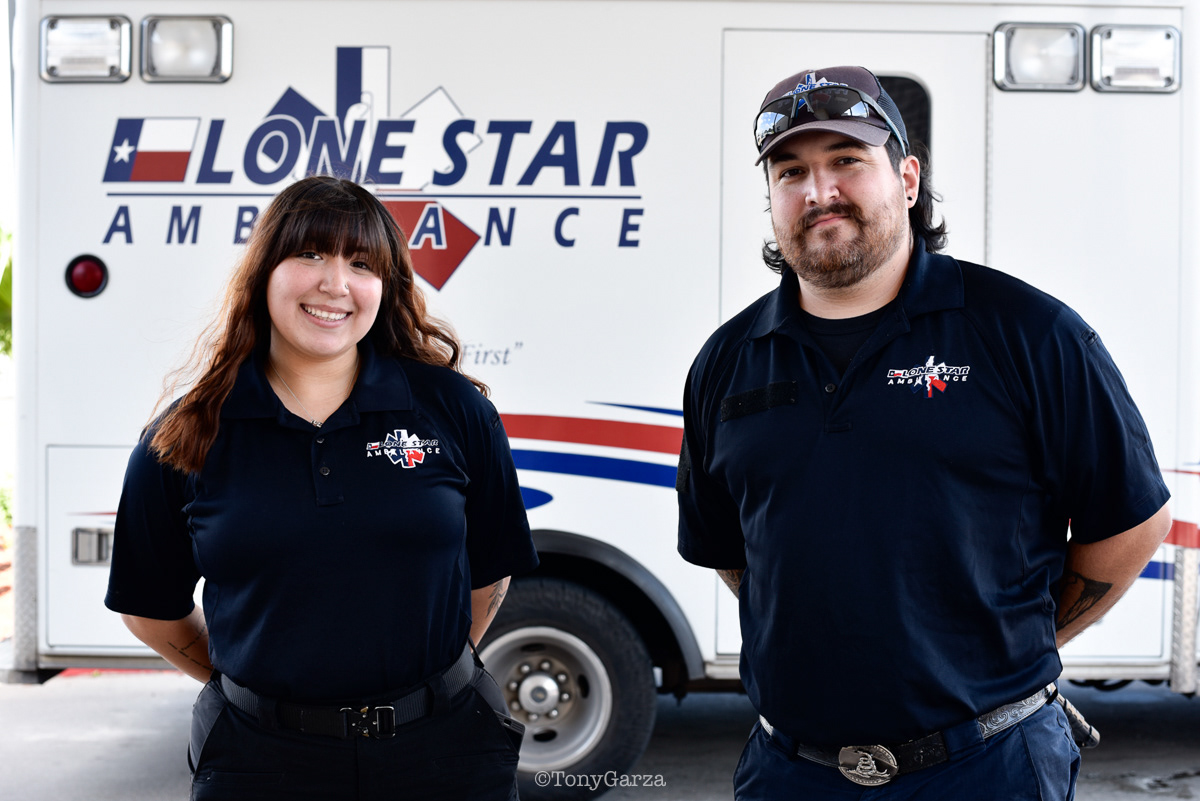
Medic 6: Paramedic J Amador (6 years) and EMT K. Zapata (3 years)
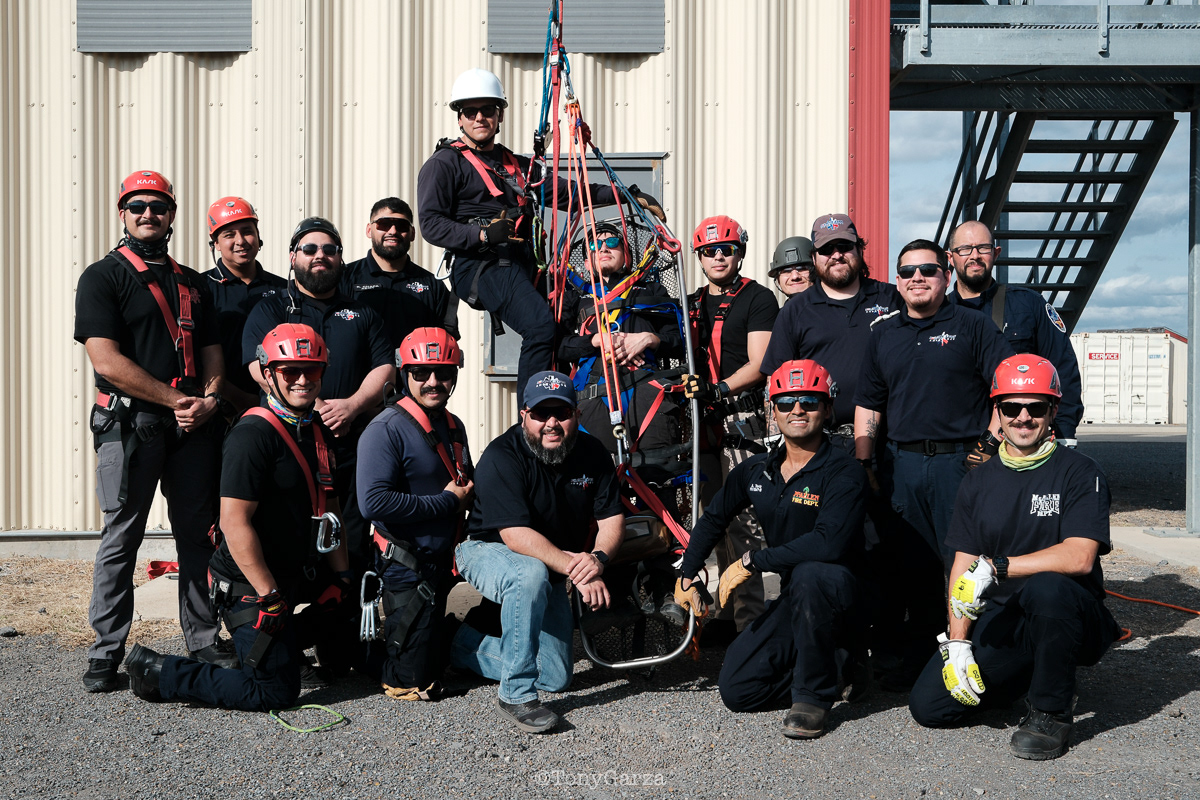
Rope rescue training with Lone Star Medics and McAllen FD.
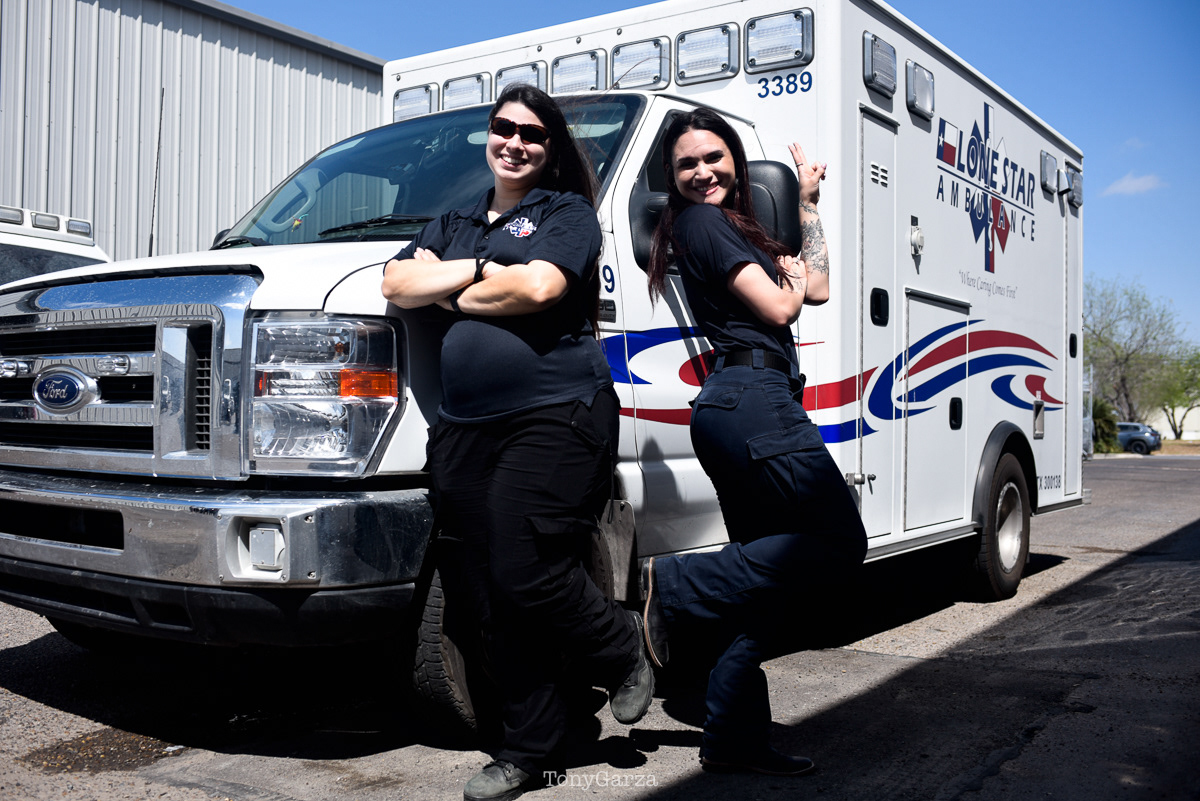
Medic 7: Paramedic D. Garza (6 years) and EMT D. Michalk (3 years)
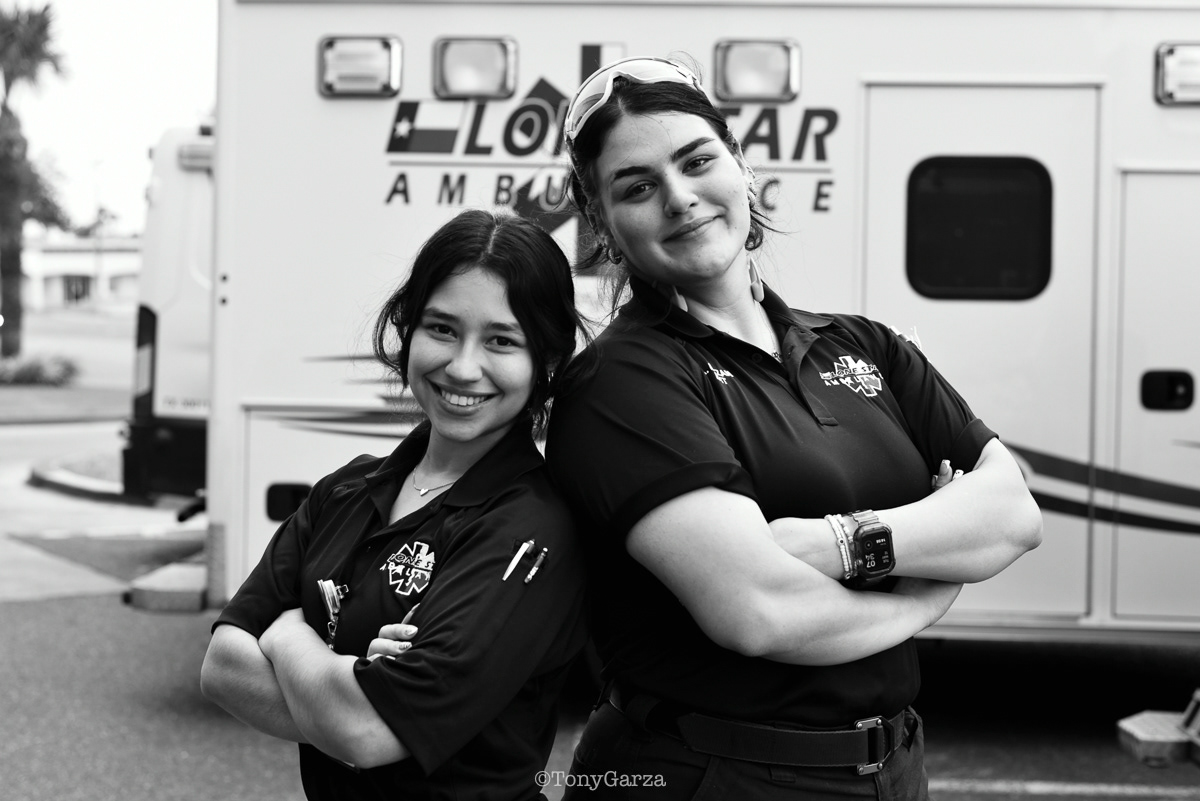
Medic 7: Paramedic A. Cantu (3 years) and EMT A. Bazan (4 months)
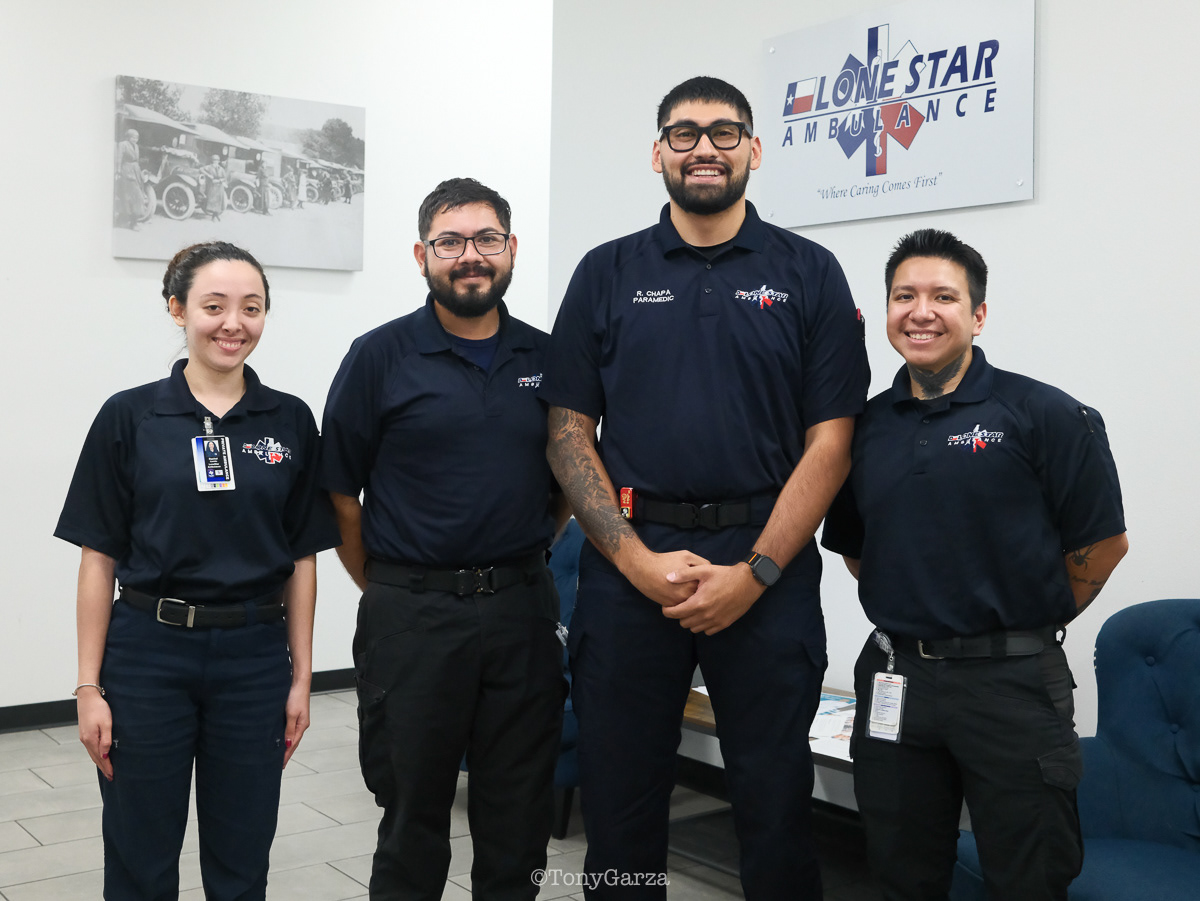
(Lto R) EMT Castillo, EMT Venecia, Paramedic Chapa, Paramedic Valencia
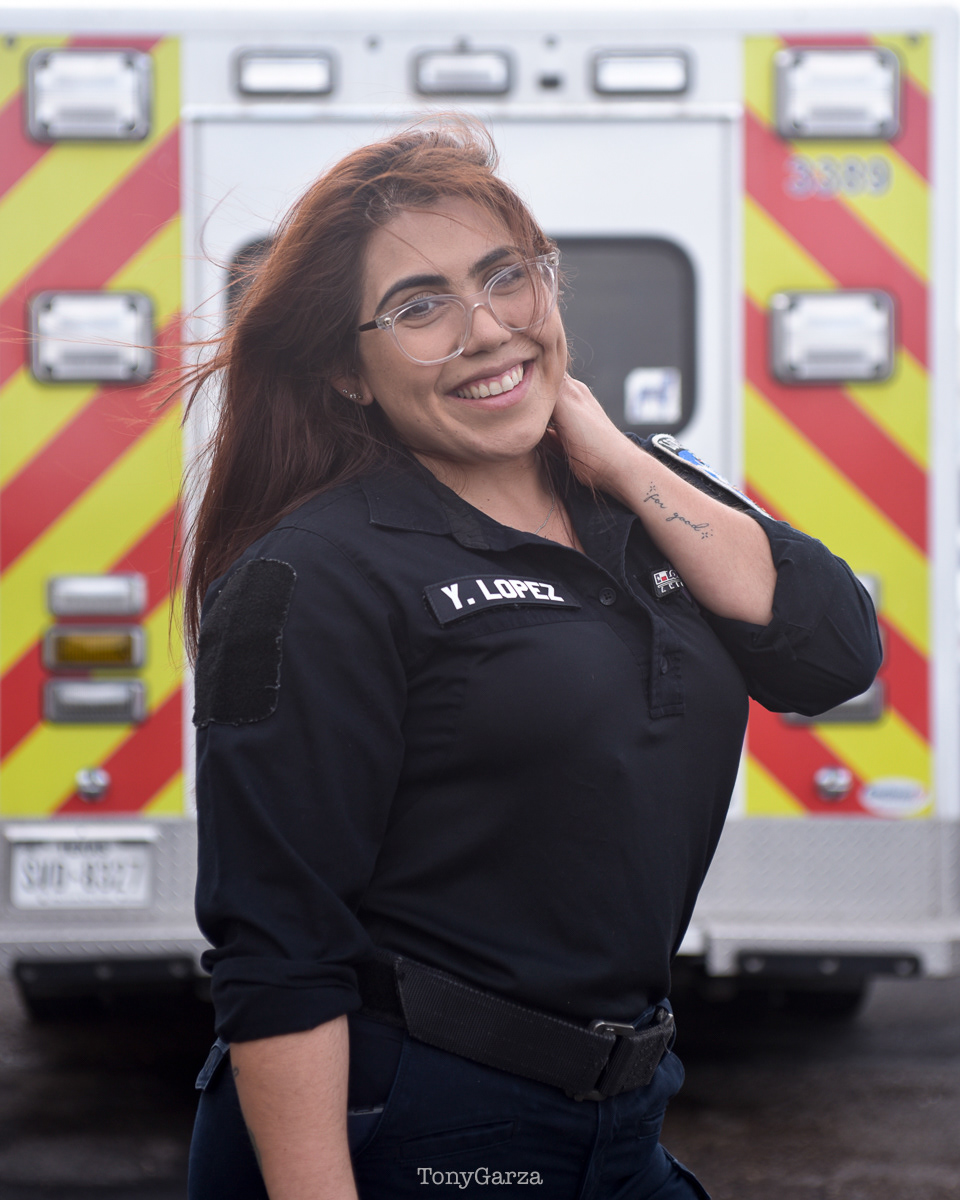
Y. Lopez, EMT, 9 years in EMS
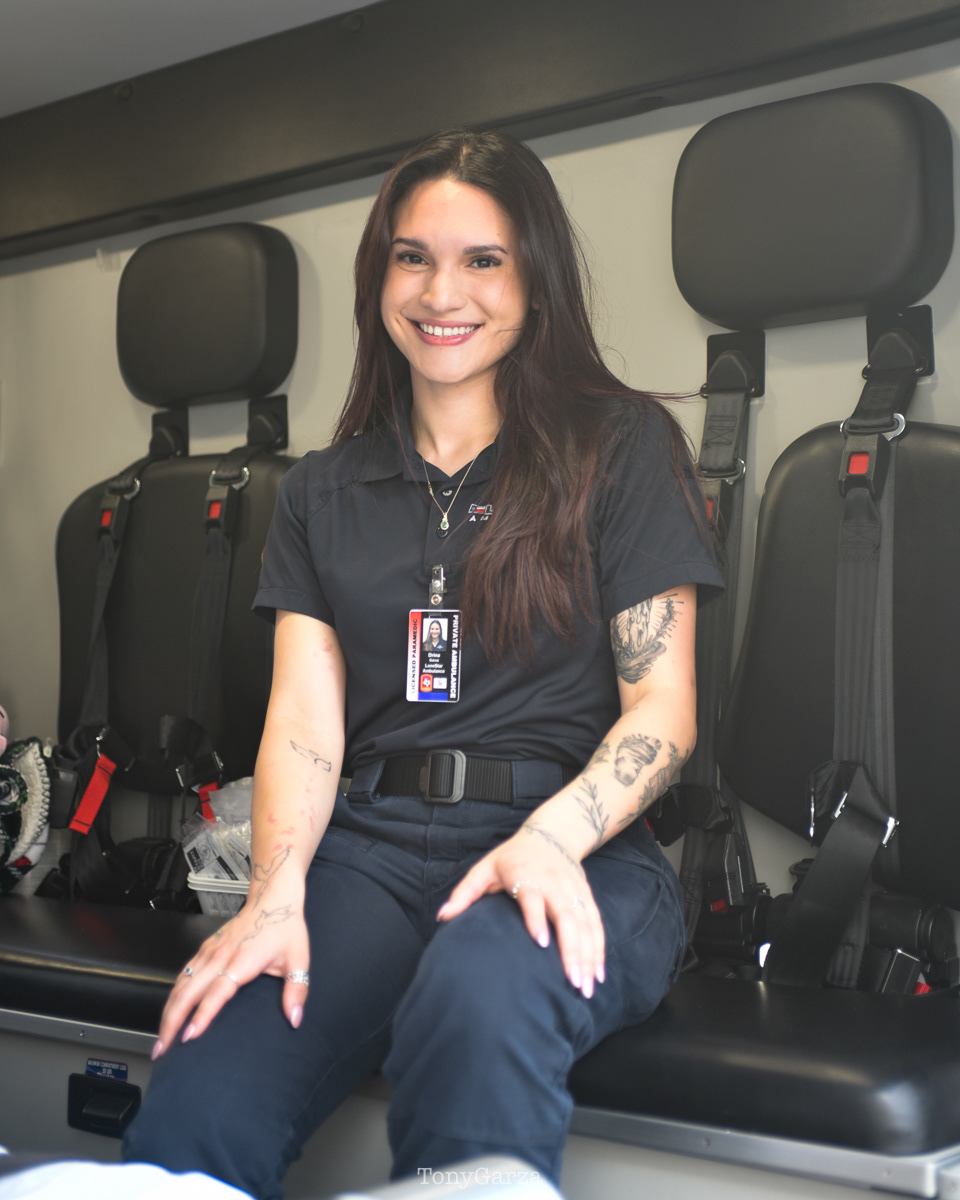
D. Garza, Paramedic, 6 years in EMS
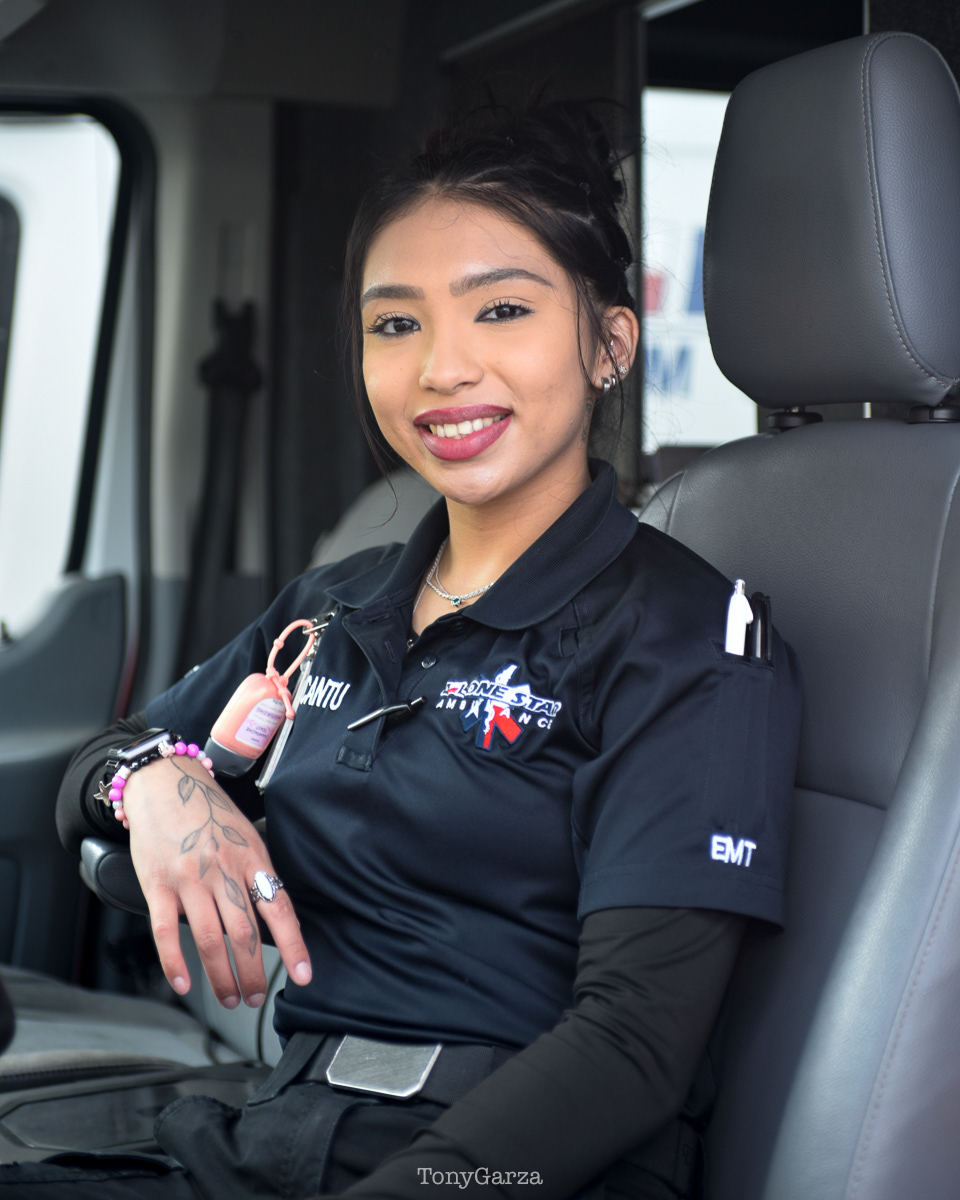
A. Cantu, EMT, 3 years in EMS
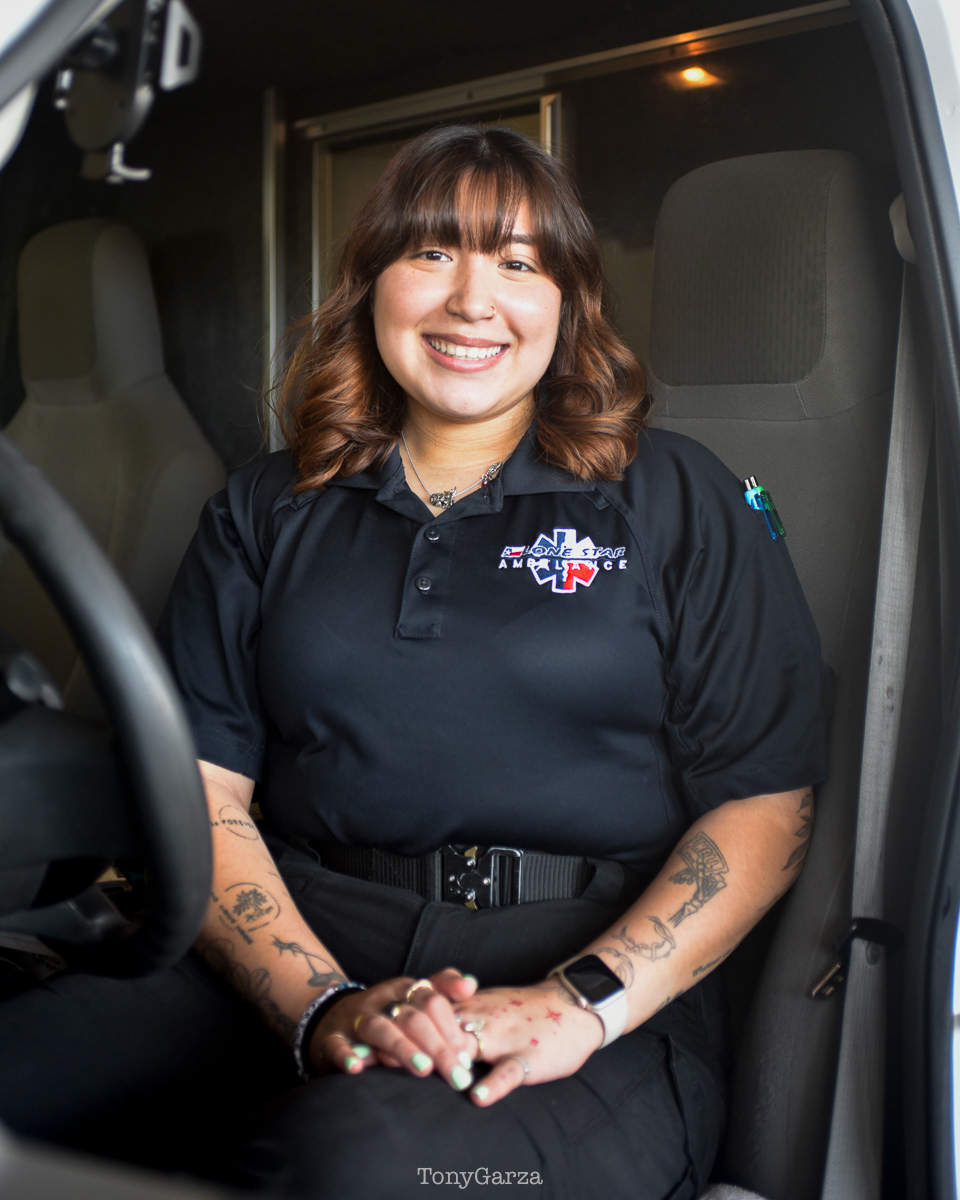
K. Zapata, EMT, 3 years in EMS
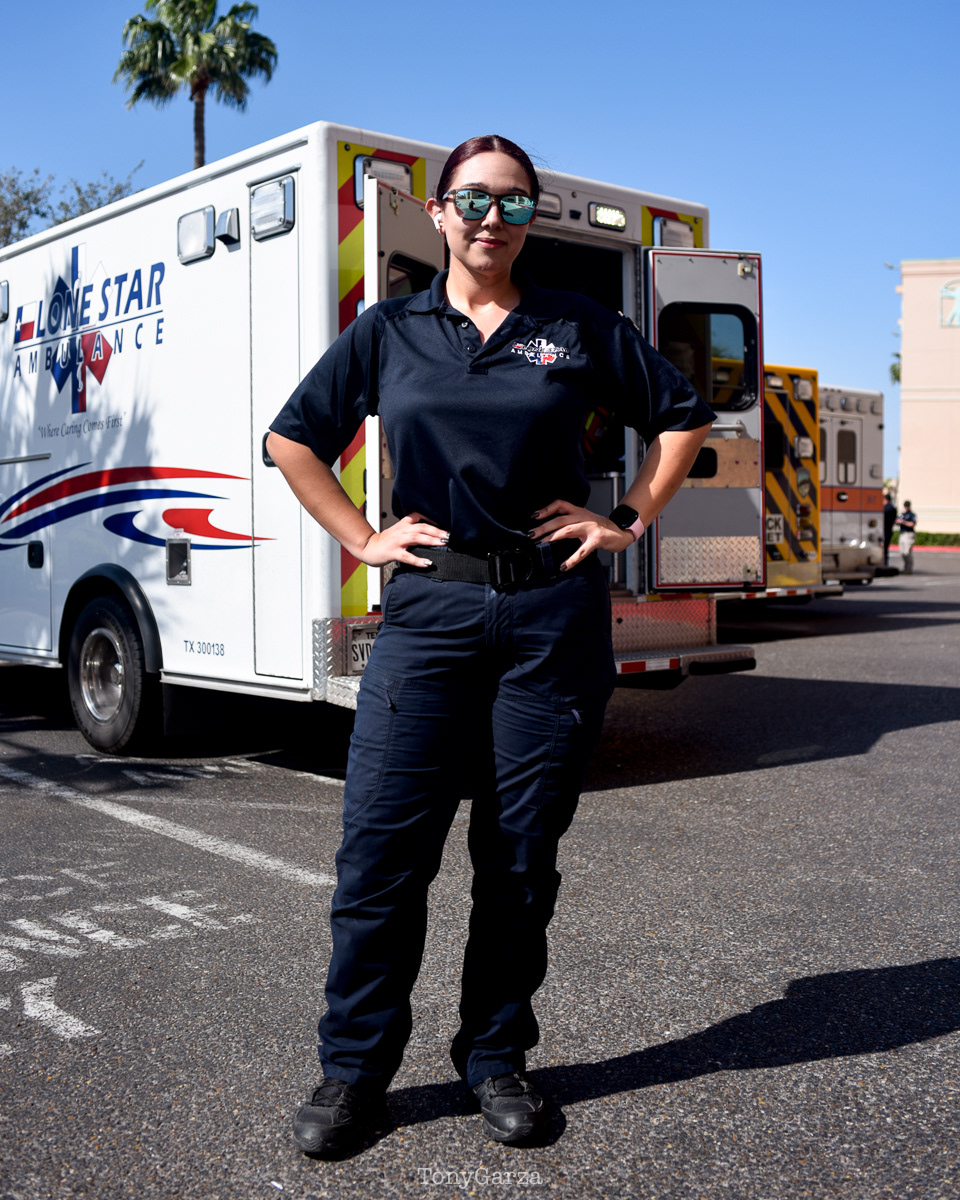
A. Pena, AEMT, 8 years in EMS
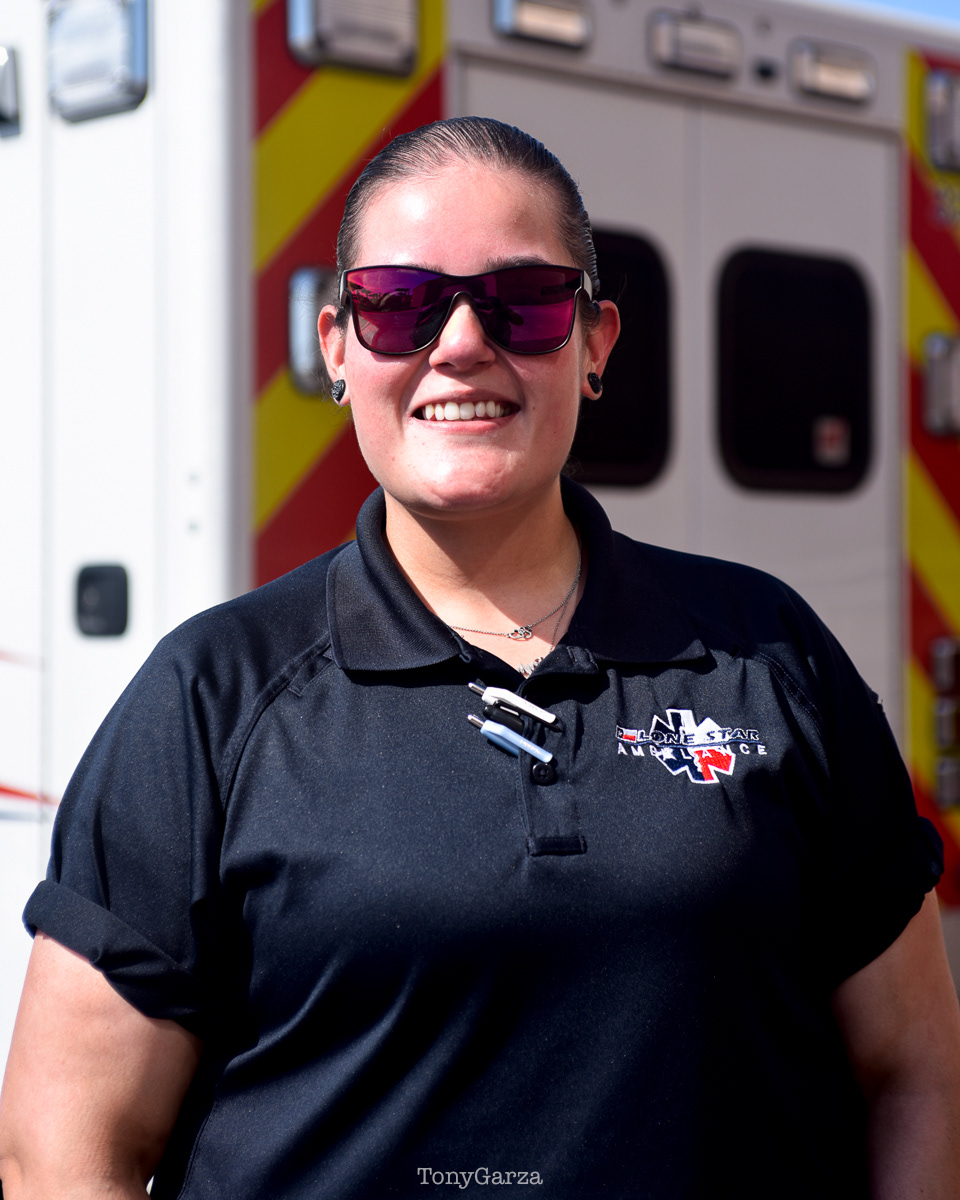
M. Rodriguez, AEMT, 6 years in EMS
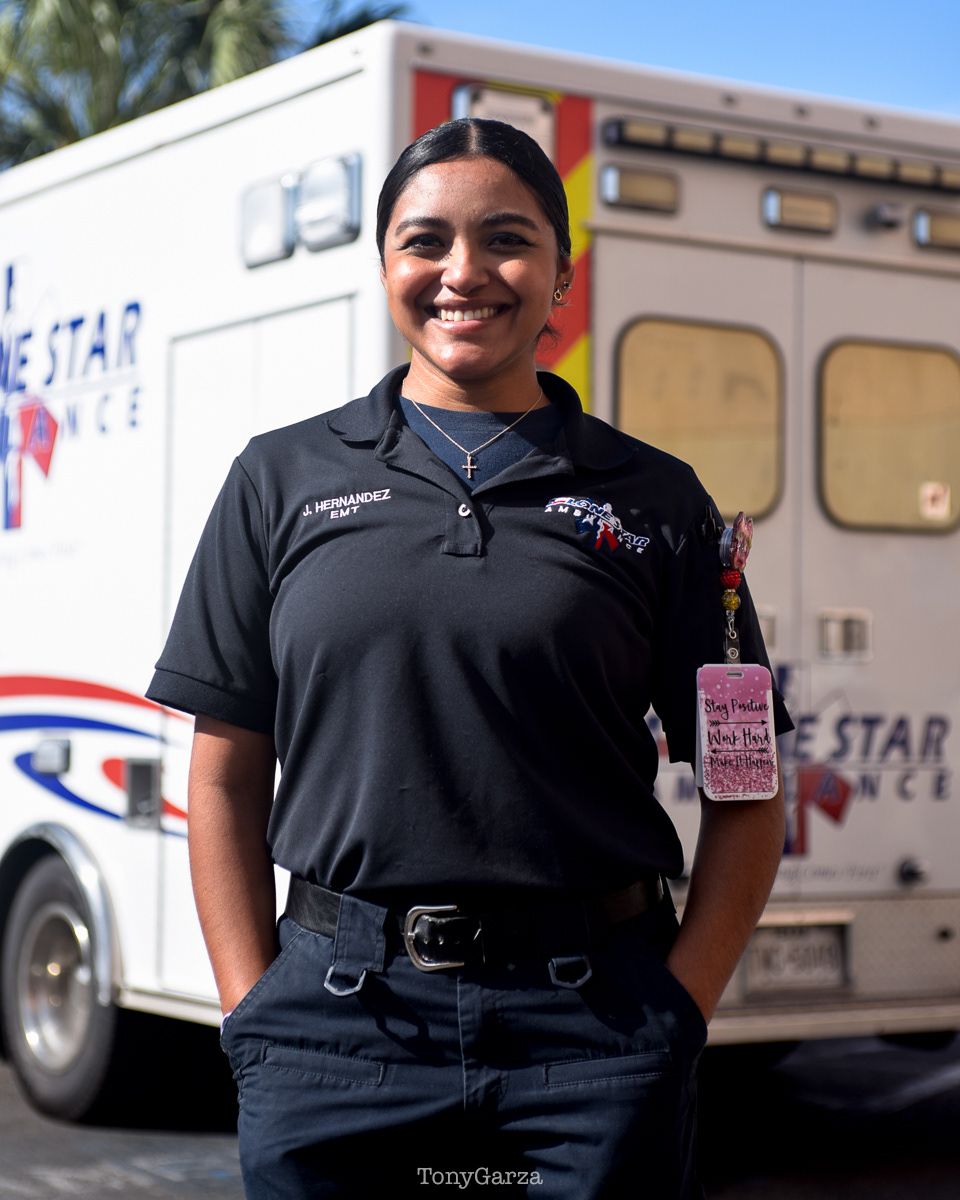
J. Hernandez, EMT, 8 years in EMS

J. Pruneda, Paramedic, with 24 years of EMS service.
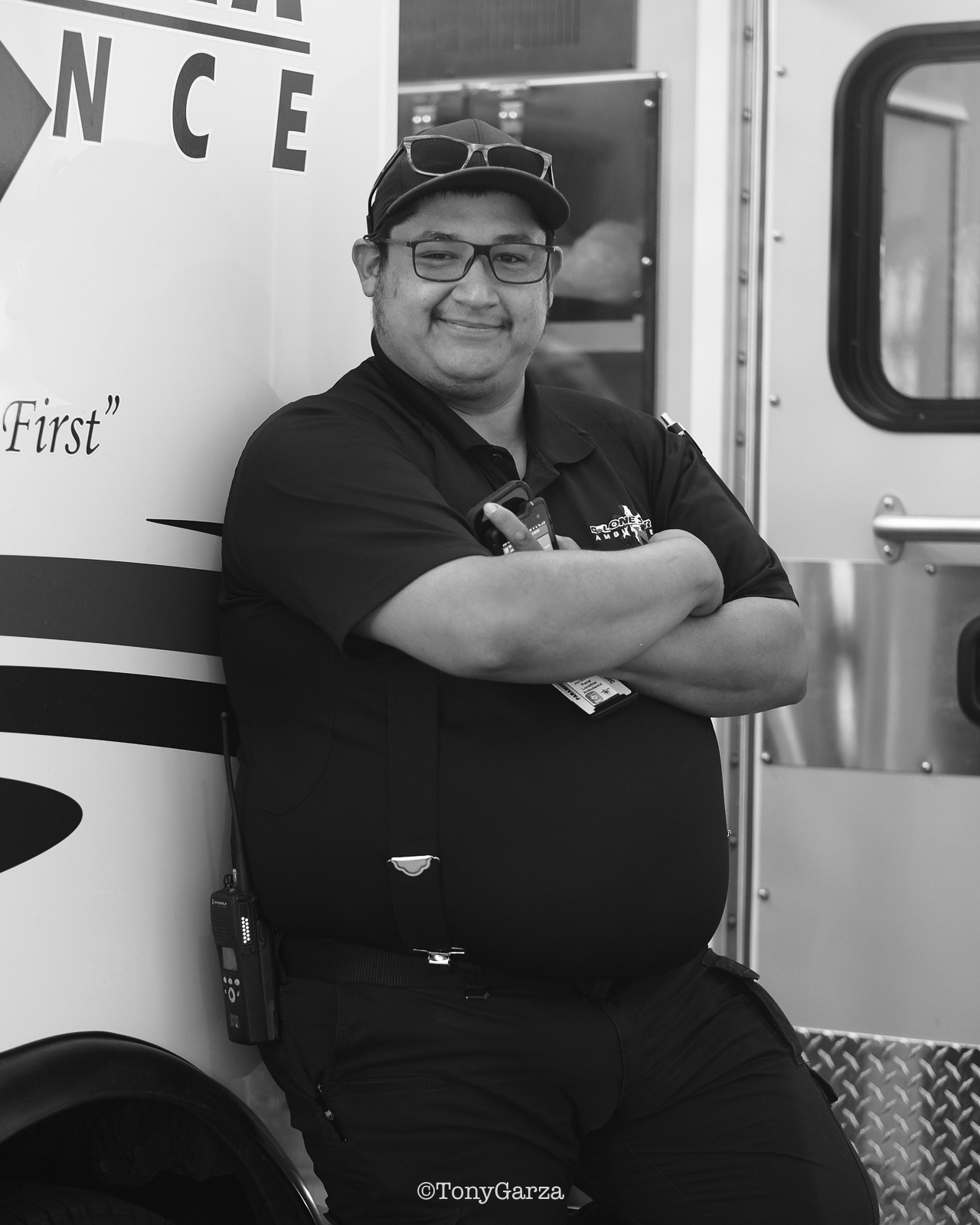
J. Pena, Paramedic, with 8 years of EMS service.
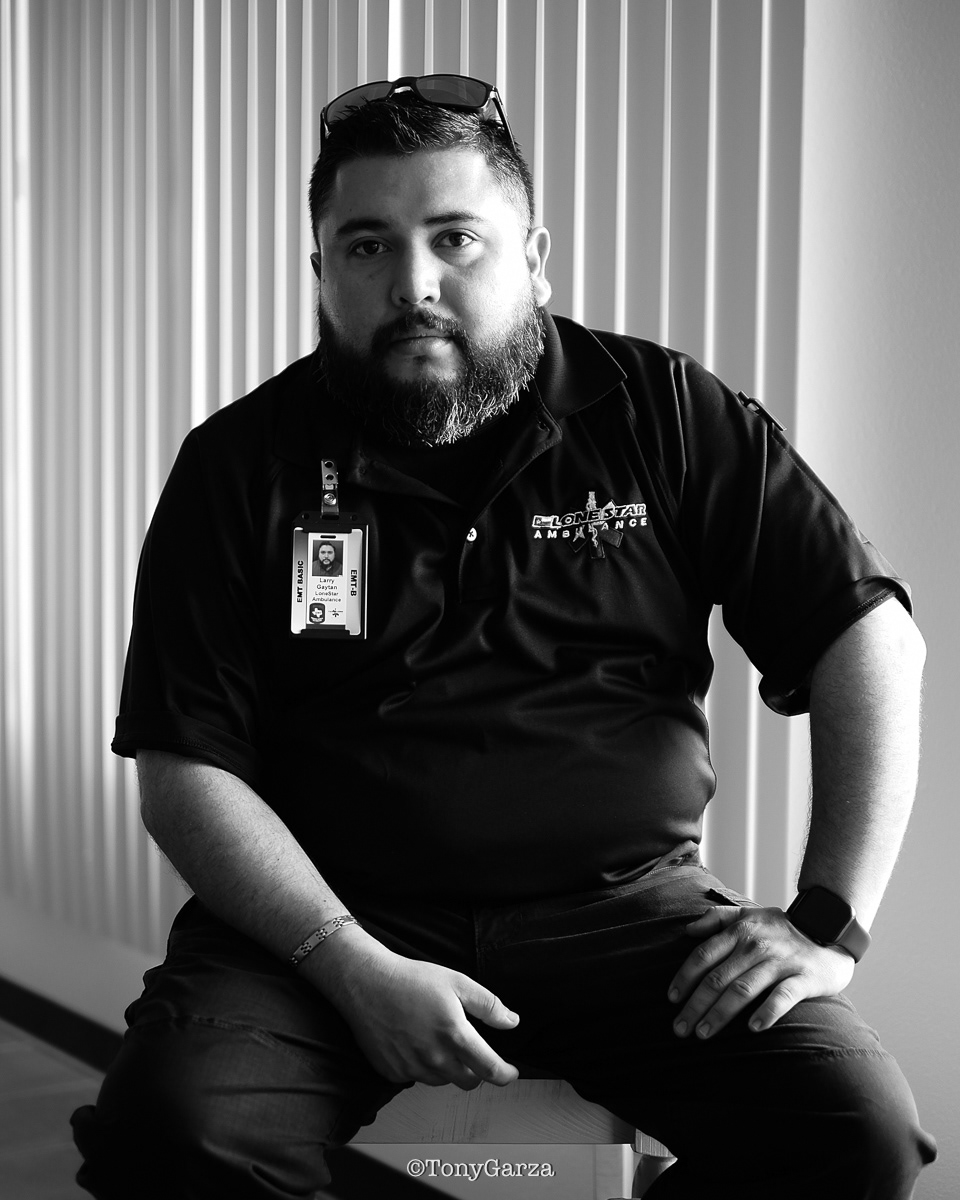
L. Gaytan, EMT, with 13 year's of EMS service

E. Hernandez, Paramedic, with 14 year's of EMS service.
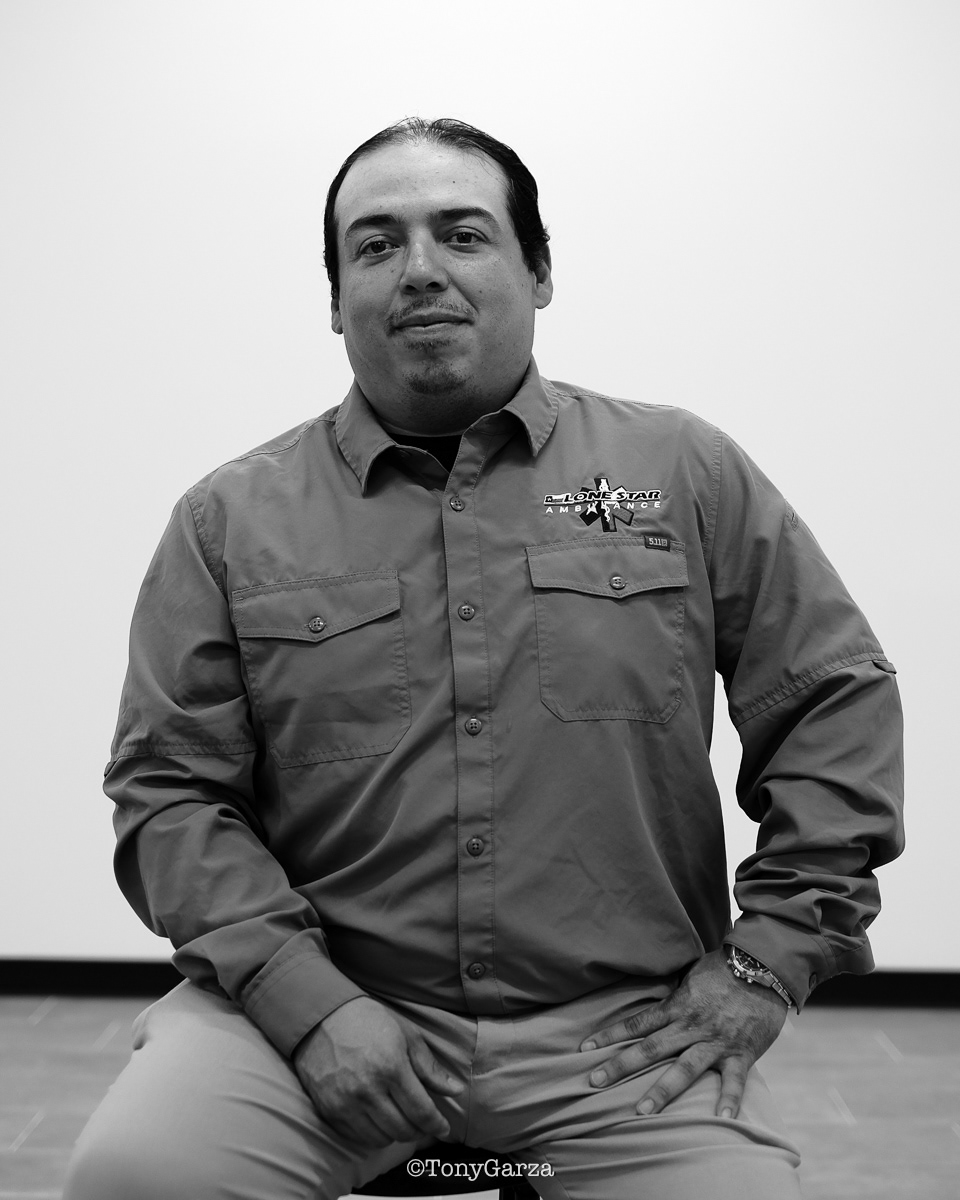
J. Lopez, Task Force Leader and EMT, with 21 year’s of EMS service.

C. Magallan, Dispatcher, with 2 year’s of communication services.

A. Rios, Dispatcher, with a year of communication services.
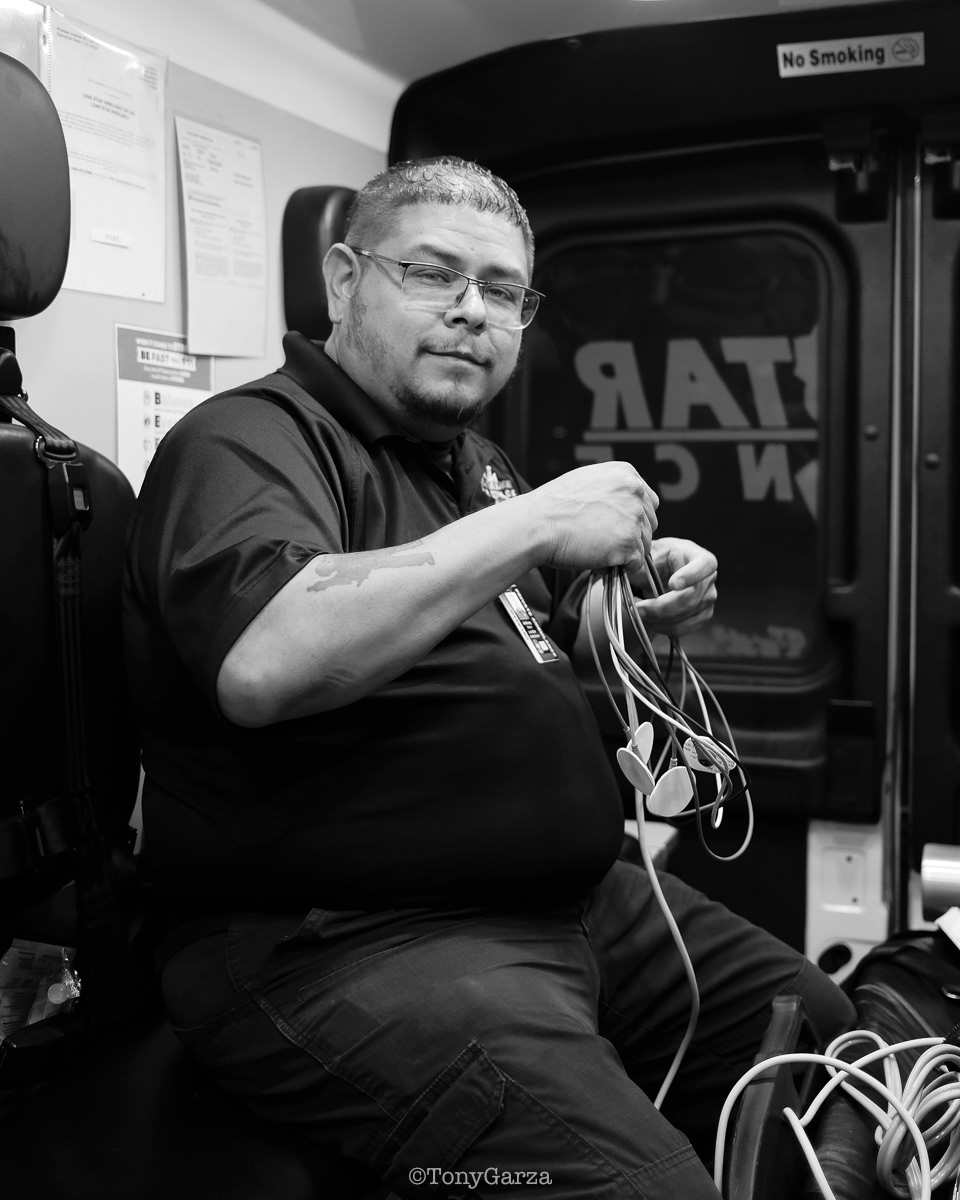
A. Ybarra, EMT, with 10 years of EMS service.
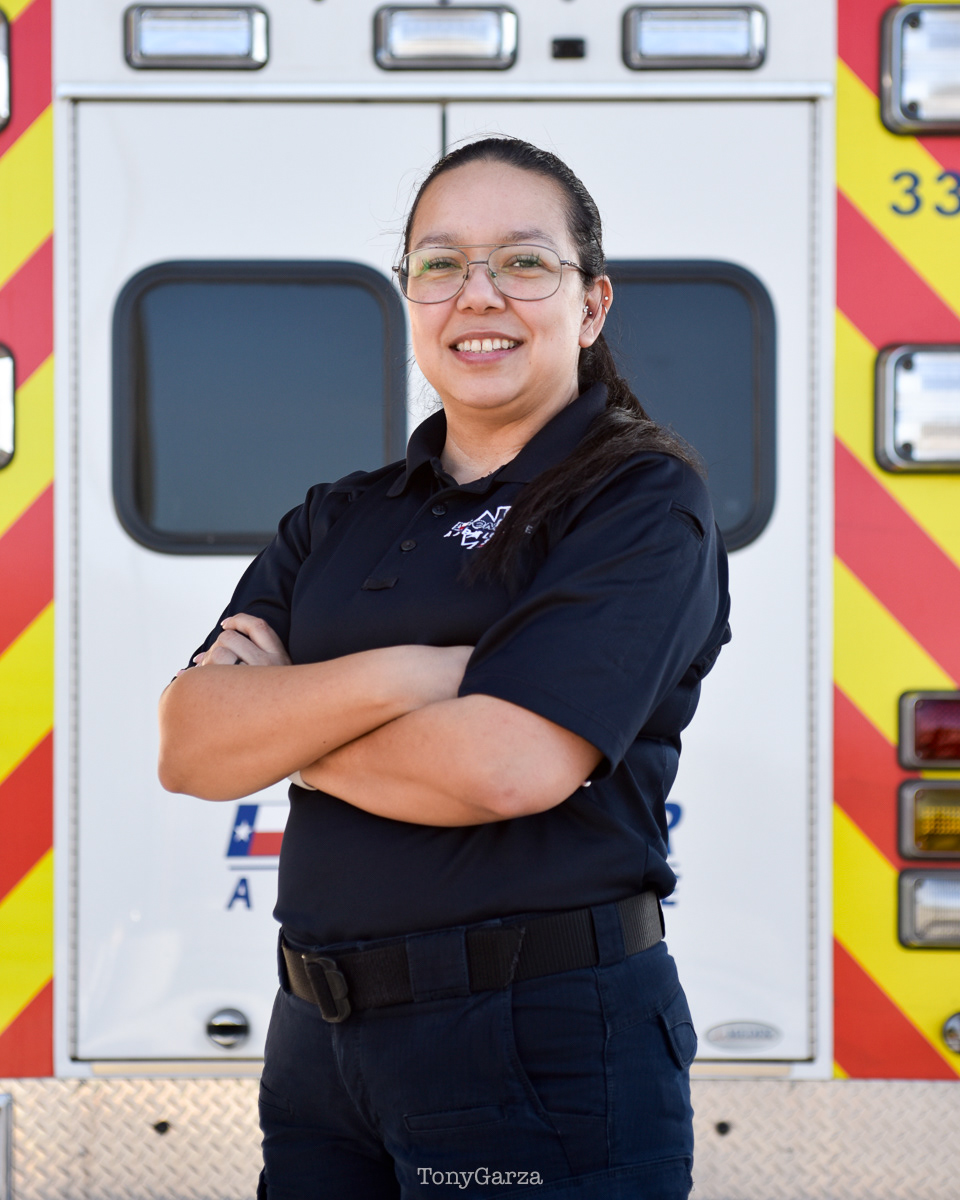
K. Villarreal, Paramedic, 10 years in EMS
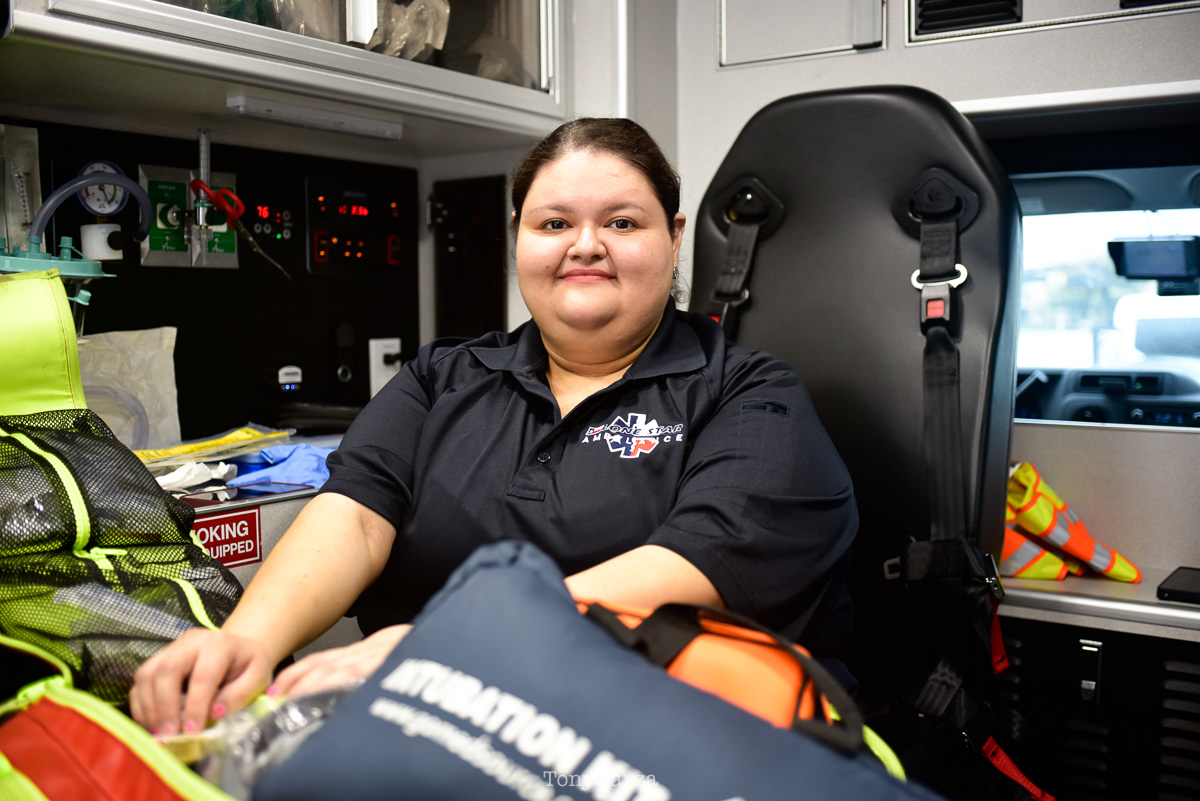
O. Mendoza, Paramedic, 17 years in EMS
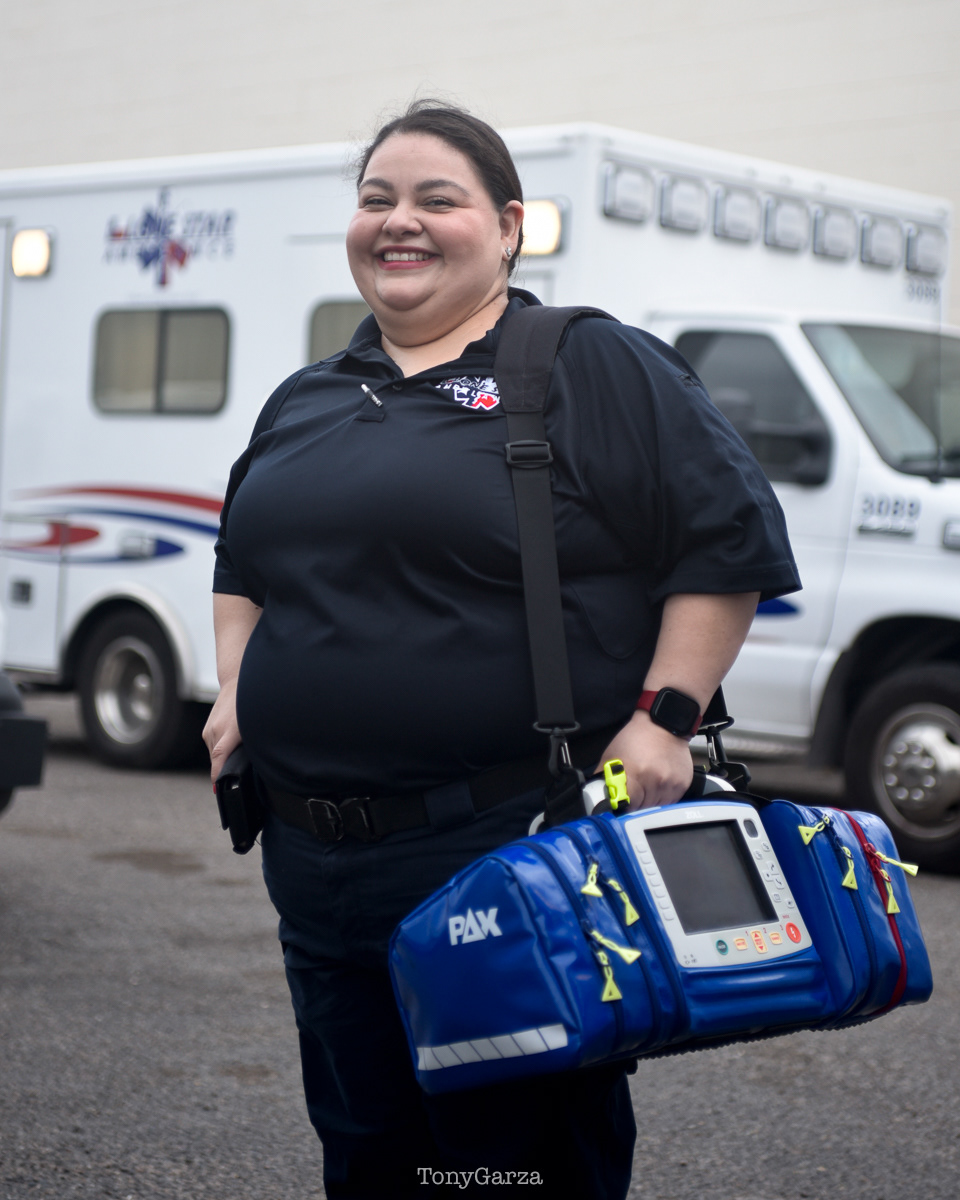
D. Mendoza, Paramedic, 20 years in EMS
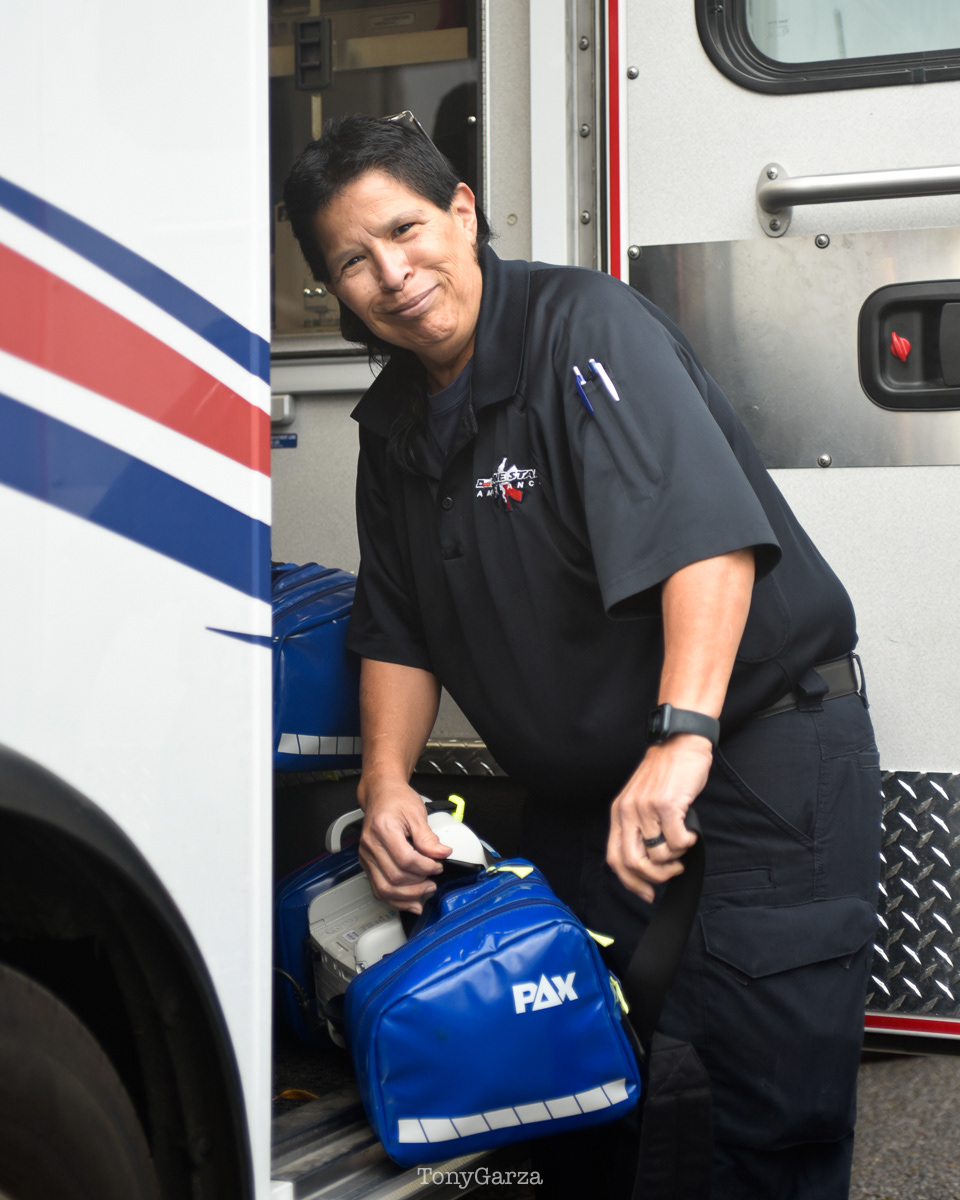
N. Dominguez, EMT, 20 years in EMS
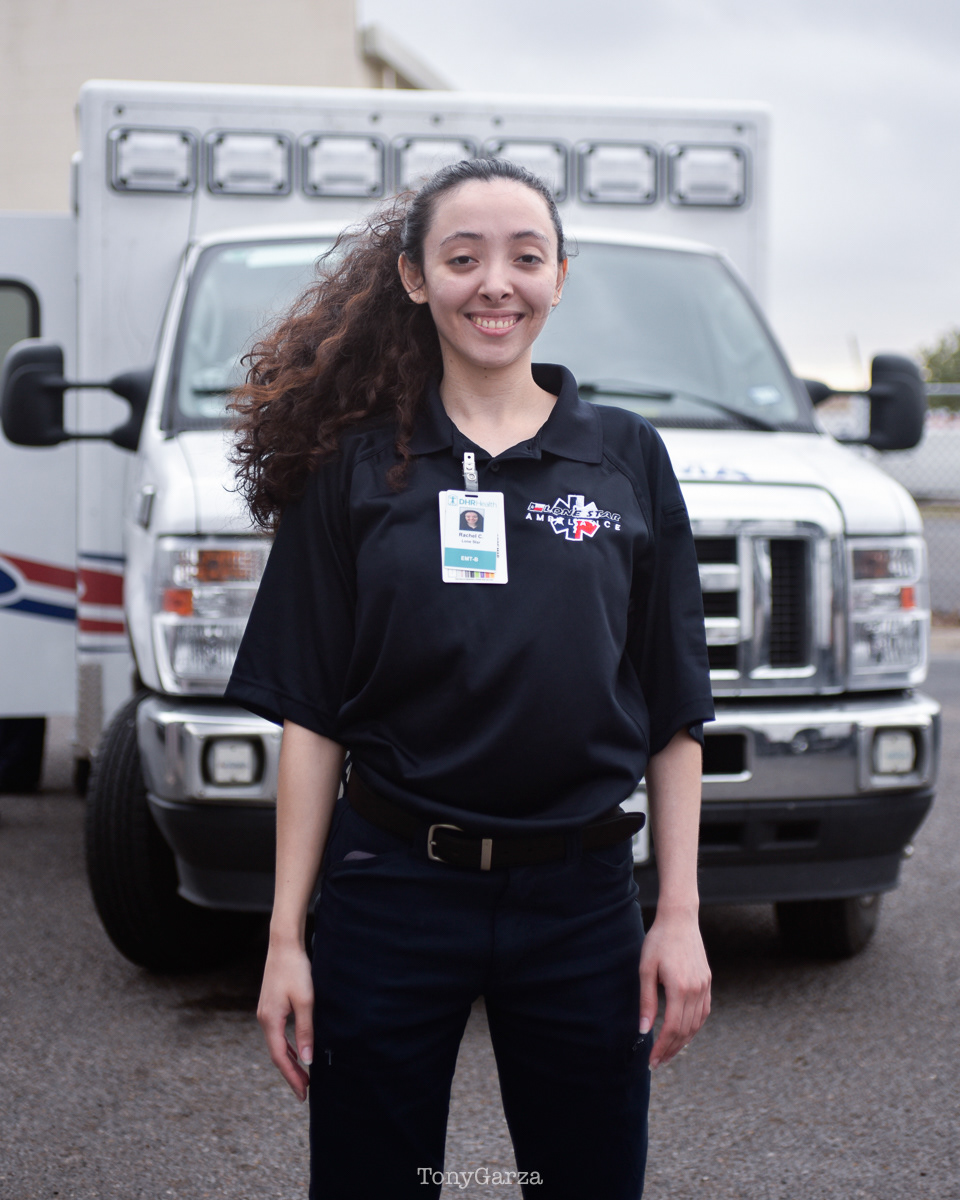
R. Castillo, EMT, 2 months in EMS
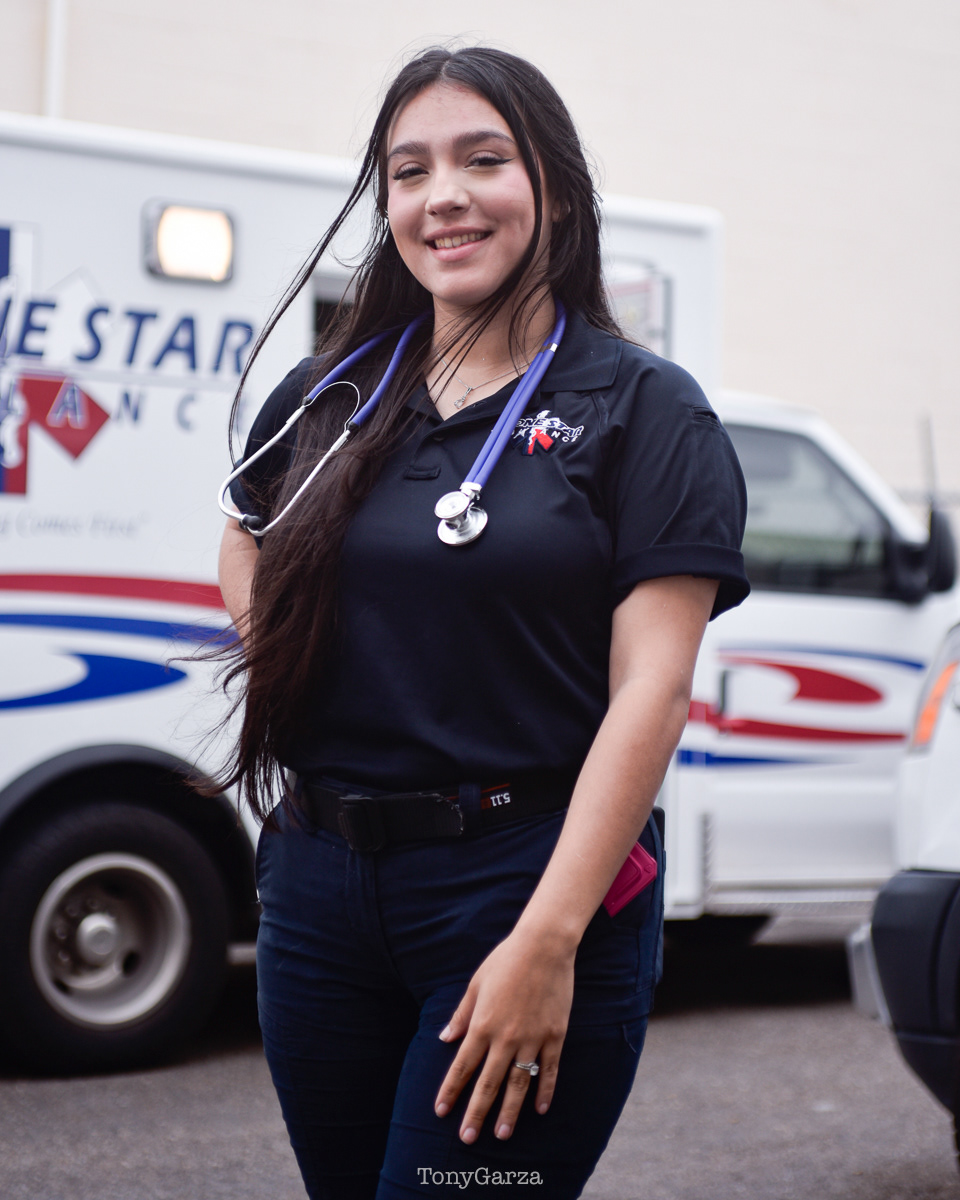
J. Casarez, Paramedic, 5 years in EMS
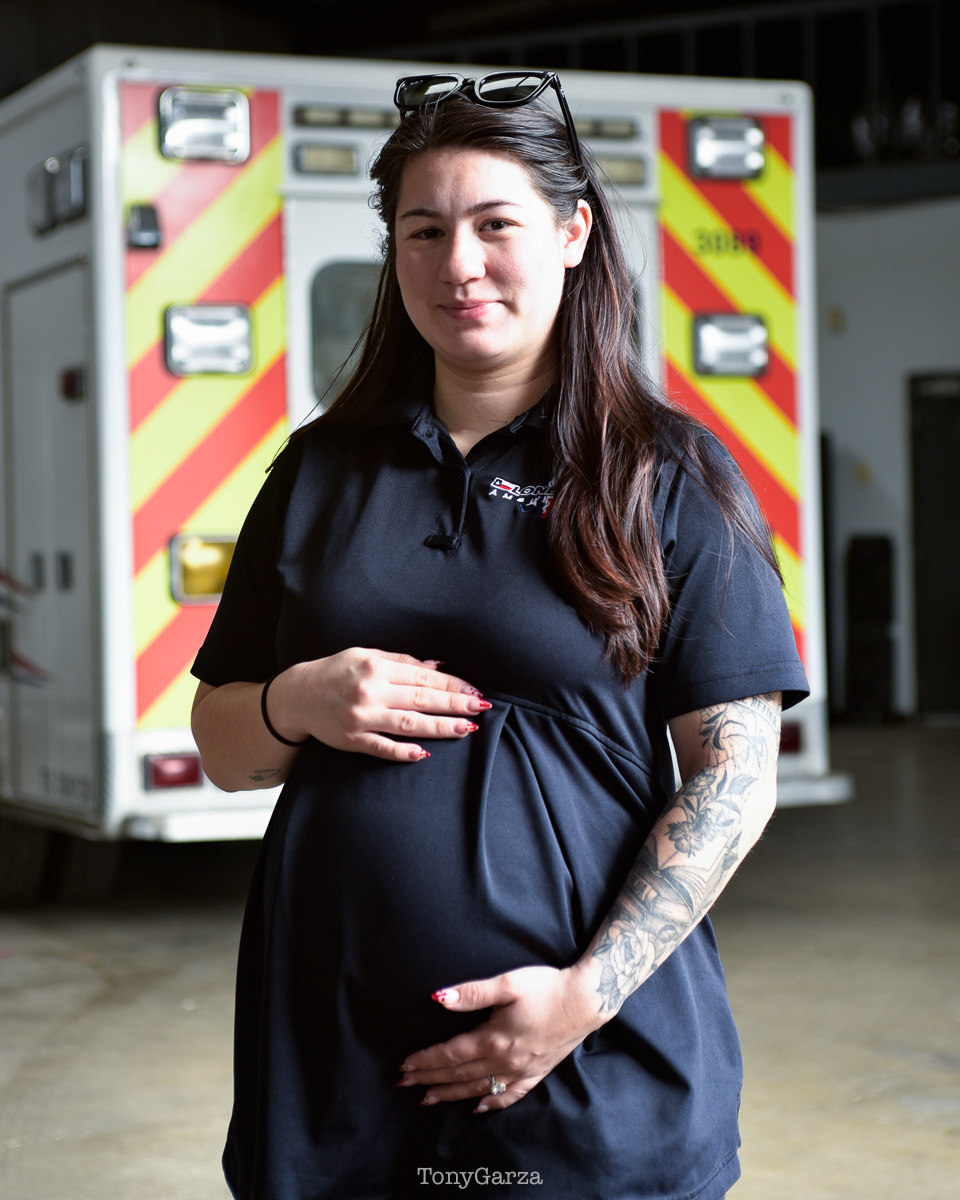
M. Perez, EMT, 2 years in EMS
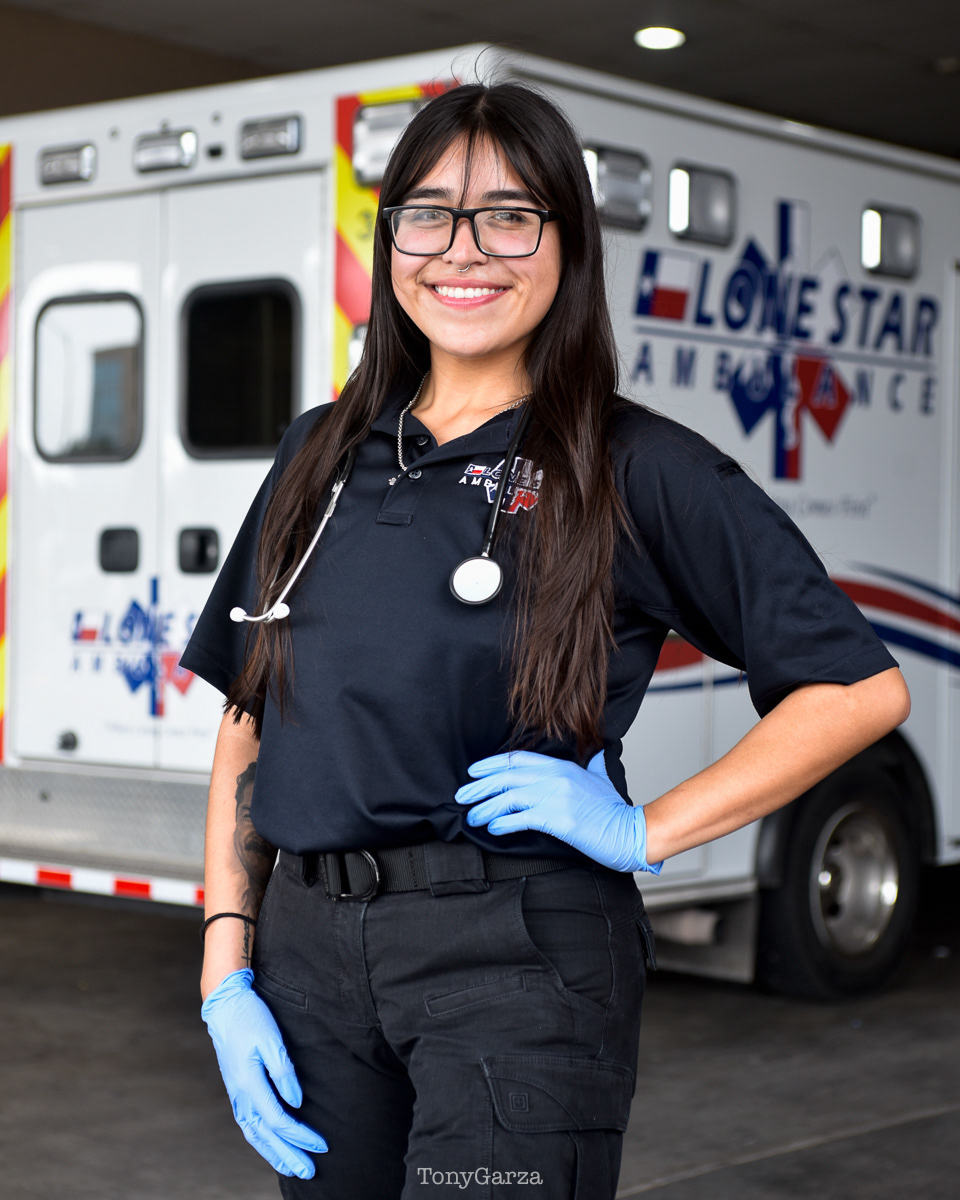
B. Morales, Paramedic, 4 years in EMS
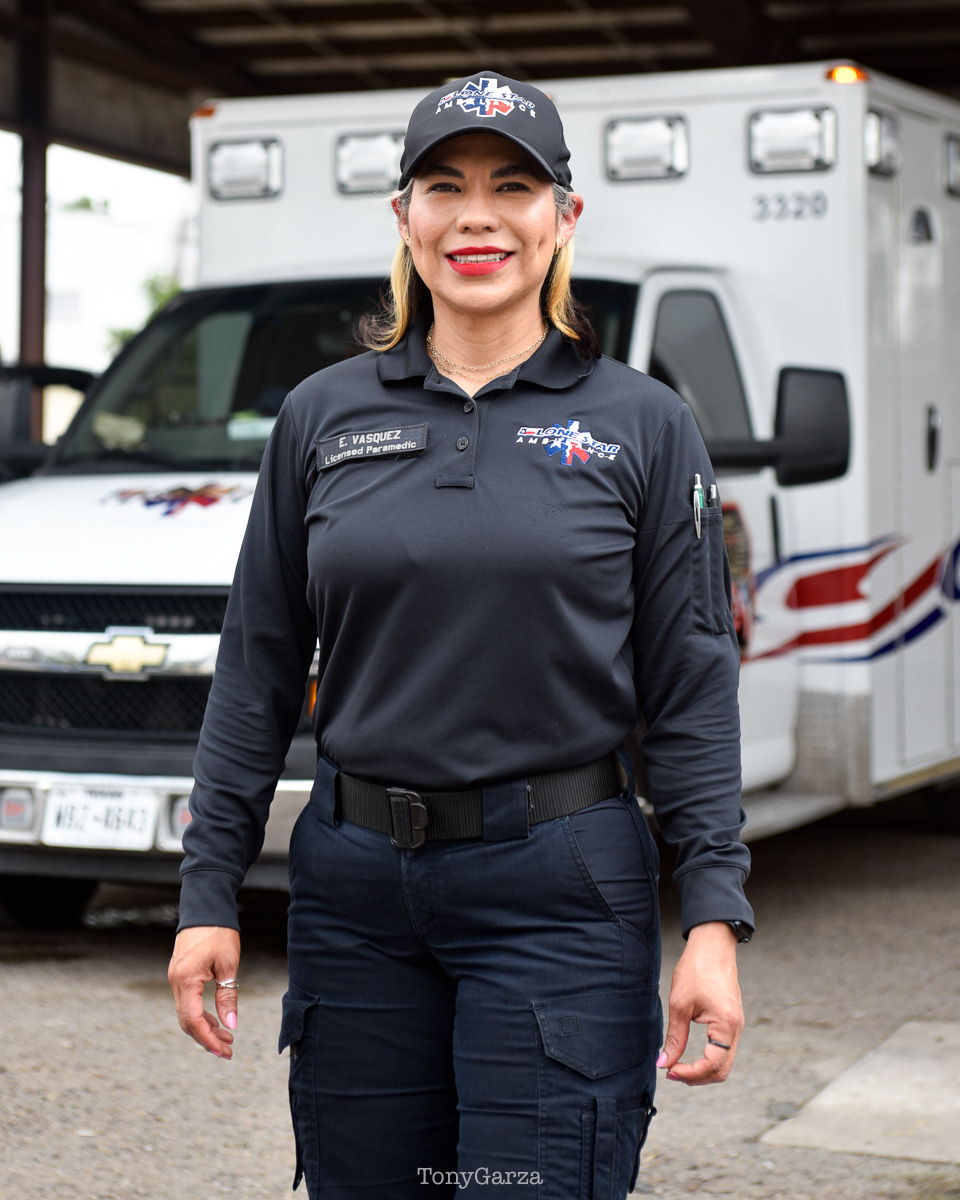
E. Vasquez, Paramedic, 27 years in EMS
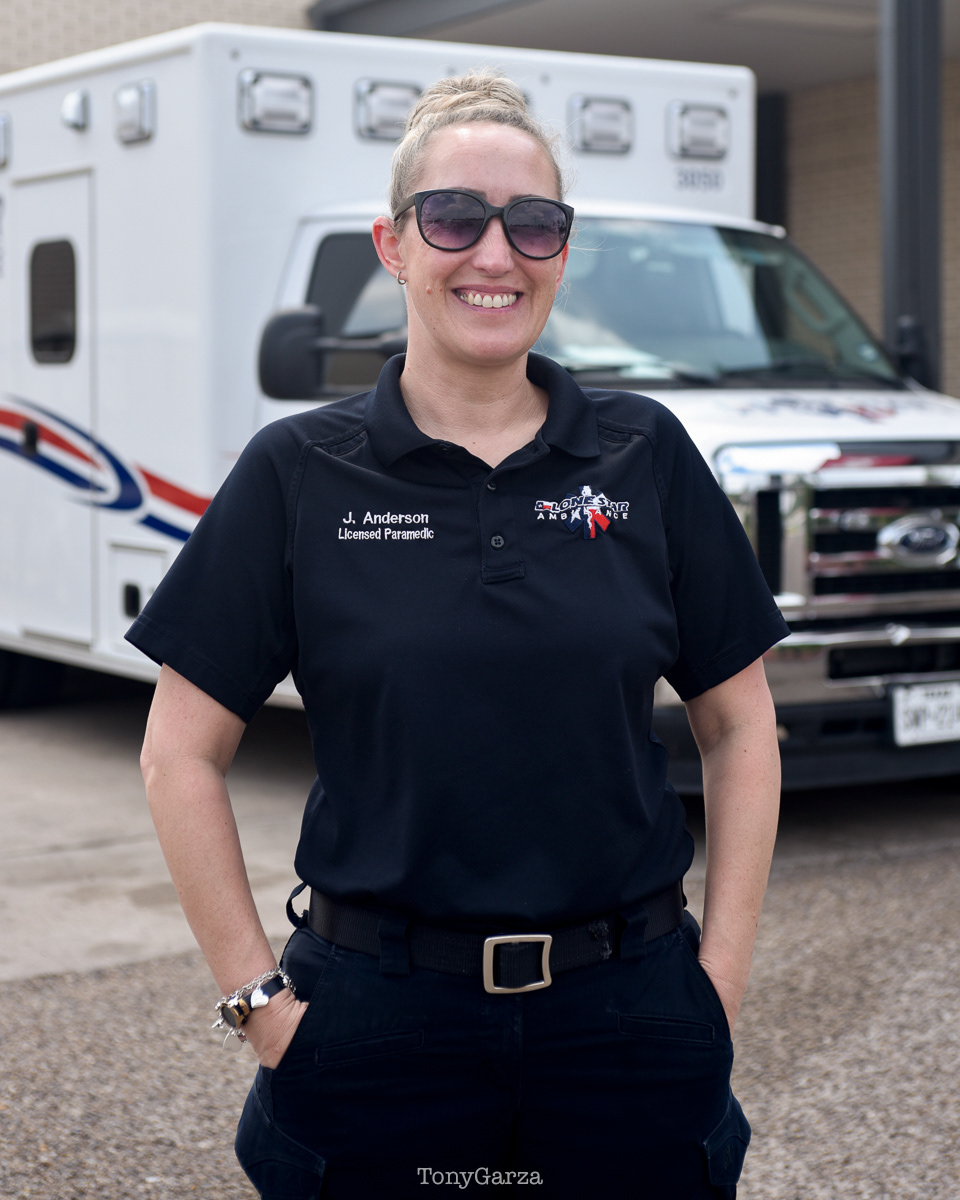
J. Anderson, Paramedic, 14 years in EMS
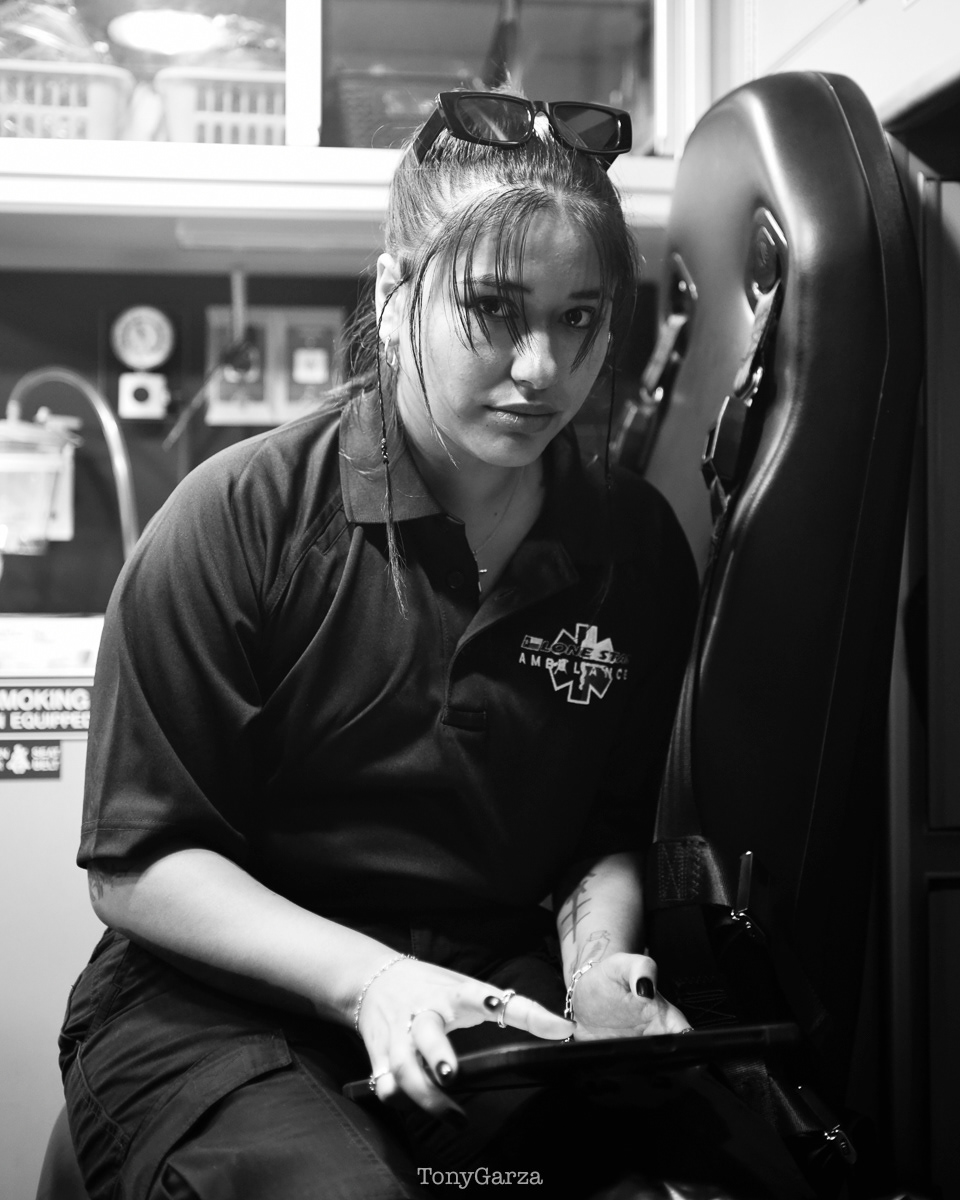
C. Flores, Paramedic, 7 years in EMS
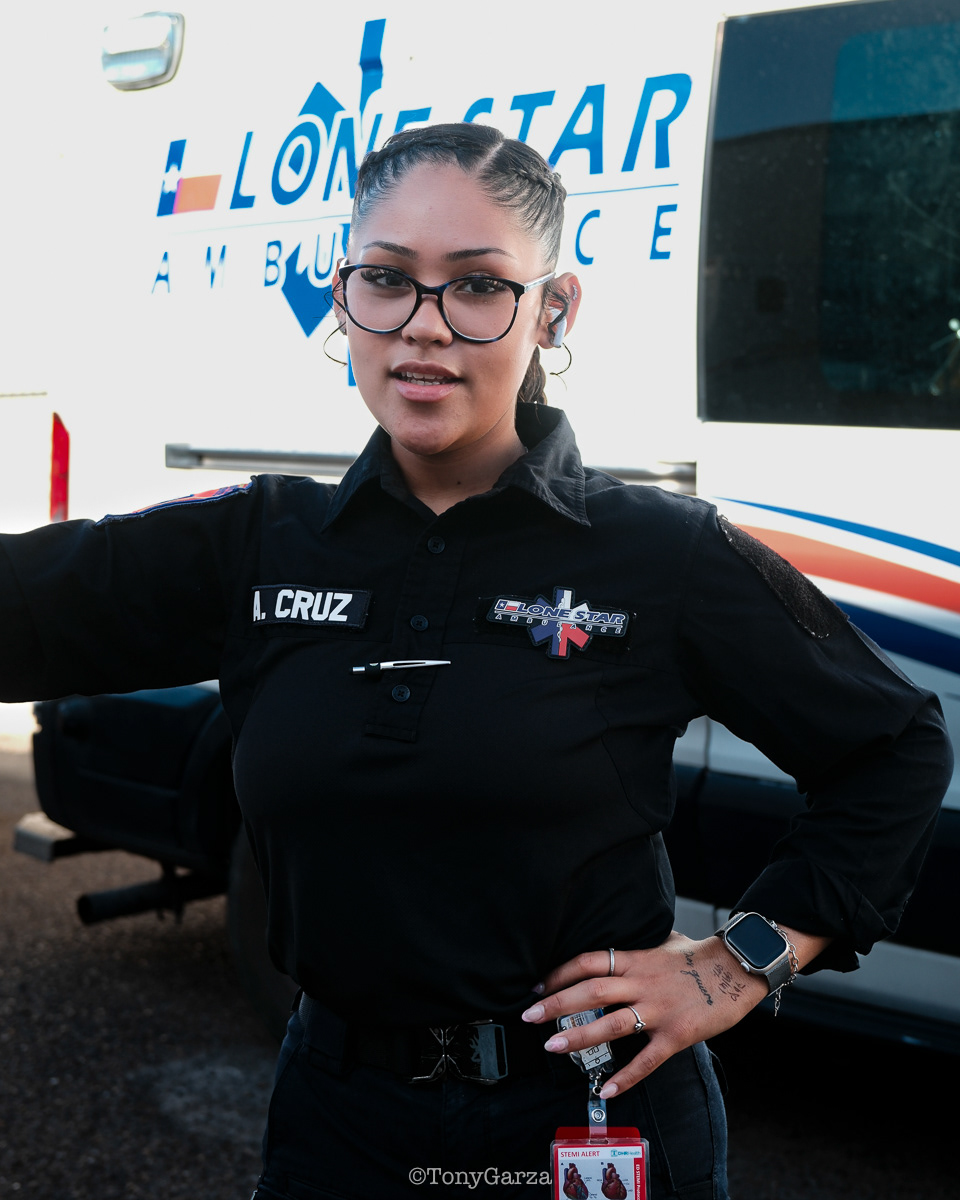
A. Cruz, Paramedic, 3 years in EMS
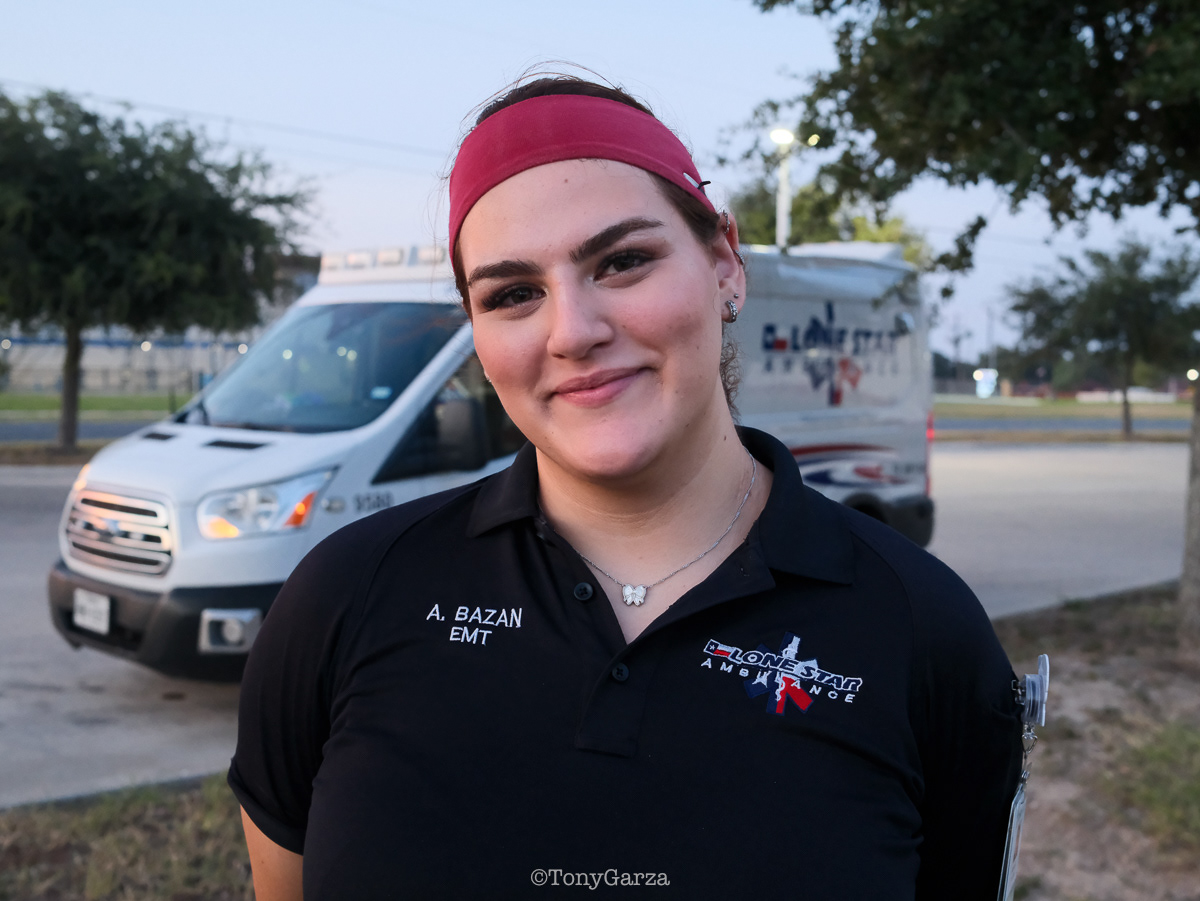
A. Bazan, EMT, 6 months in EMS
Awards
& Honorable Mentions
Rescue 1
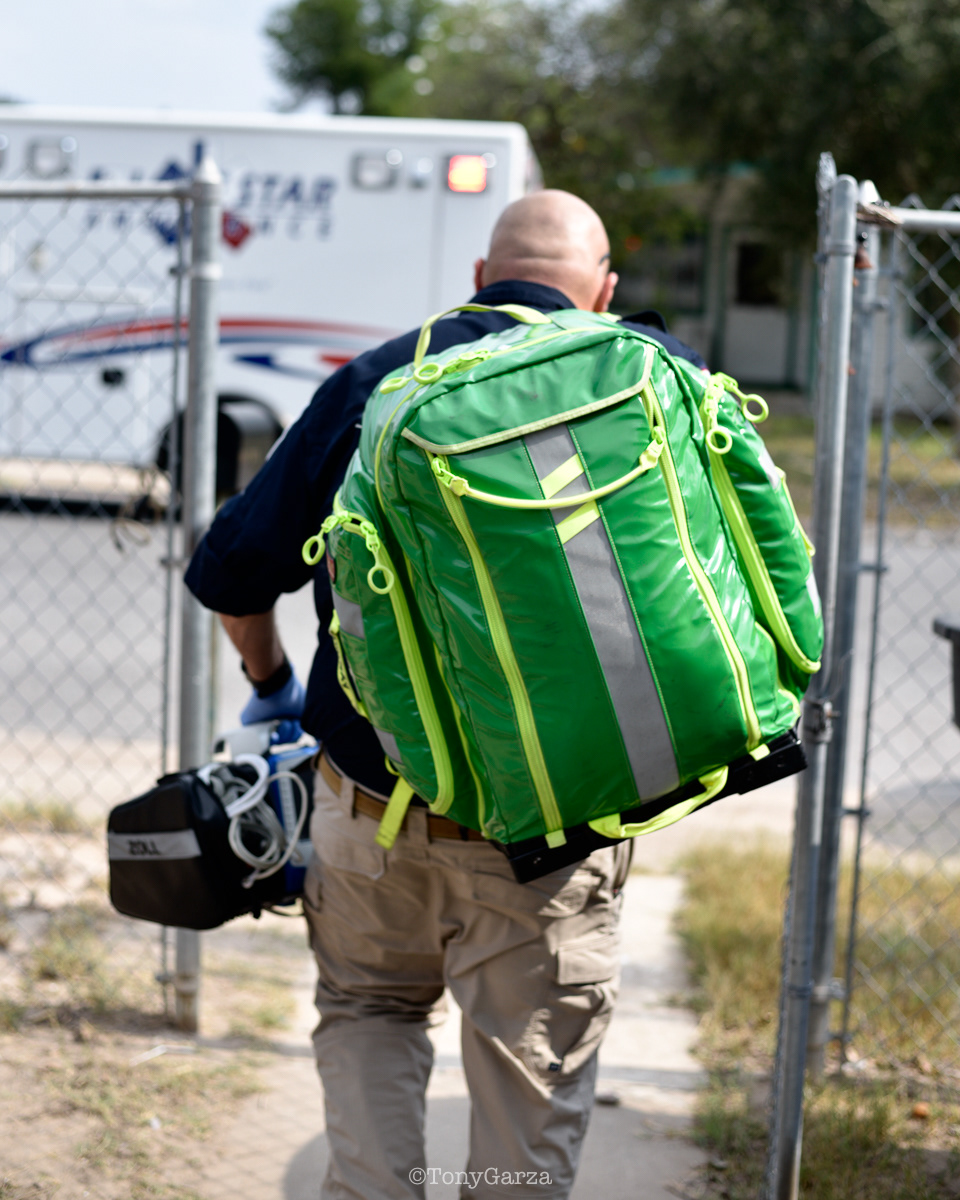
A single-paramedic unit: one supervisor/paramedic and one vehicle, with no stretcher and no extra hands. When all ambulances are committed, Rescue 1 is sent to the calls—heart attacks, major trauma, strokes, breathing problems, overdoses, and more.
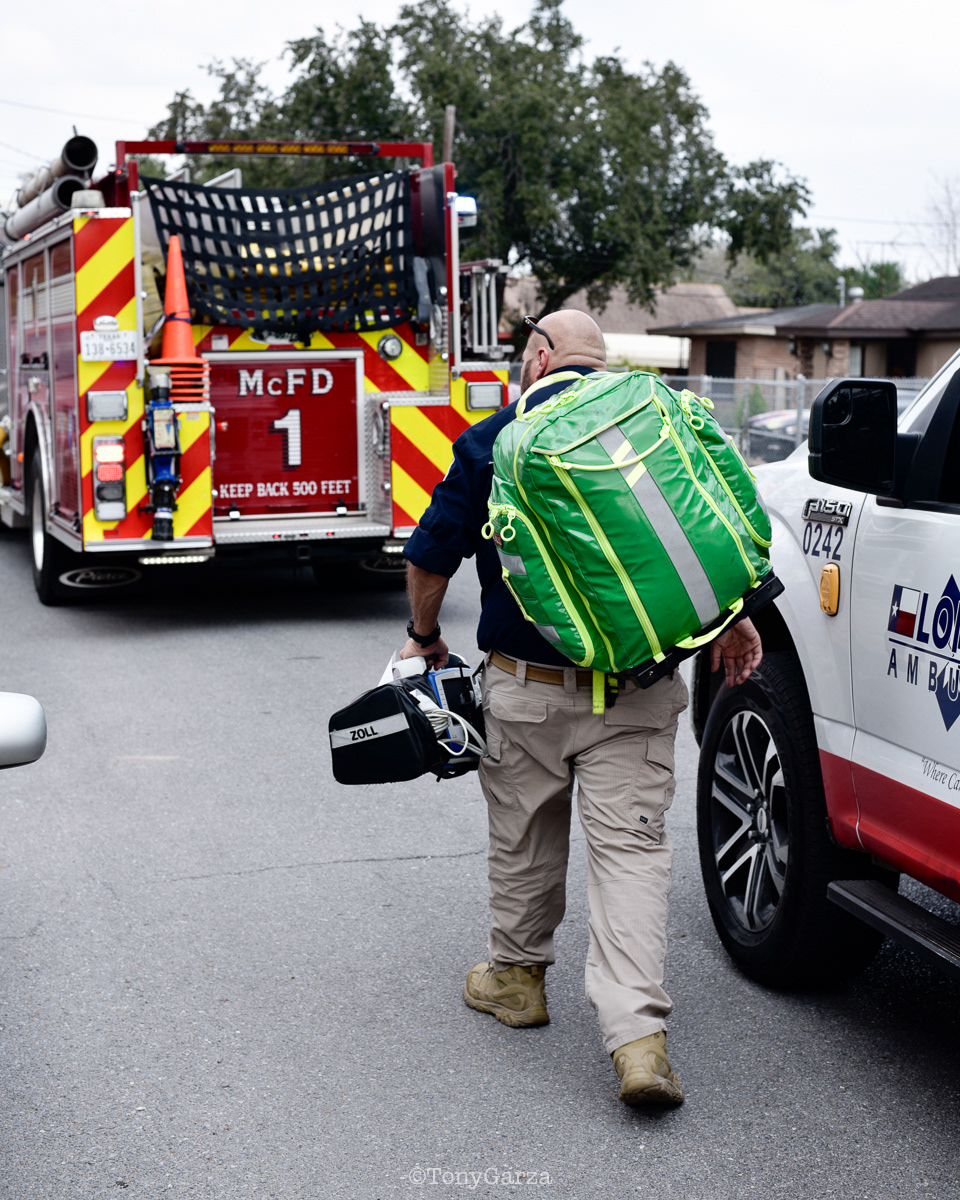
With a monitor, jump bag, and medication kit, care begins immediately on scene. IVs, medications, 12-leads, airway support, decompressions, tourniquets, and blood are provided as needed. Rescue 1 keeps the patient stable until a transport unit arrives.
The mission is simple: save minutes, stabilize patients, and stay ready for the next call. The medic on Rescue 1 is highly skilled—rapid in action, decisive in treatment, and able to work under extreme pressure alone.
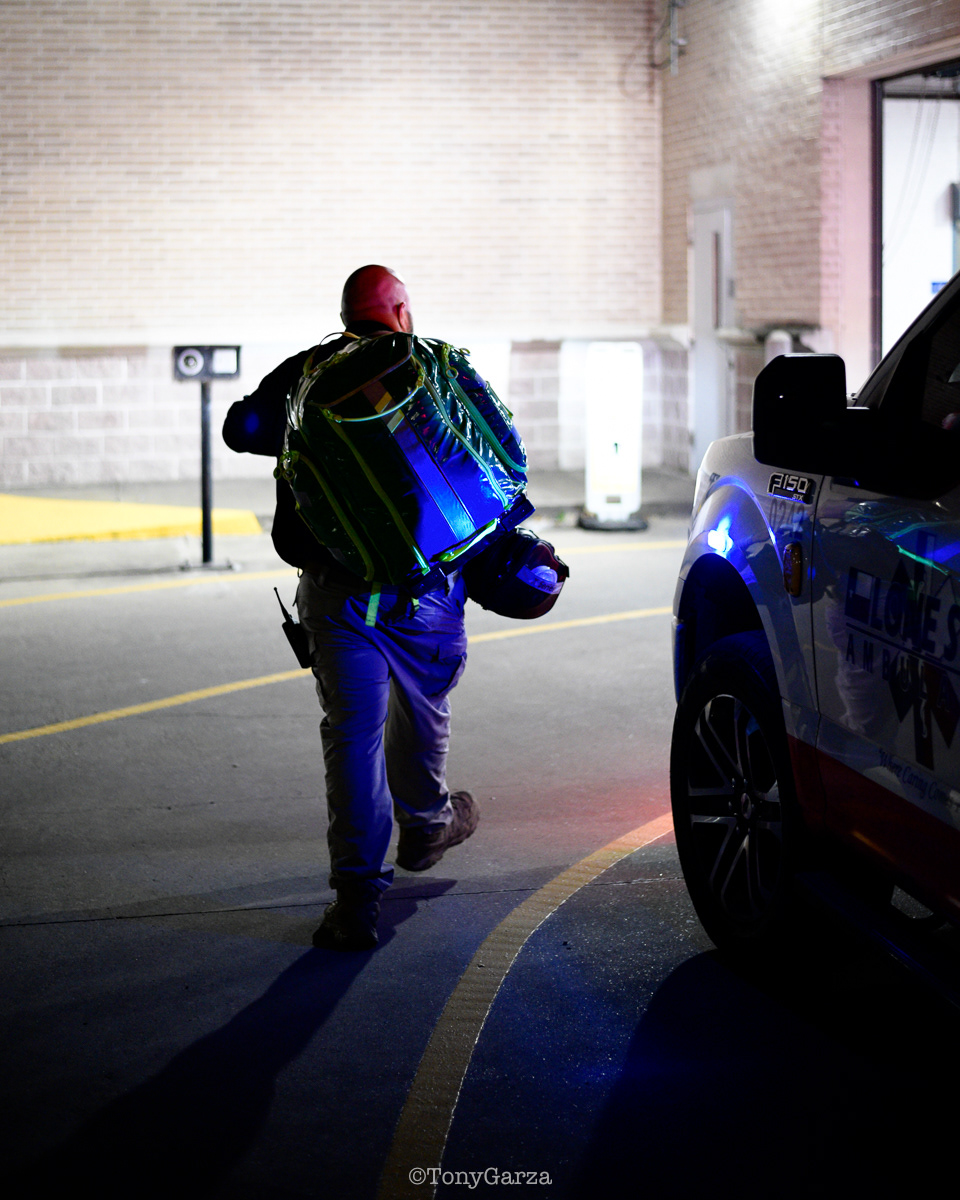
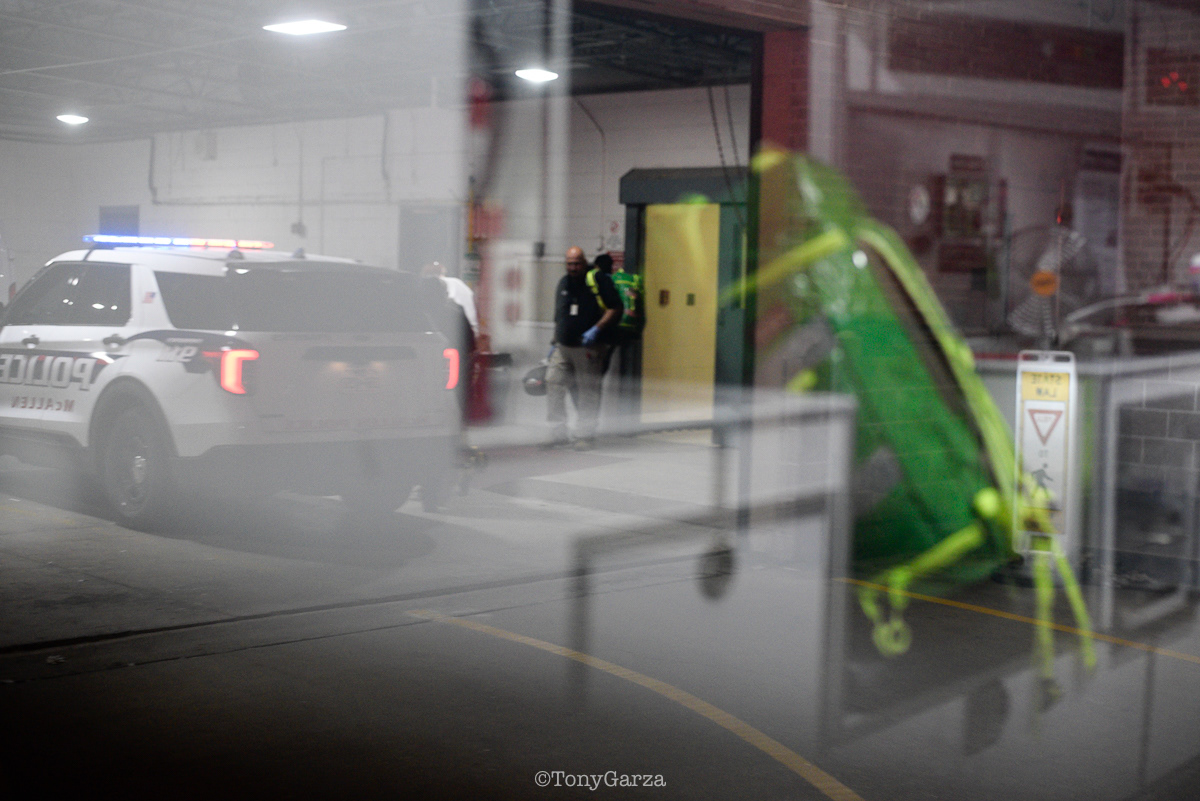
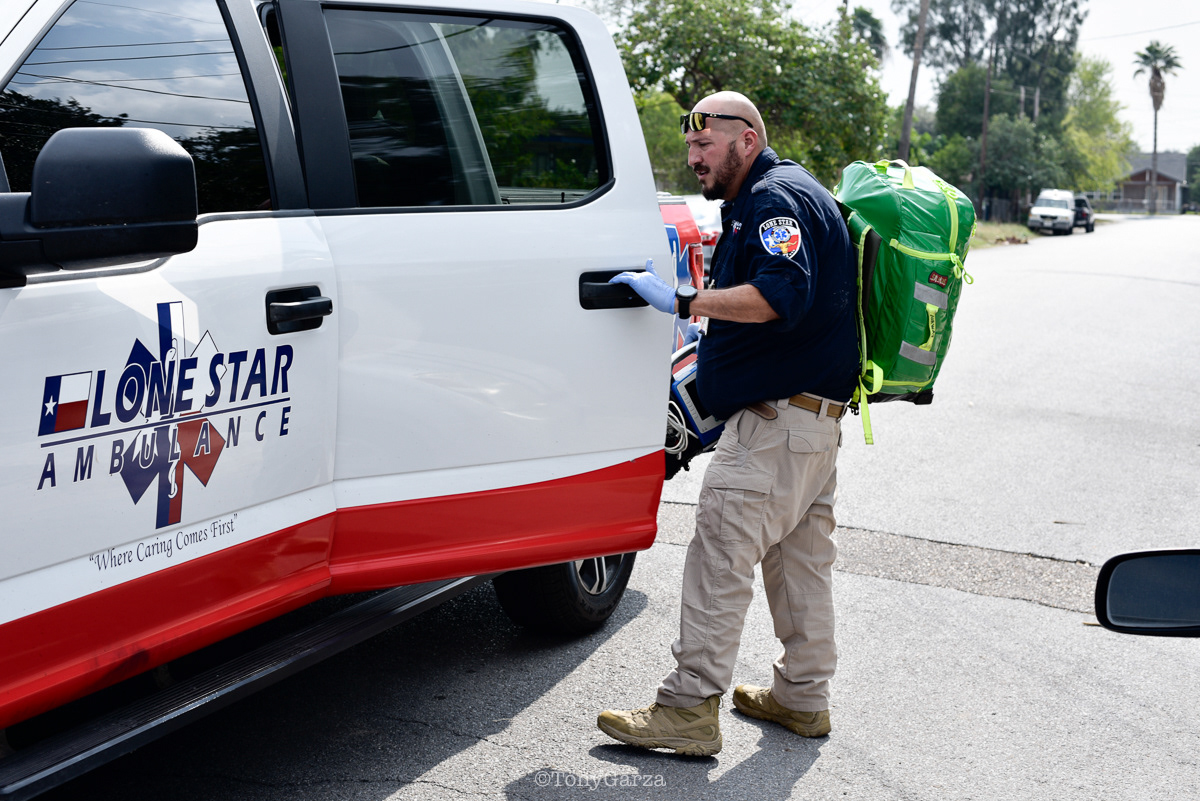
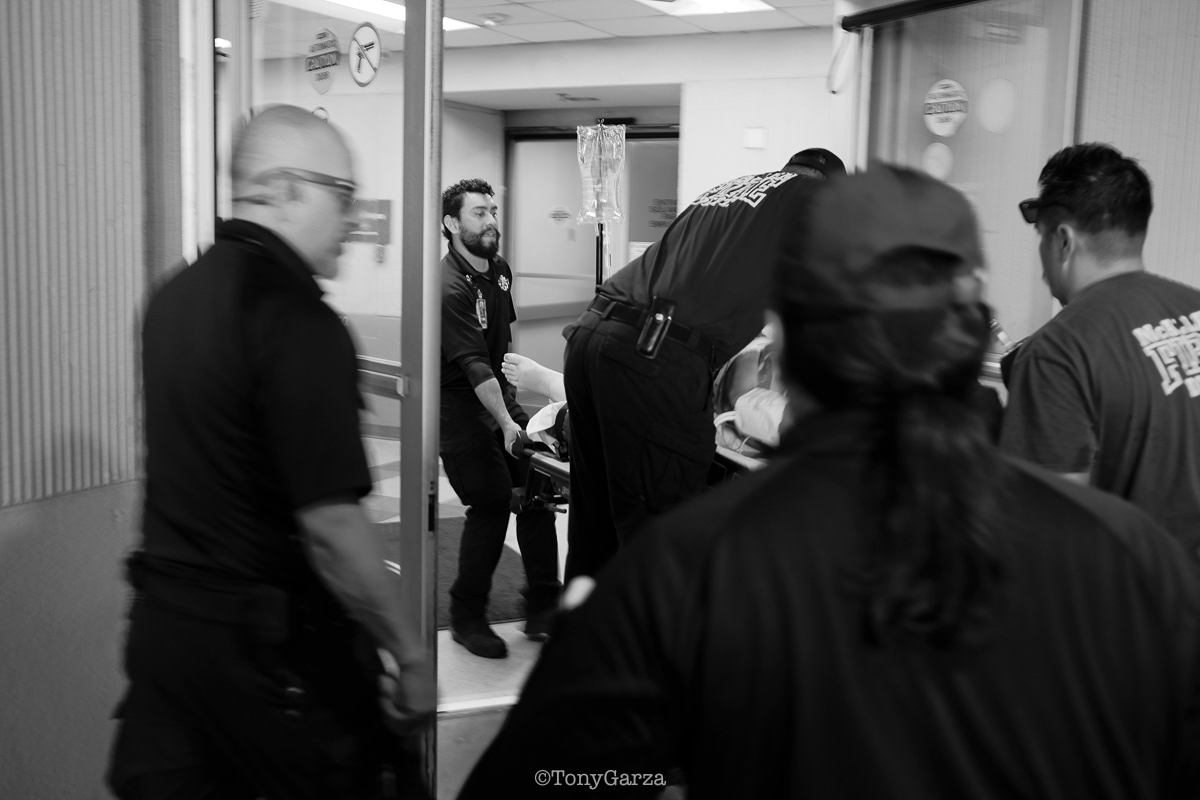
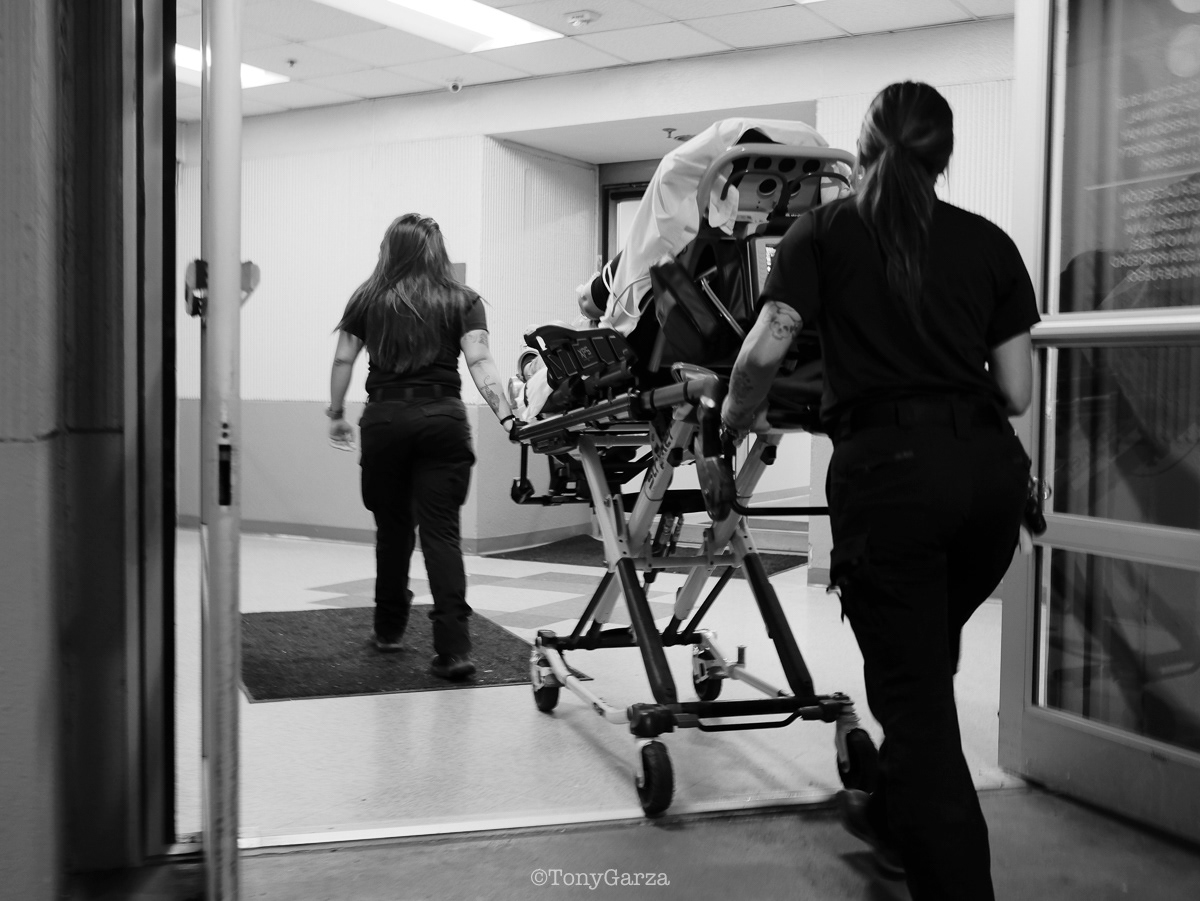
(Pictured: Supervisor/Paramedic O. Espinoza, with over 20 years of service, walking in and out from emergencies.)
With a monitor, jump bag, and medication kit, care begins immediately on scene. IVs, medications, 12-leads, airway support, decompressions, tourniquets, and blood are provided as needed. Rescue 1 keeps the patient stable until a transport unit arrives.
The mission is simple: save minutes, stabilize patients, and stay ready for the next call. The medic on Rescue 1 is highly skilled—rapid in action, decisive in treatment, and able to work under extreme pressure alone.
(Pictured: Supervisor/Paramedic O. Espinoza, with over 20 years of service, walking in and out from emergencies.)
Award

DHR Trauma Champion Certificate of Excellence Recipients
Medic 4:
Paramedic J. Flores and EMT J. Barajas
Paramedic J. Flores and EMT J. Barajas
Rescue 1:
Battalion Chief / Paramedic K. Miller and AEMT J. Rangel
Battalion Chief / Paramedic K. Miller and AEMT J. Rangel
For responding promptly, treating a major trauma patient, and transporting them in a timely manner.
Medic 11
(Paramedic A. Munoz and EMT R. Castillo), Rescue 1 (Battalion Chief/Paramedic A. Garcia and EMT G. Rodriguez), and Alamo FD responded to a cardiac arrest.
Under the strong and experienced leadership of Paramedic Munoz, the team effectively performed high-quality CPR, established intraosseous (IO) access, administered cardiac medications, and provided fluid therapy, achieving return of spontaneous circulation (ROSC) prior to leaving the scene.
During transport, interventions shifted to maintaining the patient’s pulse. Paramedic Munoz, assisted by Battalion Chief/Paramedic A. Garcia, successfully managed these life-supporting efforts until transferring care to the ER team.
Every team member contributed critically and performed their role with excellence. These providers fully met the high standards of medical care expected by the community. Strong response!
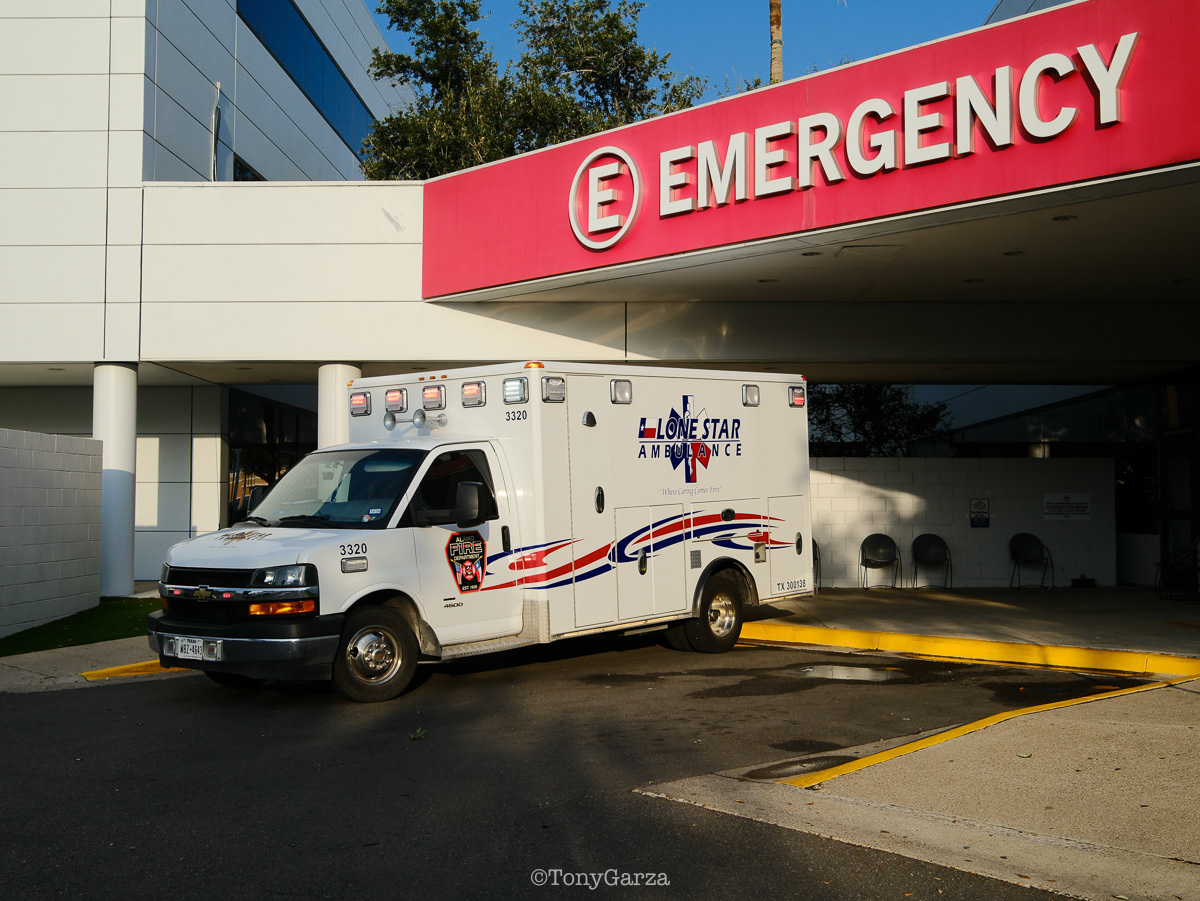
Alpha 2
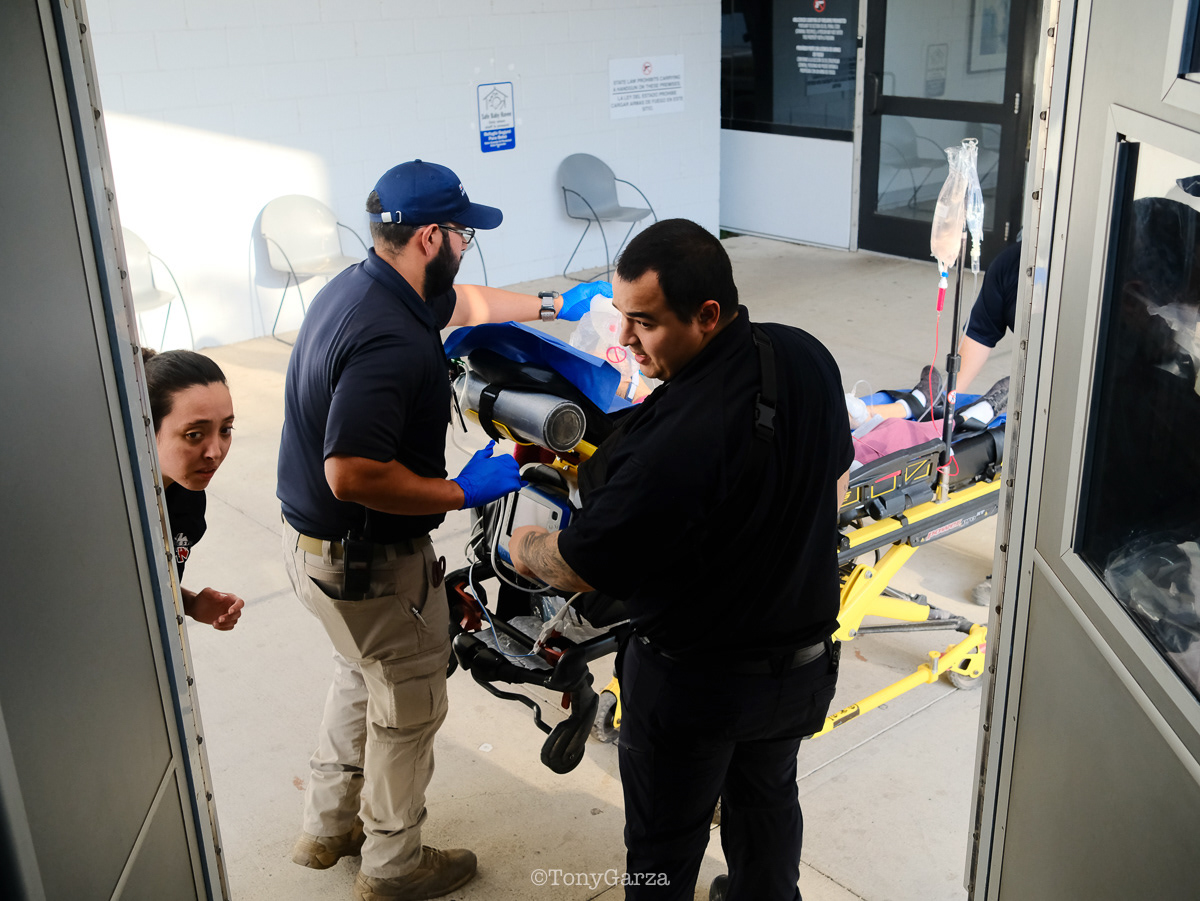
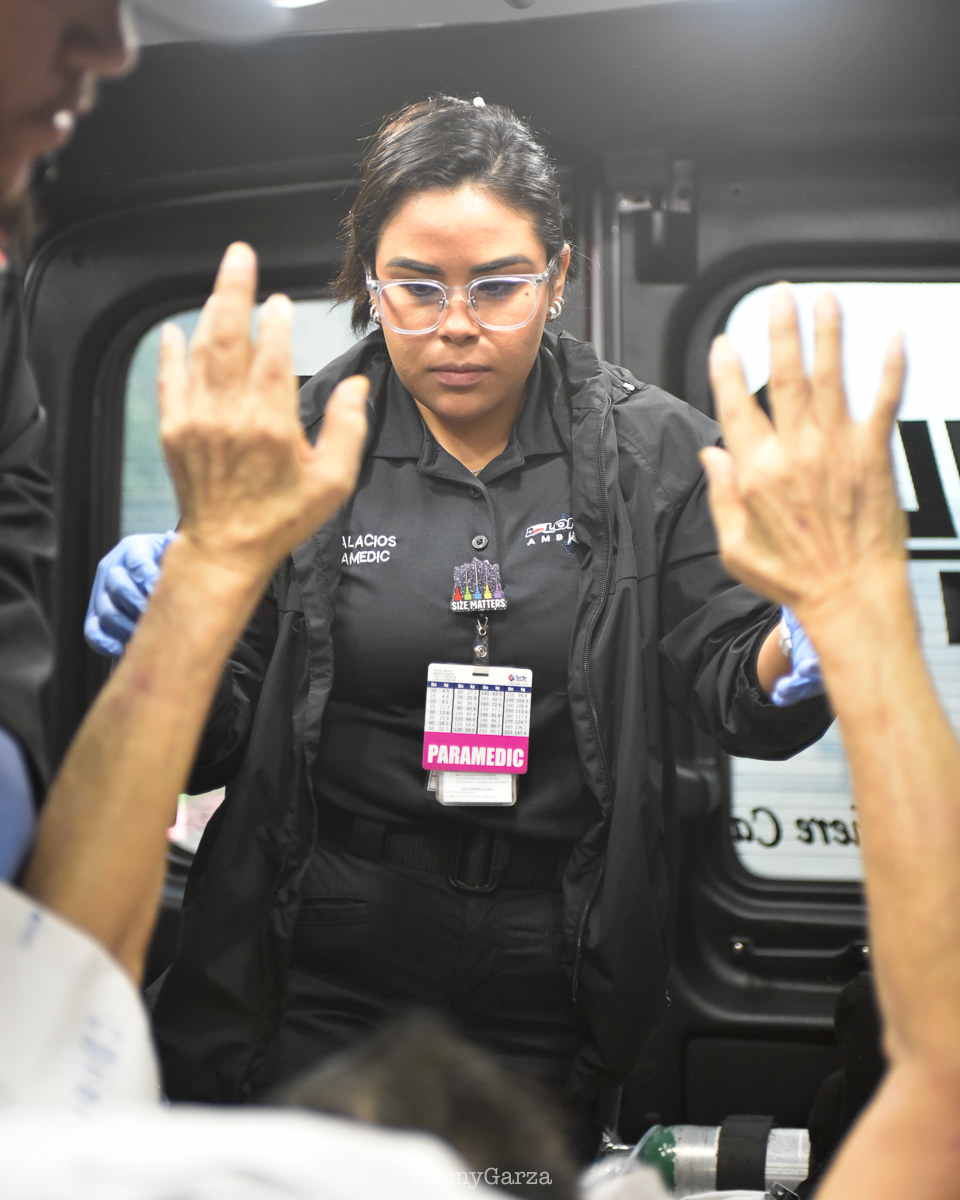
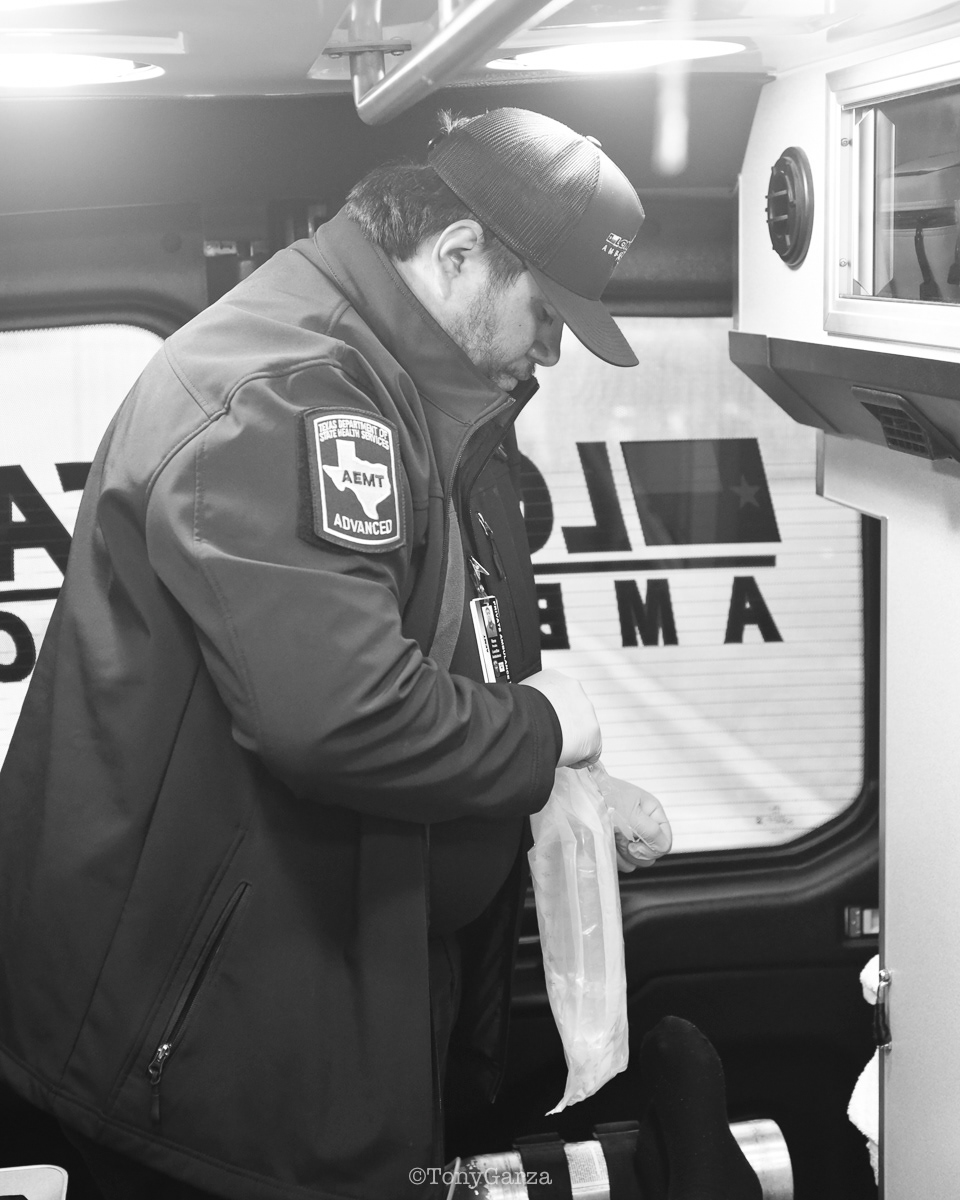
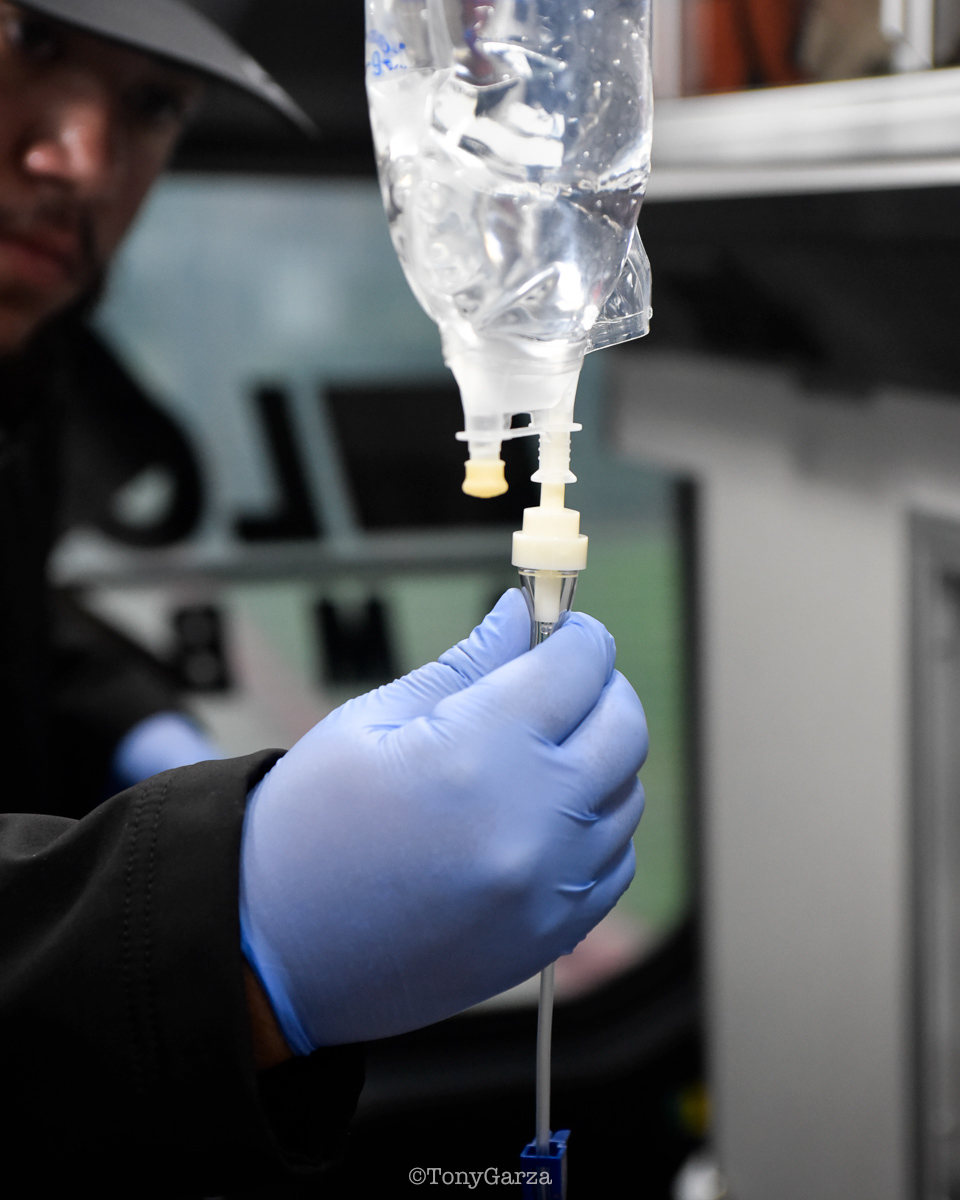
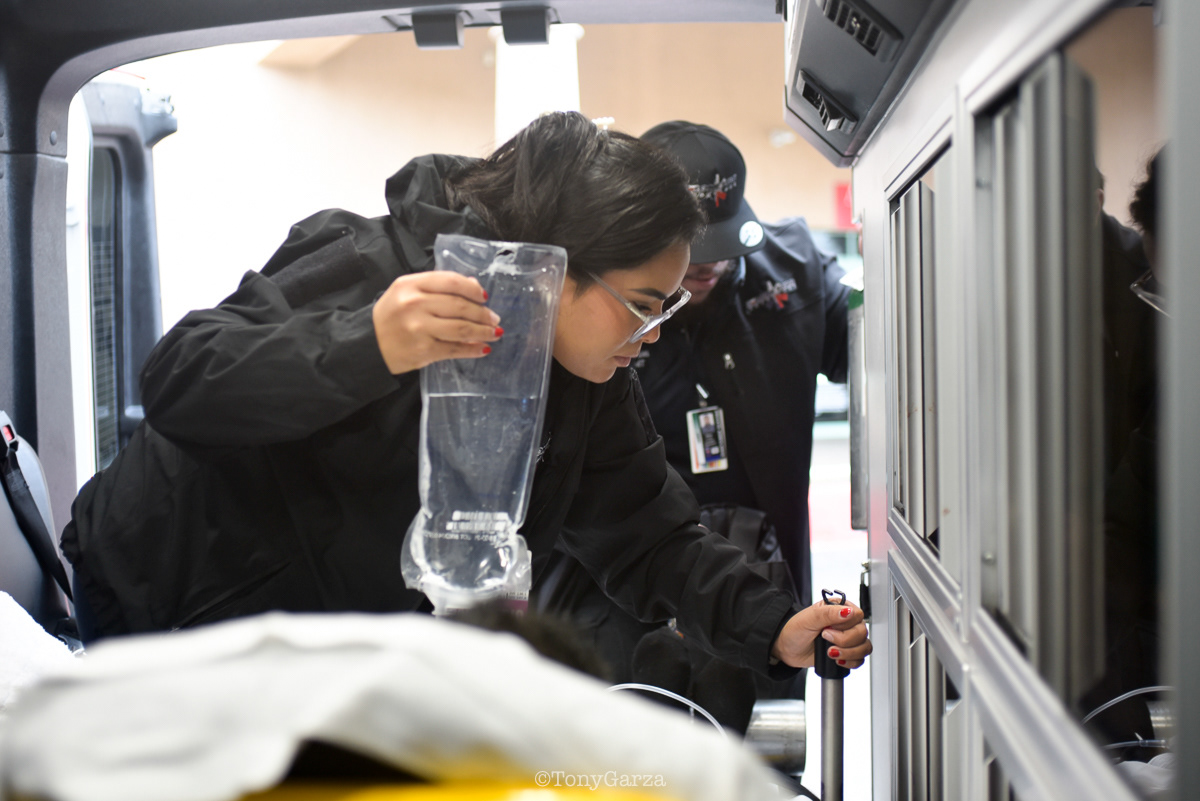
(Paramedic M. Palacios and AEMT R. Perales) responded to a call for an unresponsive emergency.
Upon arrival, McAllen FD was already on scene providing initial medical care. Paramedic Palacios immediately took charge, gathering critical history and information while directing care alongside her team. After safely loading the patient into the ambulance, she conducted a detailed differential diagnosis, methodically evaluating every possibility.
Stroke. Hypoglycemia. Heart failure. Sepsis. One by one, these critical conditions were ruled out through sharp clinical assessment.
Drawing on her exceptional patient assessment skills, relentless focus, and high-level critical thinking under pressure, Palacios zeroed in on the true cause. With steadfast support from her partner, AEMT Perales, delivered the appropriate treatments.
The patient went from altered mental status to fully conscious and alert. Palacios continued care on the way to the hospital, maintaining life-supporting measures throughout transport.
This success was the result of seamless teamwork, decisive leadership from Paramedic Palacios, and dependable backup from AEMT Perales and McAllen FD. It’s a perfect example of the quiet dedication EMS crews demonstrate every day — the kind of life-saving work that often goes unseen, yet changes everything for the patient and their family.
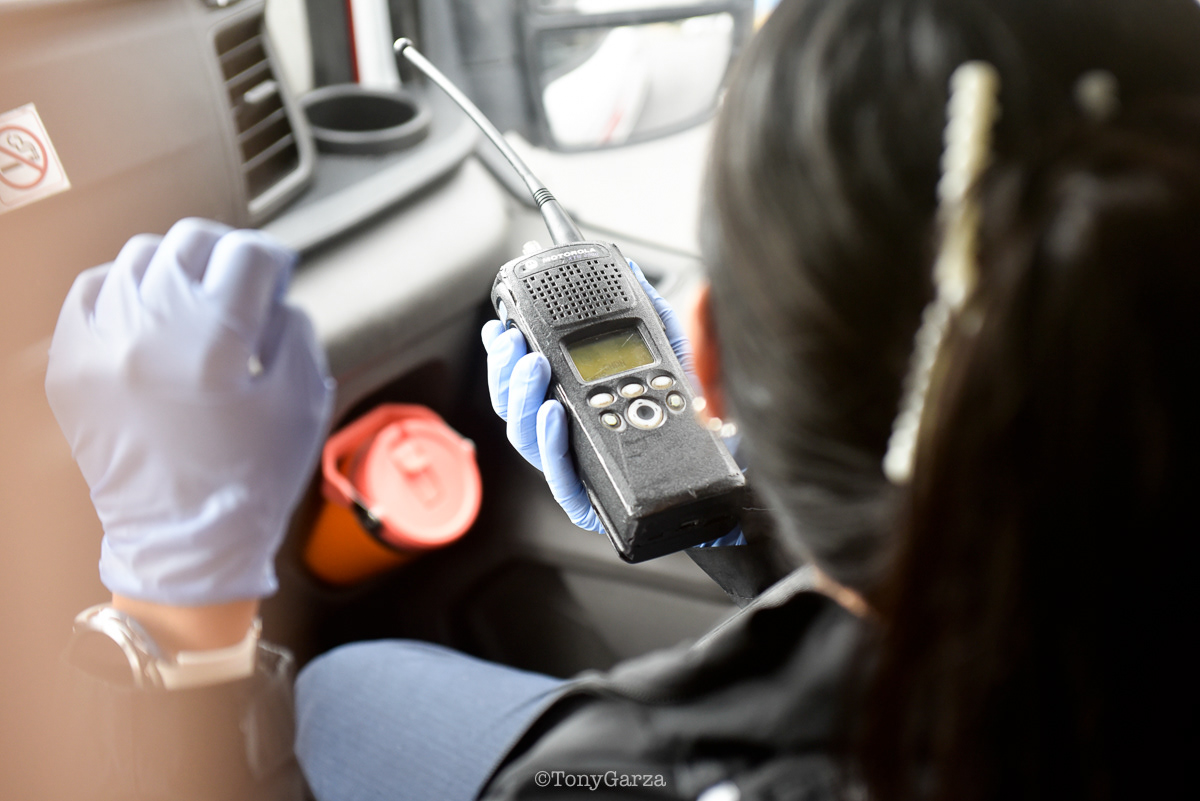
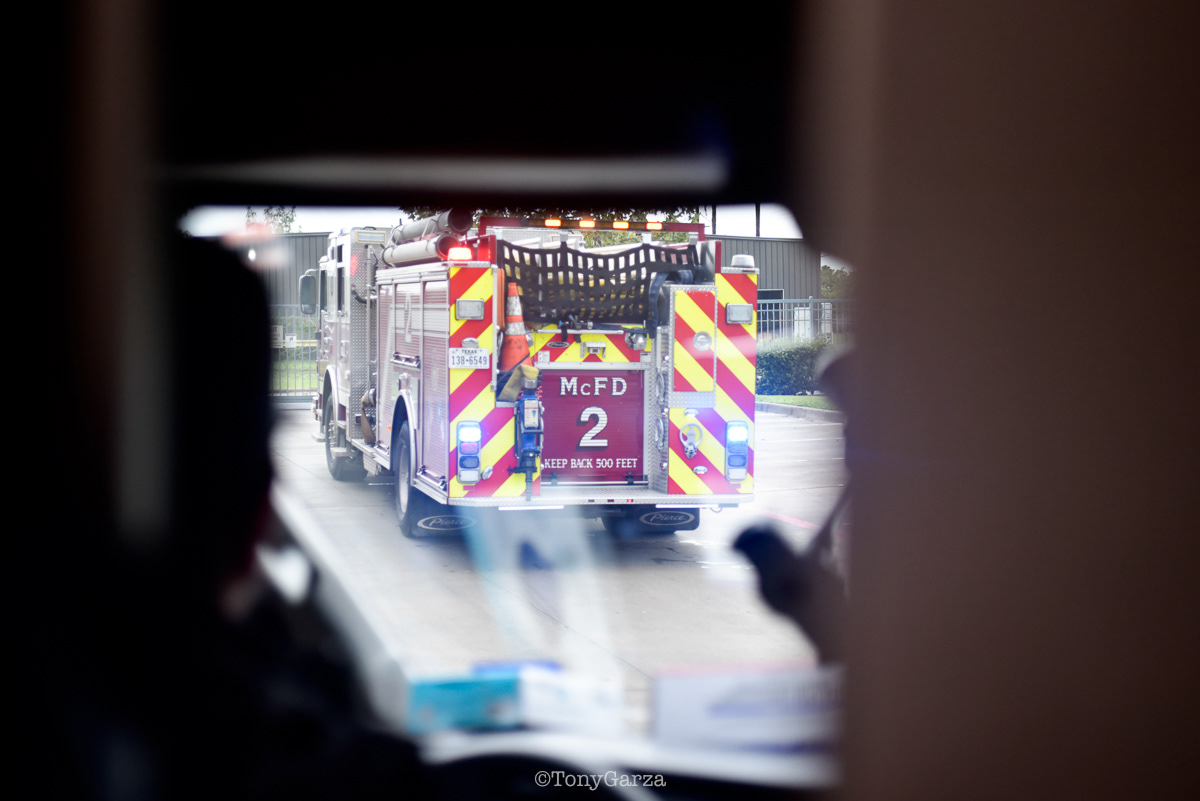
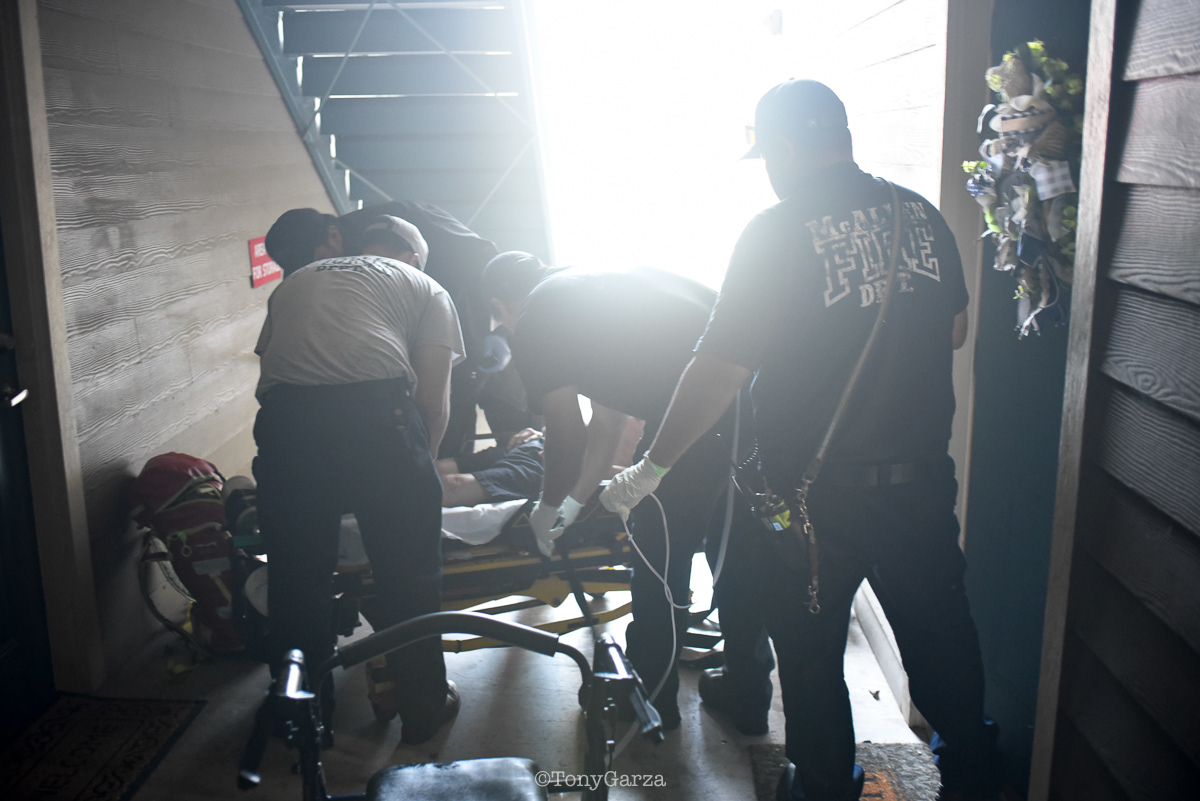
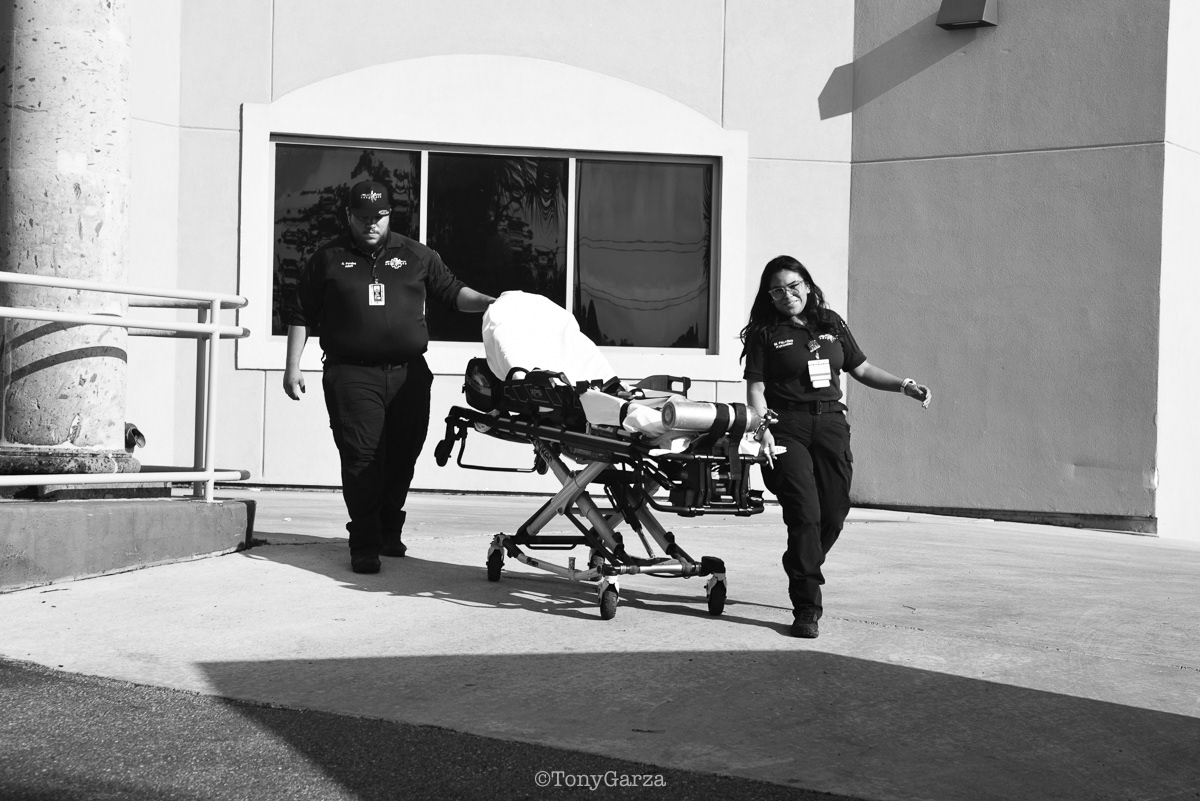
Medic 1
( Paramedic E. Hernandez, and EMT I. Yanez), Rescue 1 (Supervisor/ Paramedic O. Espinoza and AEMT M. Marquez) and McAllen FD.
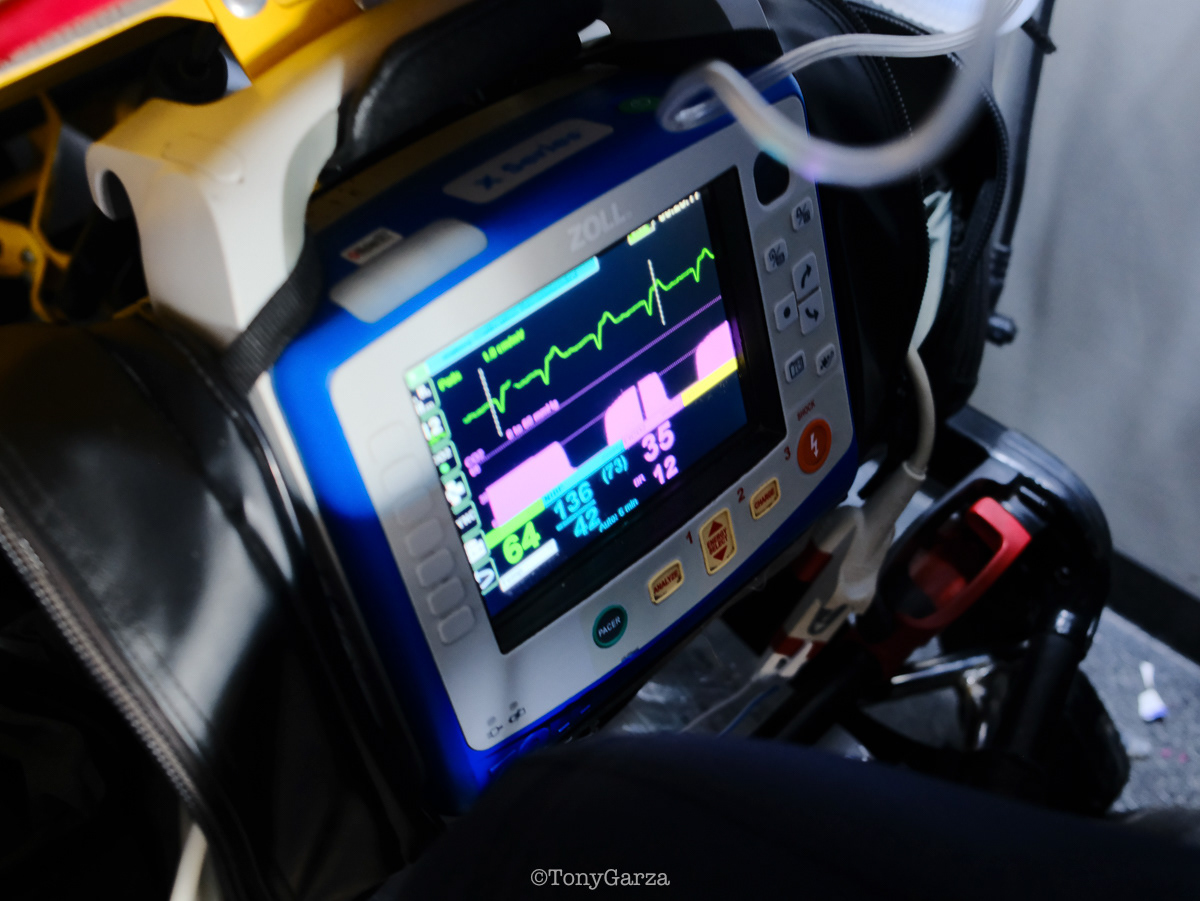
They walk into the ER with defibrillator pads still on the patient, an endotracheal tube secured in the airway, BVM delivering steady pressurized 100% oxygen with visible chest rise and capnography confirming every breath, and the monitor displaying the organized rhythm of a ROSC patient.
This is what a professional, high-functioning EMS team does every single day they clock in. They run the chaos on scene, bring order to the arrest, fight for return of spontaneous circulation, then deliver that hard-won stability to the next team without missing a beat. No fanfare. No recognition. Just quiet competence, years of knowledge and experience, and an unrelenting drive to save lives.
Shift after shift, they show up, do the work, and give patients another chance. That’s the job. That’s the mission.
So others may live.
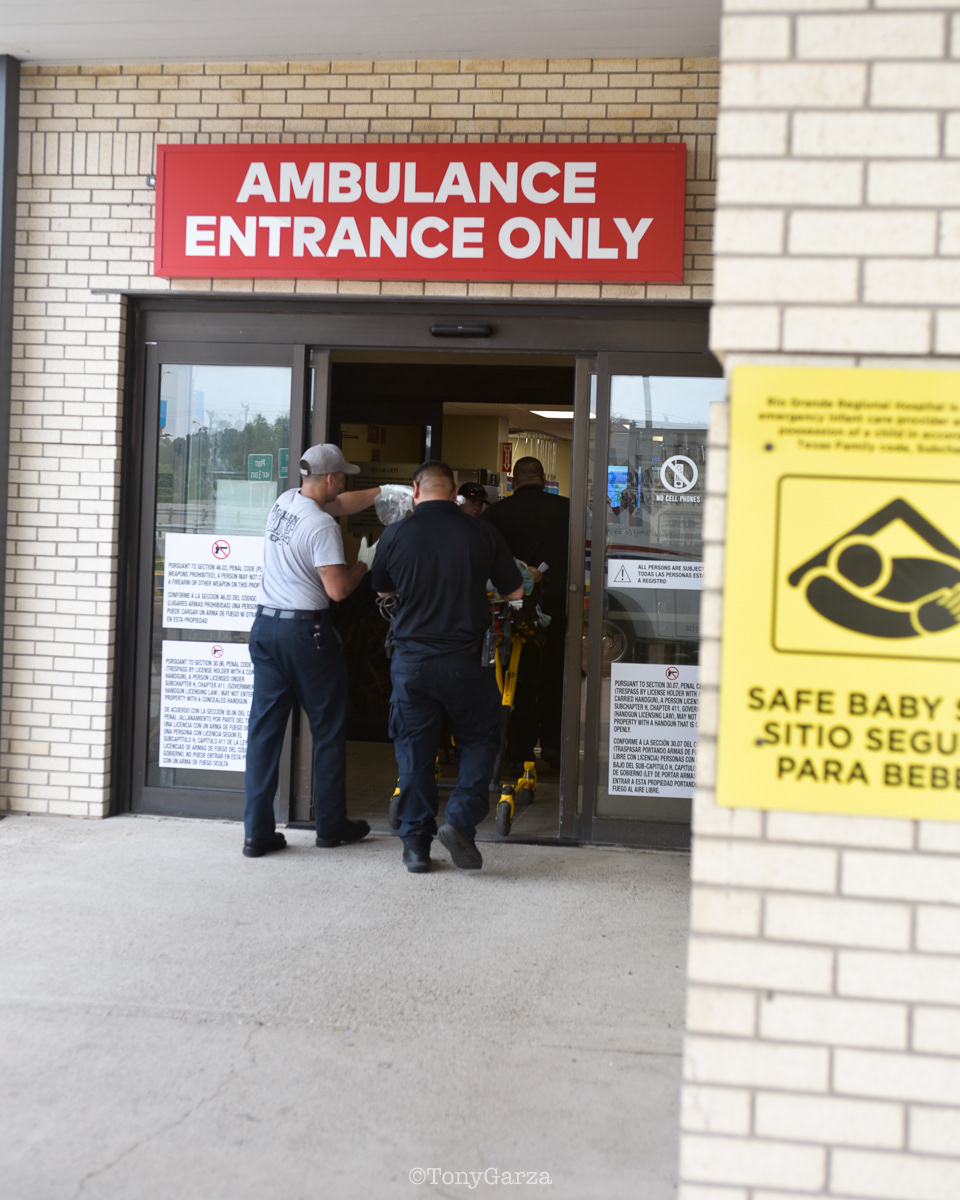
Alpha 3
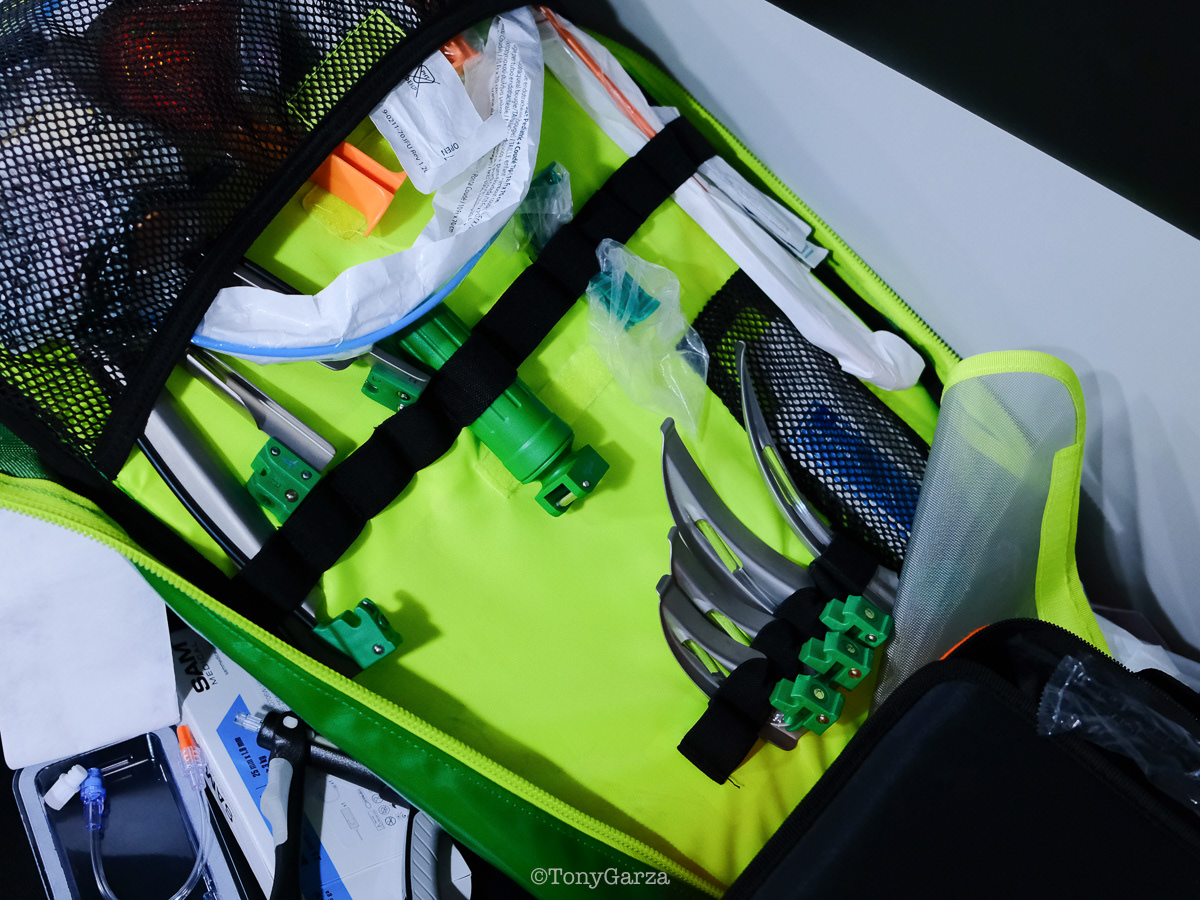
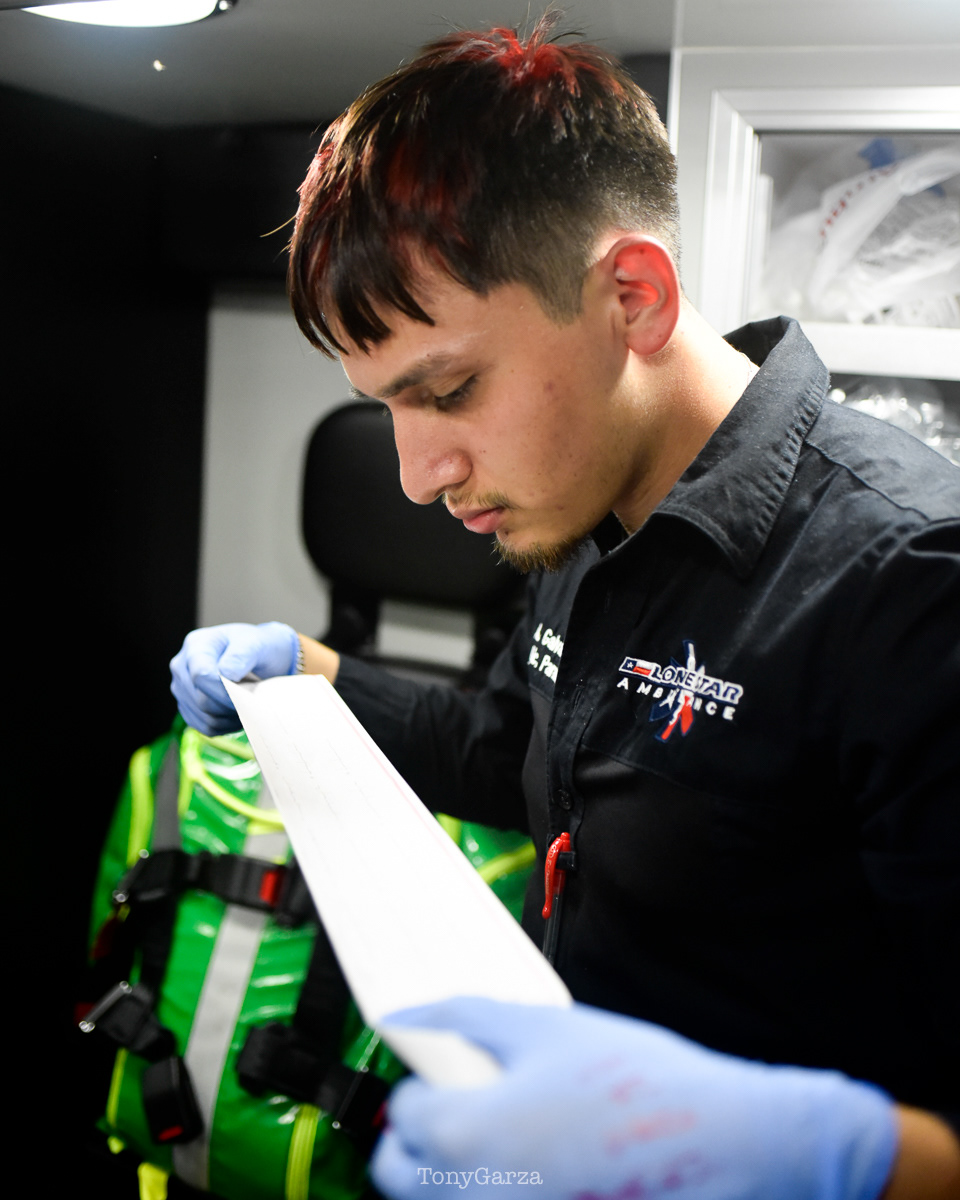
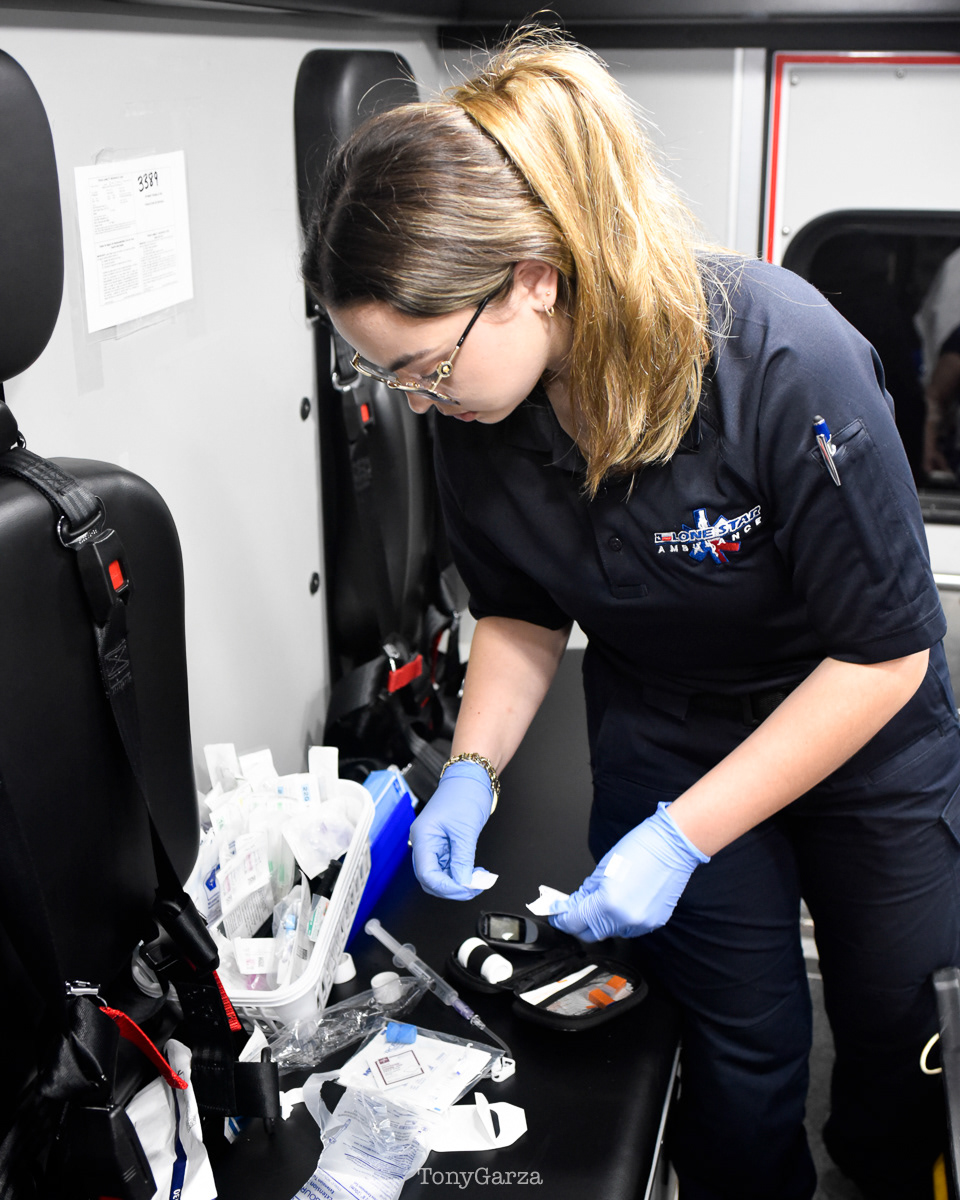
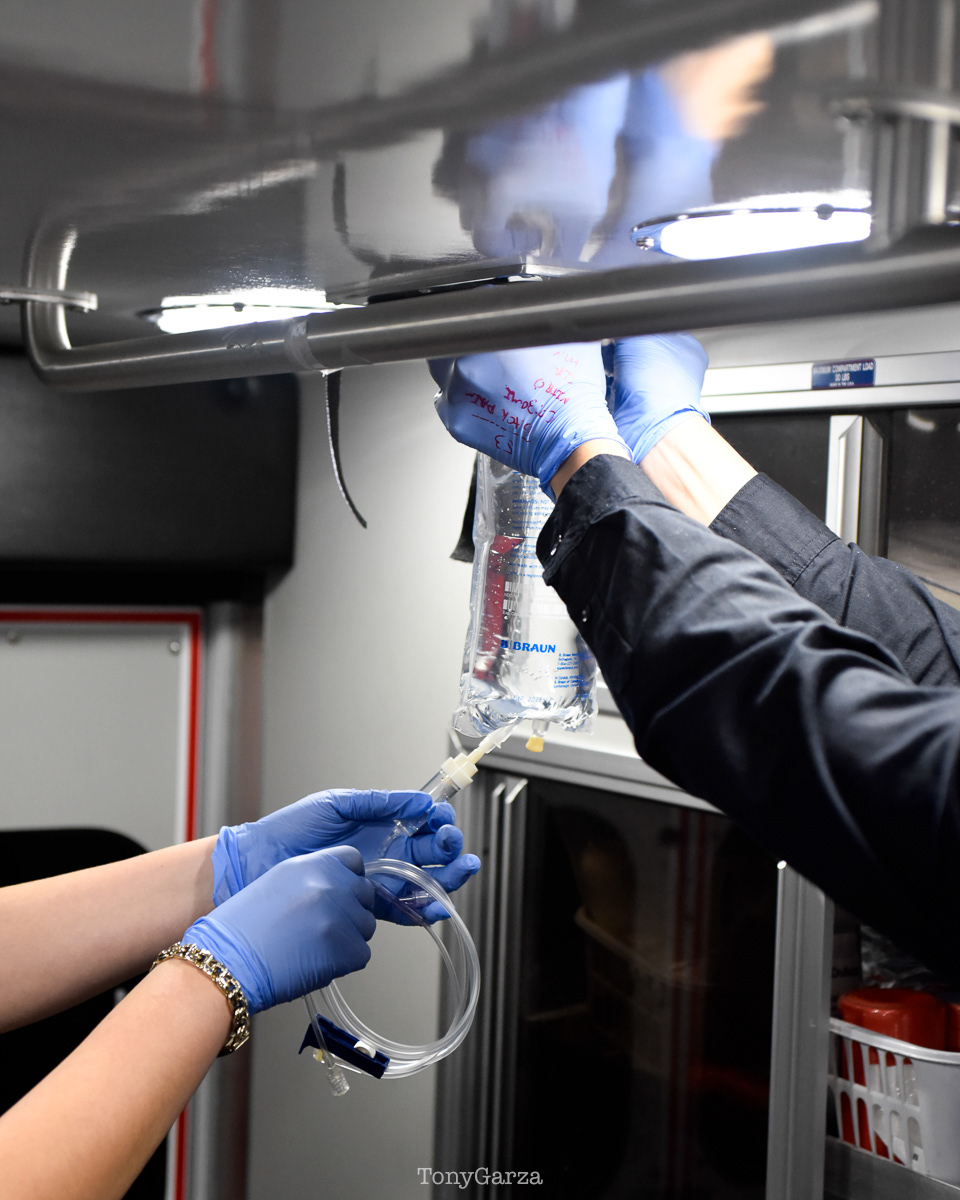
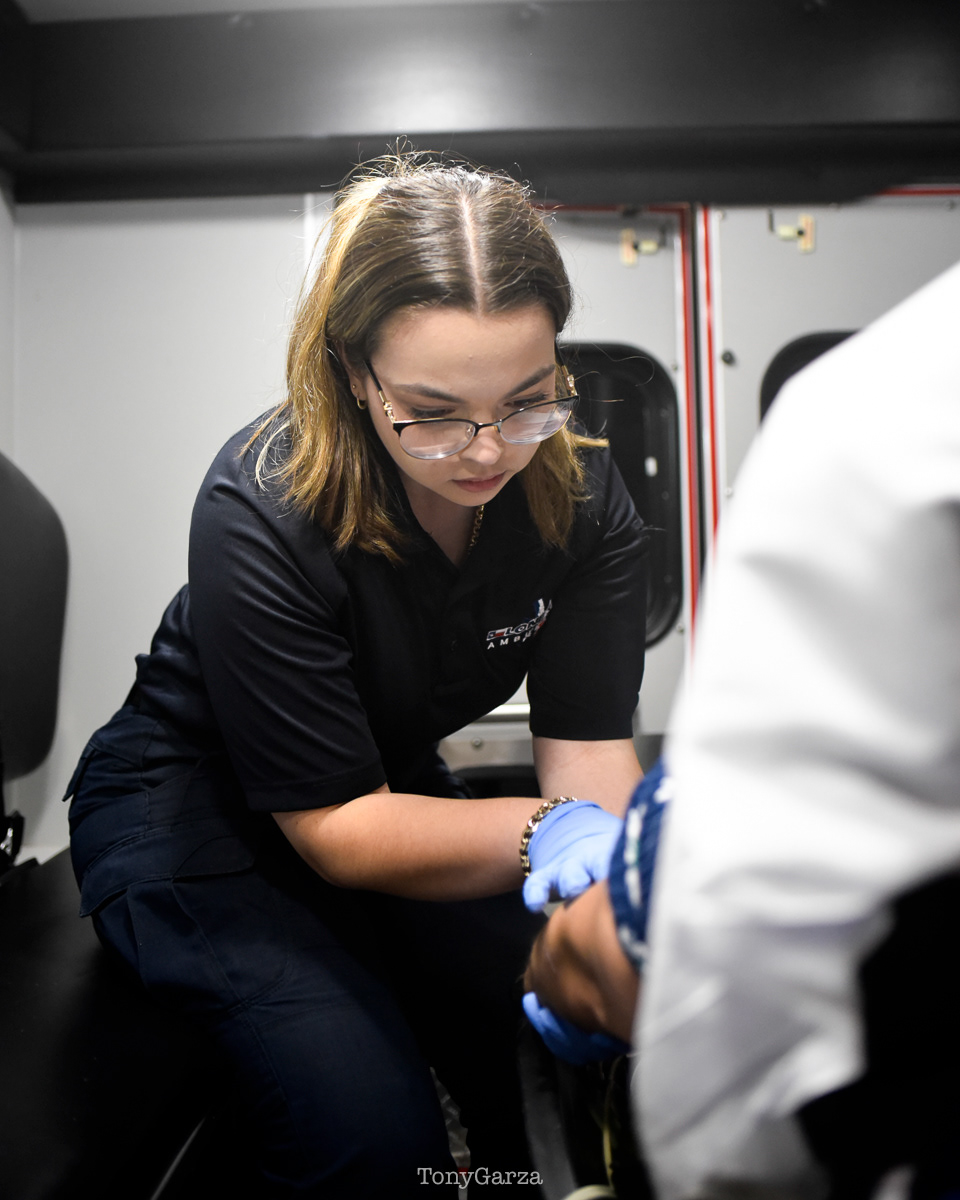
(Paramedic De La Garza and EMT Cantu) thoroughly checks their unit at the start of every shift, just as any good medic does. While this level of preparation is the standard, some go beyond it. Those who take the role seriously hold themselves to a higher standard and invest the extra time to be truly ready.
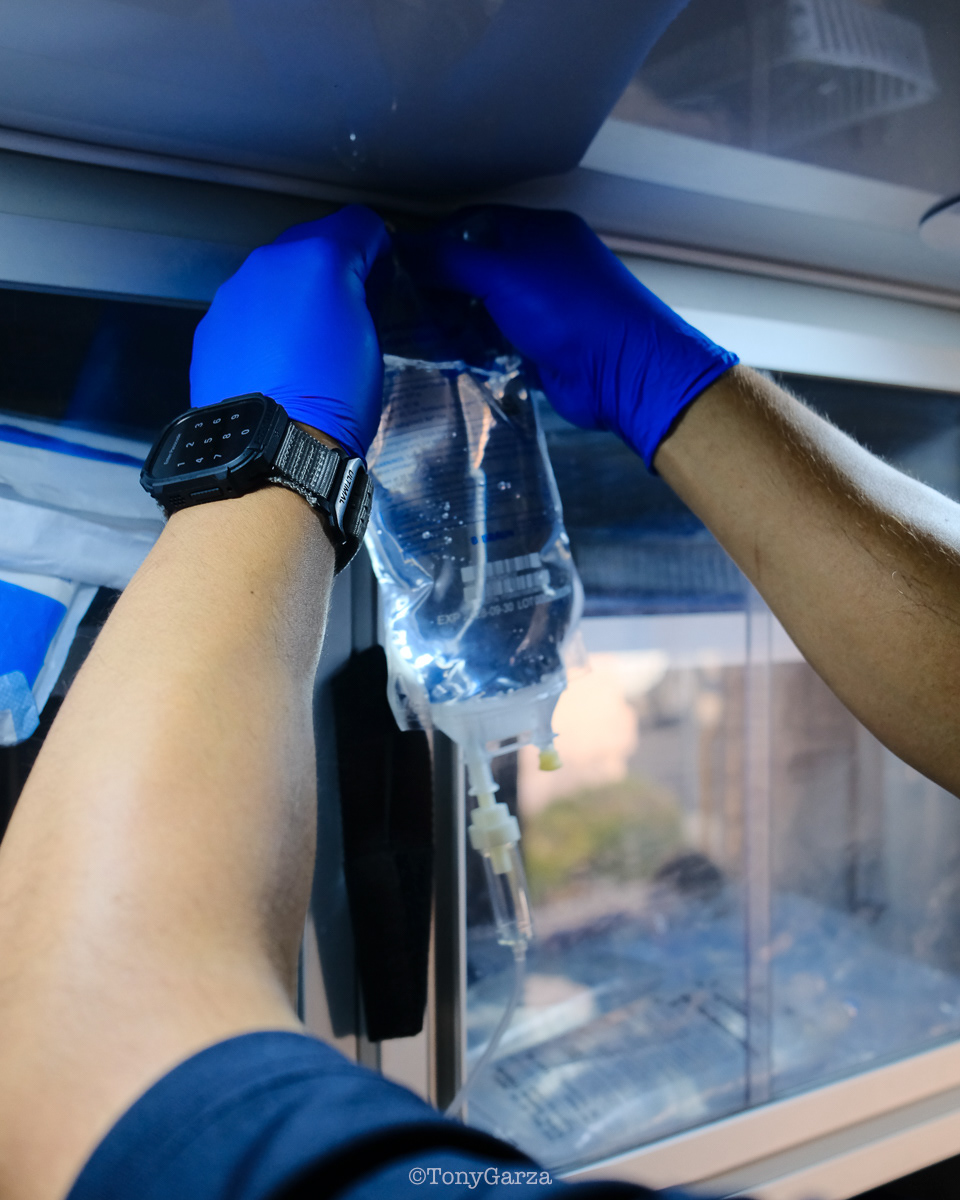
In this case, they exceed minimum requirements by taping IV drop sets directly to fluid bags, pre-attaching needles to medication vials, and meticulously organizing all equipment so it can be reached instantly during the most critical, time-sensitive emergencies.
There are levels to everything we do in life. In this field, there are levels to being a paramedic and an EMT.
Success favors those who prepare.
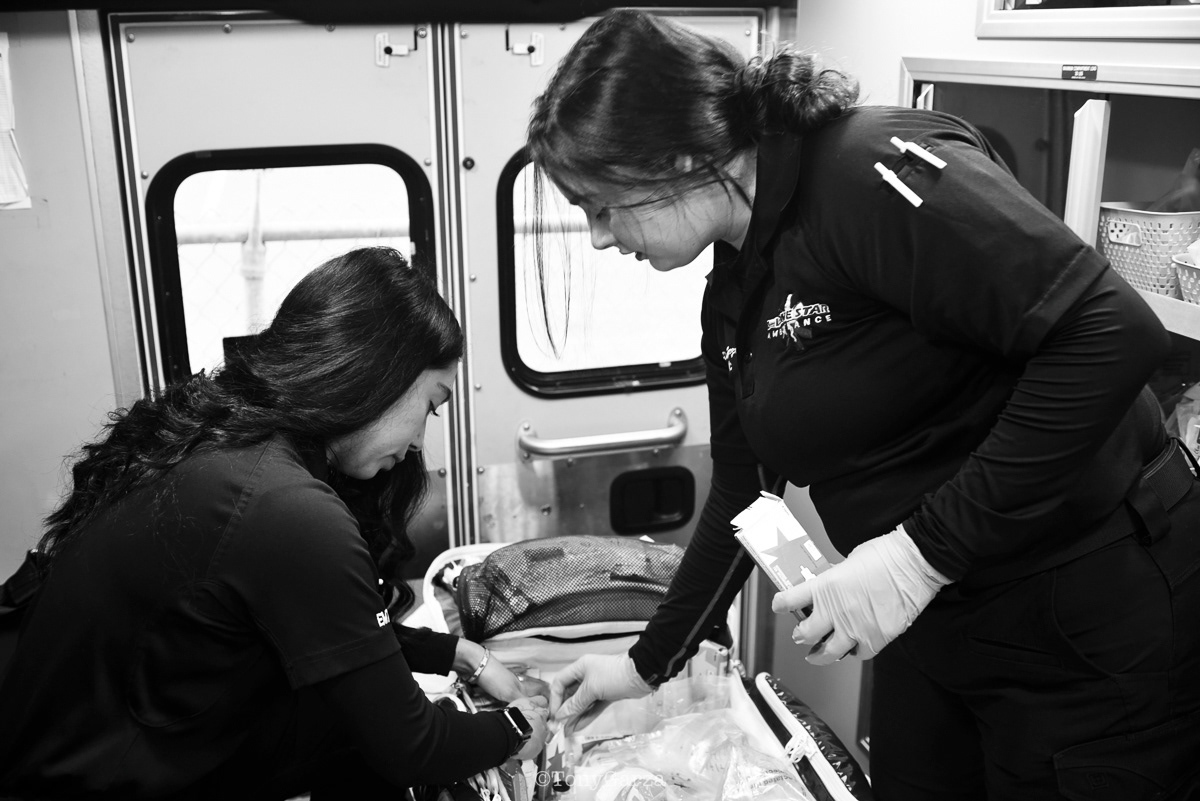
Medic 7
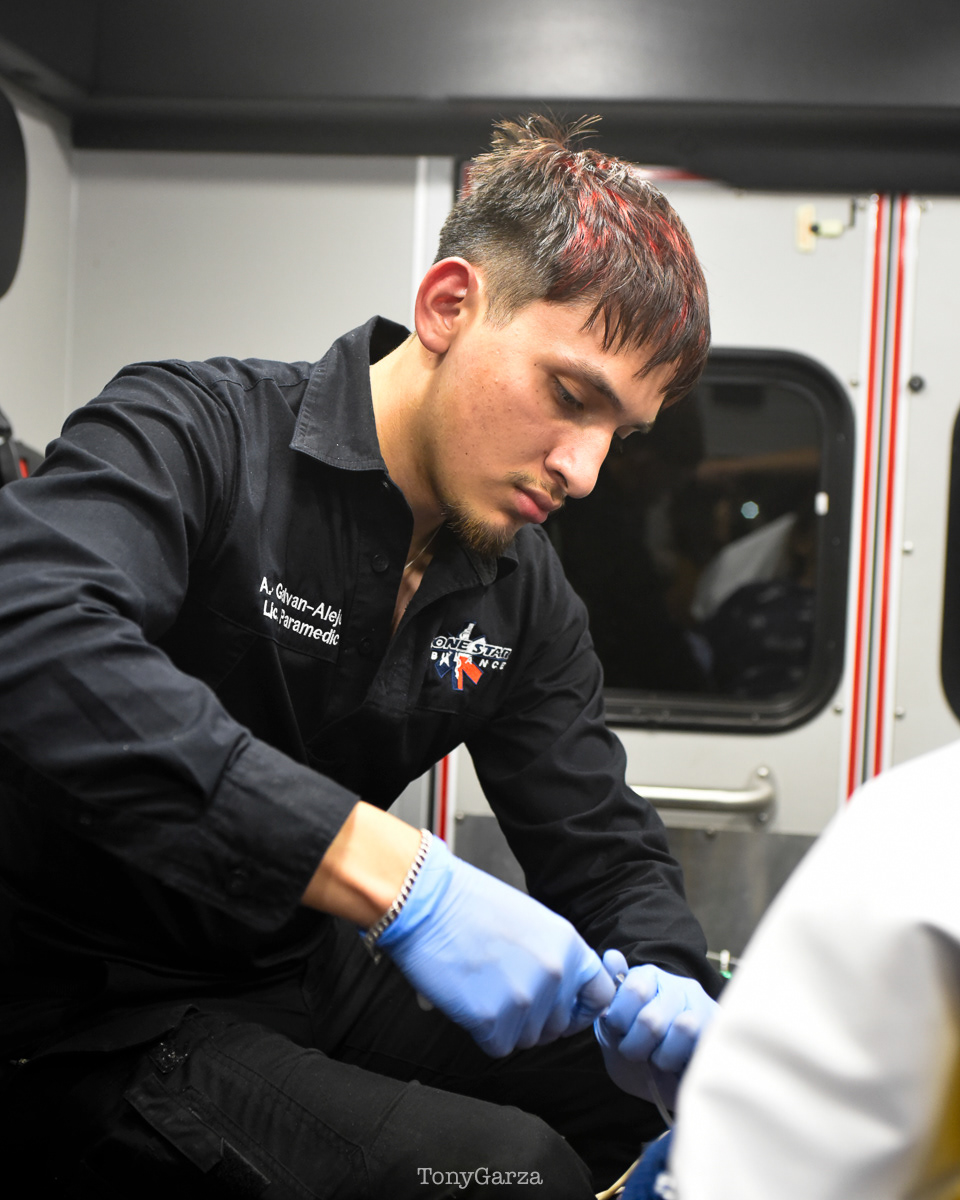
Deep into the night, Paramedic A. Galvan and AEMT A. Ozuna - responded promptly to a chest pain emergency where McAllen FD was already on scene providing first aid. As a MICU unit, Medic 7 took over patient care and initiated advanced treatment from the scene into the back of the ambulance.
Once inside the unit, AEMT Ozuna immediately began cardiac monitoring and secured IV access, while Paramedic Galvan conducted a thorough assessment and gathered the critical details needed to tailor the right treatment.
Working together with calm efficiency, genuine compassion, and true empathy, the two medics demonstrated outstanding teamwork and excellent bedside manner. Even in the quiet hours when fatigue begins to set in, they delivered high-quality advanced care and upheld the standard every patient deserves. After the initial assessment and treatments, transport was initiated to the hospital of the patient's choice, and the family was informed of the destination.
"You helped me," the patient said softly to Paramedic Galvan as he continued treatment during transport, easing their suffering.
This is the true role of medics in the field: to step in with professionalism and provide the highest quality care - no excuses, no exceptions. And that's exactly what Medic 7 did on this night.
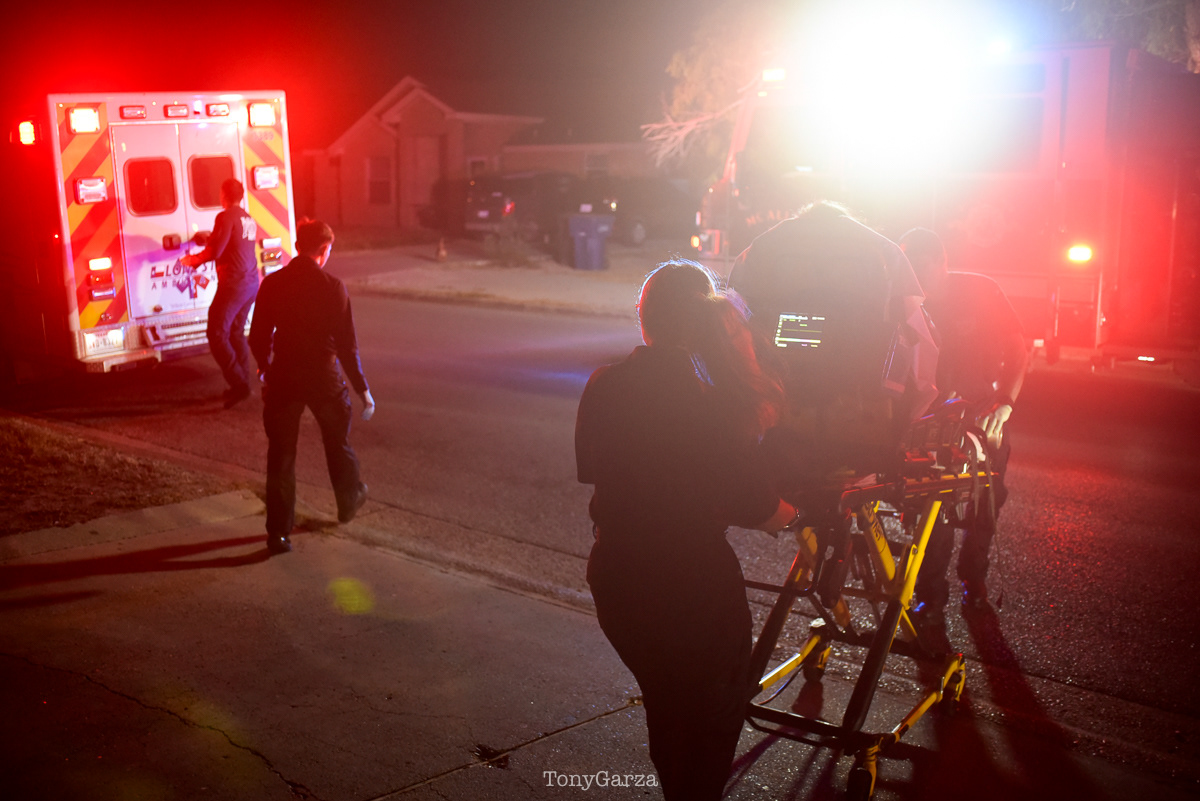
Medic 6
(Paramedic R. Melchor and AEMT J. Castillo), along with Rescue 1 (Supervisor/Paramedic O. Espinoza and AEMT M. Marquez), responded to a gunshot wound (GSW) emergency.
Paramedic R. Melchor assumed the role of team lead and took over patient care from McAllen Police and Fire Department personnel, who were providing initial first aid. The patient was rapidly moved to the ambulance, where Paramedic Melchor conducted an assessment while providing strong leadership through clear and decisive direction to the team.
Orders were given to continue direct pressure on the wound, establish bilateral IV access, and prepare a tranexamic acid (TXA) infusion. The crew demonstrated effective teamwork by rotating responsibilities to ensure continuous hemorrhage control while interventions were performed efficiently and without delay.
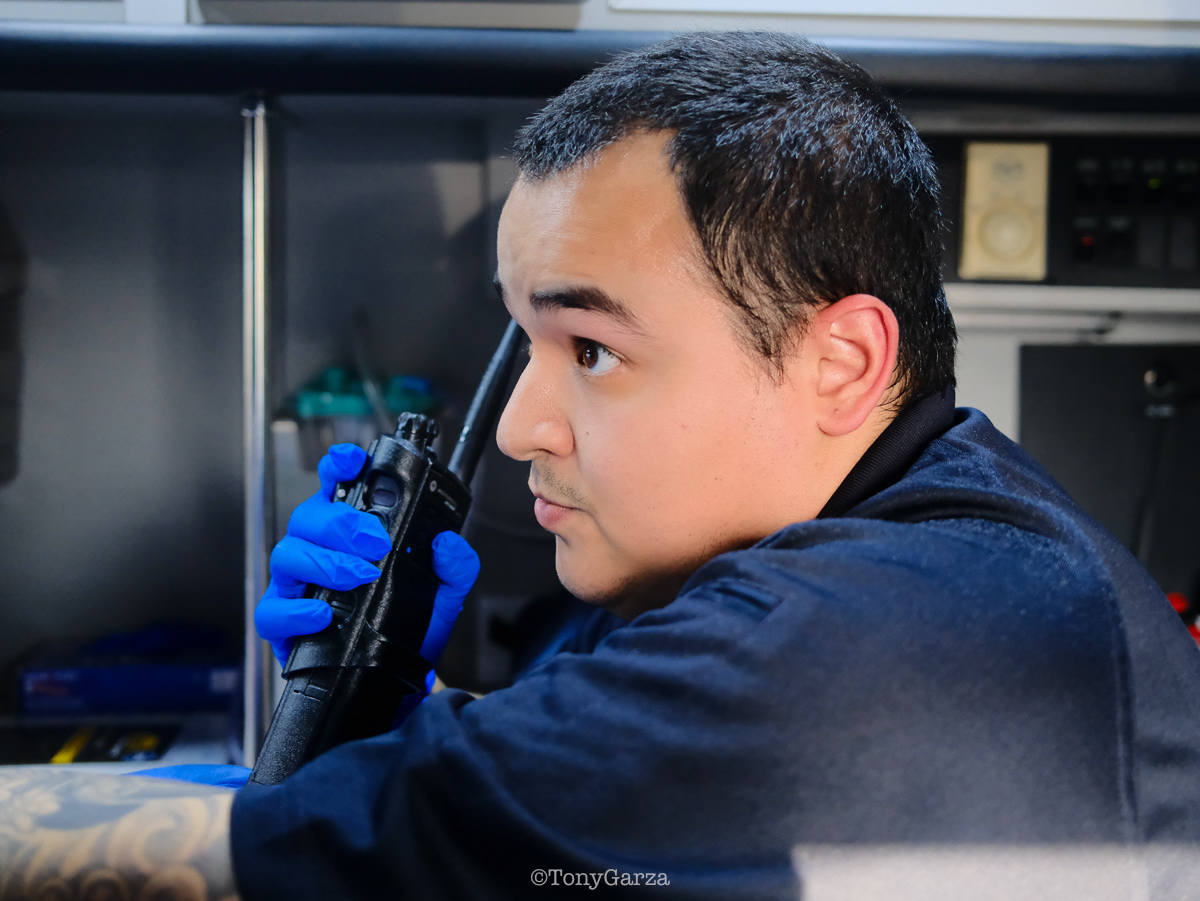
Once initial treatments were in progress, Paramedic Melchor initiated rapid transport. Shortly after departure, he delivered a concise and effective radio report to the receiving trauma center.
During transport, AEMT Marquez focused on patient reassurance while maintaining direct pressure on the wound. Paramedic Melchor also addressed hypothermia prevention by ensuring the patient was covered.
Upon arrival, care was transferred smoothly and efficiently to the trauma team, who stood ready to continue advanced care.
This call was executed with a high level of professionalism and coordination. Each team member contributed effectively, resulting in a seamless response and timely delivery of the patient to definitive care. Total on-scene time was 5 minutes, with a transport time of 7 minutes. Any mistake or hesitation would have added critical seconds to the on-scene time and potentially decreased the patient’s chances of survival.
Excellent work to the whole team—Paramedic R. Melchor, AEMT J. Castillo, Supervisor/Paramedic O. Espinoza, and AEMT M. Marquez.
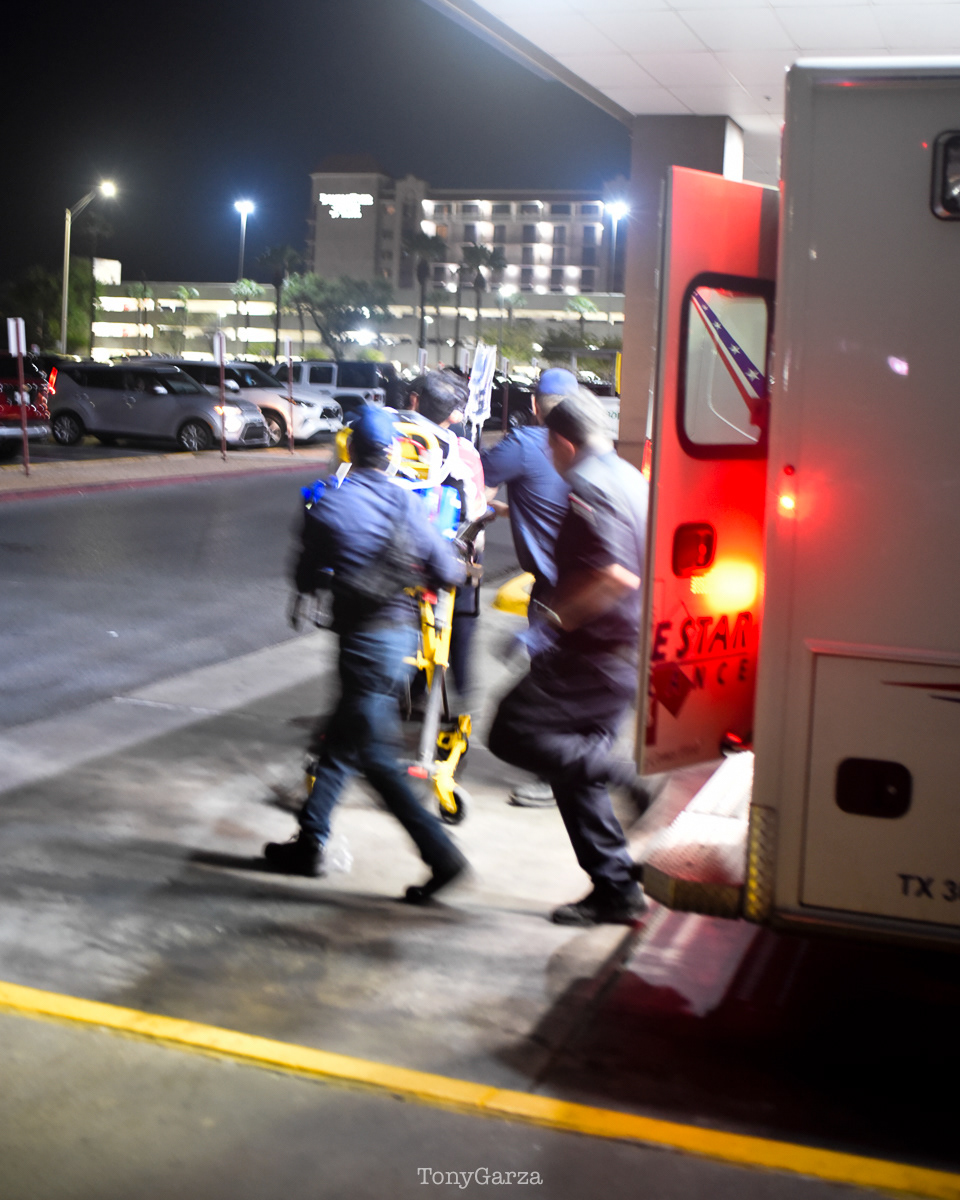
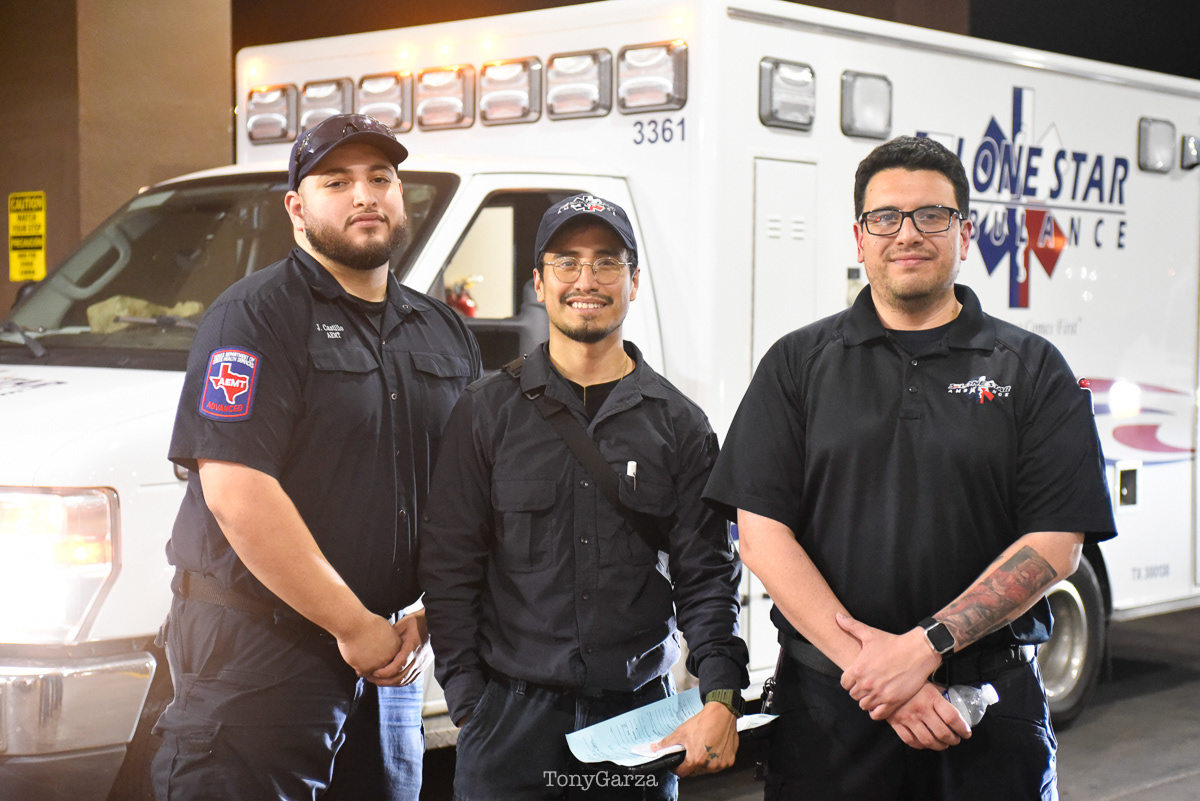
Medic 30
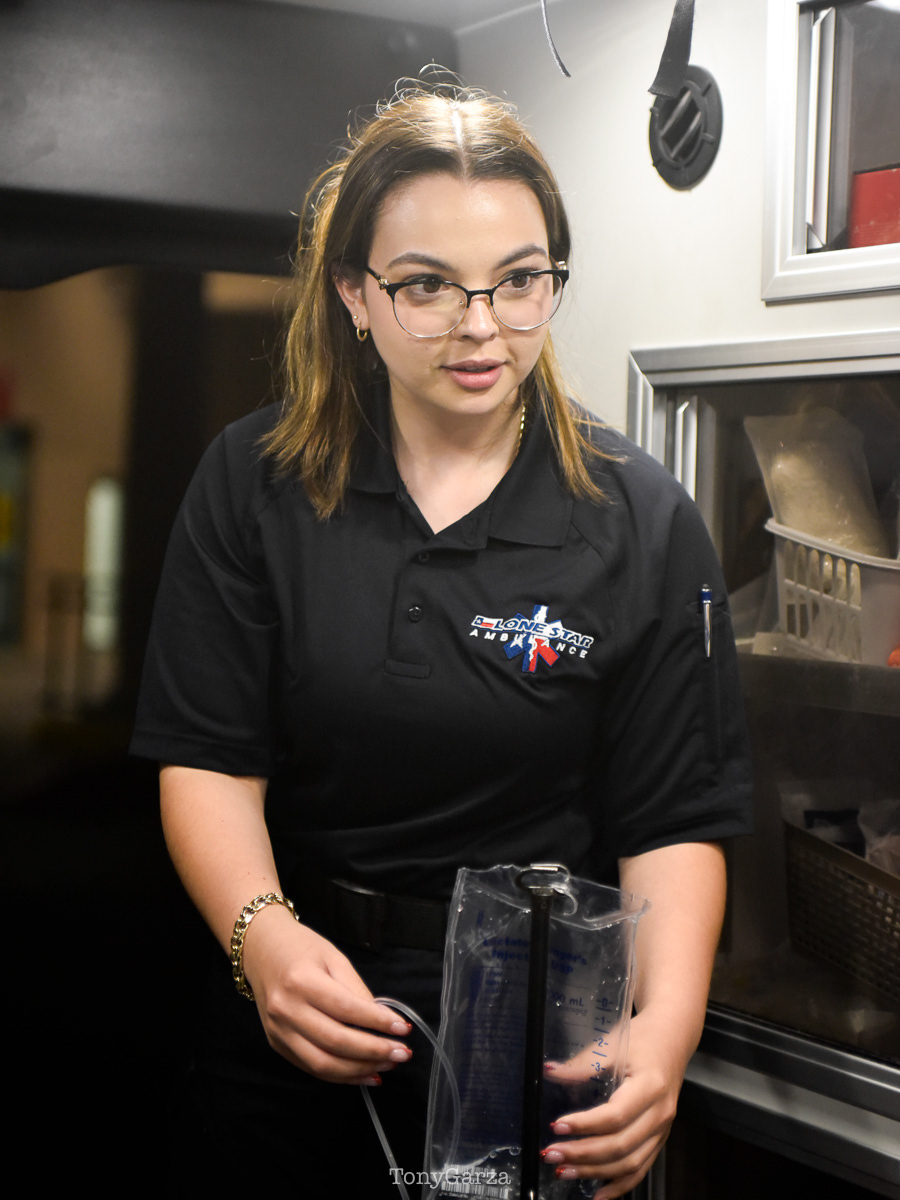
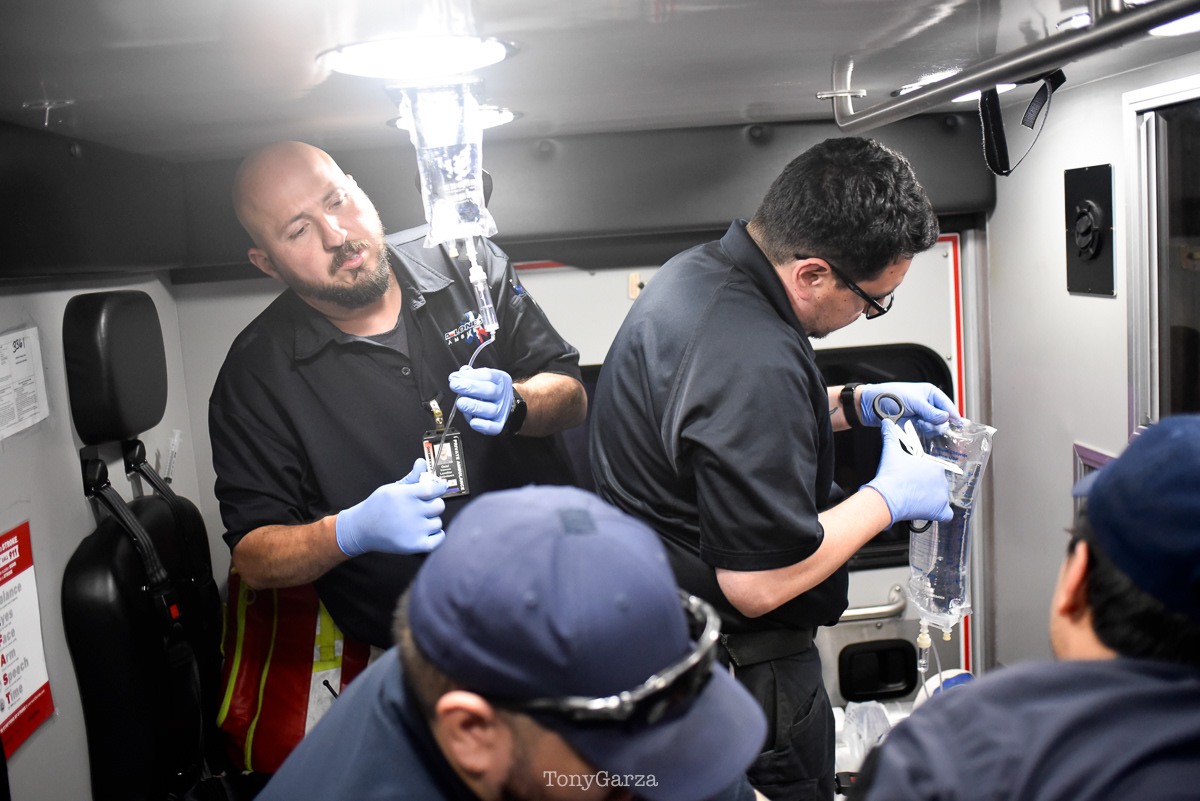
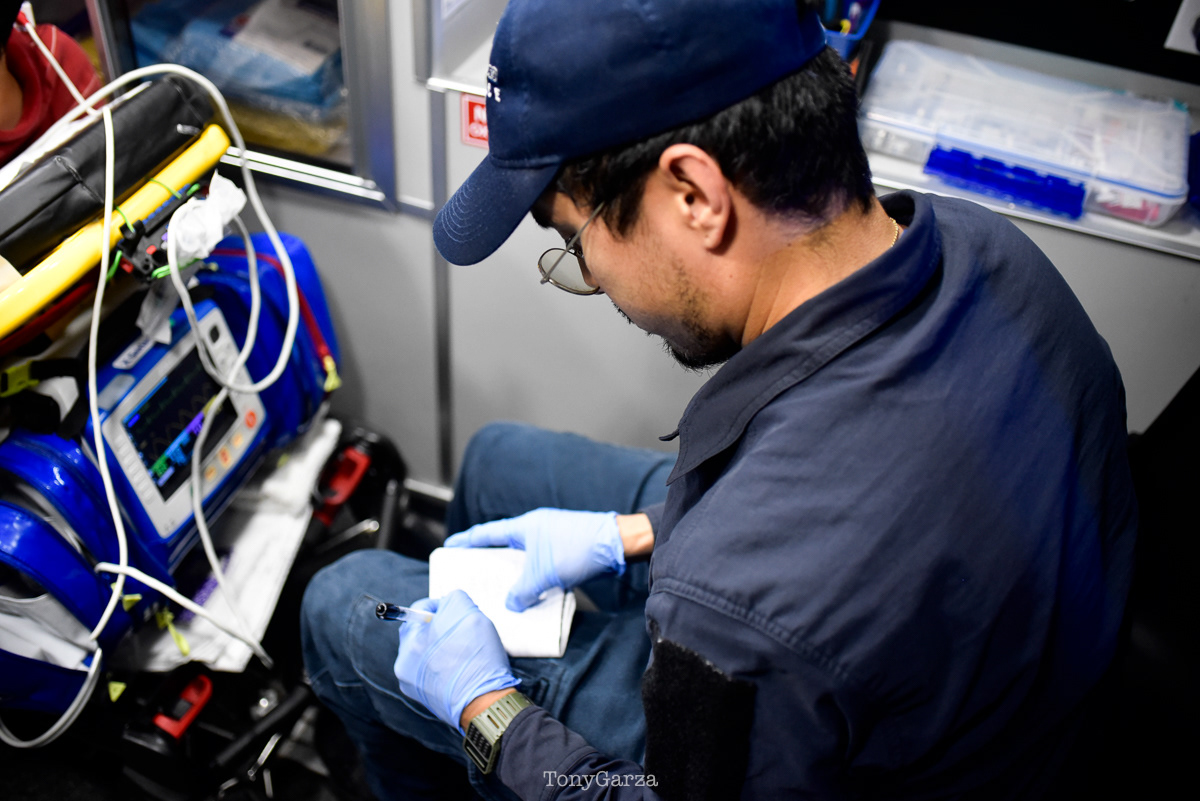
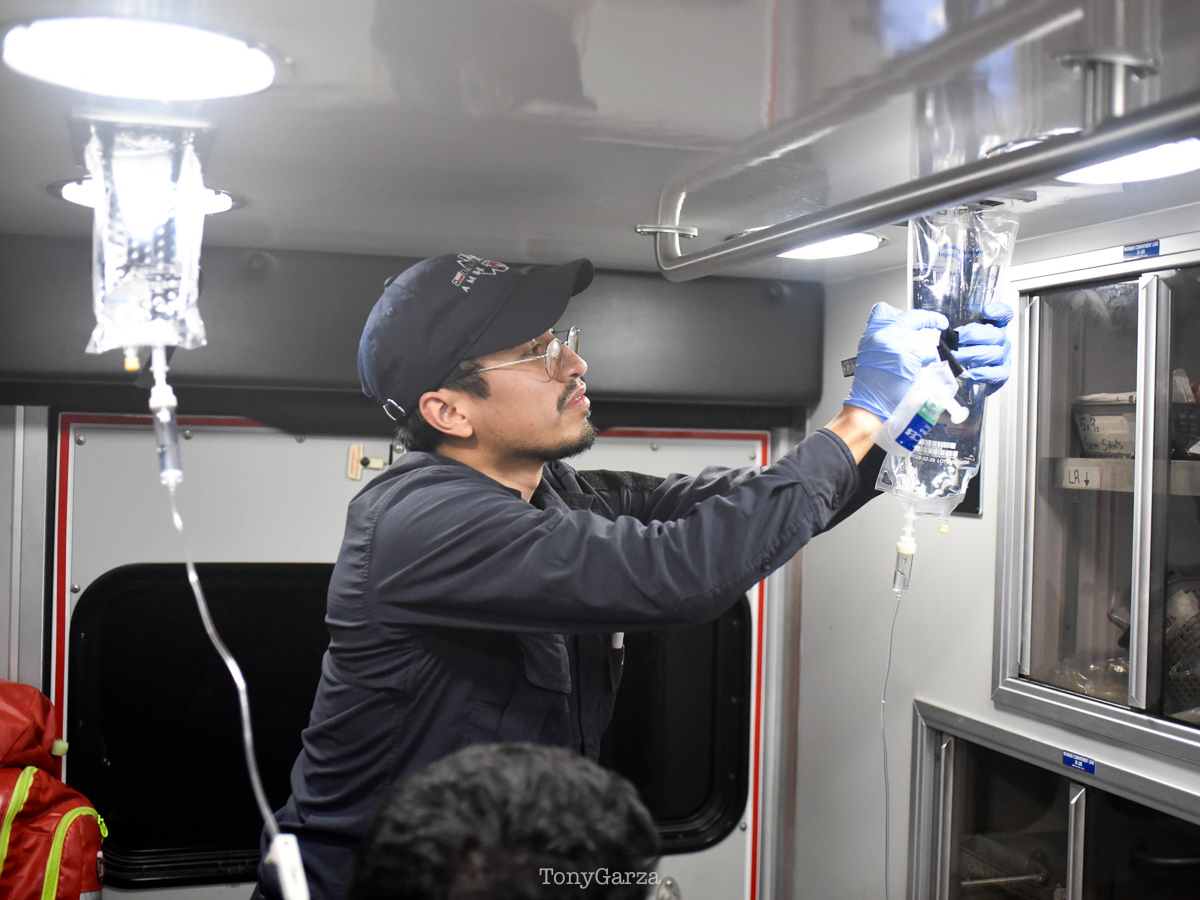
(Paramedic R. De La Garza/ EMT J. Hernandez) and Rescue 1 (Supervisor/Paramedic A. Garcia) responded to a sick call. Upon arrival, the team—led by Paramedic De La Garza—rapidly initiated assessment of the patient, who was presenting with vomiting and hypotension.
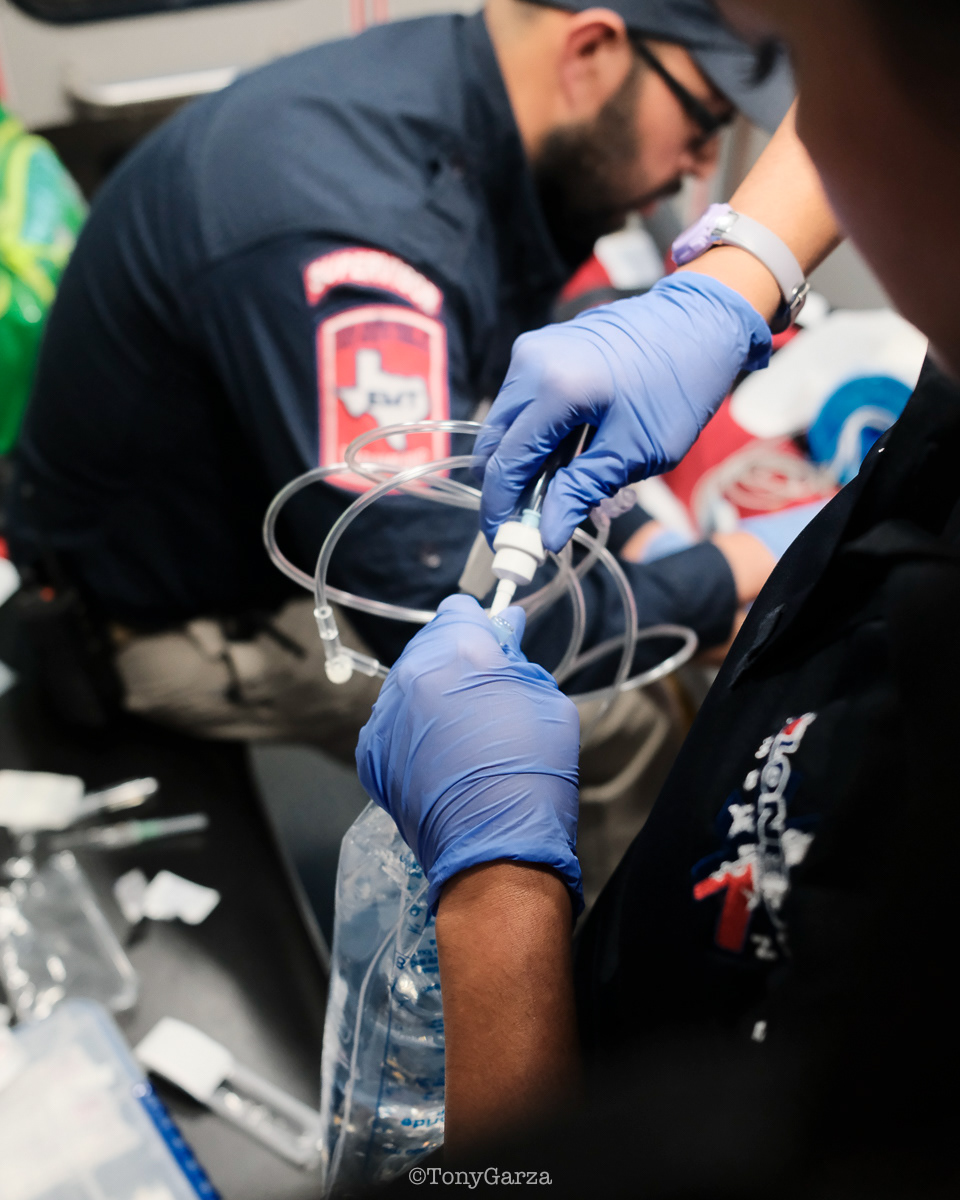
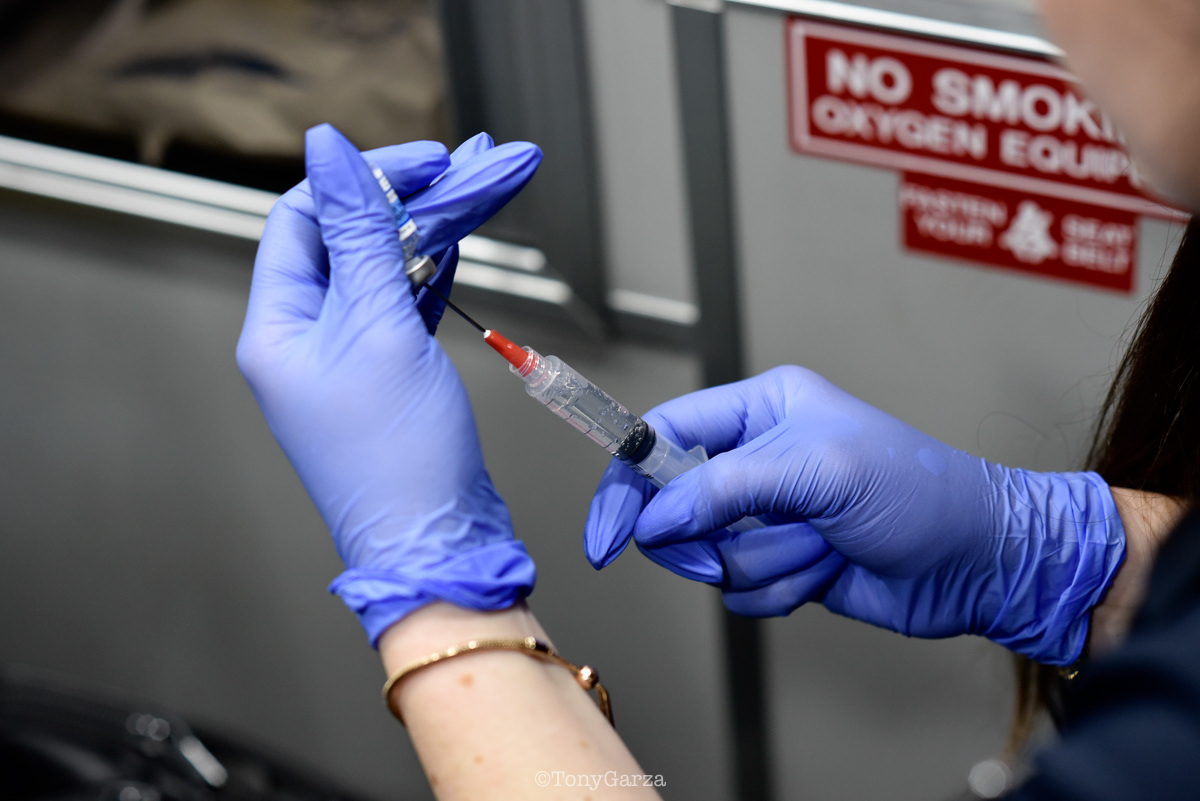
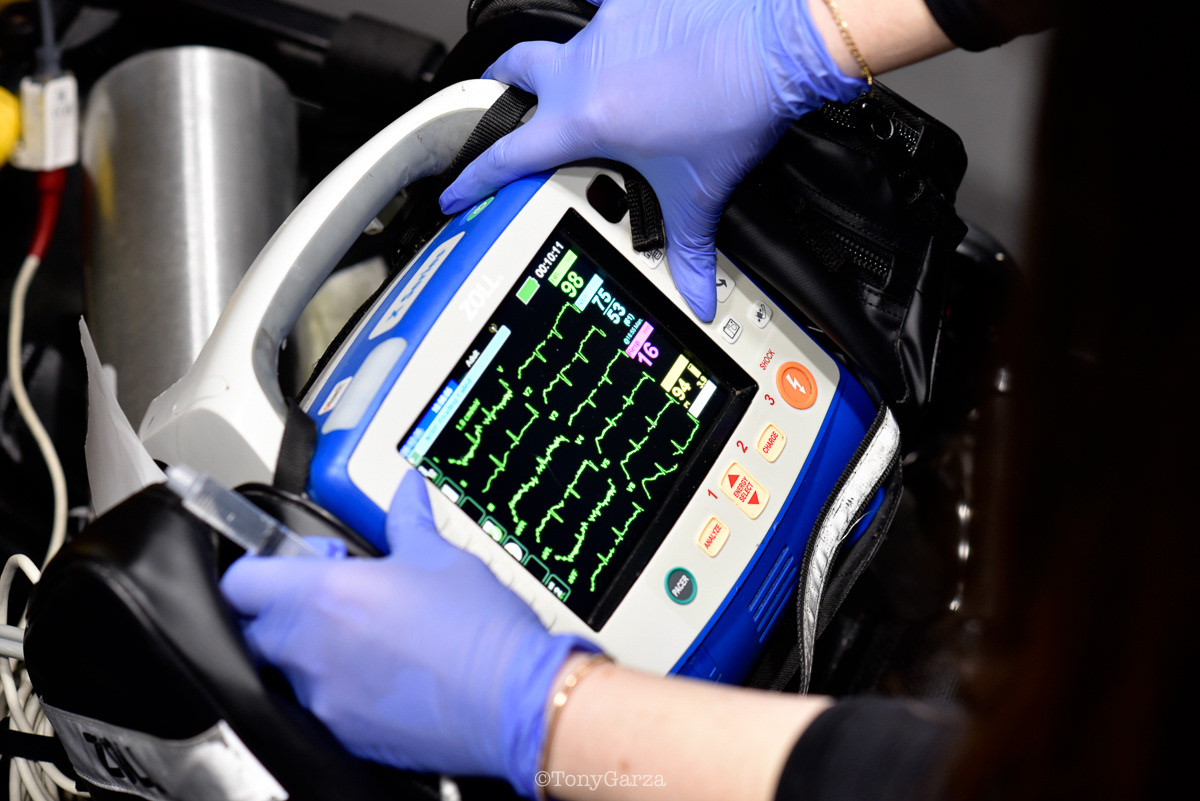
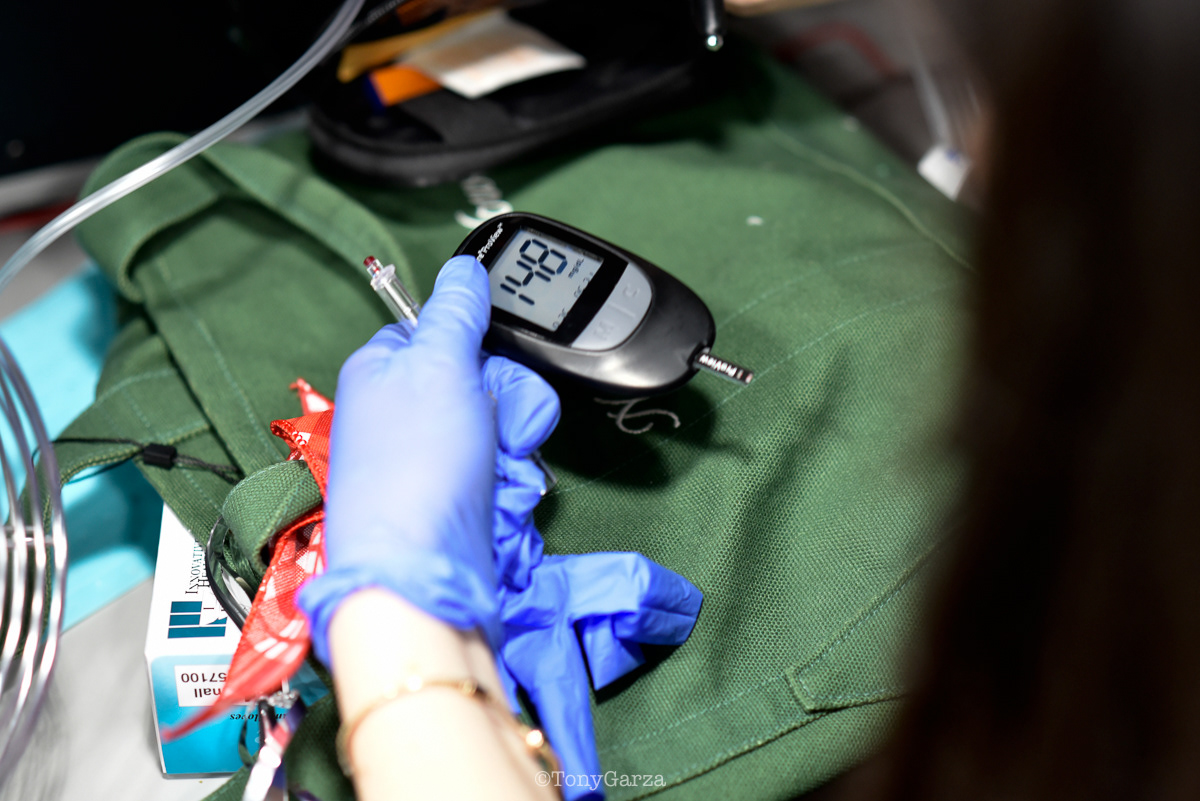
Once the patient was placed in the unit, Paramedic De La Garza performed a thorough yet rapid medical assessment and differential diagnosis, quickly identifying critical issues. She made sound clinical decisions and directed the team to initiate targeted interventions without delay, including obtaining vital signs, performing a 12-lead ECG, and establishing IV access, while she prepared the indicated antiemetic medication.
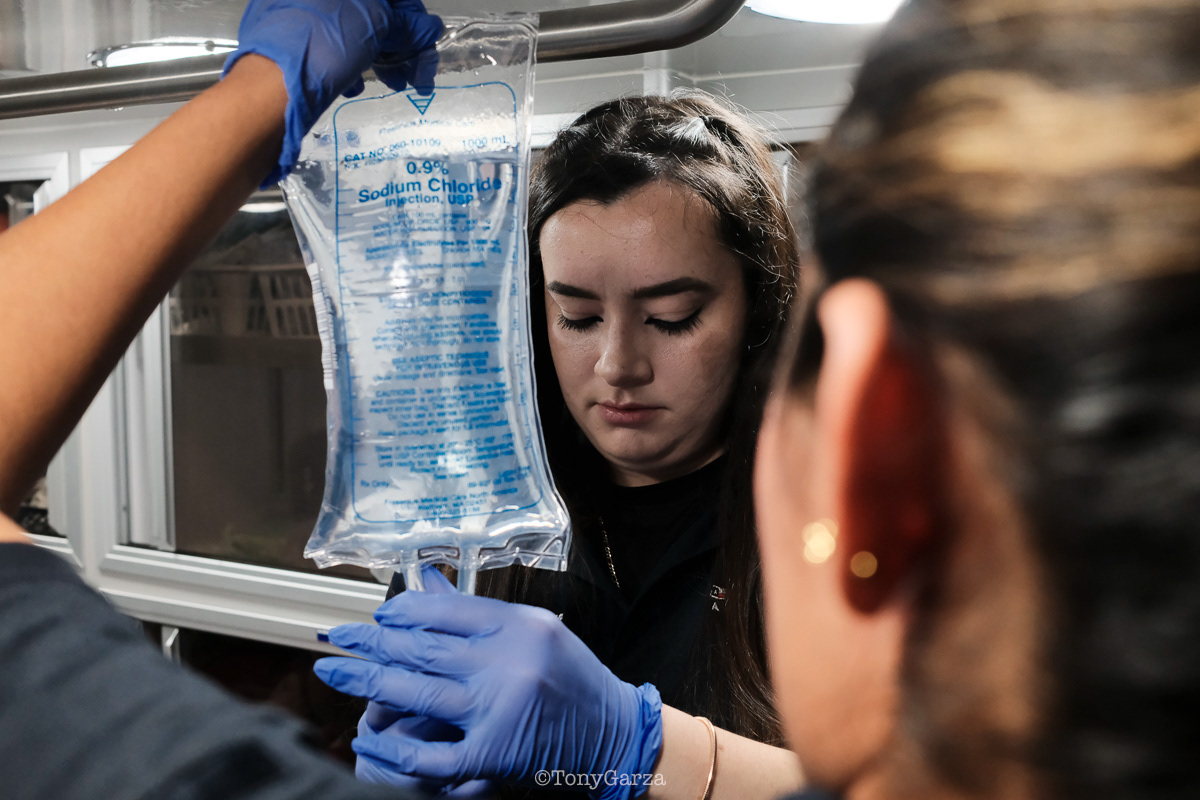
After completion of the 12-lead ECG and ruling out a heart attack, normal saline fluids were initiated and the medication was administered. The patient was promptly transported to the hospital of their choice. Paramedic De La Garza continued to closely monitor and reassess the patient en route, exemplifying strong leadership, clinical competence, and professionalism throughout the call.
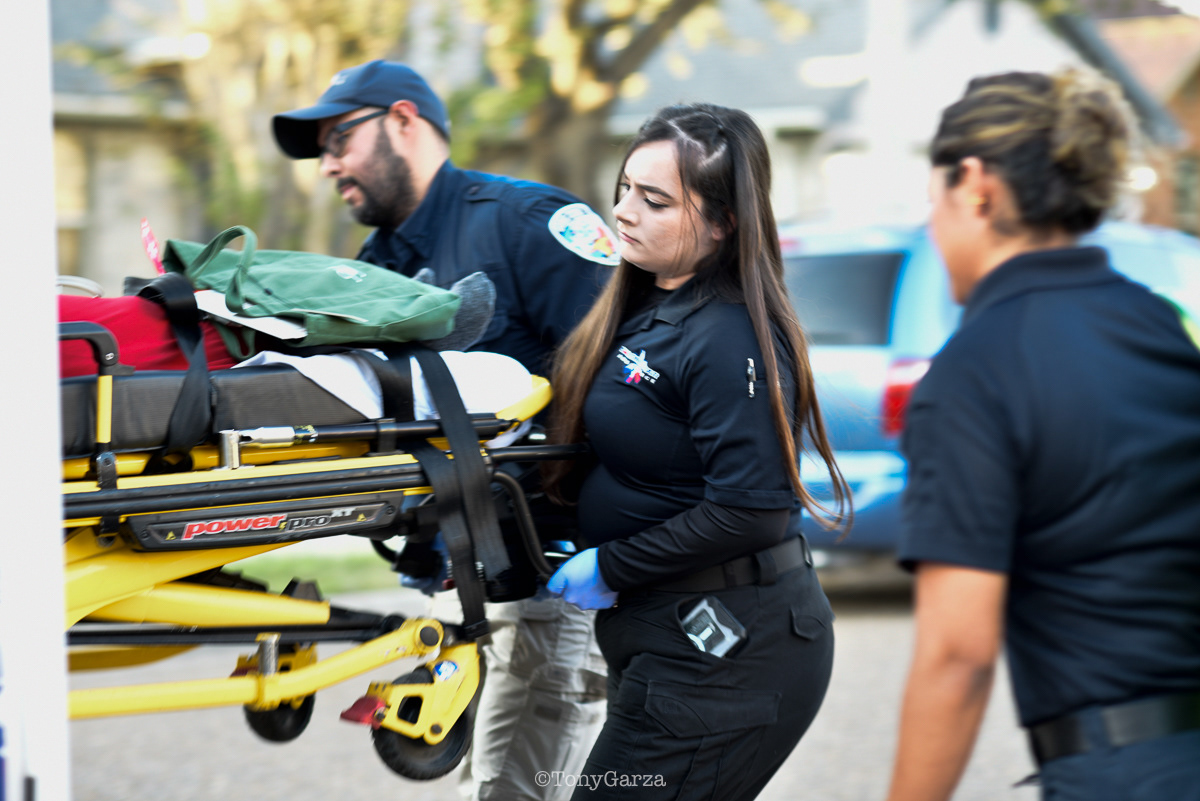
Medic 6
Paramedic J. Amador sat beside the patient for the entire transport, making their comfort his priority. He demonstrated exemplary bedside manner as he carried out a thorough focused assessment, and asking clear, purposeful questions. His calm demeanor and steady, friendly conversation helped build trust. From the initial contact to hospital arrival, his attentiveness and professionalism were evident. Outstanding patient care.

Medic 1
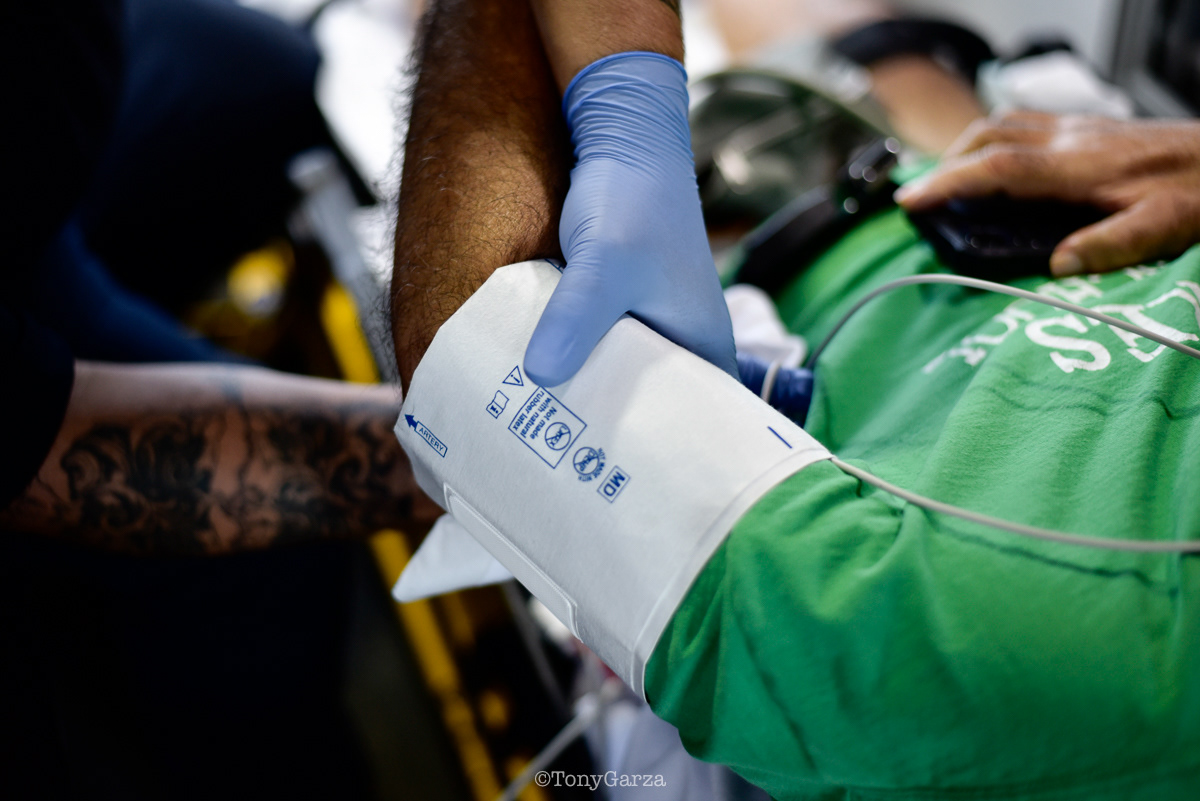
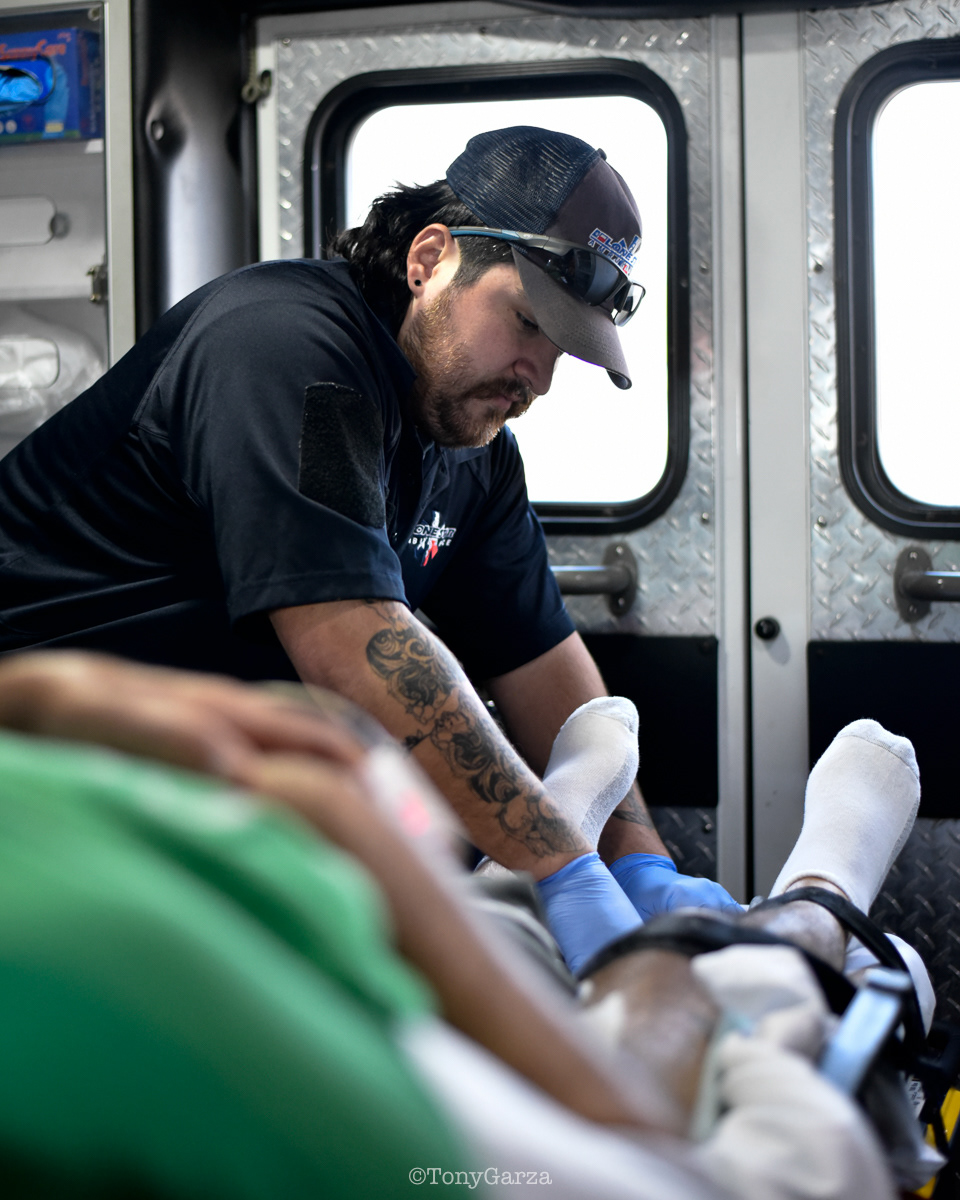
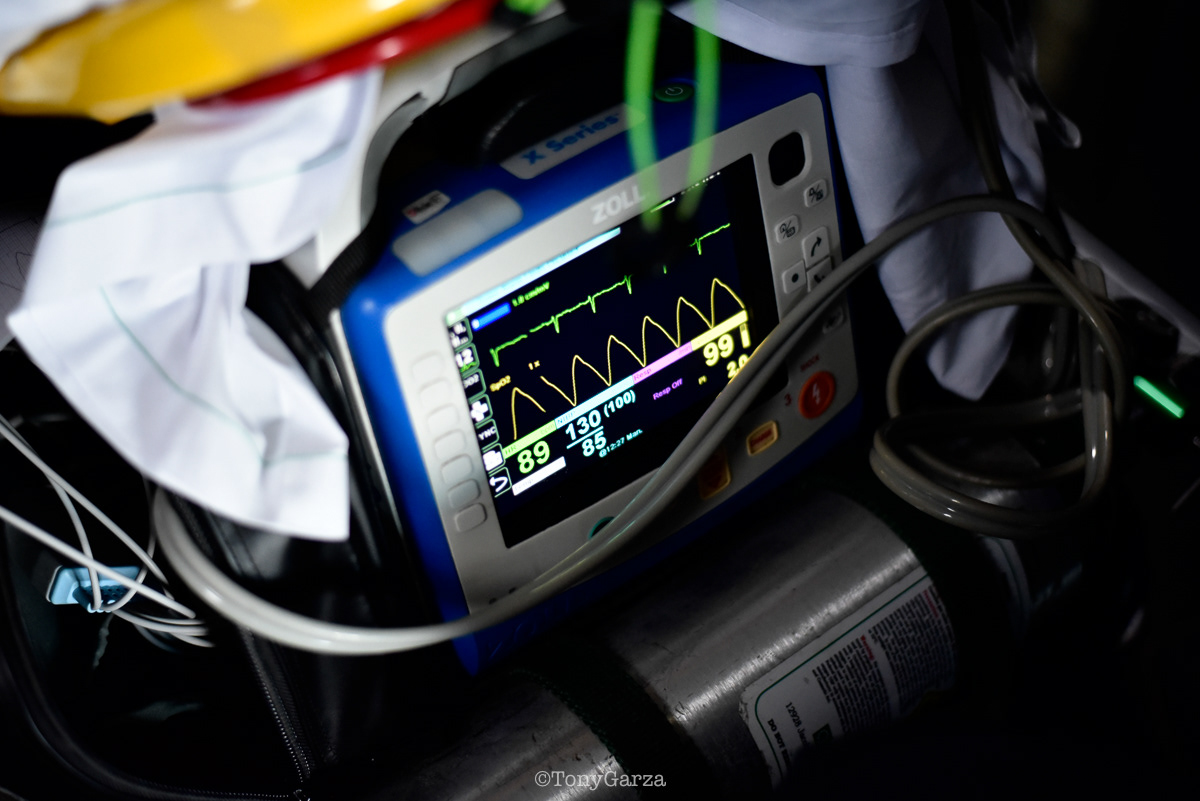
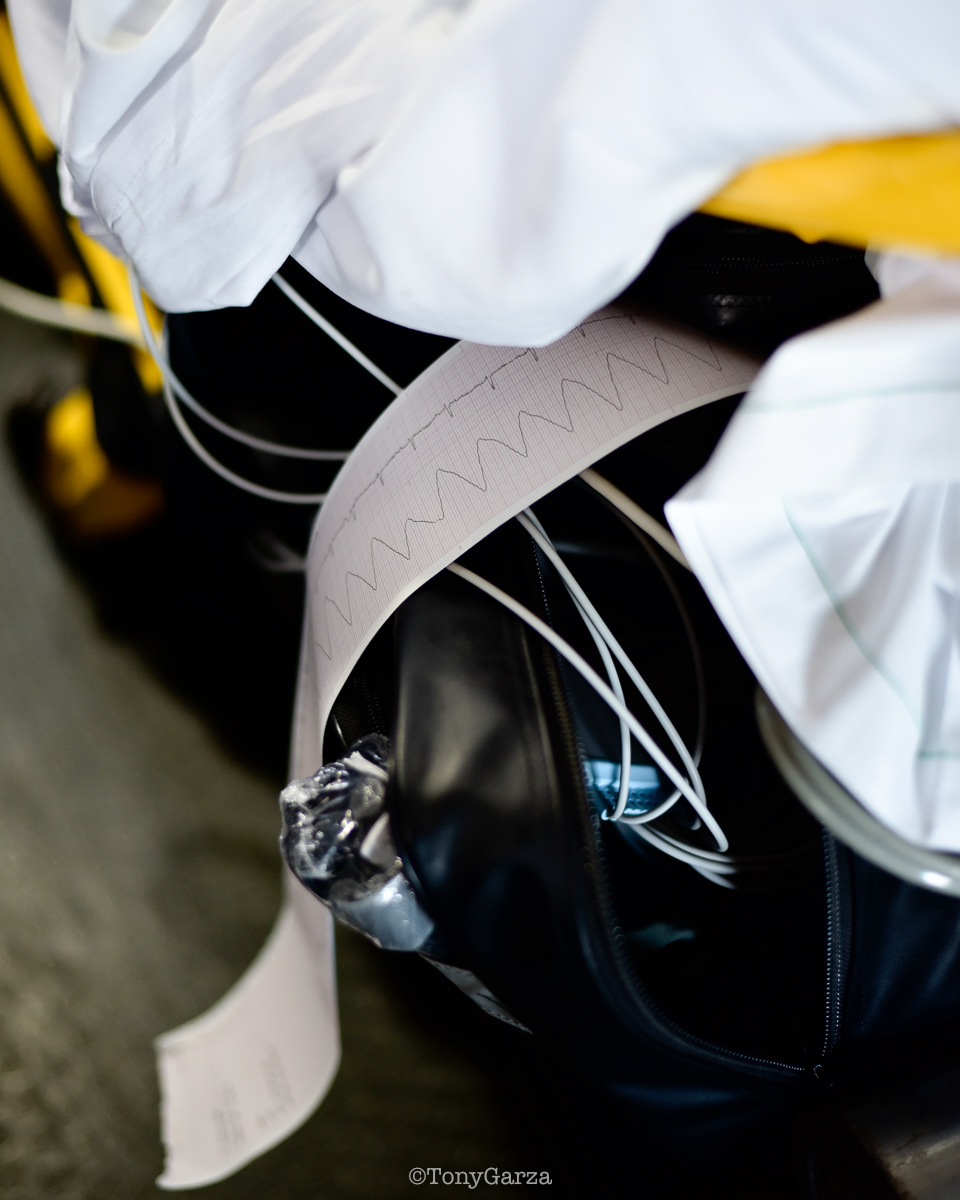
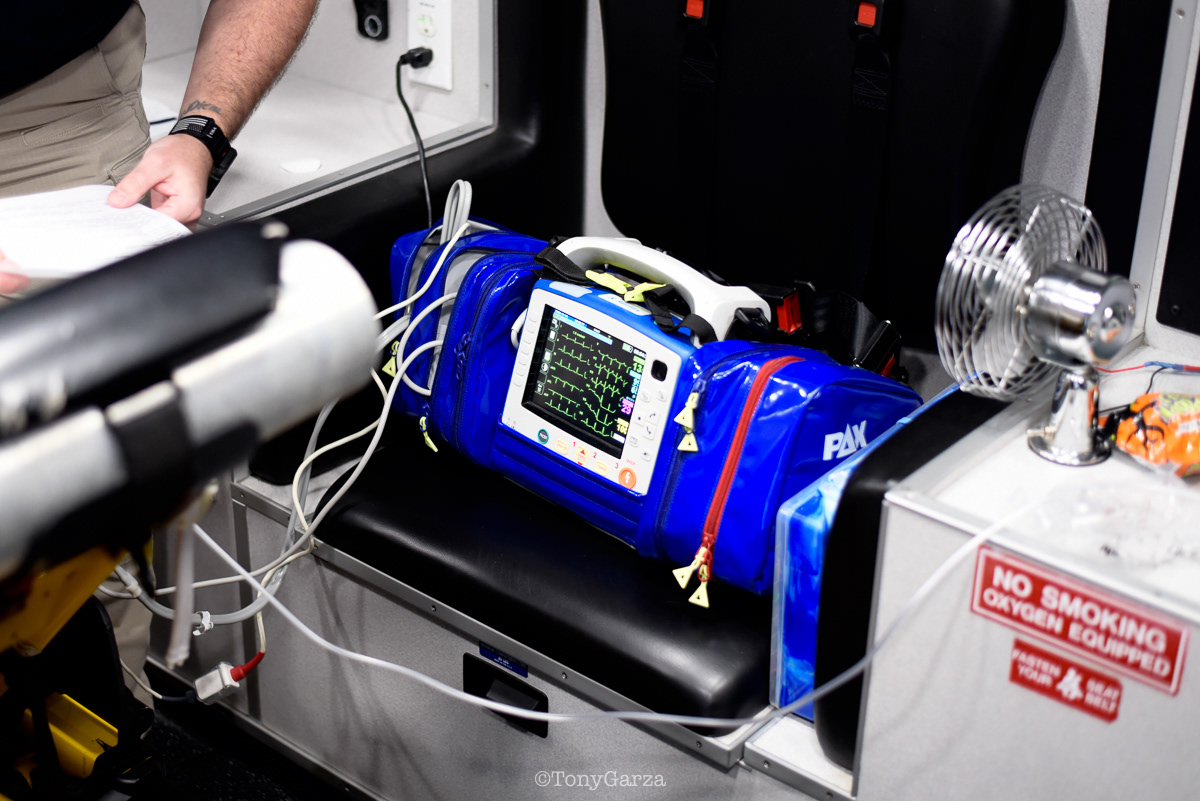
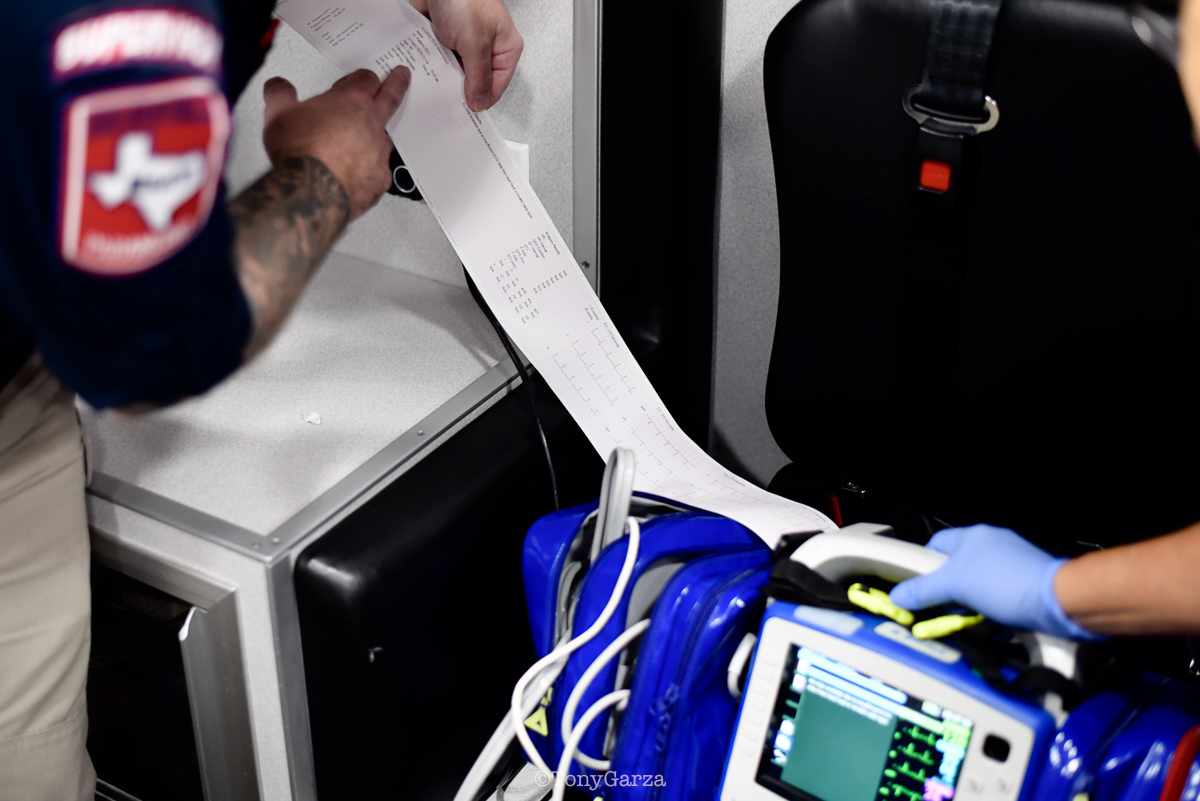
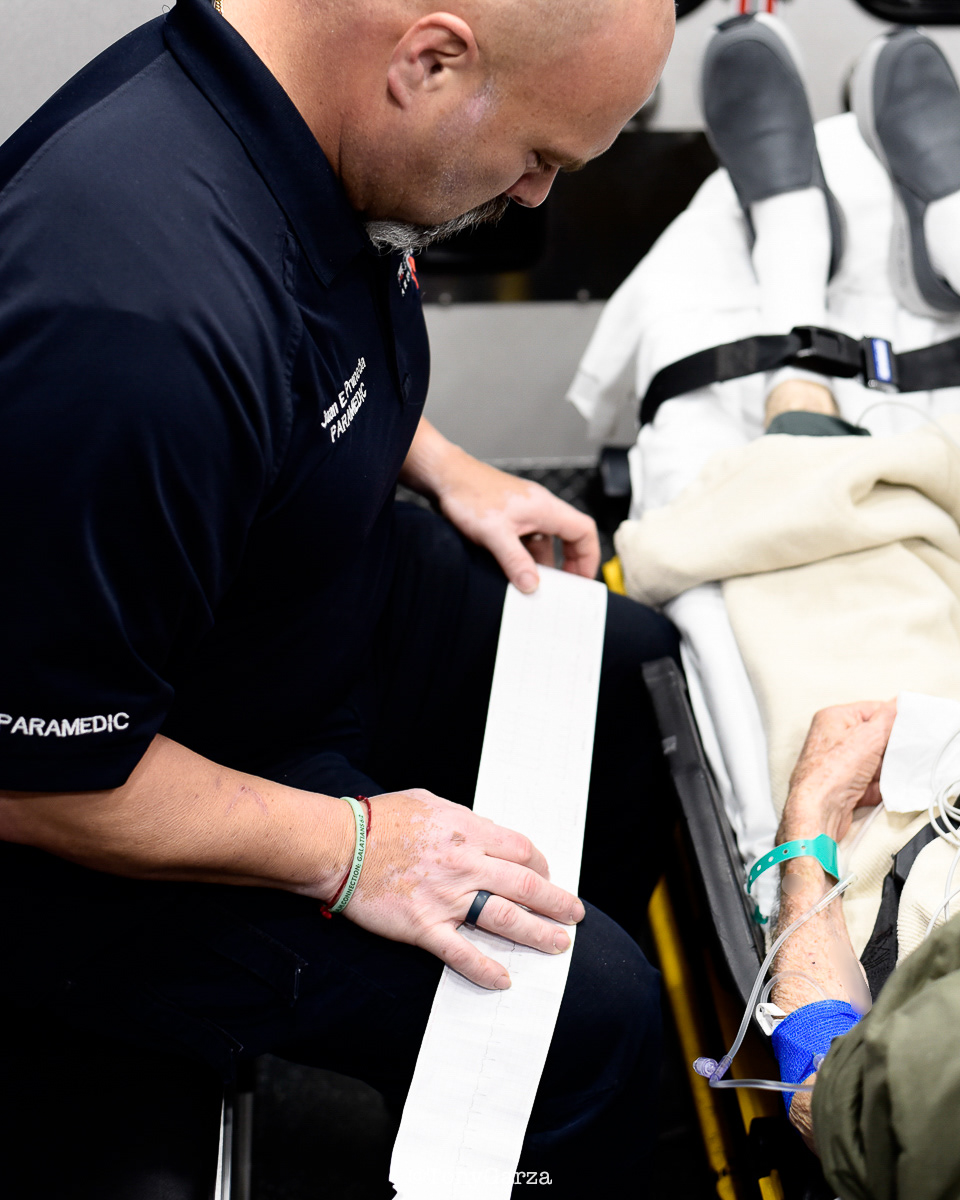
(Paramedic J. Pruneda and EMT N. Dominguez) and Rescue 1 (Supervisor/Paramedic K. Miller) performed an excellent differential diagnosis on a critically ill patient presenting with tachycardia and hypotension.
Paramedic Pruneda quickly ruled out arrhythmia and myocardial infarction using ECG monitoring and a 12-lead ECG, narrowed the differential, identified the most likely condition, and initiated targeted treatment that effectively reduced the patient’s distress.
Field differential diagnosis is a critical skill for paramedics, allowing them to tailor treatment to the most probable cause of a patient’s signs and symptoms. This approach ensures that simple, non-invasive interventions are attempted first, reserving more extreme measures for when they are truly necessary.
Outstanding work by Paramedic J. Pruneda, Supervisor/Paramedic K. Miller, and EMT N. Dominguez.
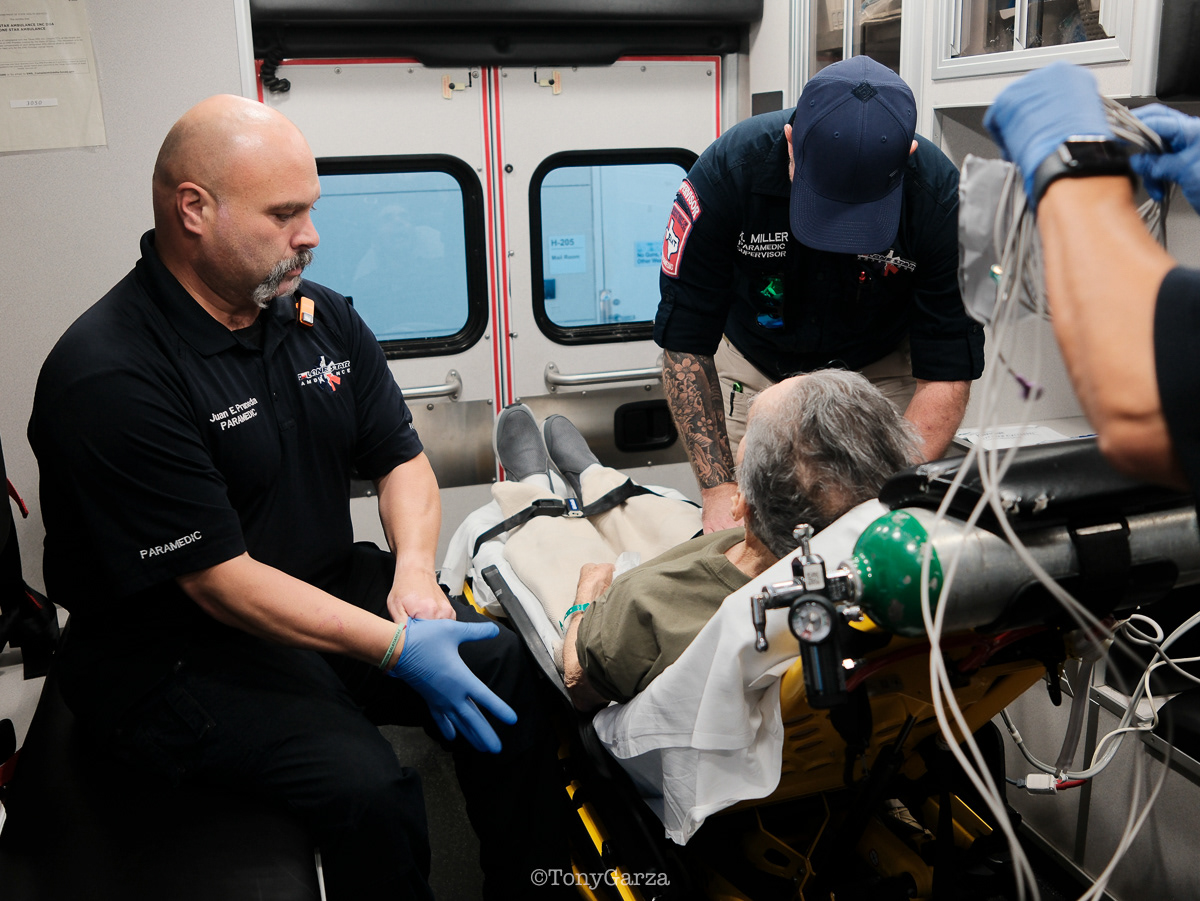
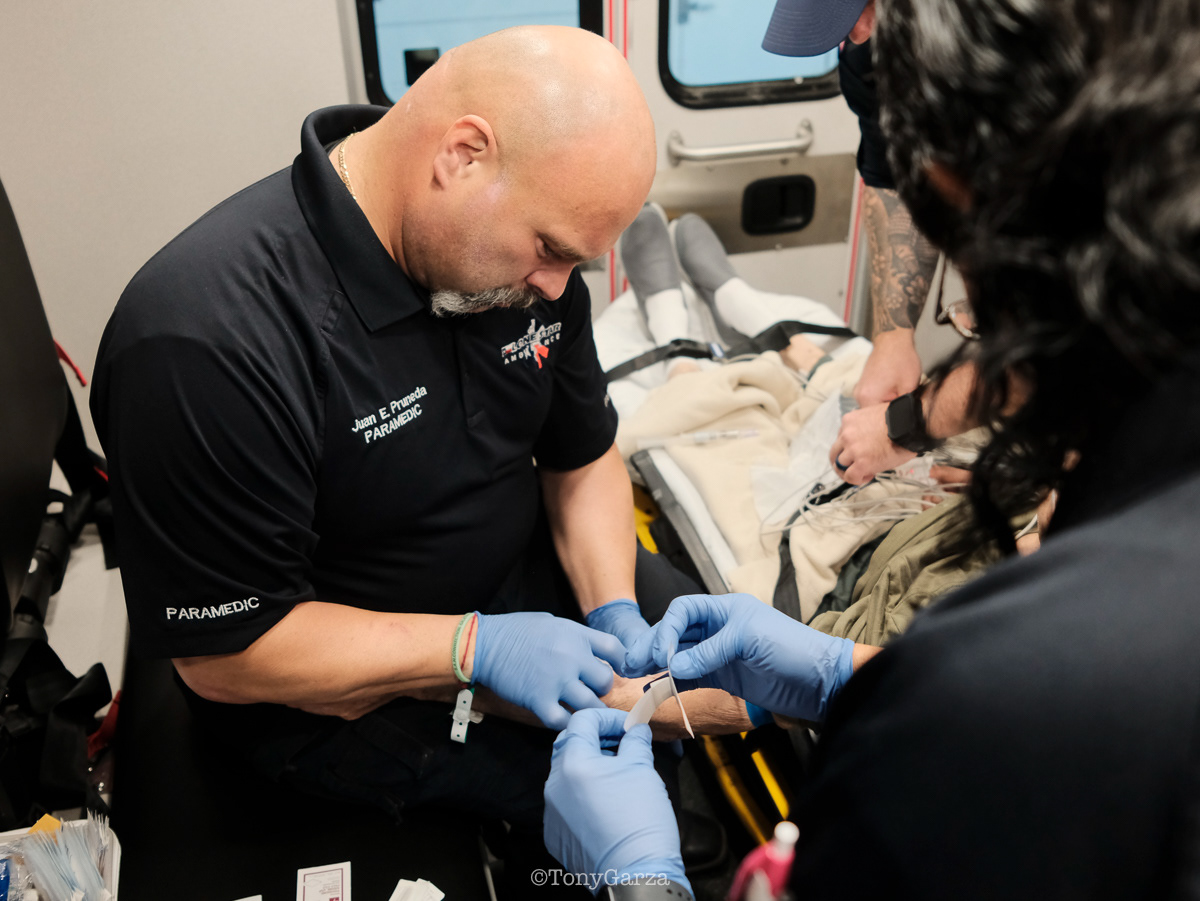
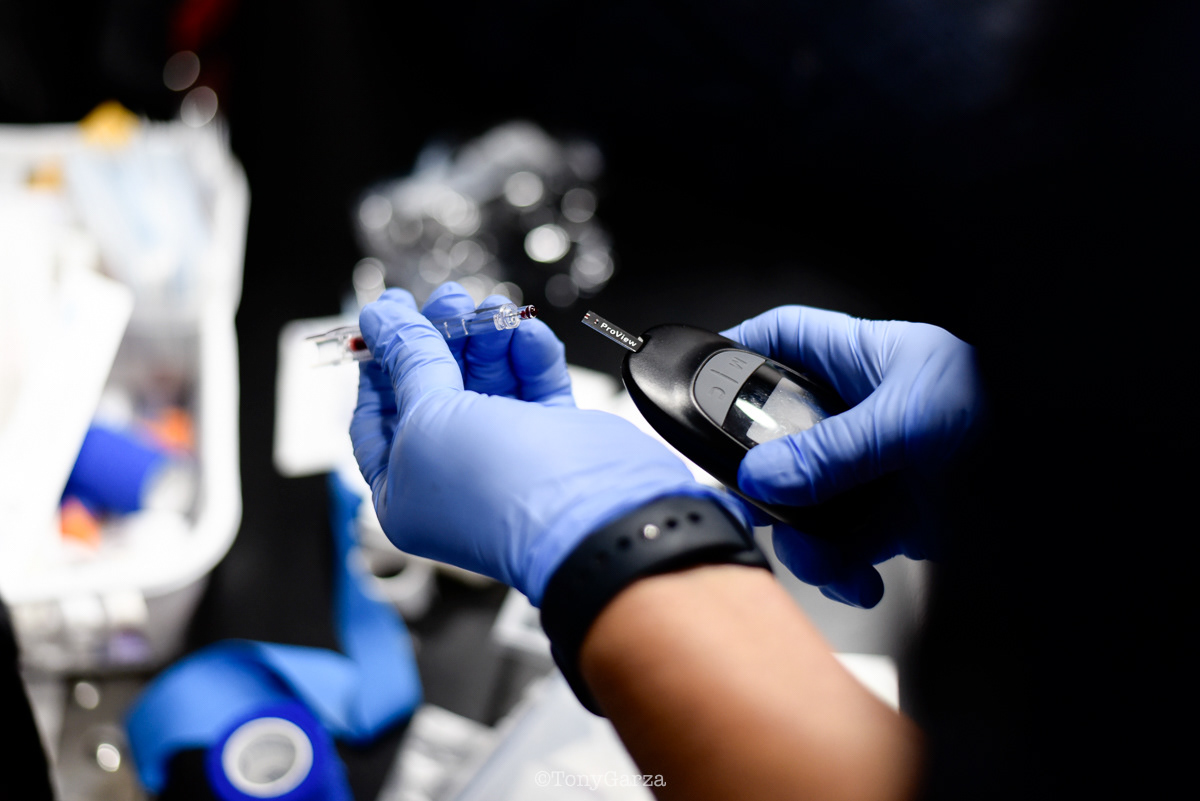
Medic 1
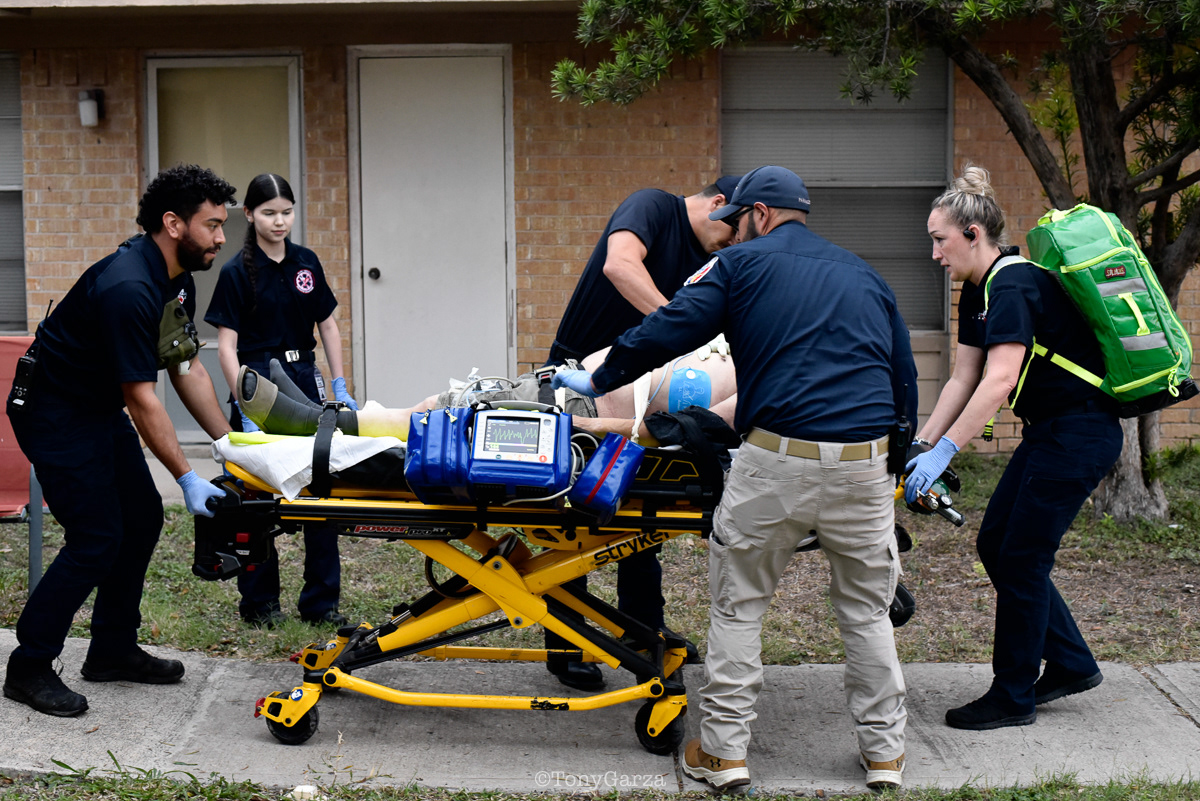
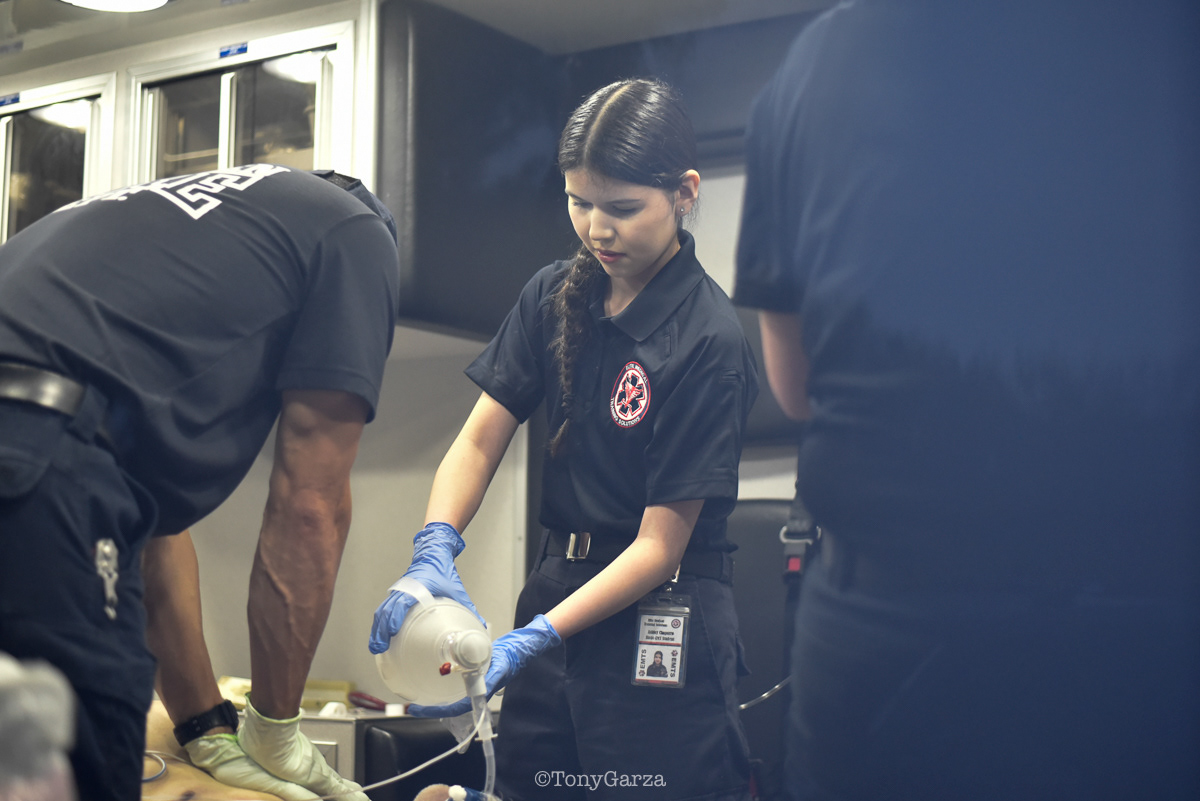
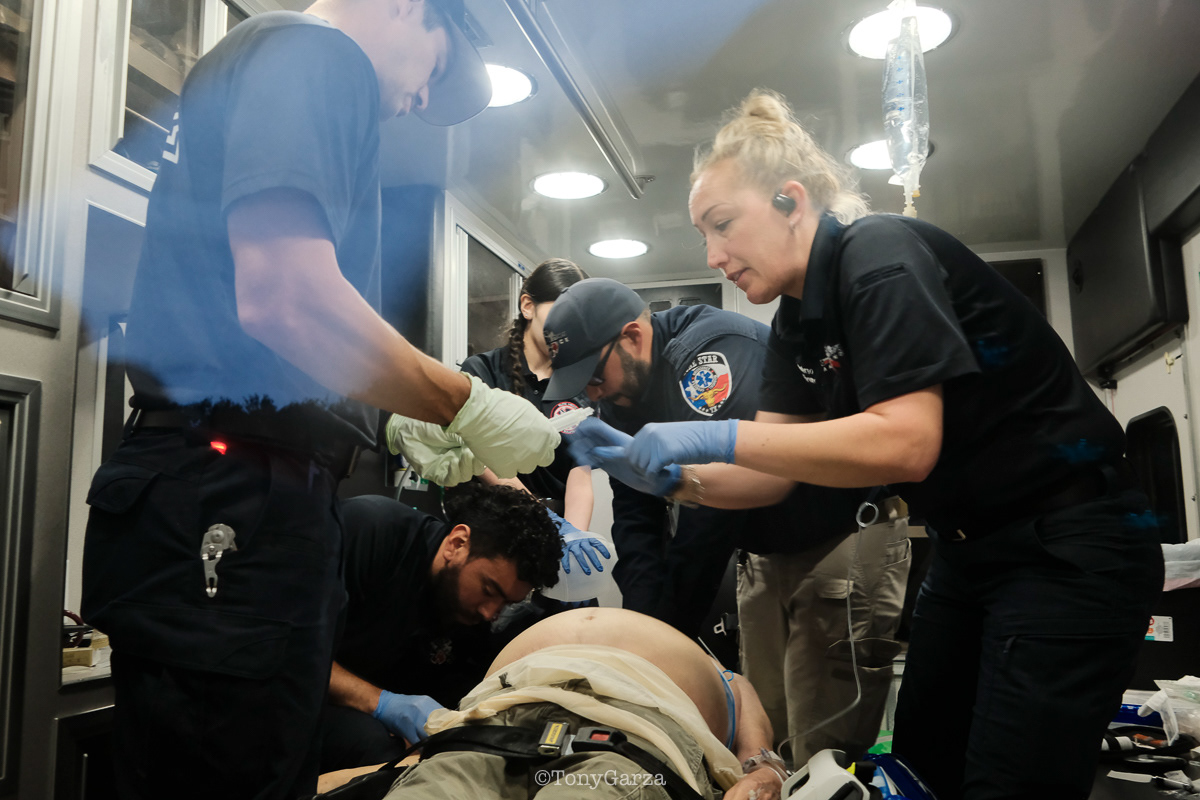
(Paramedic J. Anderson, EMT R. Longoria and EMT student A. Chaparro (first ride out, second arrest)), along with Rescue 1 (Supervisor/Paramedic A. Garcia), and McAllen FD, responded to a cardiac arrest. The crew intubated, established IV access, and administered cardiac medications on scene and en route. ROSC was achieved at the hospital. Great teamwork.
Rescue 1
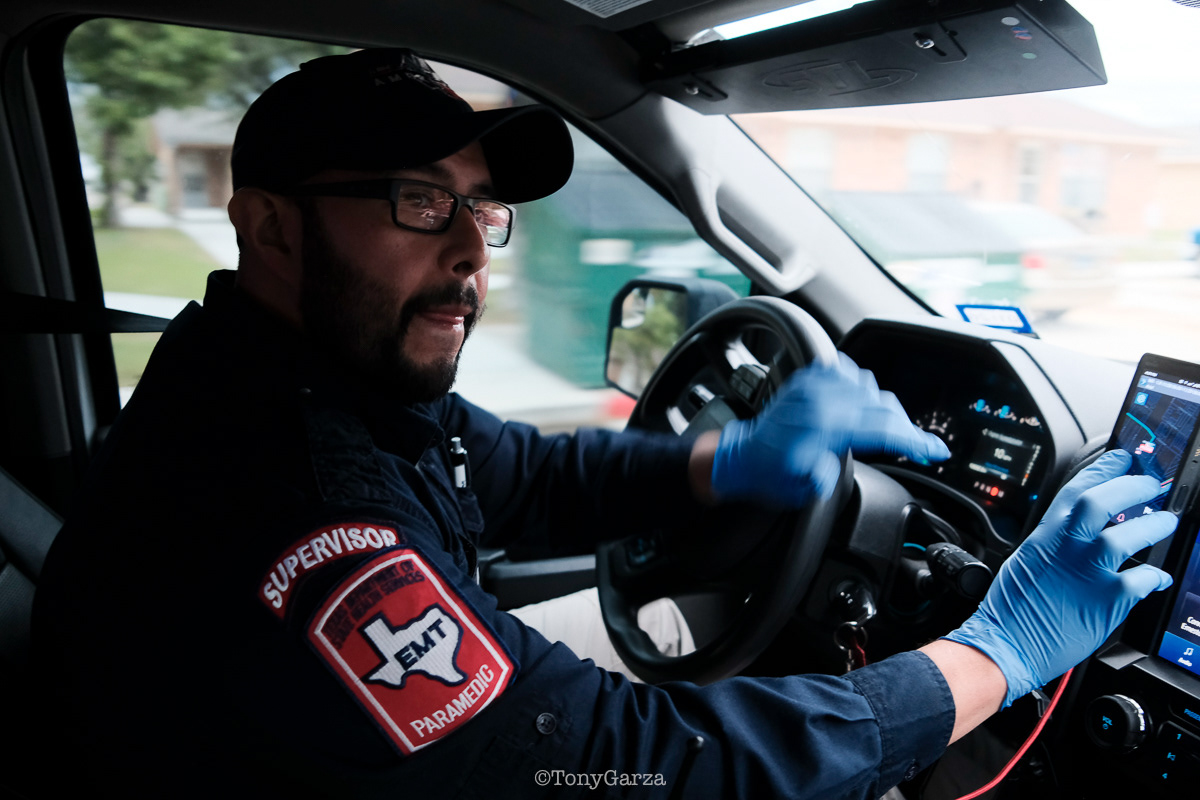
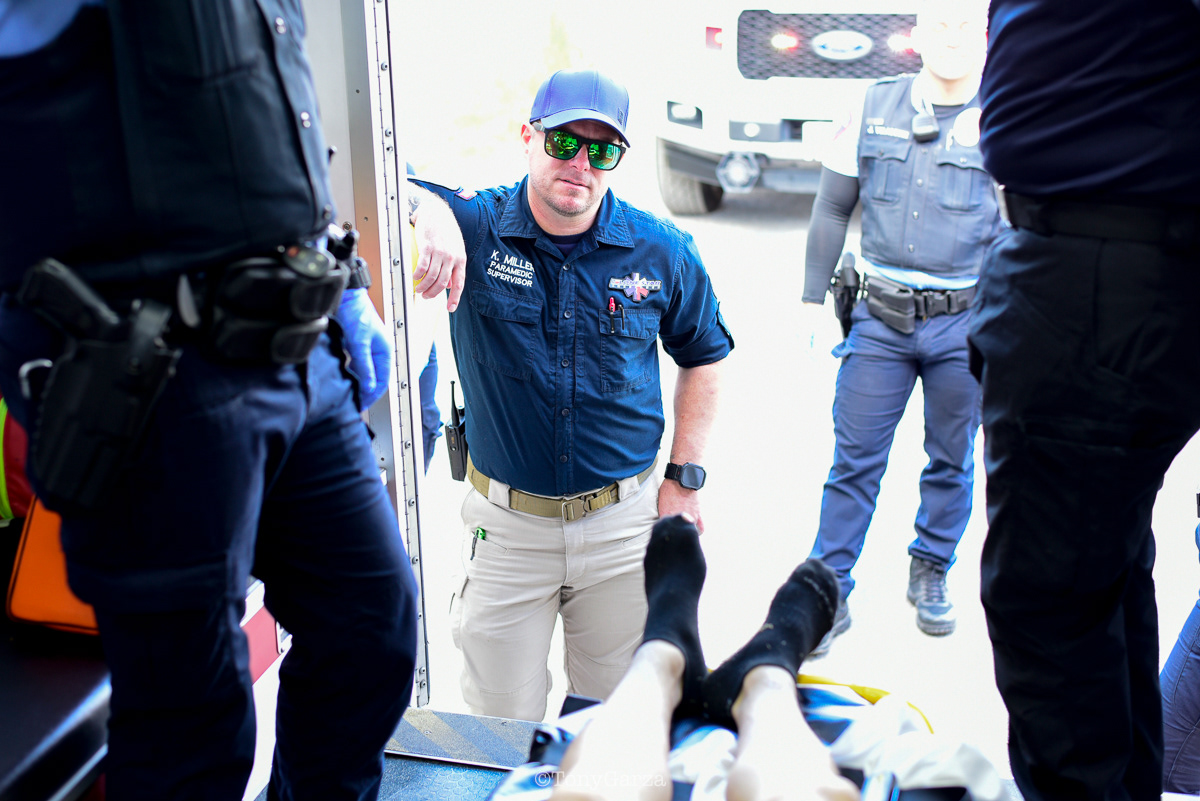
(Supervisor/Paramedic K. Miller) responded to assist Alpha 1 (AEMT Ozuna and EMT Venecia) with an uncooperative patient requiring medical evaluation.
Supervisor Miller effectively gained control of the scene, de-escalated the situation, and helped the patient calm down enough to voluntarily seek medical attention at the hospital.
Patient advocacy is one of the many critical responsibilities medics carry in the field beyond treating life-threatening emergencies. De-escalating an uncooperative or agitated patient is often more challenging than managing a full cardiac arrest; it requires patience, trust-building, and the ability to maintain safety while guiding the patient toward the care they need.
Patient advocacy is one of the many critical responsibilities medics carry in the field beyond treating life-threatening emergencies. De-escalating an uncooperative or agitated patient is often more challenging than managing a full cardiac arrest; it requires patience, trust-building, and the ability to maintain safety while guiding the patient toward the care they need.
This is textbook patient advocacy: recognizing that sometimes the most important intervention isn’t a medication or a procedure, but creating the conditions for someone in crisis to accept help. Good job to Miller and Alpha 1 for recognizing the need and requesting assistance.
Medic 6
Paramedic R. Melchor and EMT R. Longoria saved the life of an elderly man in severe respiratory distress. The patient was alert and conscious but showing clear signs of hypoxia—slowly deteriorating with an SpO₂ reading in the 70s (normal >94%).
Acting quickly, Medic 6 delivered what may seem like simple but highly effective interventions: providing high-flow oxygen, administering medications to open the lungs, and applying CPAP to deliver continuous pressurized support. These treatments stabilized the patient, improved his oxygenation, and helped maintain his life during rapid transport.
Upon arrival at the hospital, the receiving team determined that intubation—the worst-case scenario—was not necessary due to the timely and skilled actions of Medic 6.
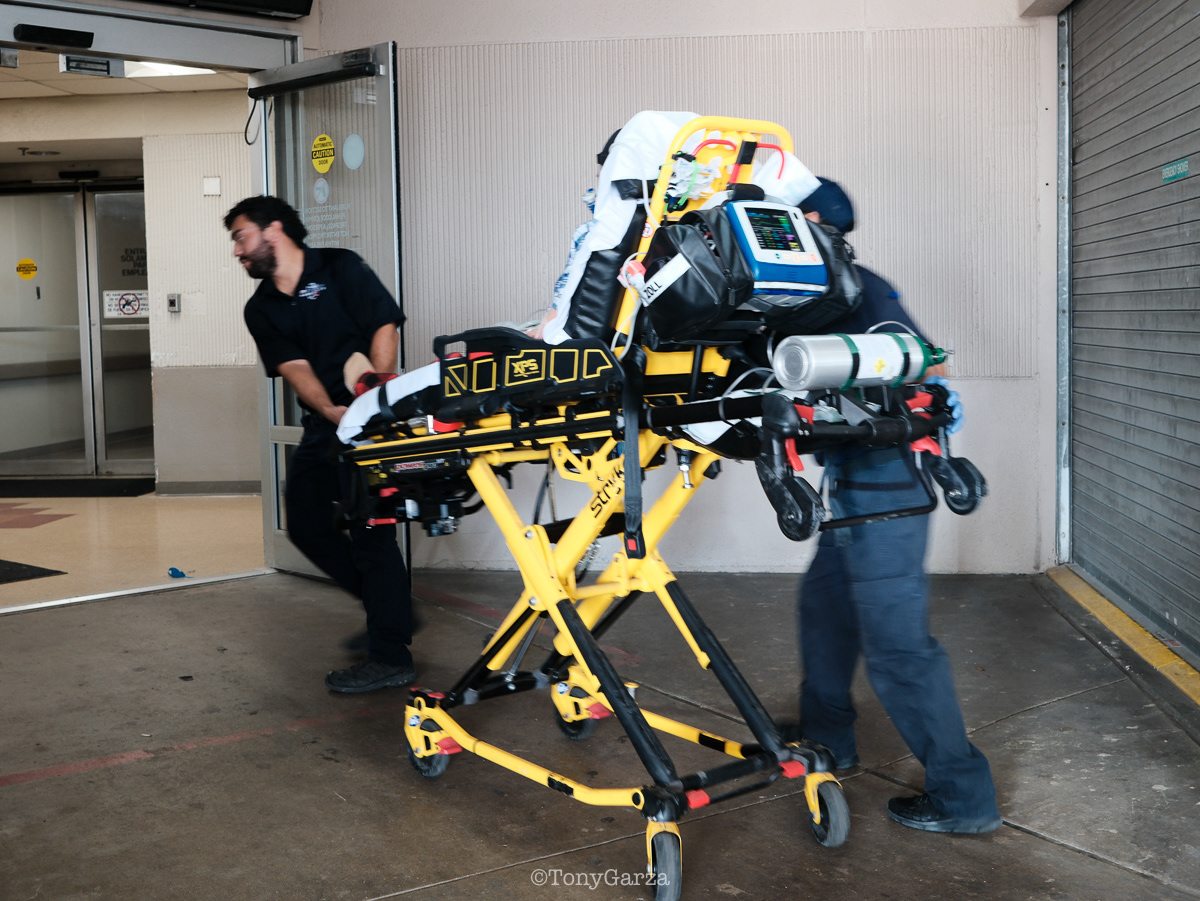
Medic 4
Paramedic J. Pena and EMT S. Lopez, assisted by Supervisor/Paramedic A. Garcia and McAllen Fire Department, respond to a cardiac arrest and achieve ROSC (return of spontaneous circulation) on location.
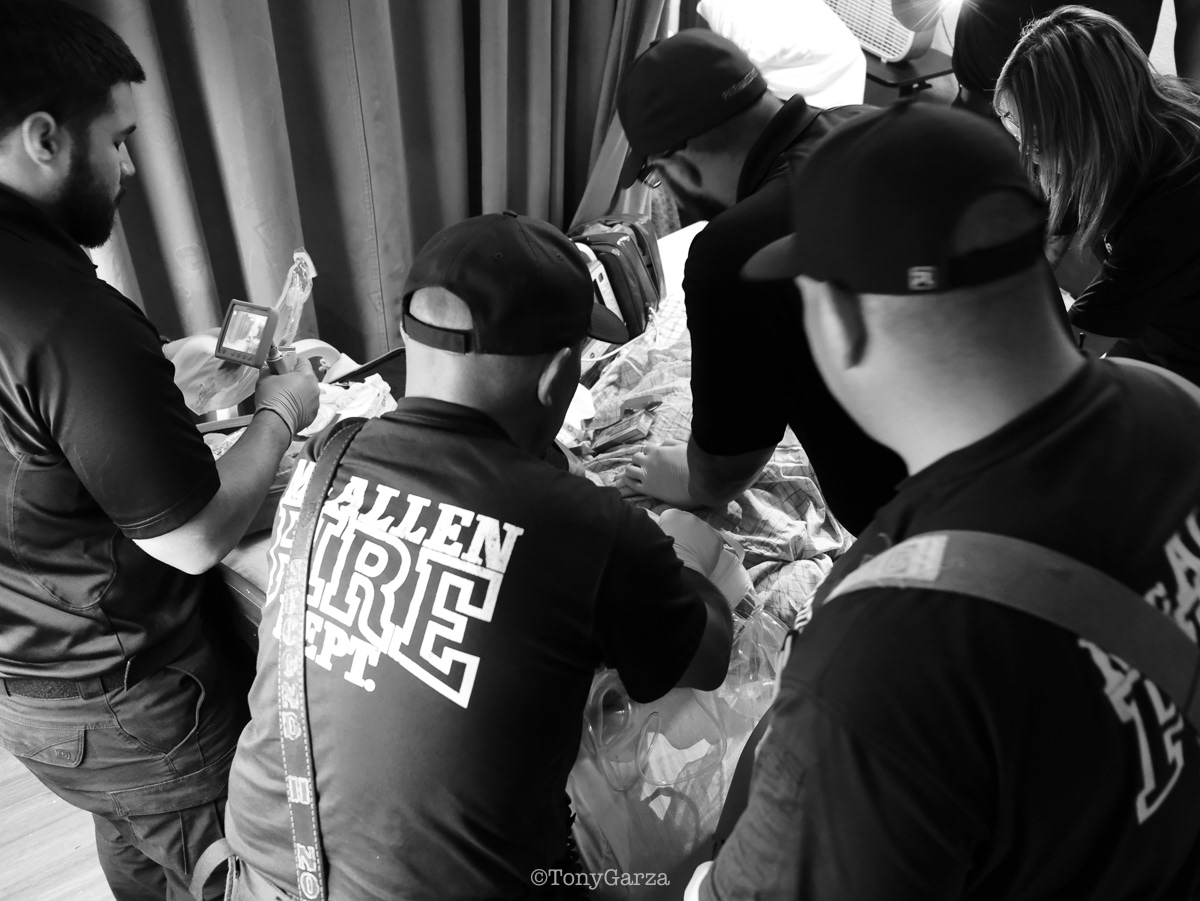
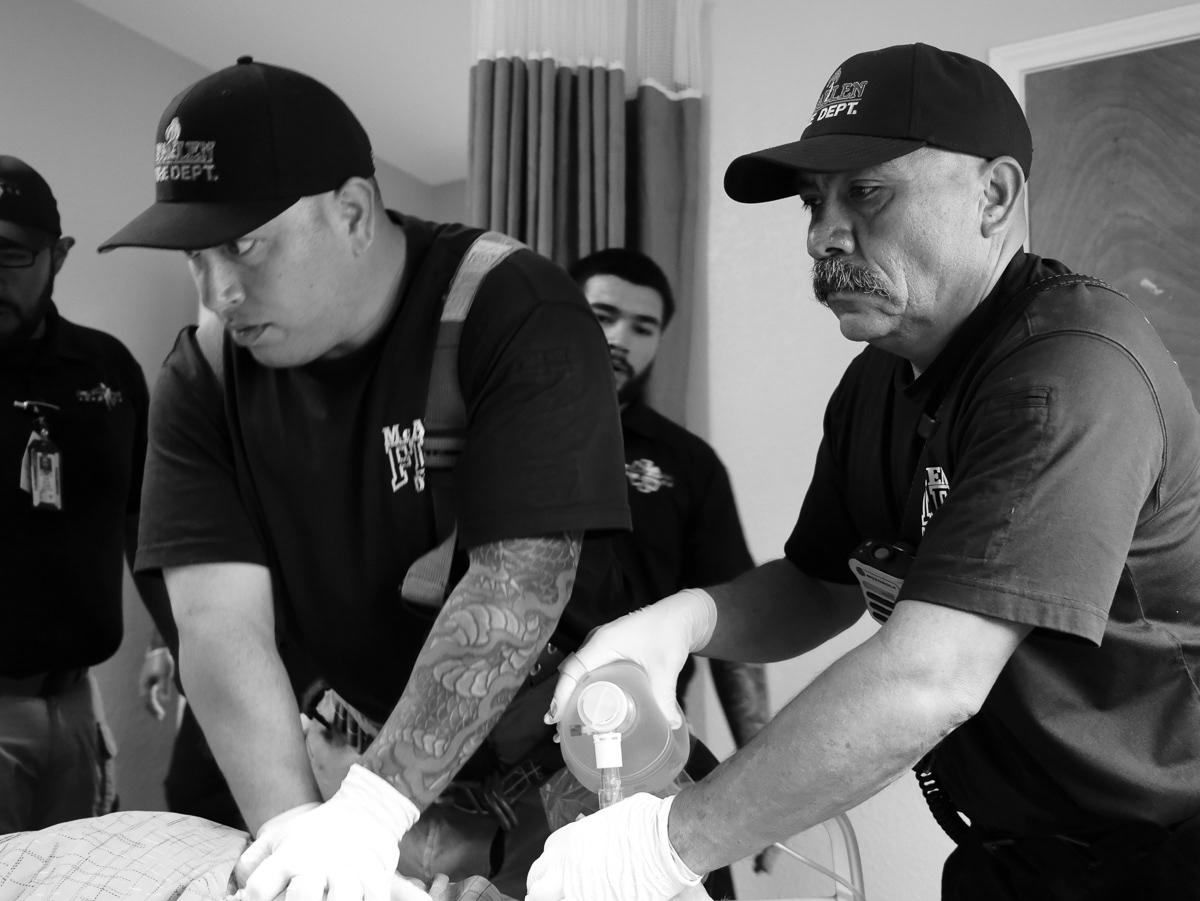
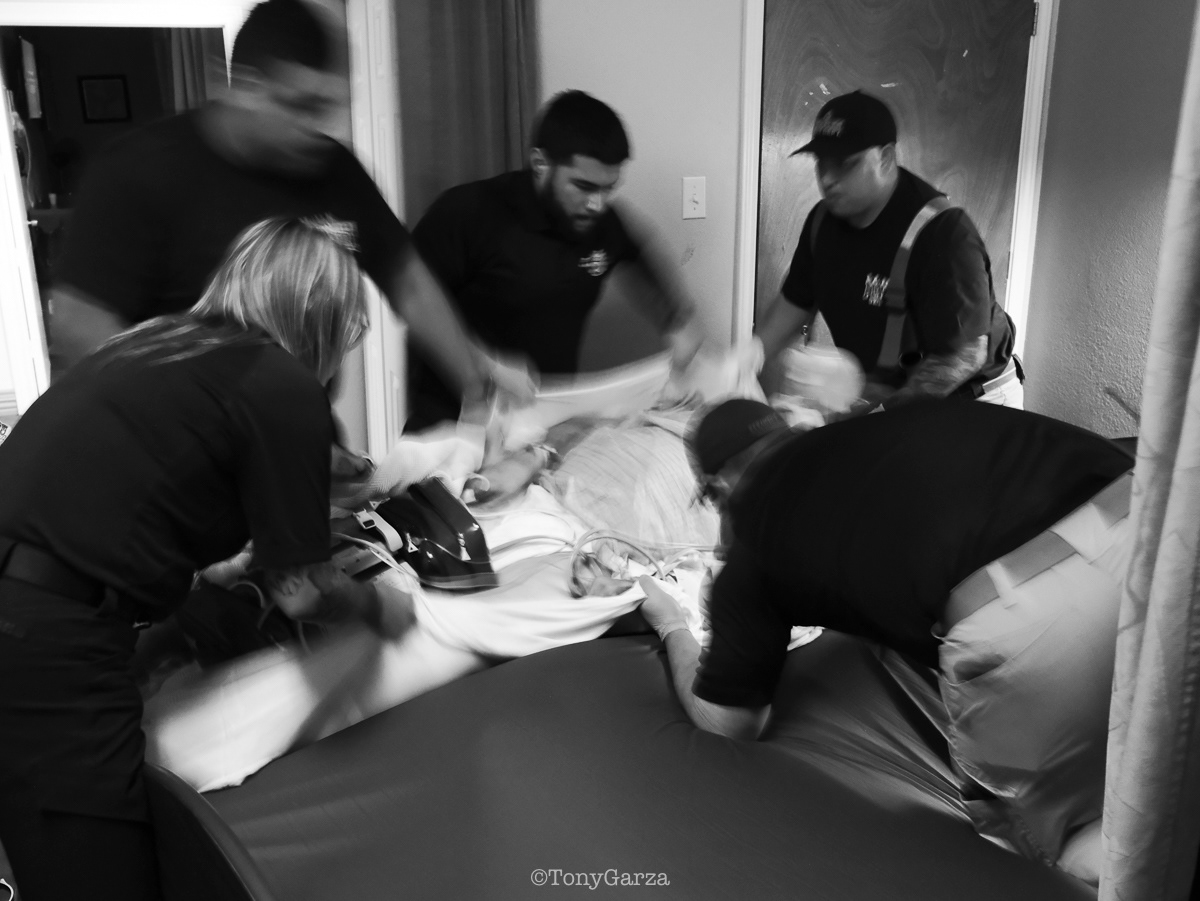
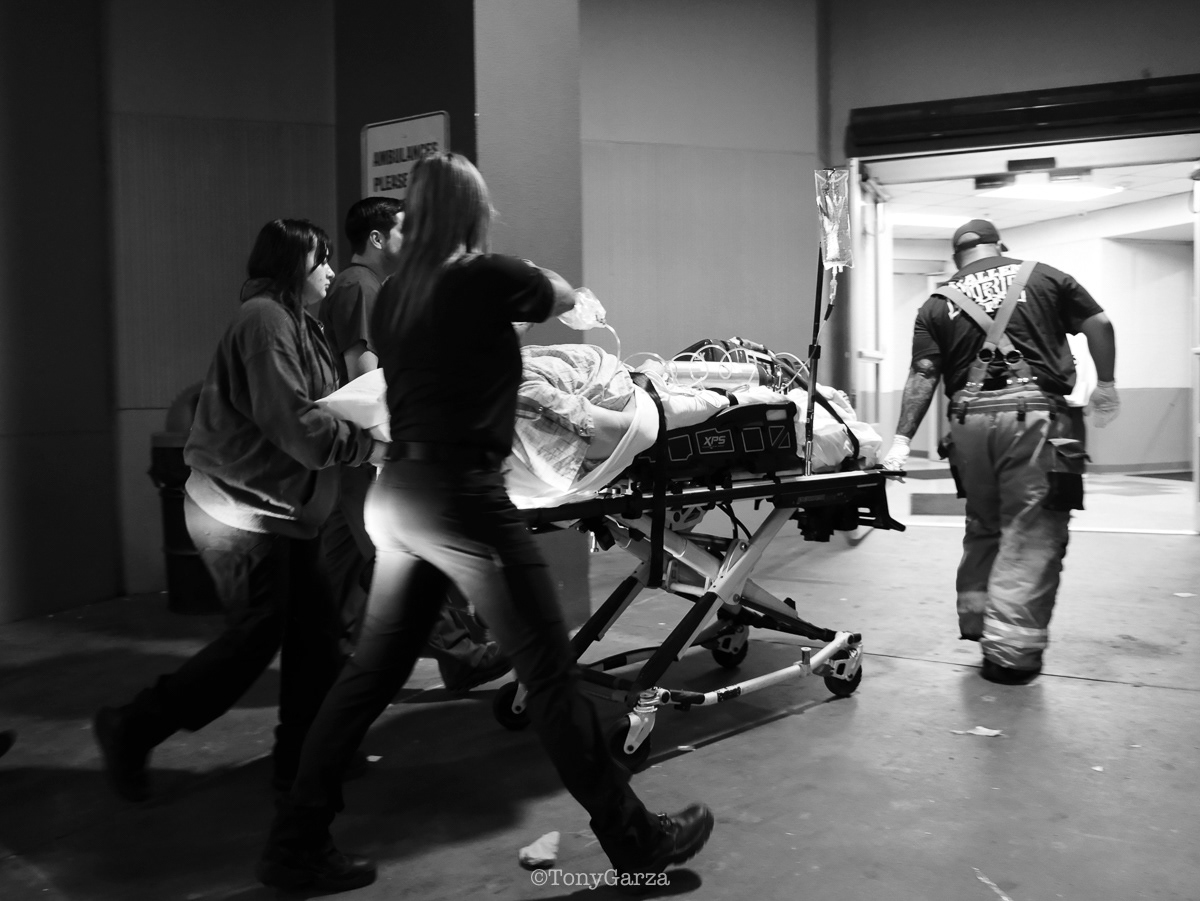
Medic 6
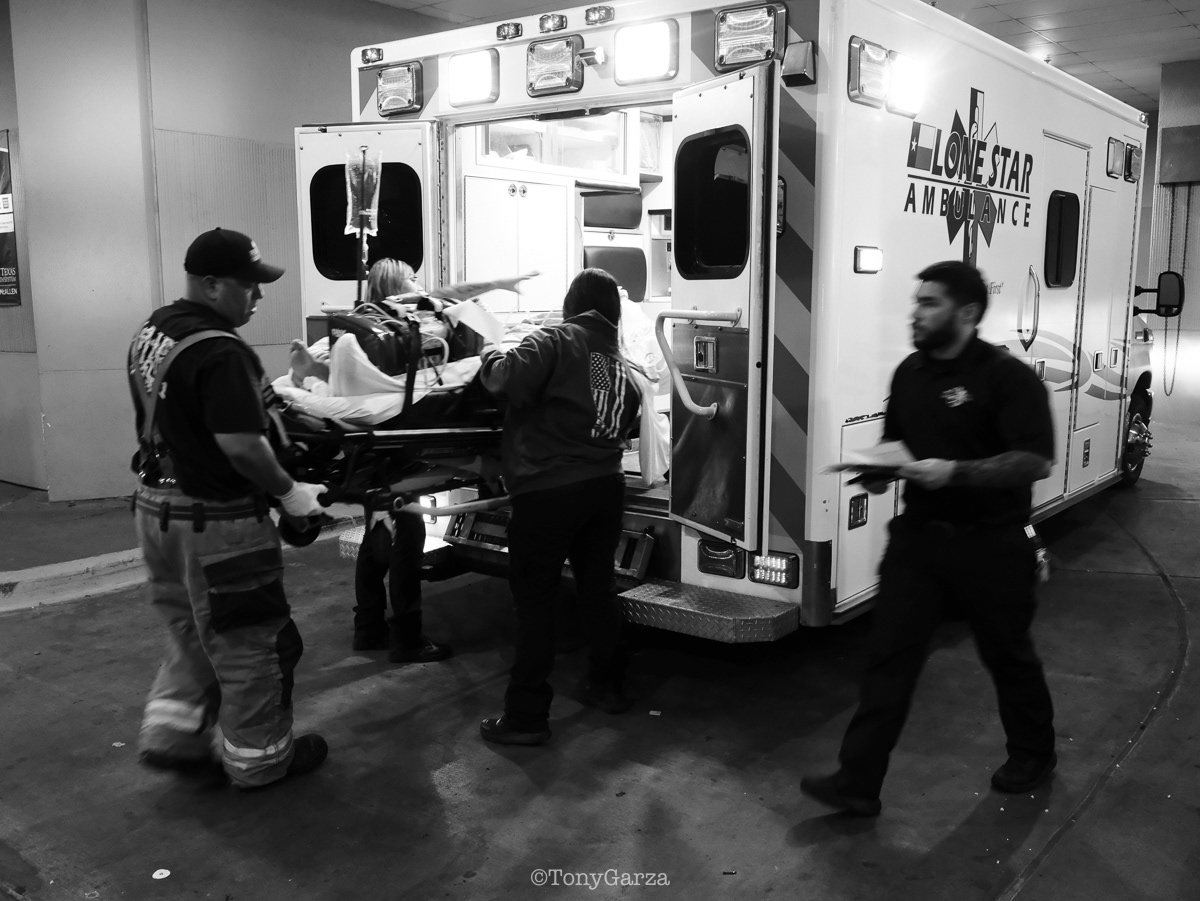
Paramedic M. De Pena and EMT R. Longoria, assisted by Supervisor/Paramedic K. Miller and the McAllen Fire Department, respond to a cardiac arrest. Pulseless, with some ECG rhythm changes, on scene and on the way to the hospital; ROSC was obtained at the hospital.
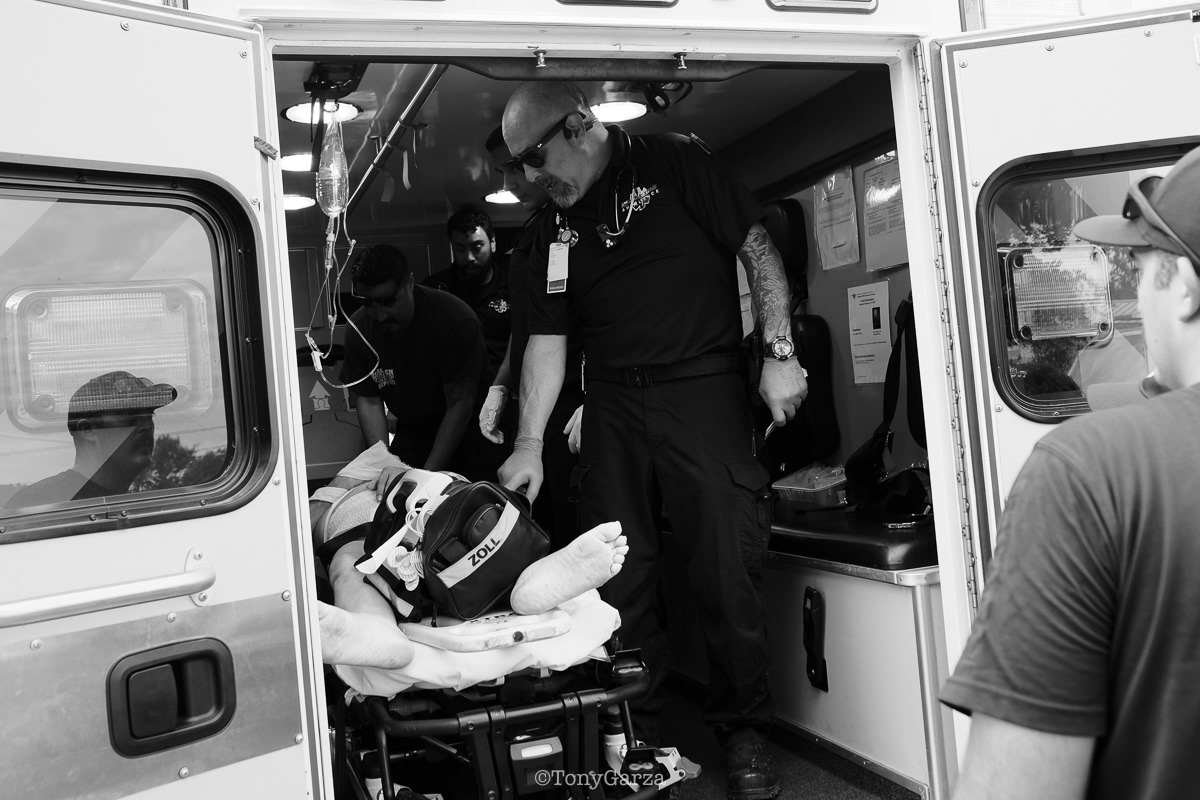
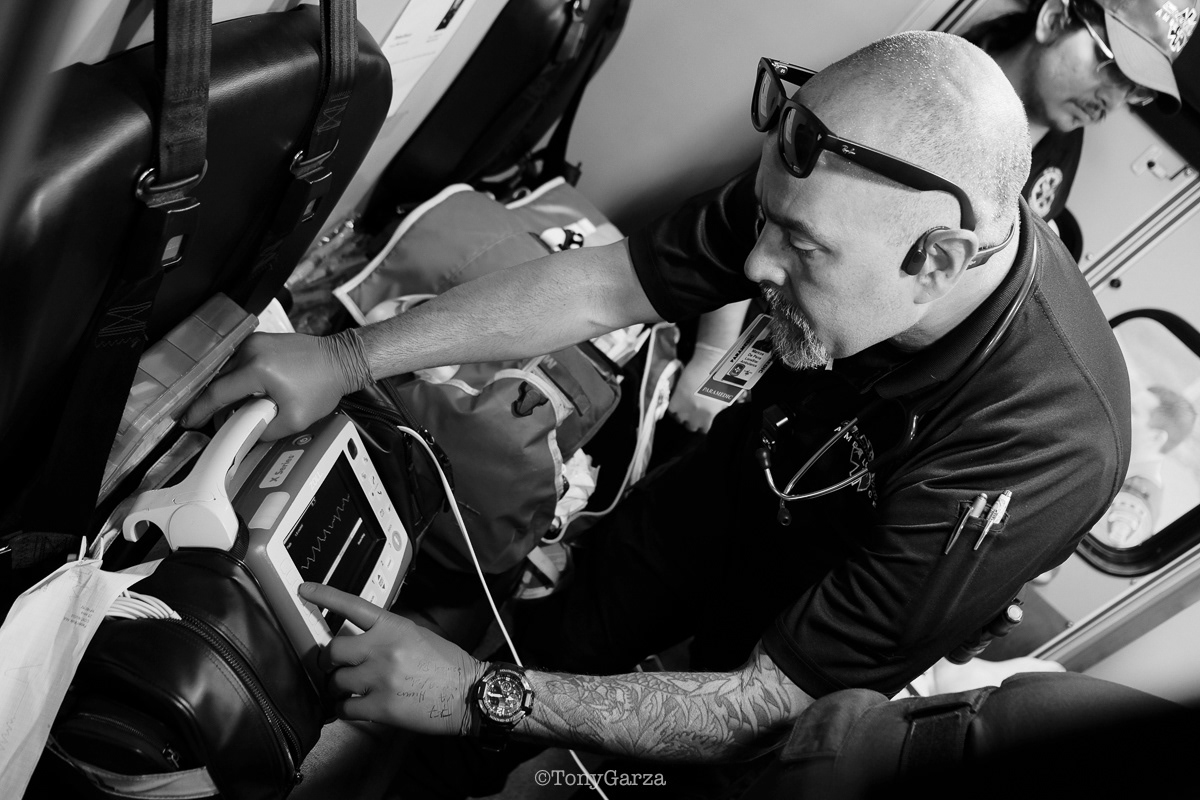
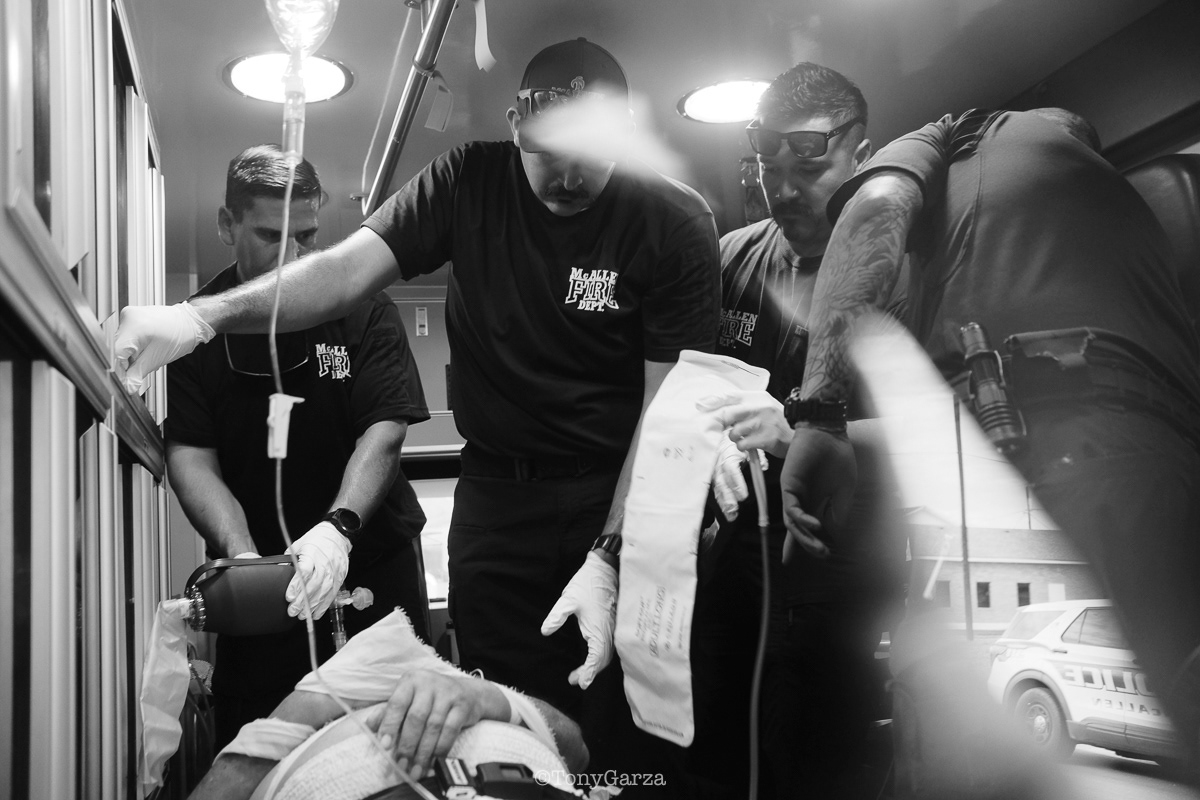
Medic 7
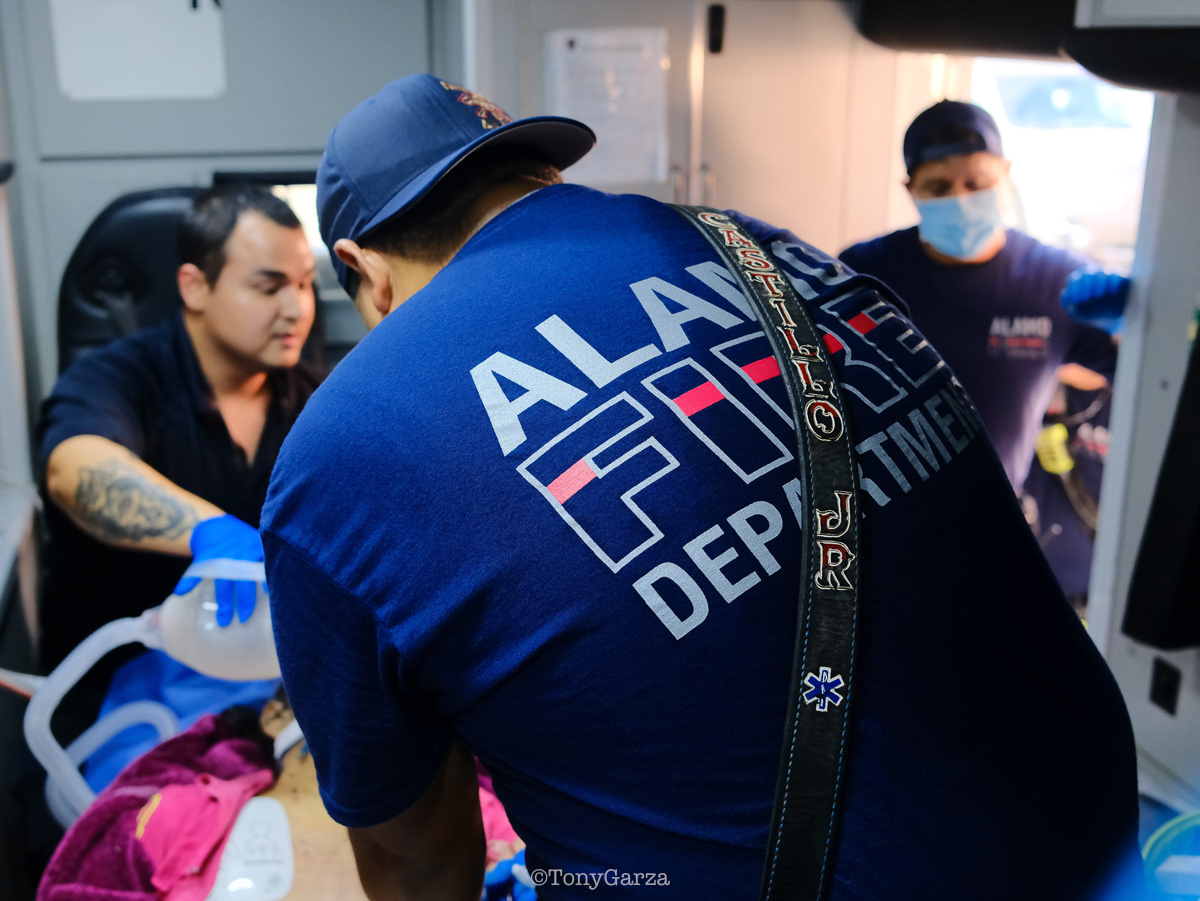
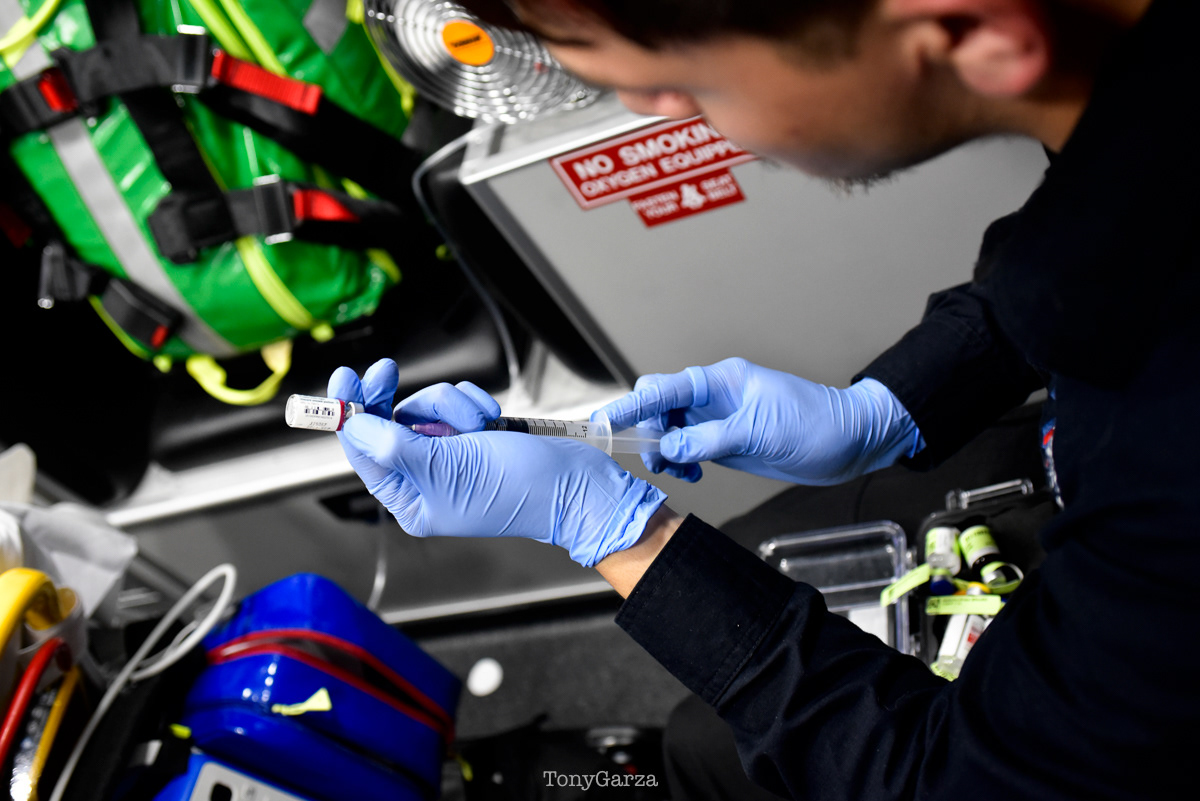
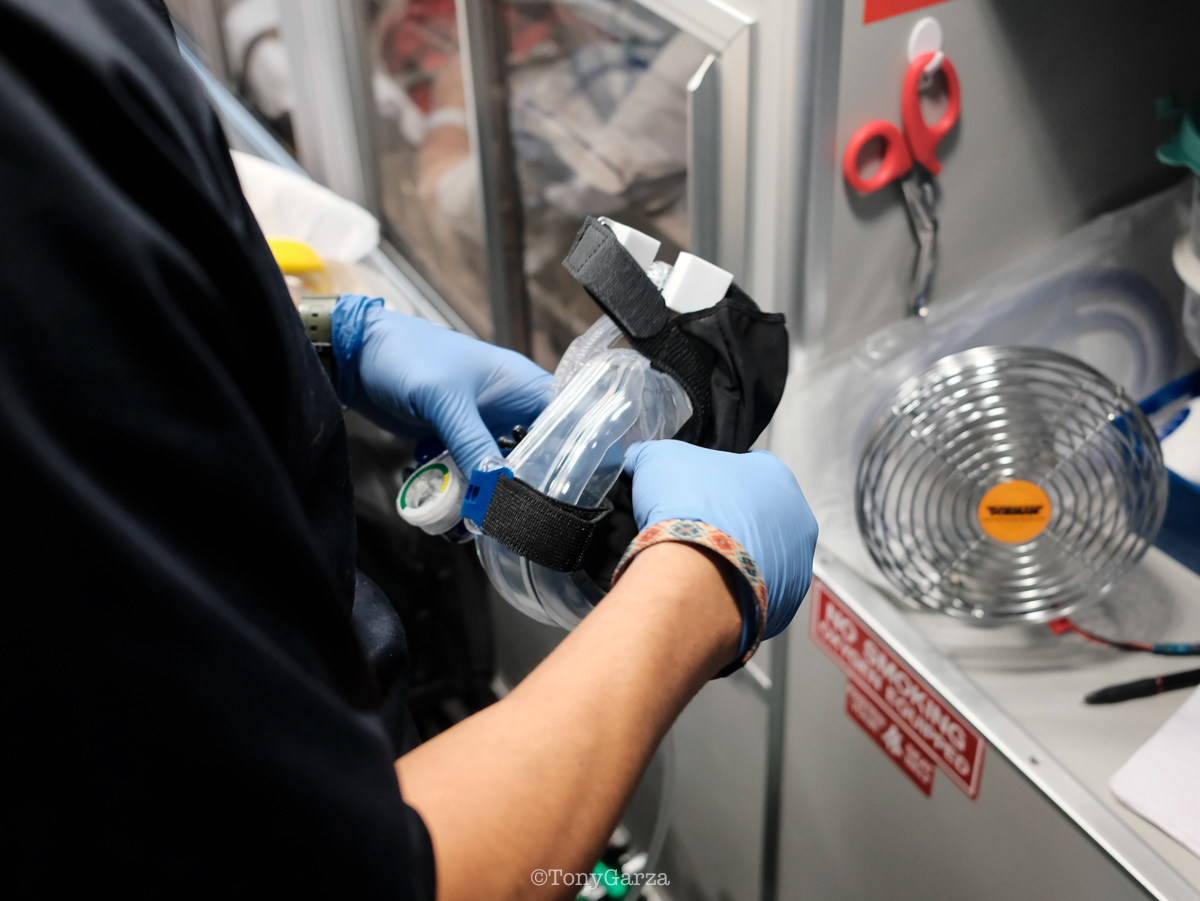
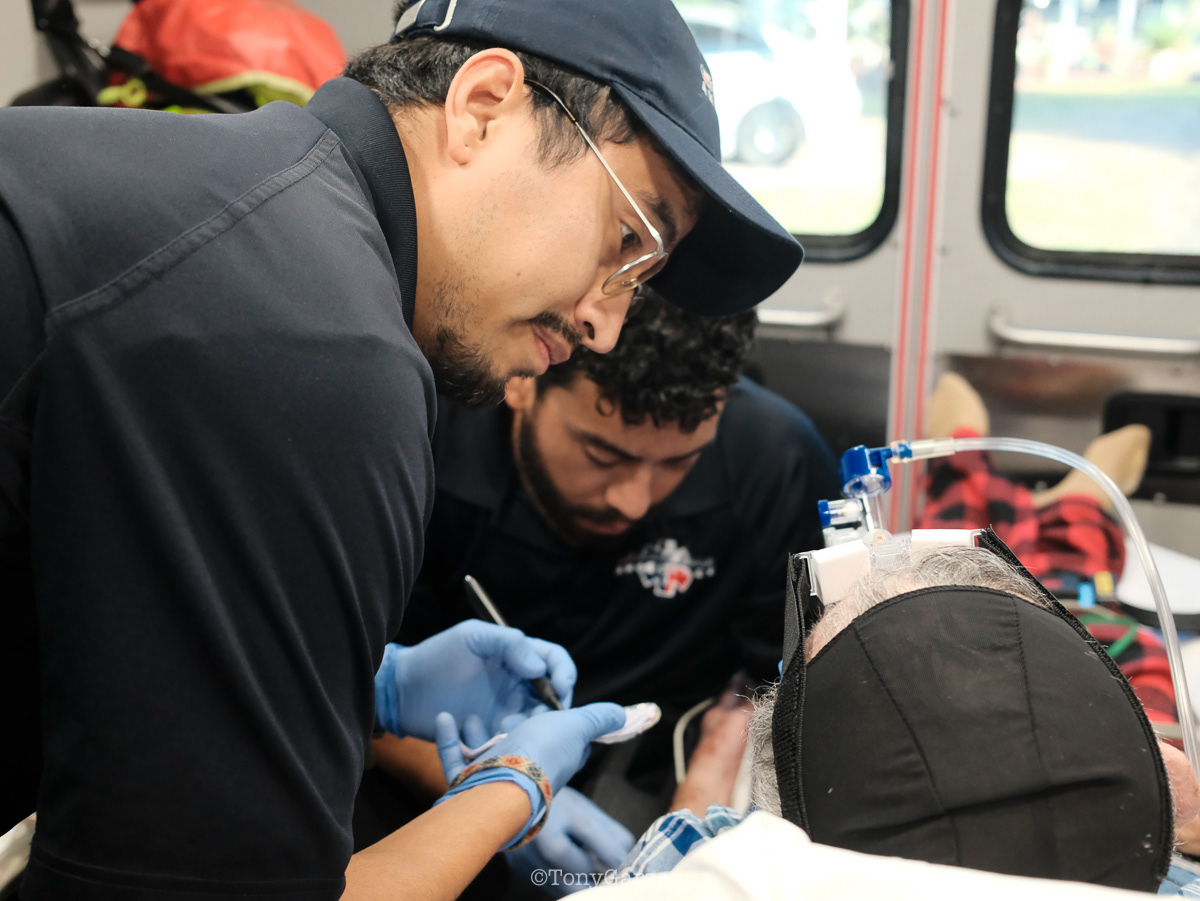
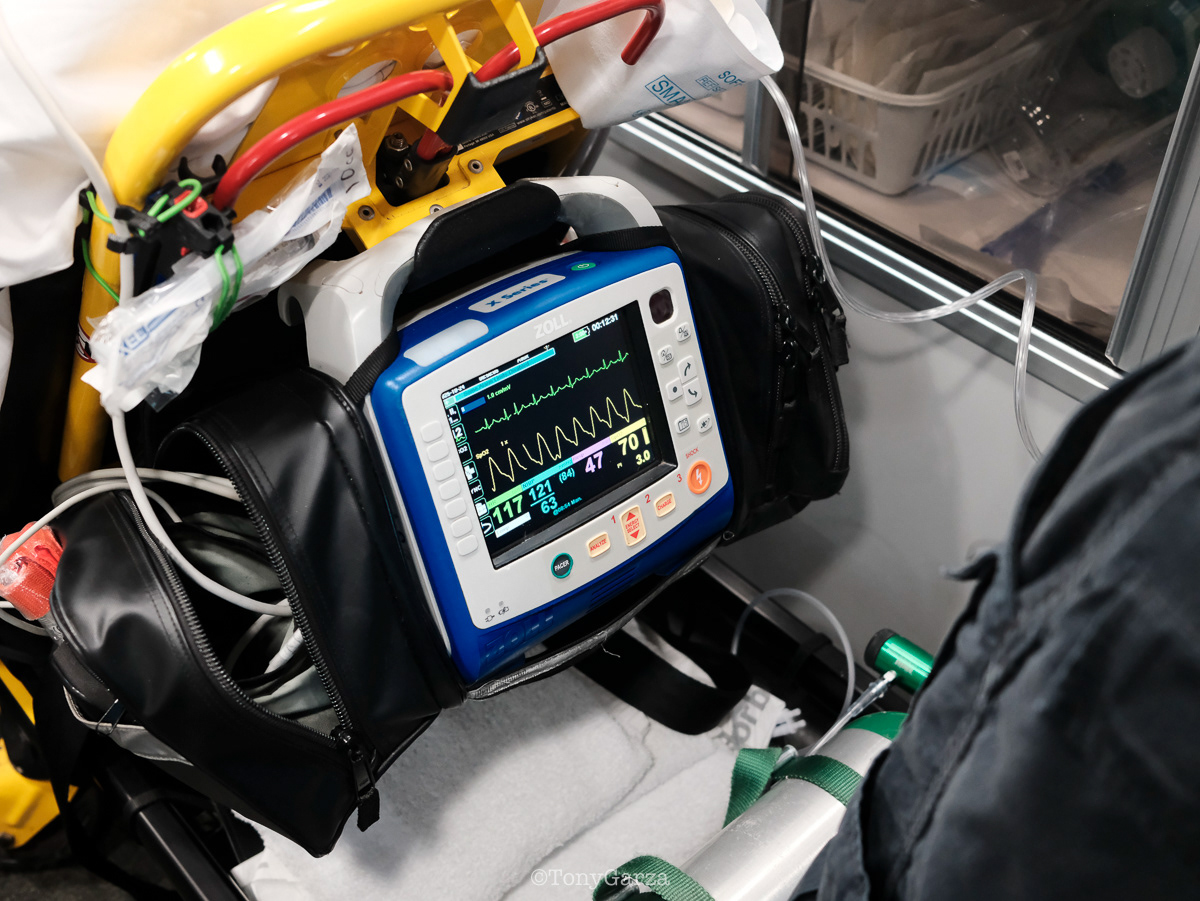
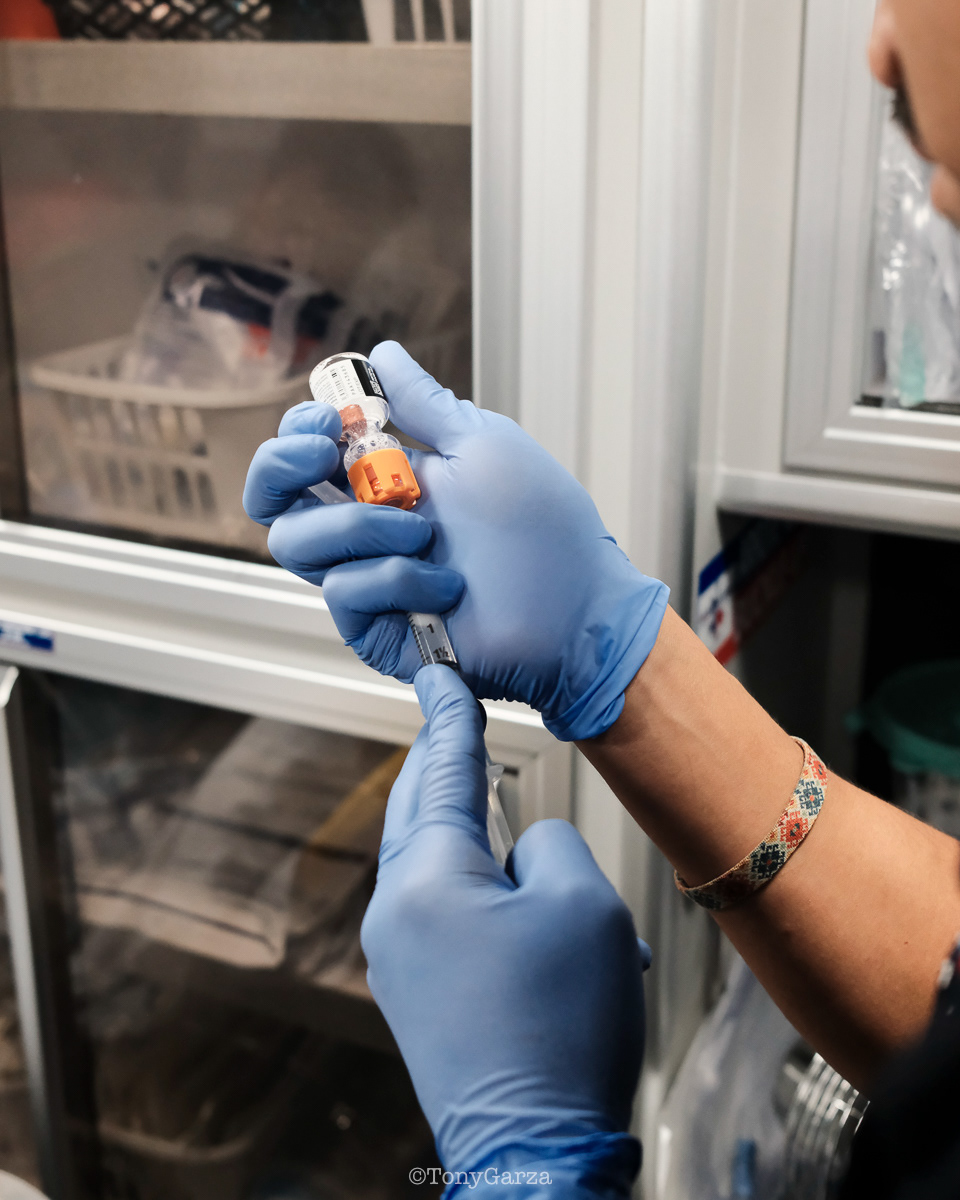
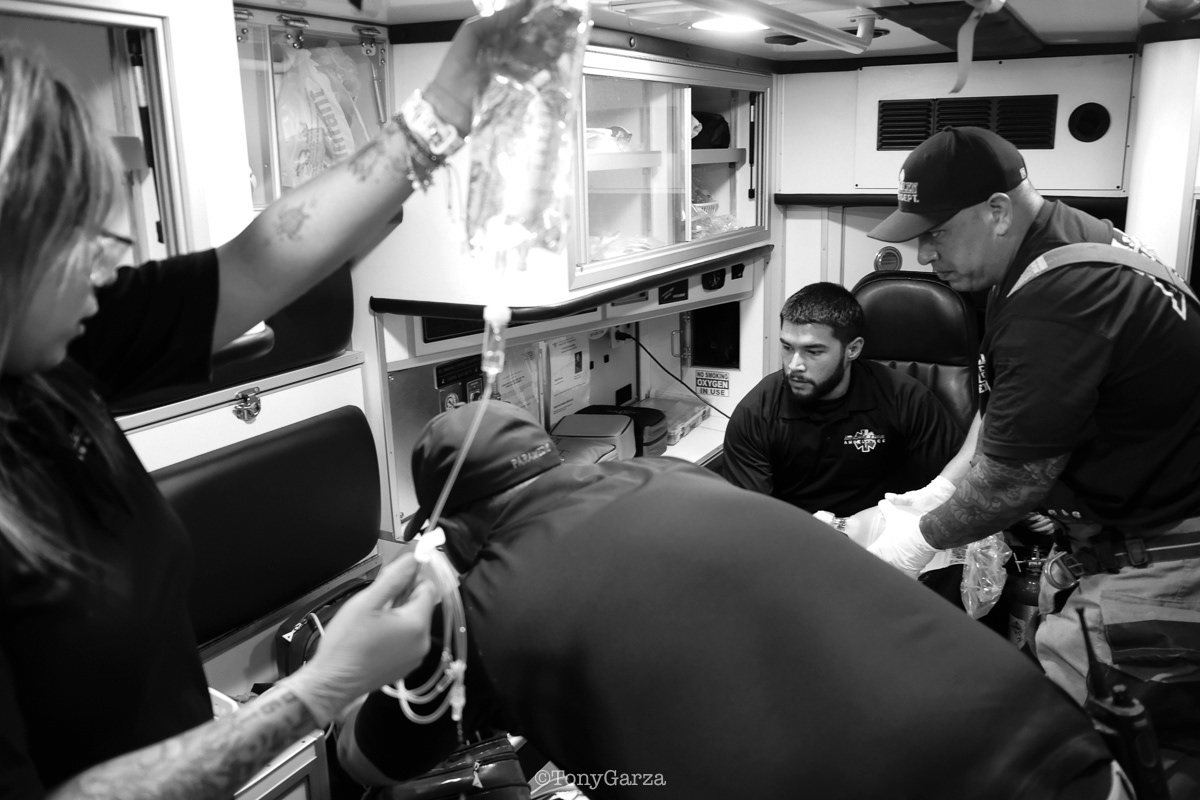
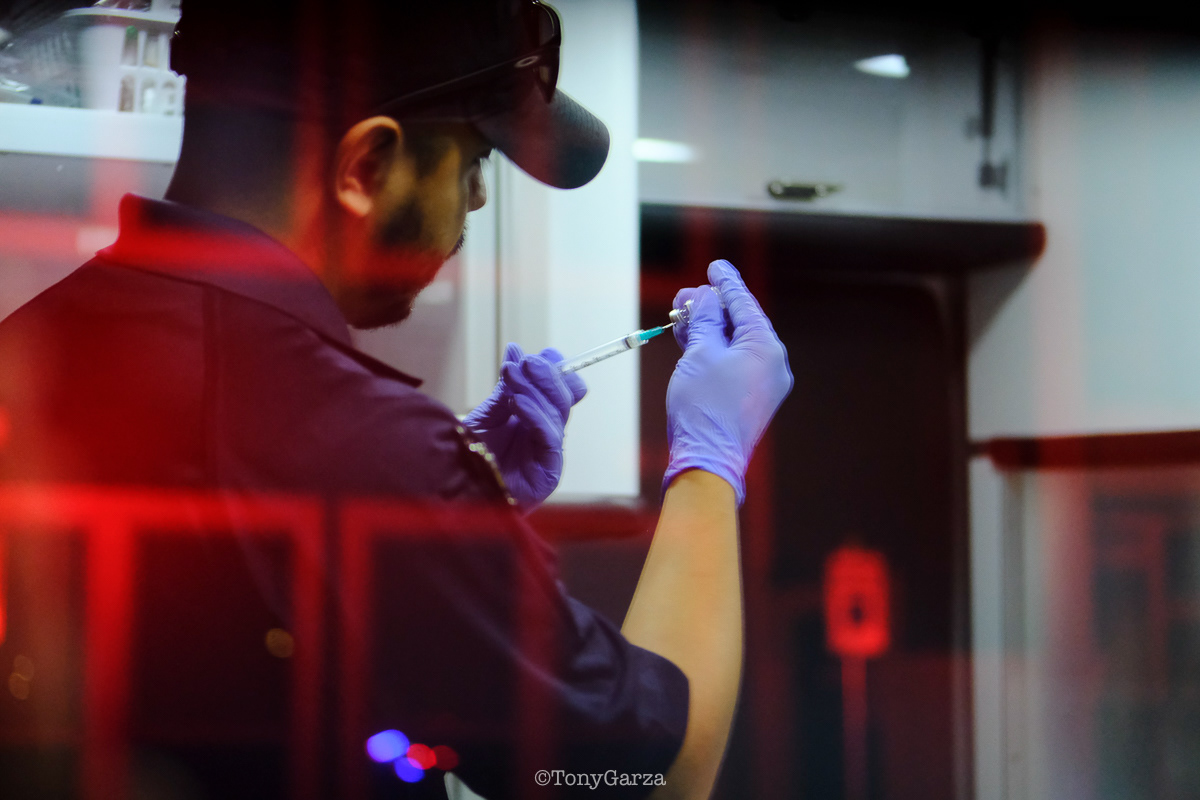
(first photo) Paramedic C. Rodriguez prepares antiemetic medication for a stroke patient experiencing slurred speech and nausea. The purpose is to relieve nausea and prevent vomiting that will compromise the airway during a rapid transport to the hospital. In making split-second decisions, field knowledge, experience, and foresight are critical.
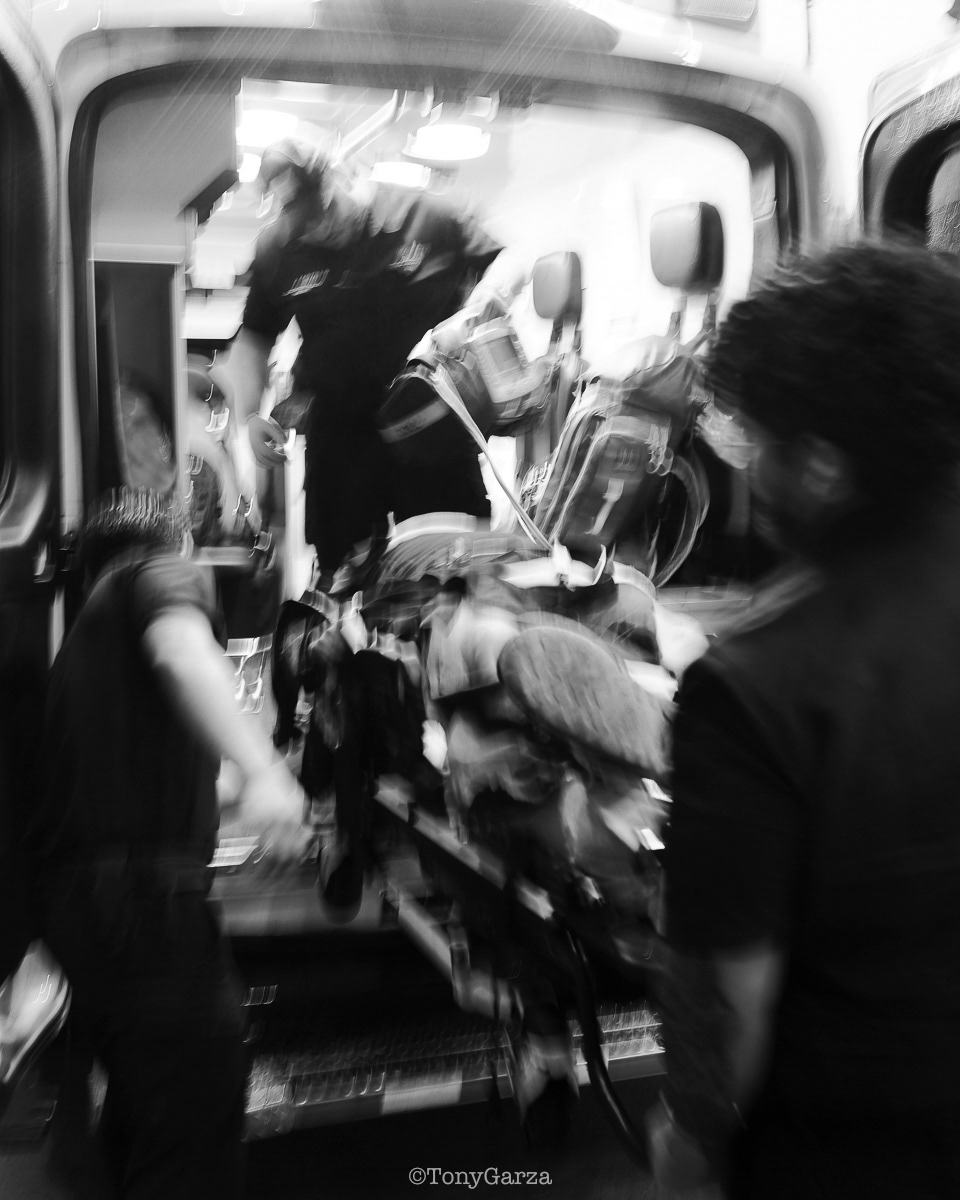
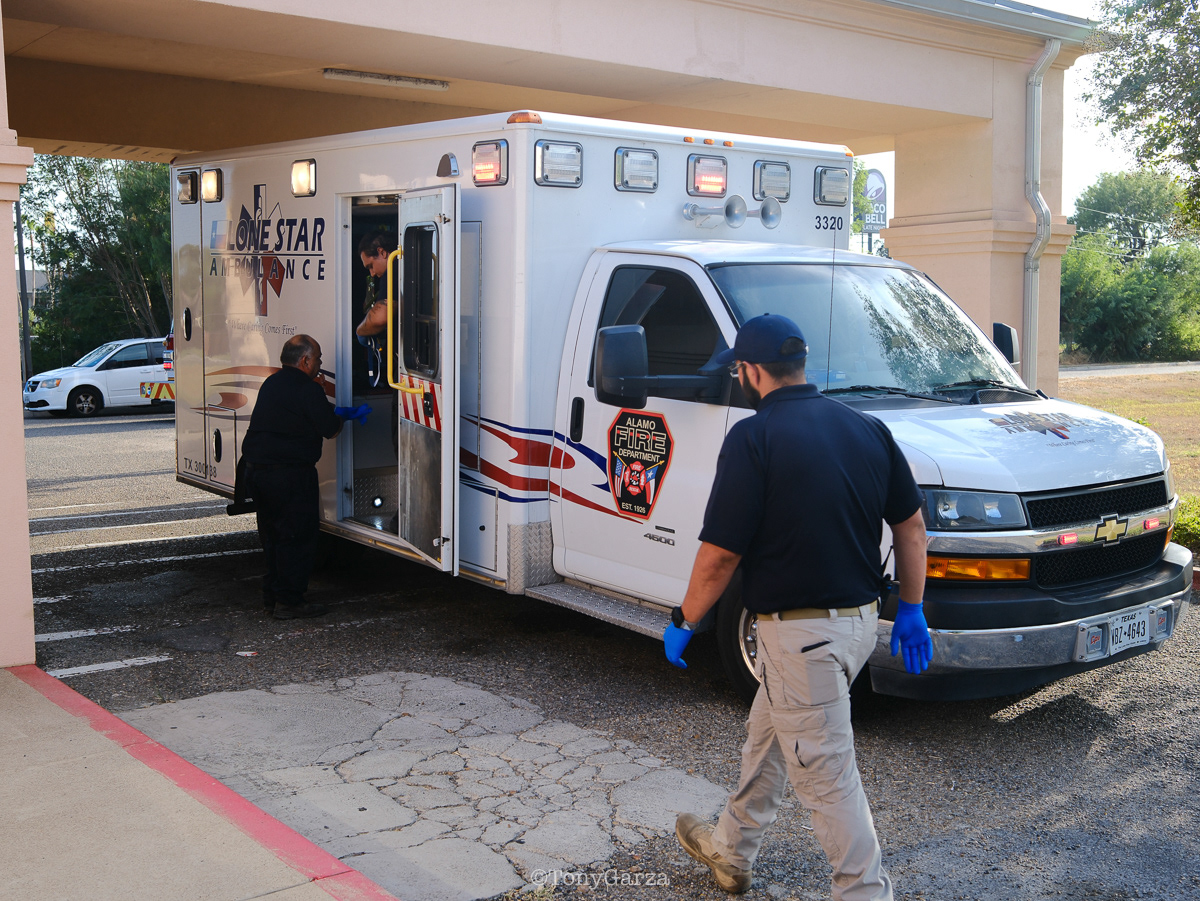
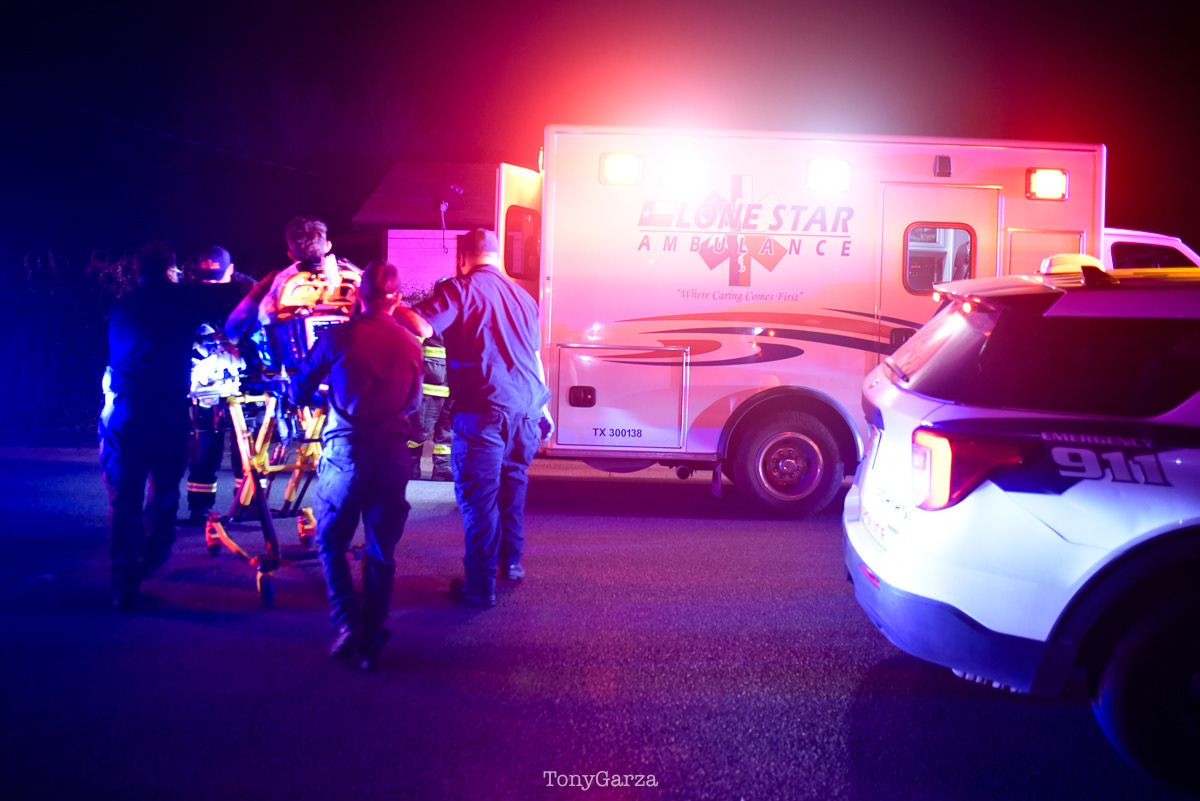
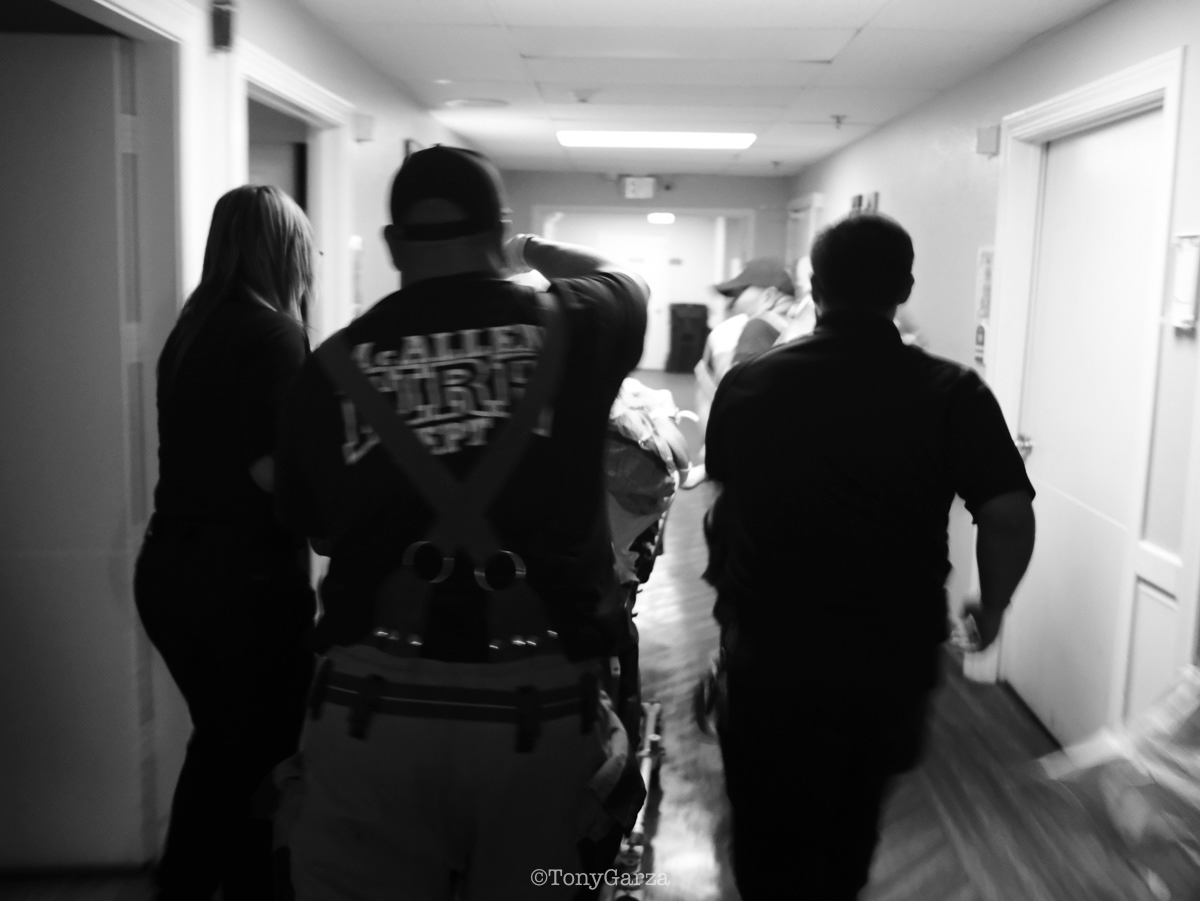
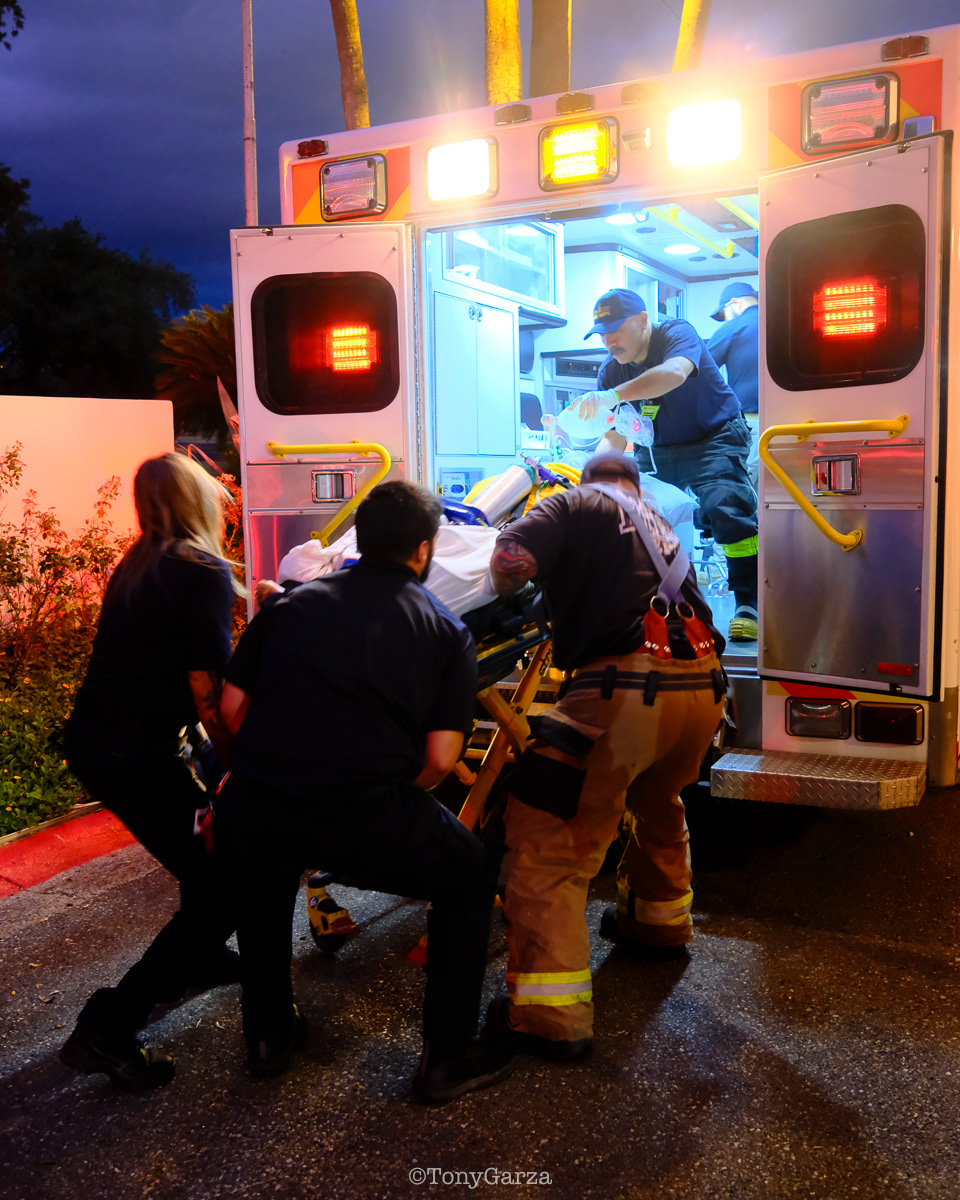
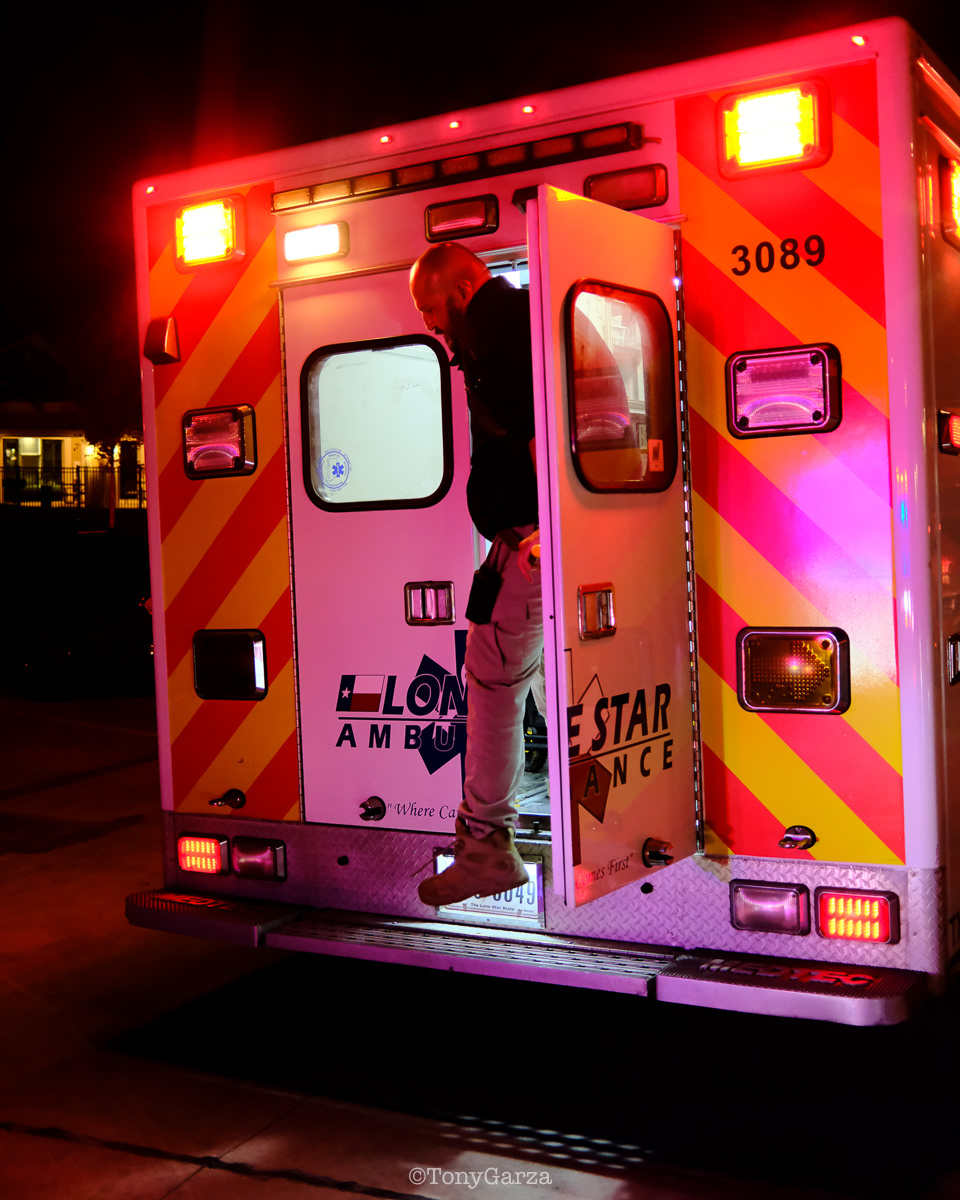
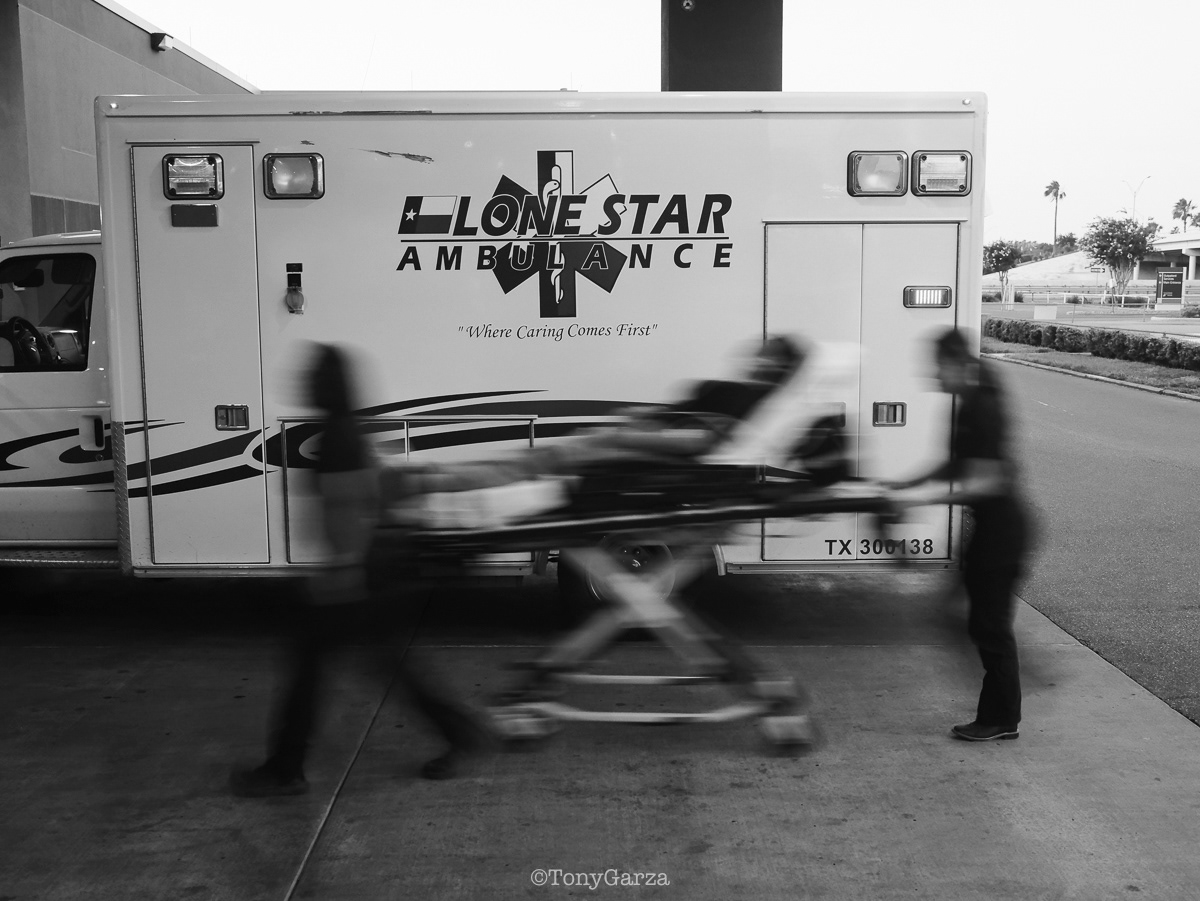
(second photo) O. Espinoza, supervisor and paramedic, exits the unit after assisting Medic 7 with a critical call. Any additional assistance simply increases the chances for the patient. It’s not about ego, pride, title, or rank. Teamwork is dream work!
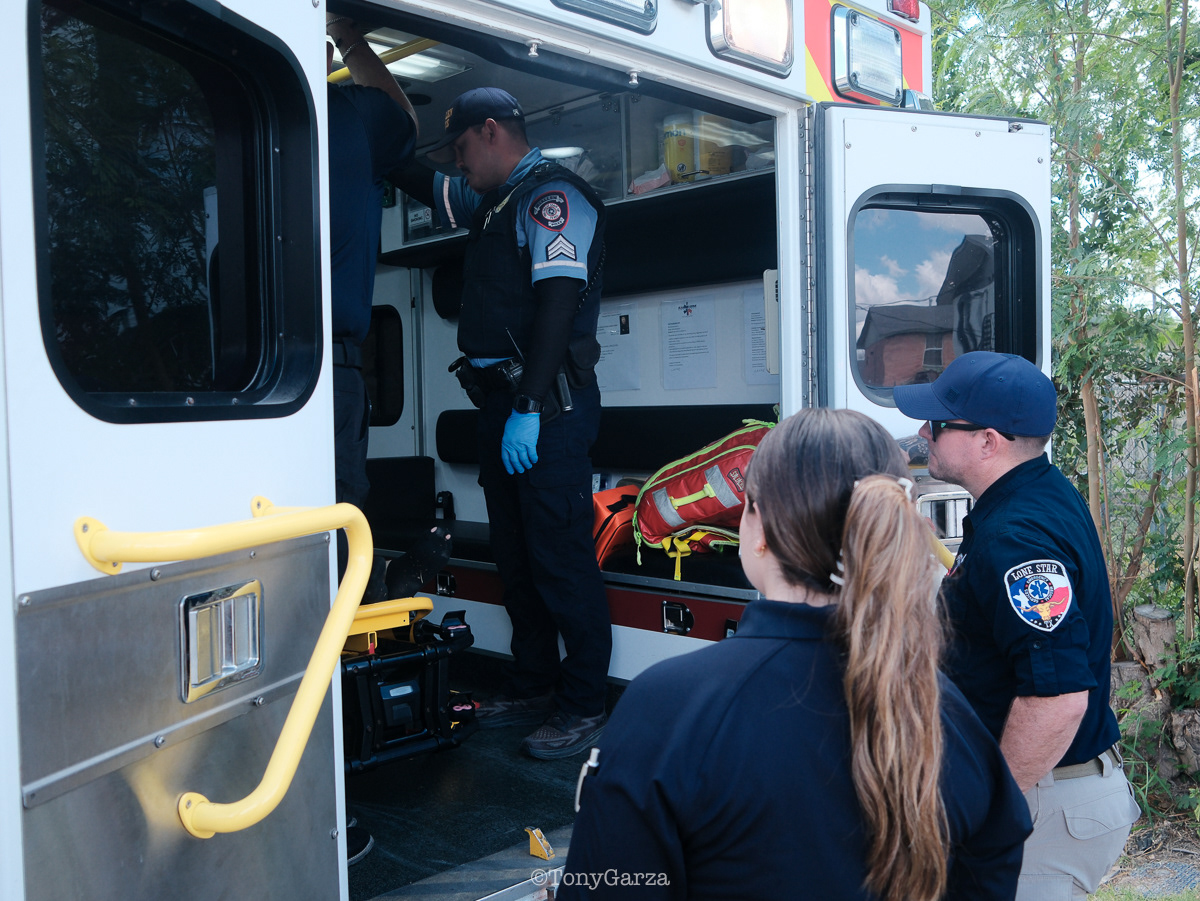
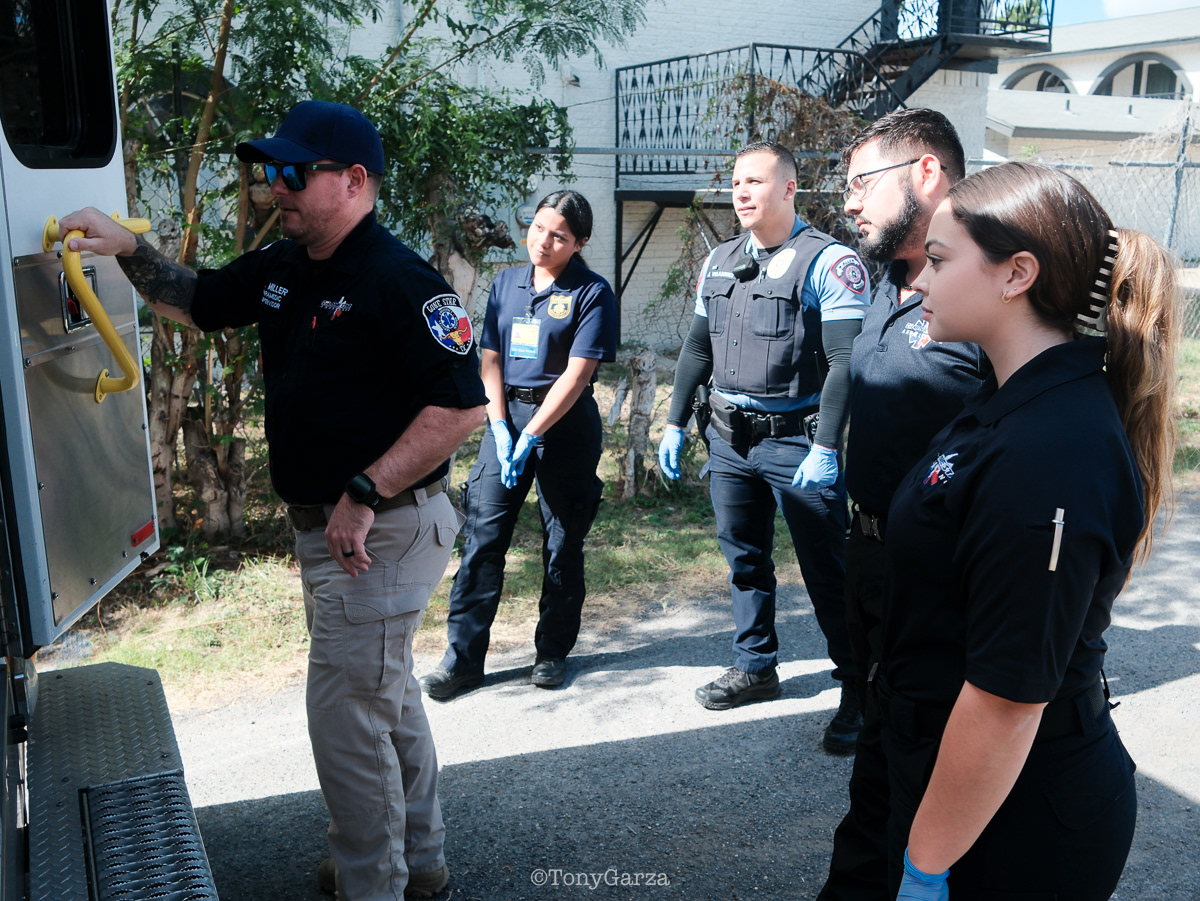
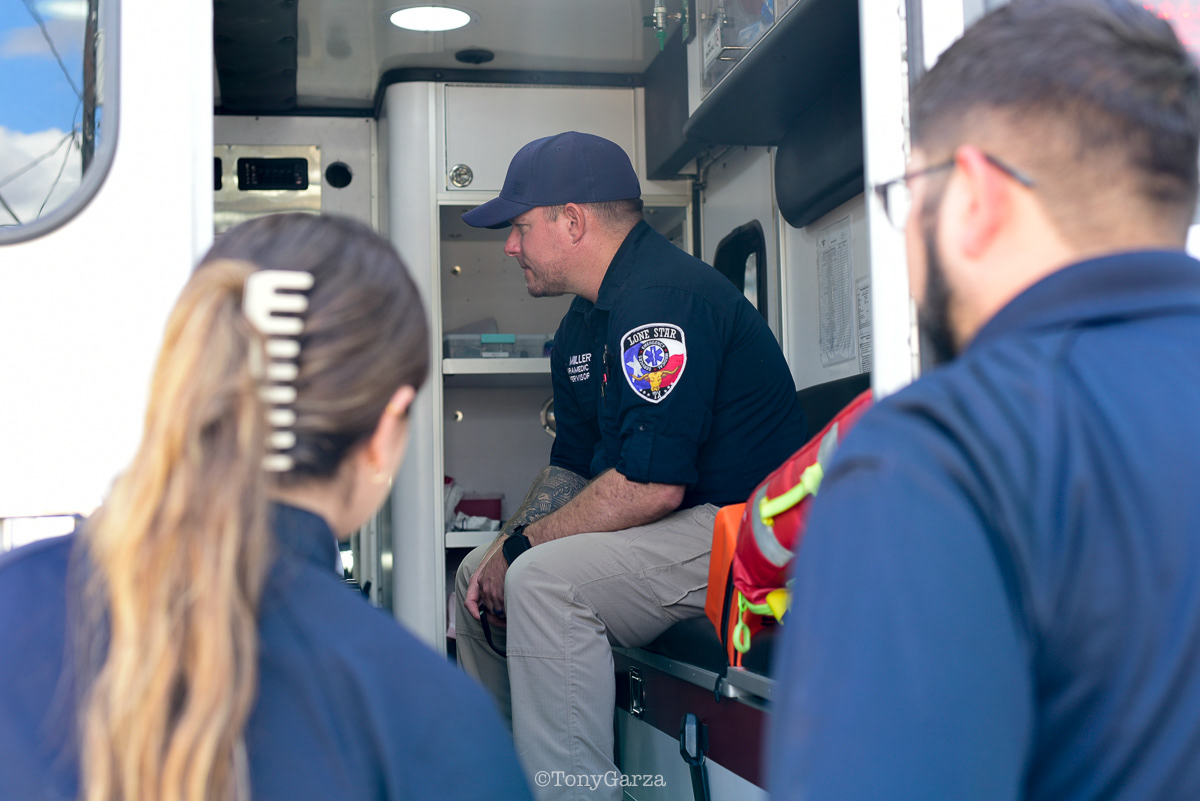
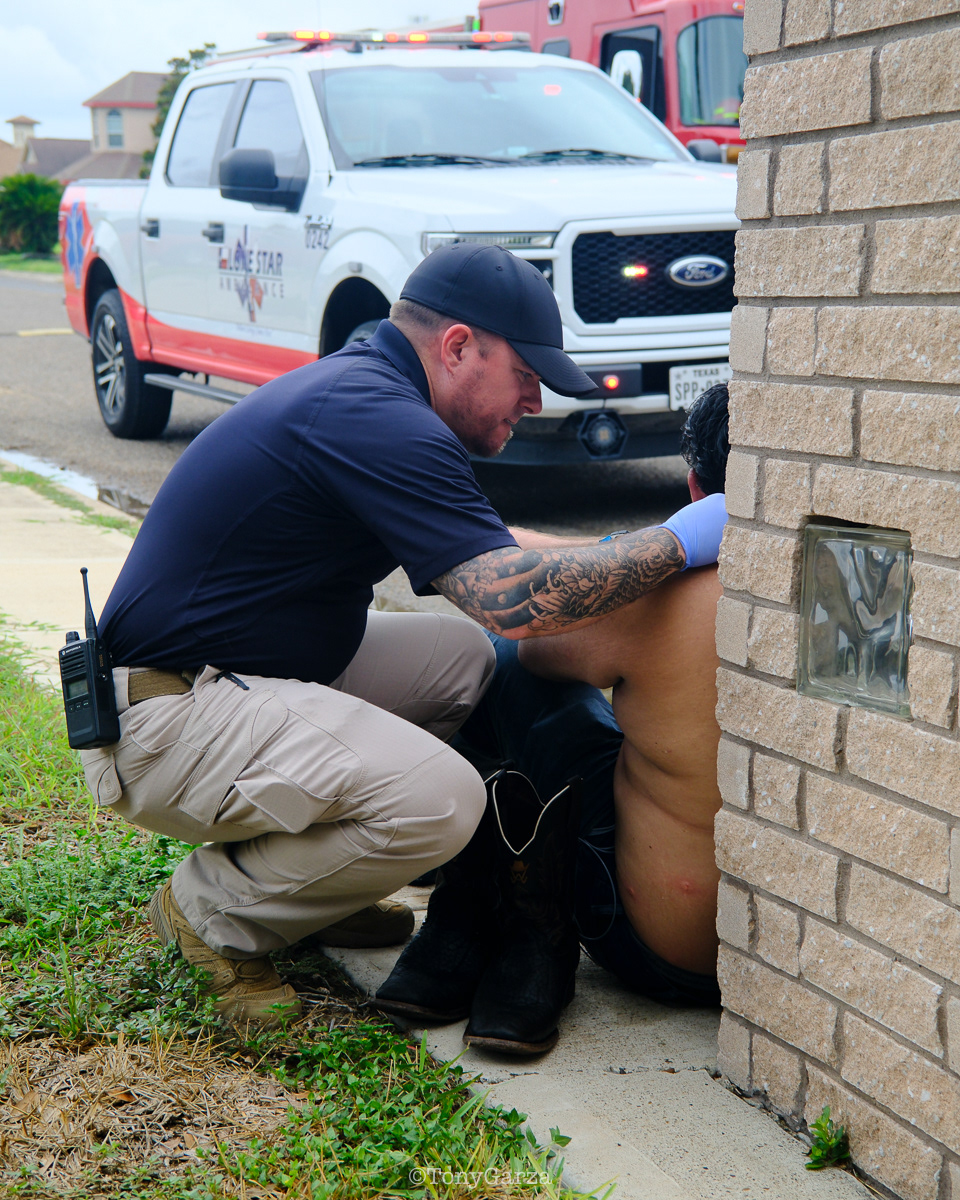
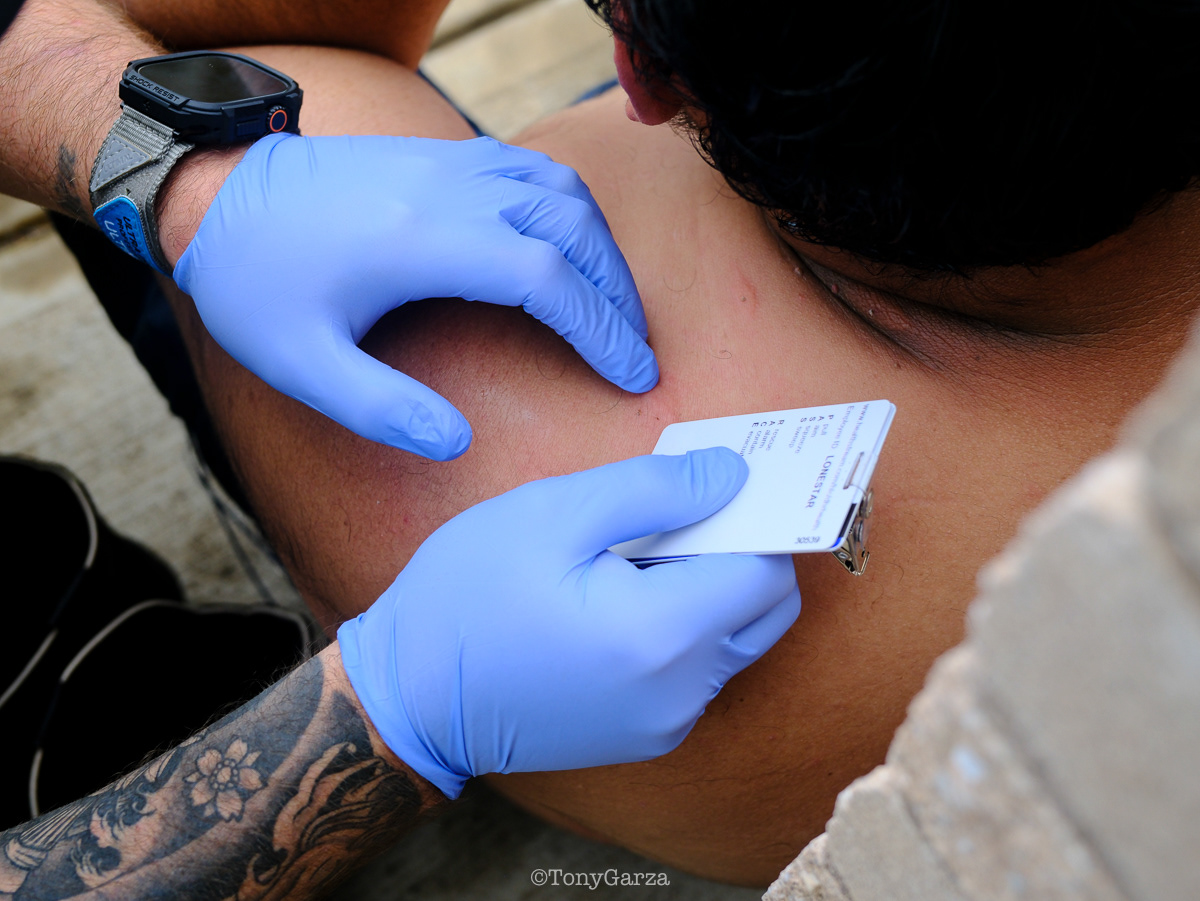
At the scene of a bee attack, Supervisor /Paramedic K. Miller is assisting the second patient in removing the bee stings that remain. If anaphylaxis occurs, it must be treated immediately since it is a life-threatening condition.
(History: In the early 1900s, anaphylaxis from a bee sting was recognized, and it was not until the mid-20th century that it was understood how to treat the life-threatening condition.)
(History: In the early 1900s, anaphylaxis from a bee sting was recognized, and it was not until the mid-20th century that it was understood how to treat the life-threatening condition.)
Medic 7
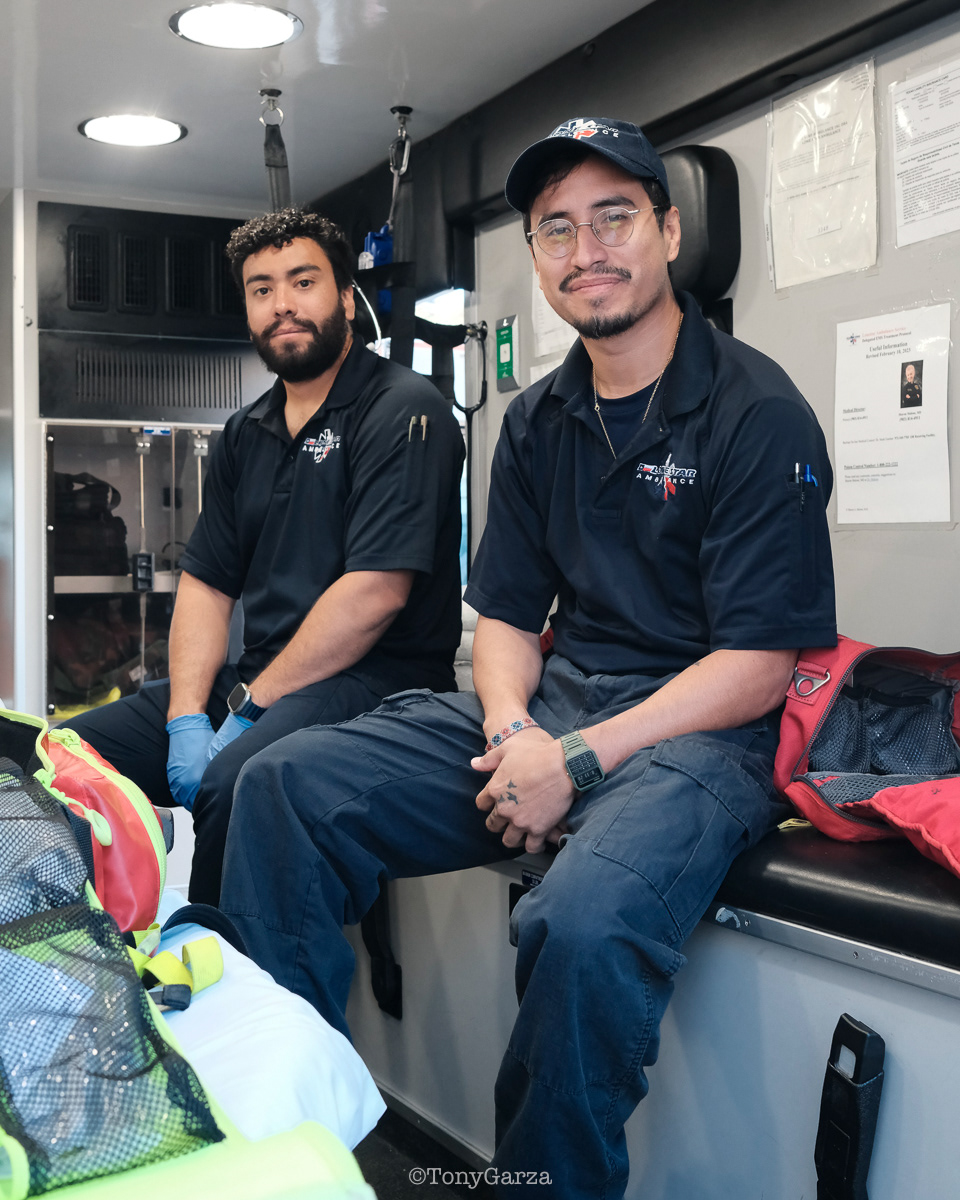
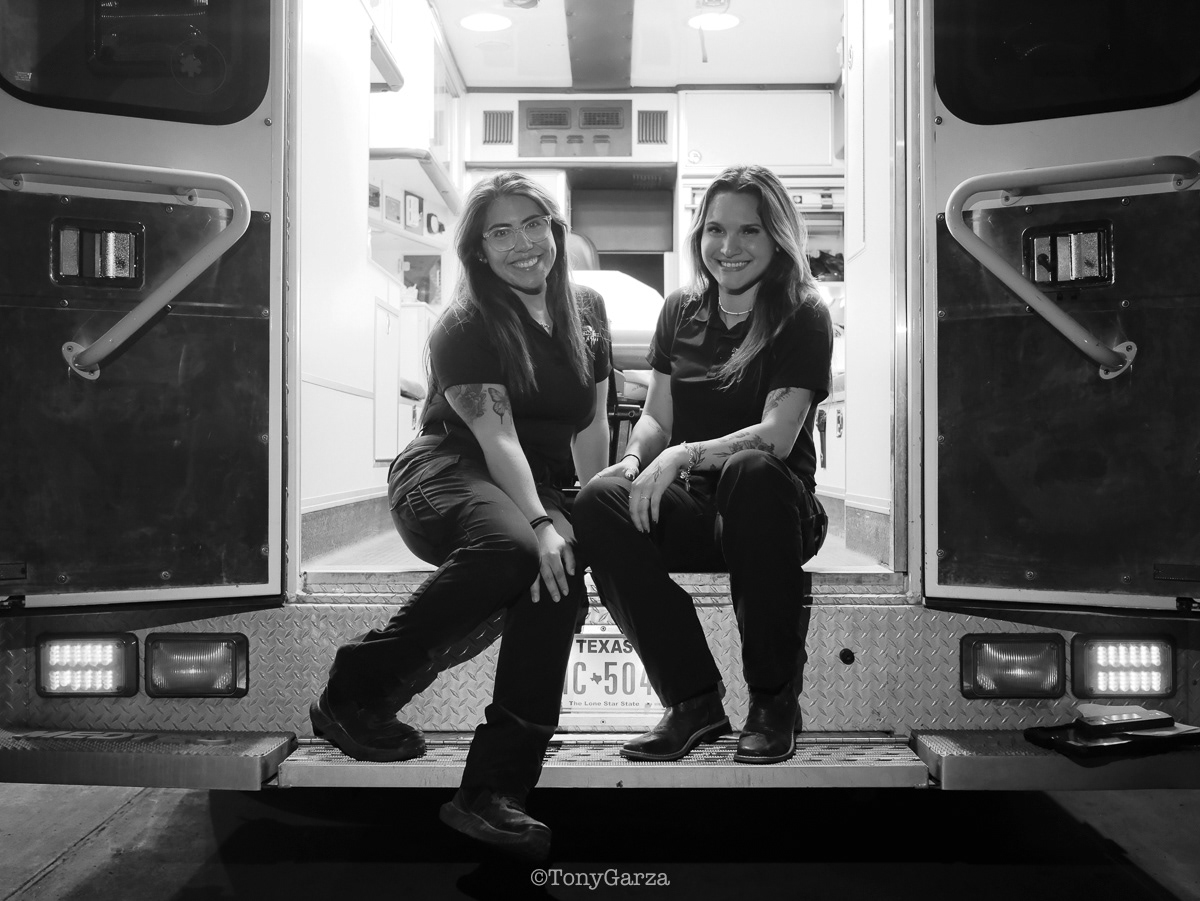
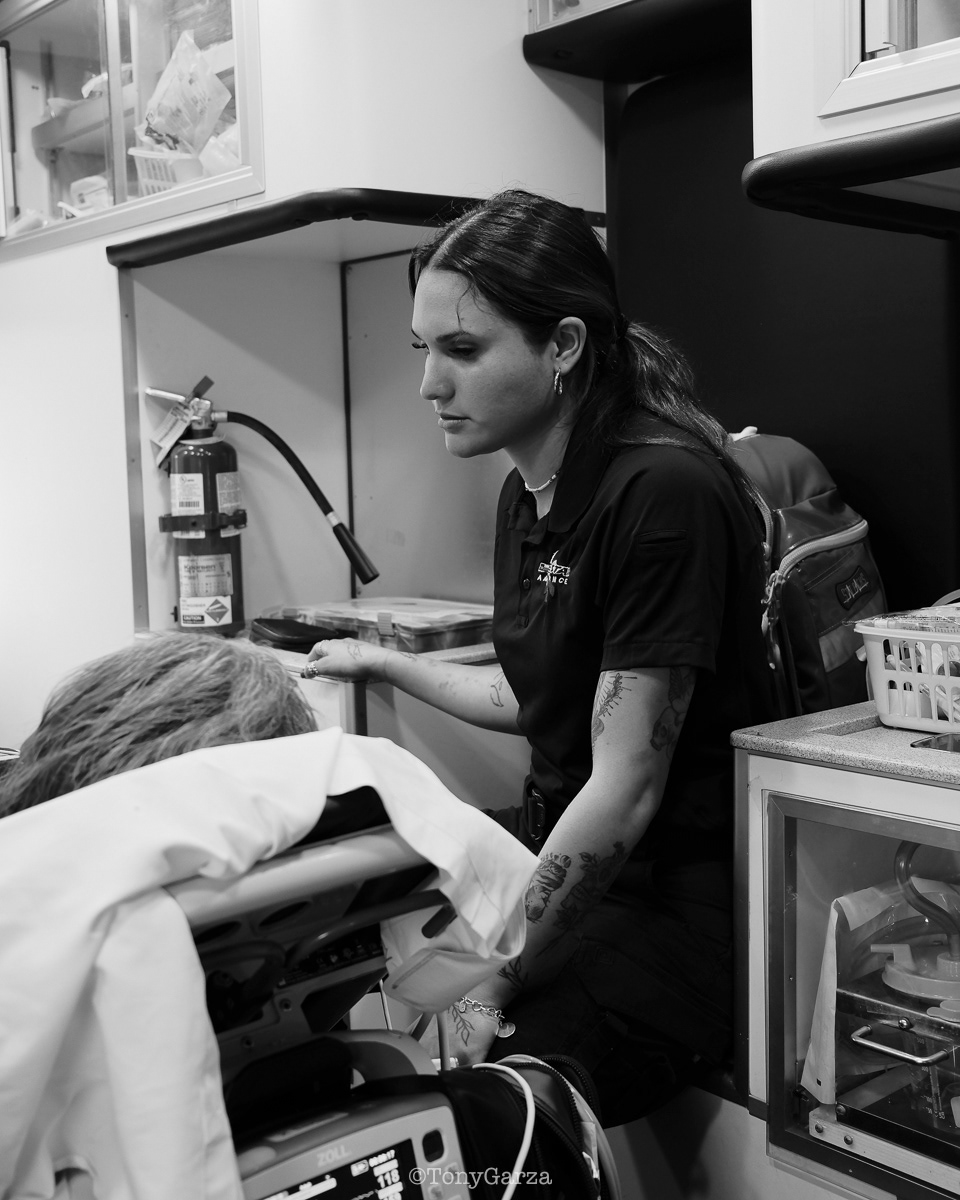
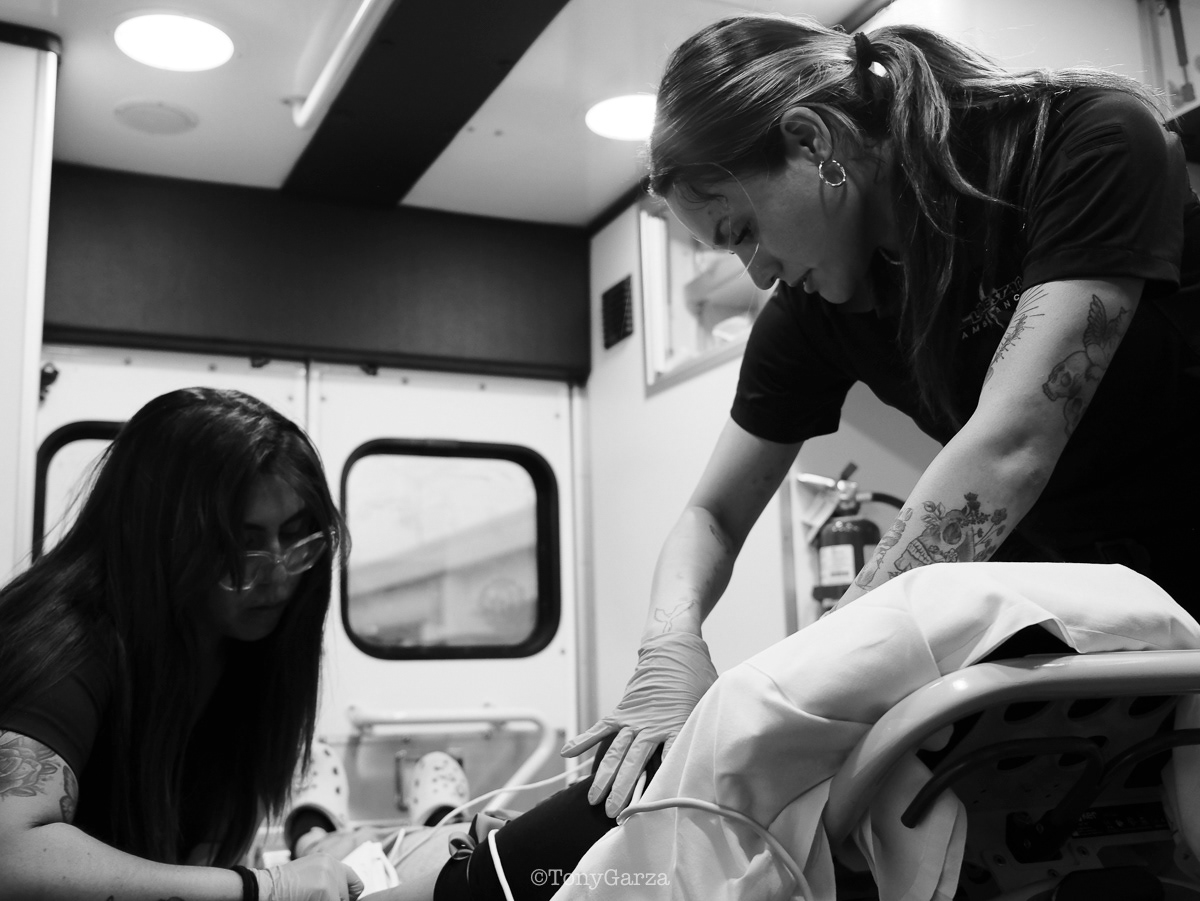
Paramedic D. Garza and EMT Y. Lopez—exemplify the qualities of an effective emergency response team. Each member understands their role and executes it with precision. Their coordination is so seamless that they often anticipate each other’s actions without speaking. This capability stems from countless hours spent working together, shared field experience, and a deep professional trust that allows them to function as one in the moments that matter most.
Award
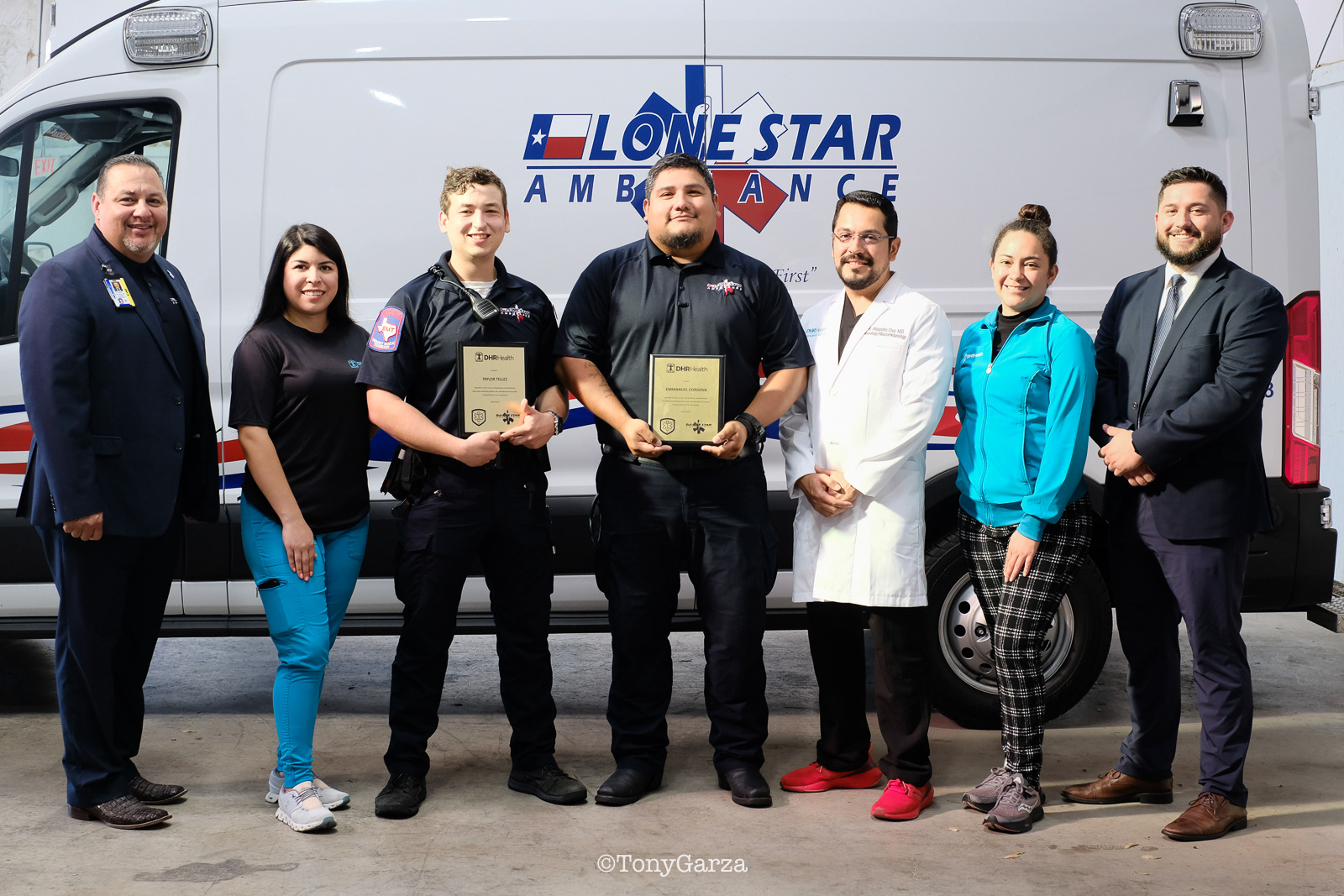
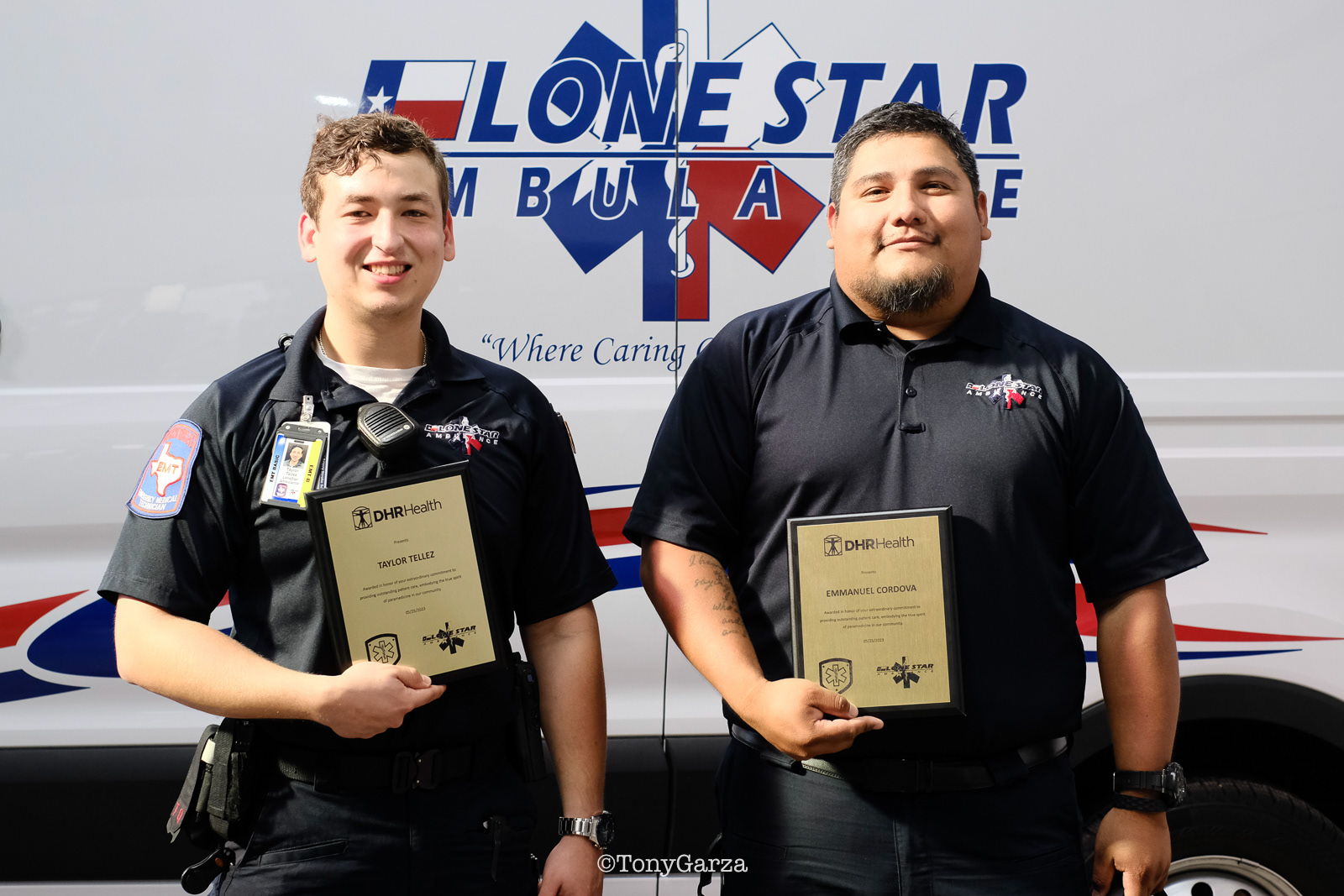
Doctor Robert Alejandro Cruz, along with DHR Health Neurology Department, present Lone Star Ambulance Paramedic E. Cordova, and EMT T. Tellez, with an award for their heroic act of helping and getting a stroke patient to the hospital. The patient received treatment in the appropriate time frame to have a full recovery.
EMS Philosophy
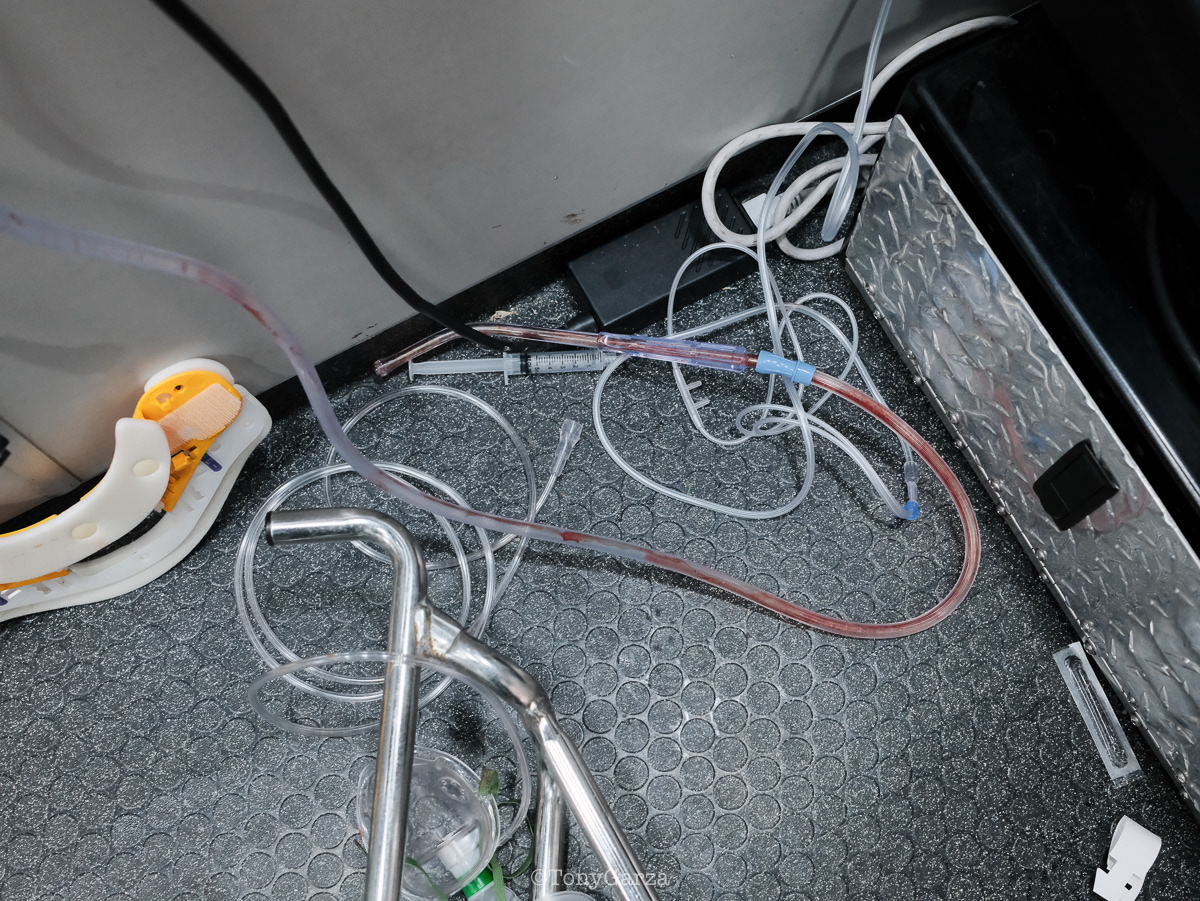
Titles, degrees, and licenses often mask incompetence. True capability reveals itself daily through actions, integrity, relentless craft mastery, and lives changed.
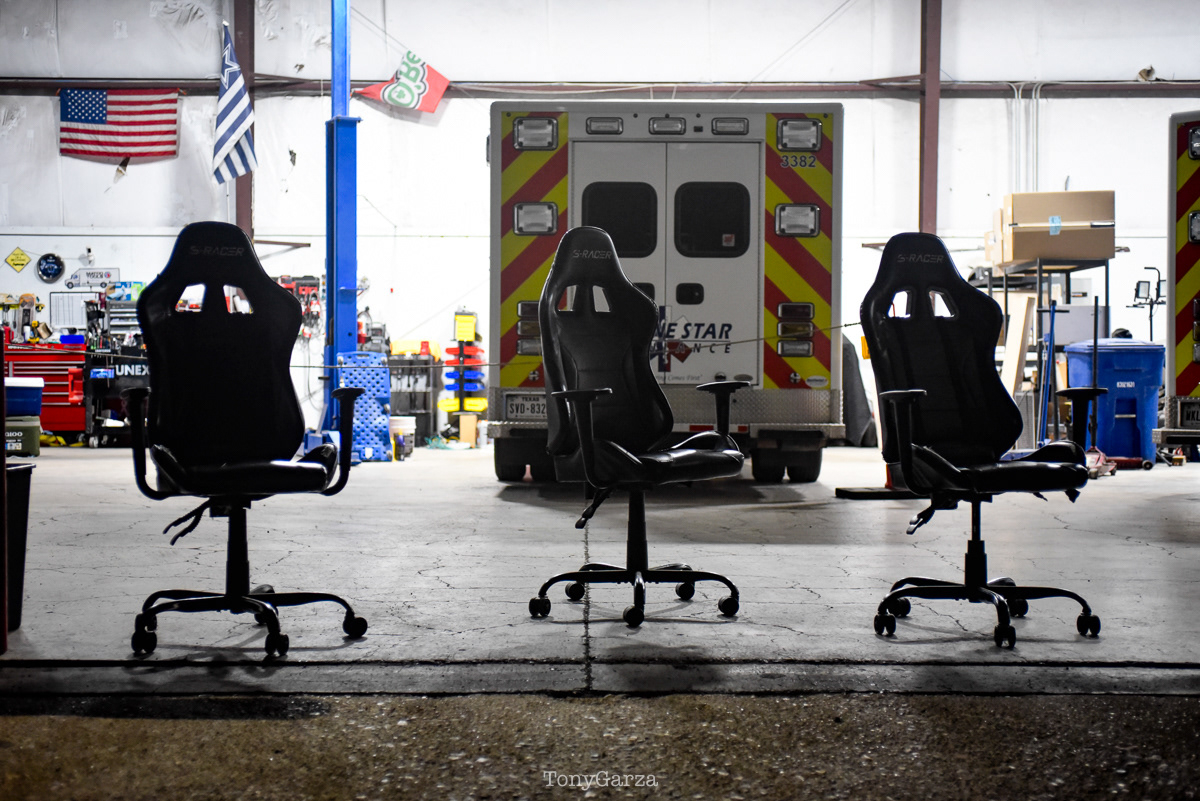
In this photo, I captured an unassuming scene of empty chairs left exactly where medics once gathered. What appears to be a quiet and simple moment is actually a powerful symbol of camaraderie. It is here — in the shared glow of stories, laughter, banter, and silent understanding — that the hearth of EMS camaraderie burns, reminding the medics they are never alone in the weight they carry.
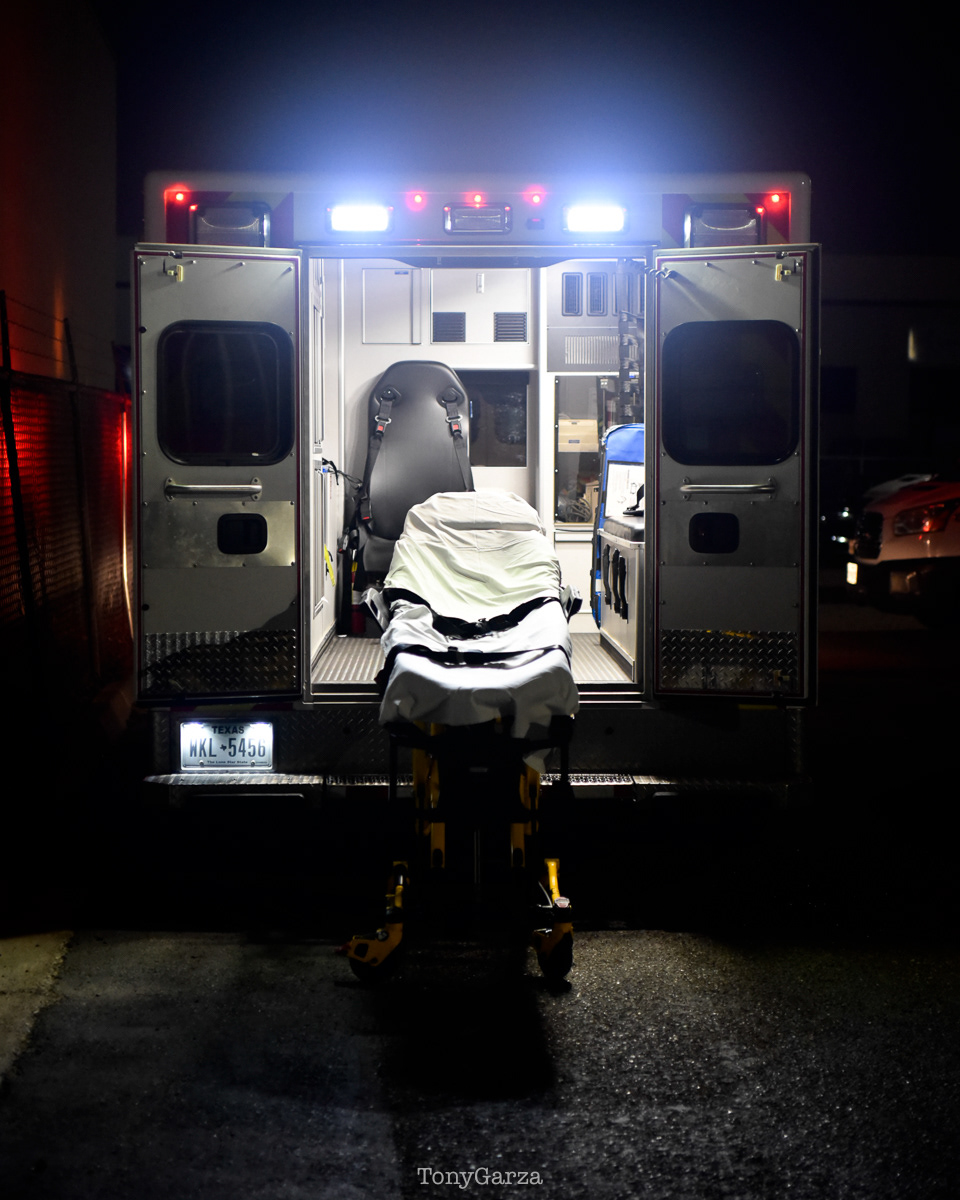
School is done. You pass your test. Now you carry the weight of responsibility for saving lives. You get hired and begin: one 24-hour shift, then another. They’re all different until eventually they start being the same. Long hours, long exposure to people’s misery and uncontrolled emotions. Then the night comes: back aches, head beating like drums, dark humor released like the kettle screaming, and the whole body burns with fatigue. Yet through it all, you still deliver 100%. Every. Single. Time. Despite it all. Because deep in your consciousness you know the patient in front of you deserves the best. You know life is unfair, and being a mediocre medic would only add to that unfairness. So you don’t break. You don’t make excuses. You do not compromise. You enter flow state. You don’t believe in limitations, so you push through till the final minute of the shift. You gather your stuff, walk to your vehicle— emotionally and physically tired, but the soul is fed with accomplishment. The inner voice says, “It feels good being a badass.”
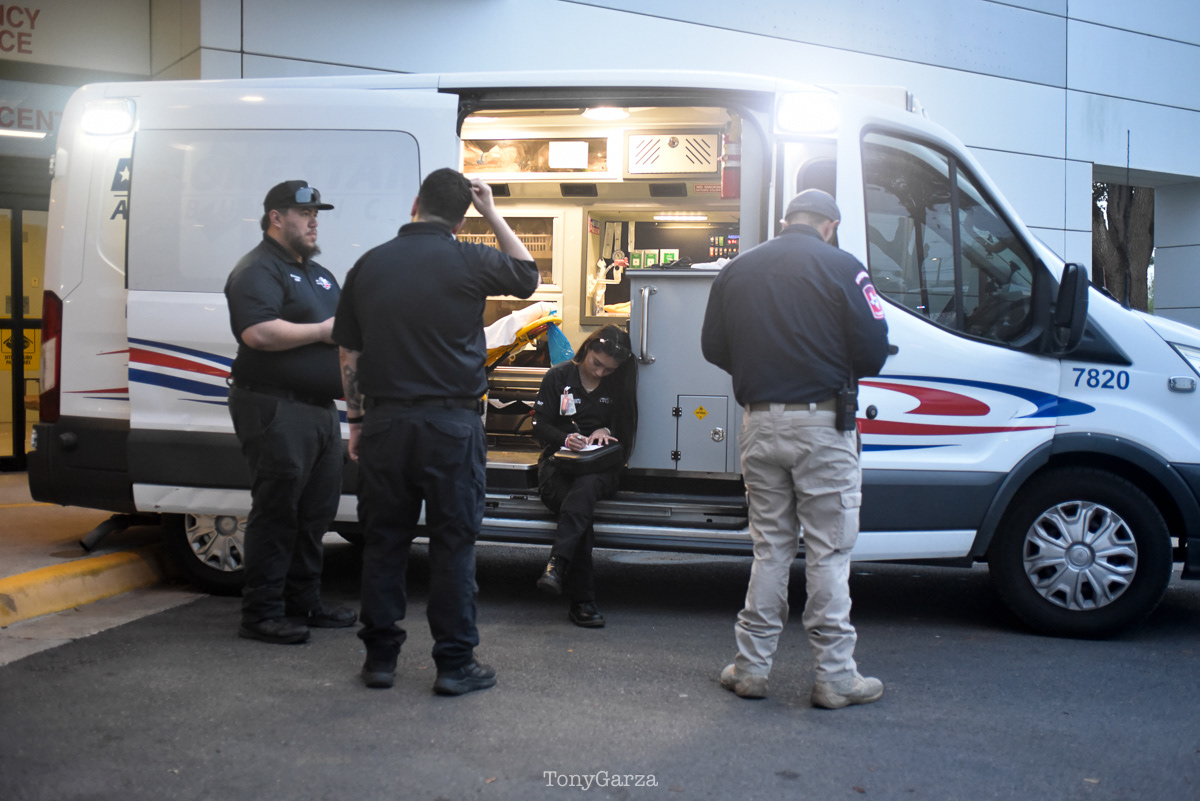
In the aftermath of battling to bring someone back to life, medics promptly clean, decontaminate, and restock any equipment used so they are ready for the next call—the next battle. In this brief moment, medics decompress by talking with each other about what just occurred. During these conversations, many emotions are felt and expressed, but something else certainly happens: the sharpening of the medical professional for the next intense fight to save a life. This is called experience, and it will benefit the next patient—at the price of the medic carrying what they did and what they witnessed, while never fully understanding, beyond what our consciousness allows, why things are the way they are. Because in this work, what is seen cannot be unseen.
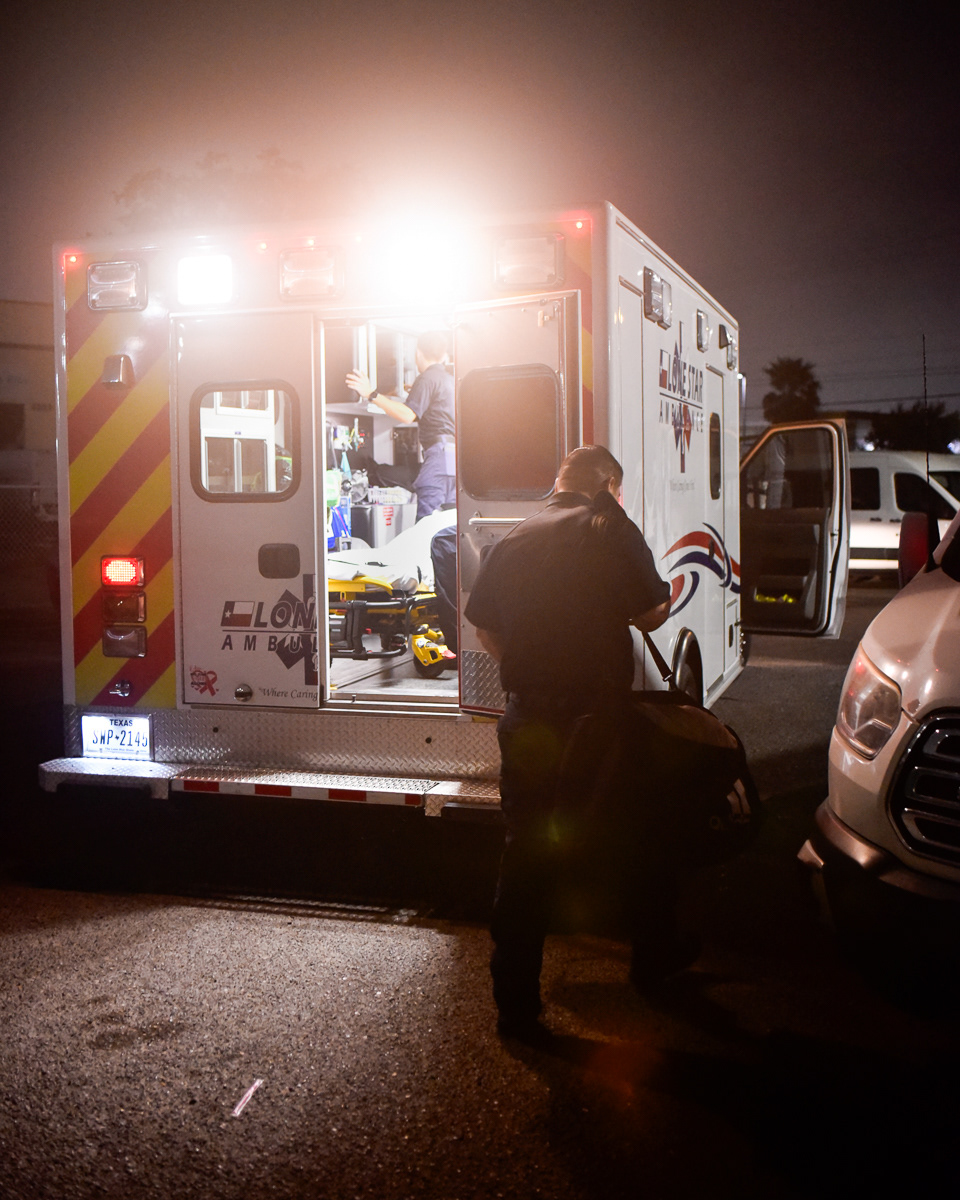
Another day, another shift begins: dedicated medics quietly take over the watch, ready to help and save lives. Medics are often invisible to society—known only to patients and families when they arrive at an emergency. Even then, amid the chaos and critical moments, they frequently go unnamed. Yet one thing is certain: without them, many people wouldn’t be alive today. That’s powerful. That’s beautiful. It’s an everyday reality that demands these medics finally be seen and recognized.
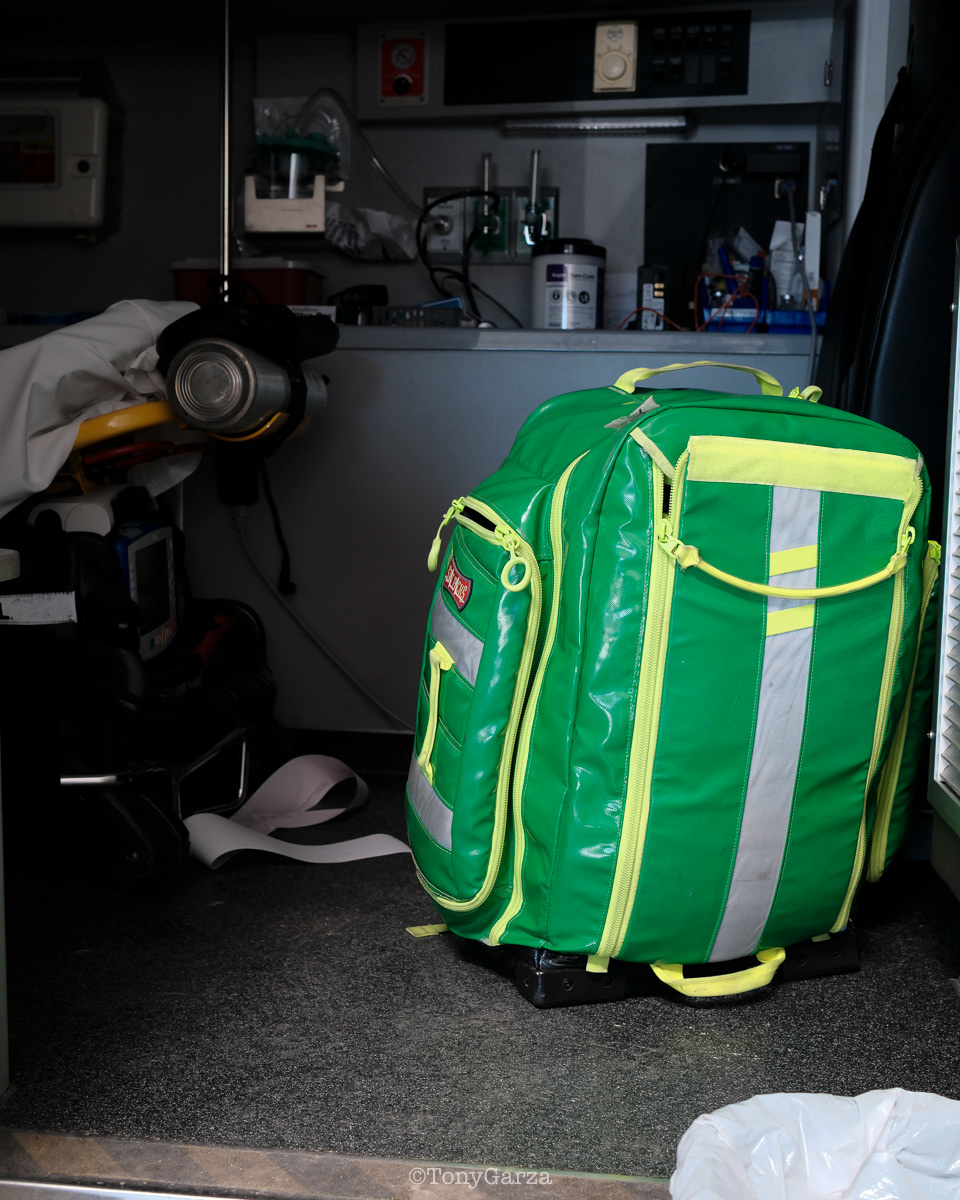
INTEGRITY- DOING THINGS THE RIGHT WAY KEEPS YOUR MIND CLEAR: ONE FOCUS. ONE WORRY—DOING IT RIGHT. DOING THINGS THE WRONG WAY. CUTTING CORNERS. IGNORING PROTOCOLS. WORRIES MULTIPLY. DO IT RIGHT. EVERY TIME. EVERY PATIENT. EVERY CALL. EVERY DECISION. IT’S THE STANDARD. IT’S THE WAY.
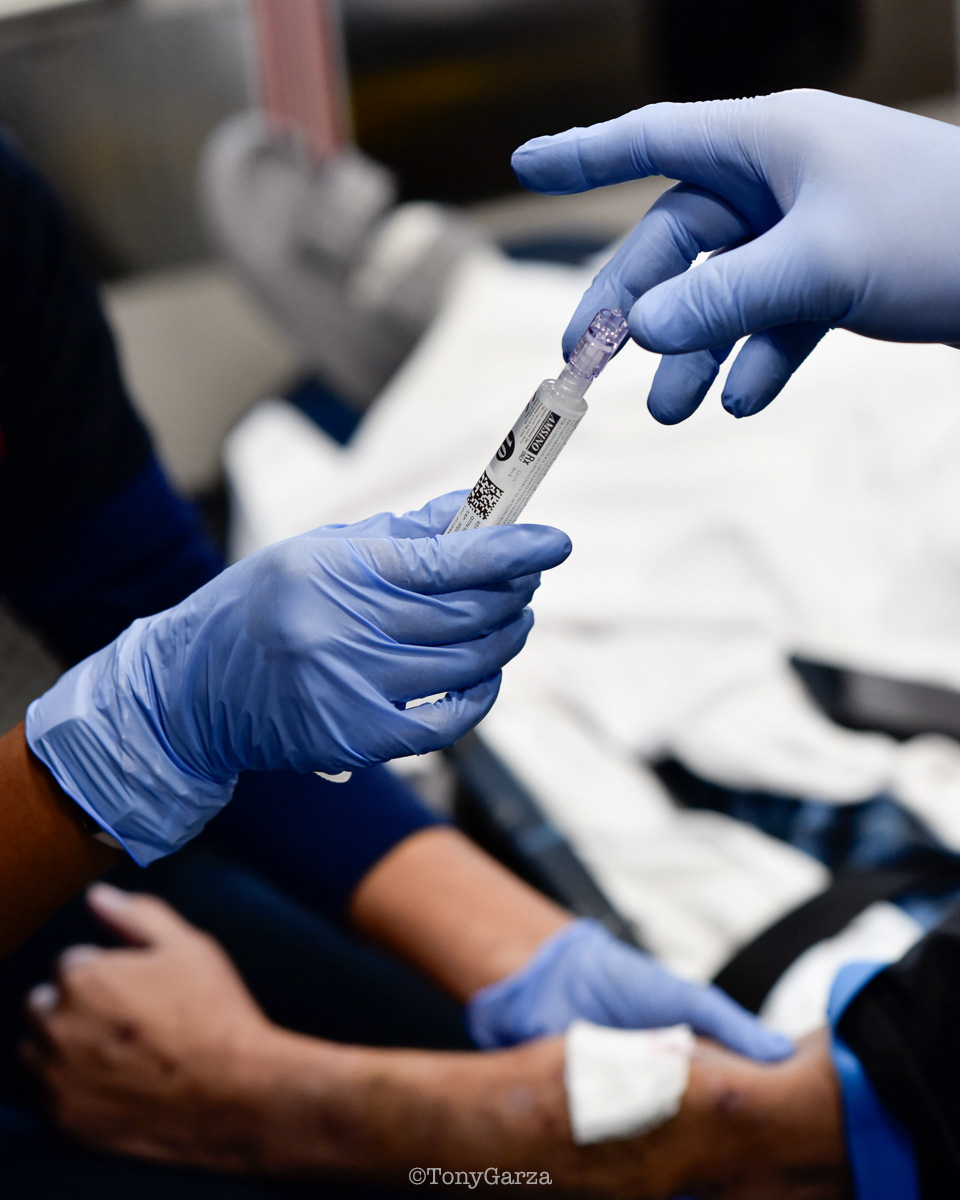
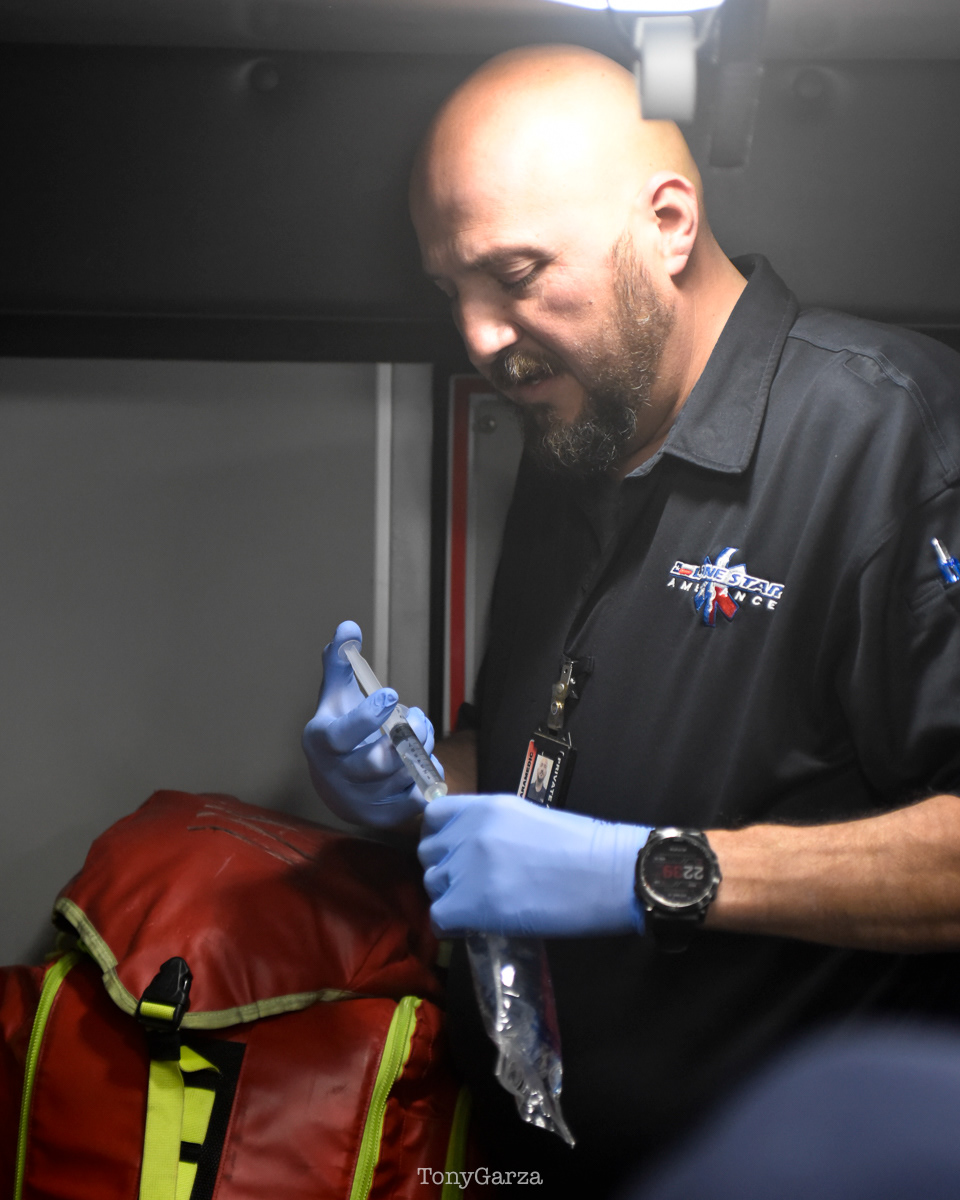
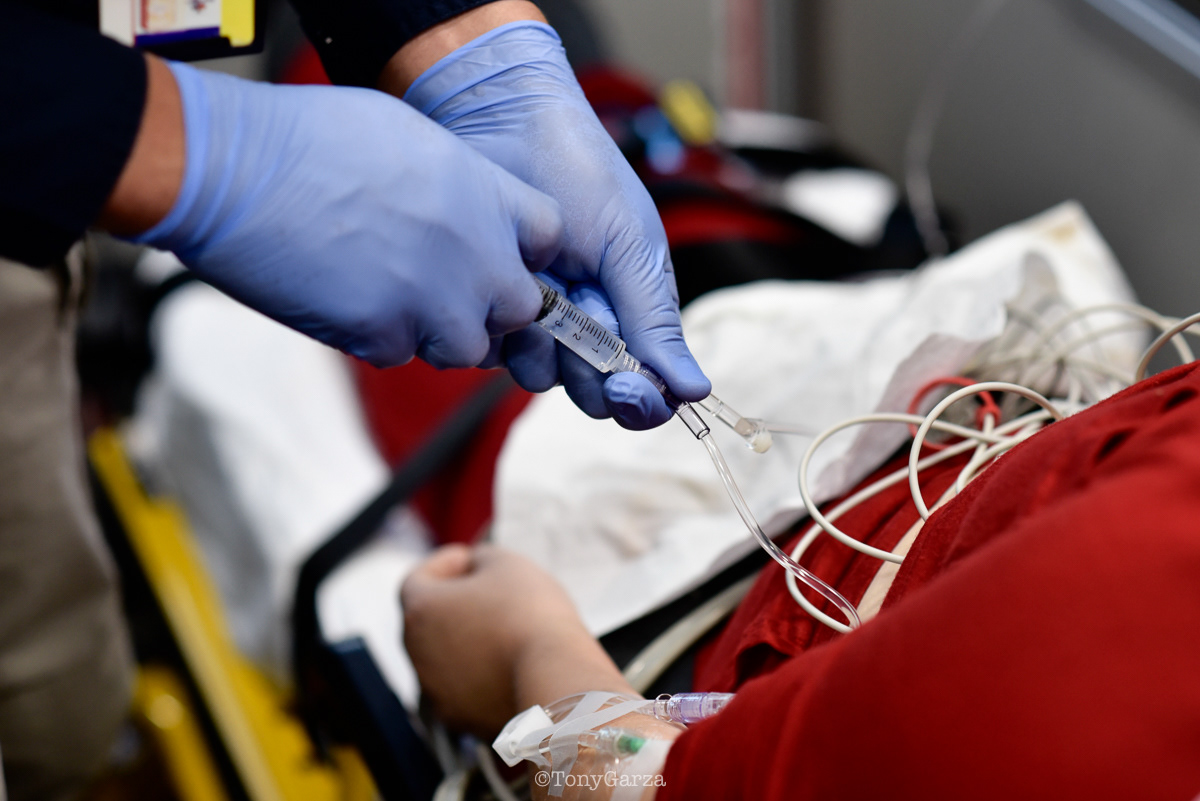
The Spark of Knowledge: Guided by seasoned paramedics, new medics learn emergency care as they enter and work in the field—a full-circle moment every medic experiences. Such mentorship is both a professional and ethical duty—essential and sacred. Its purpose is to pass knowledge from one generation to the next so the profession can advance, the highest standards of care are maintained, life is protected, and, above all, harm is avoided. All of this is possible only if the new generation understands and carries these principles forward. In this moment, the seasoned medic hands a filled NS syringe to the trainee, guiding them to complete the IV procedure—a spark of knowledge that creates a spark of life for the patient.
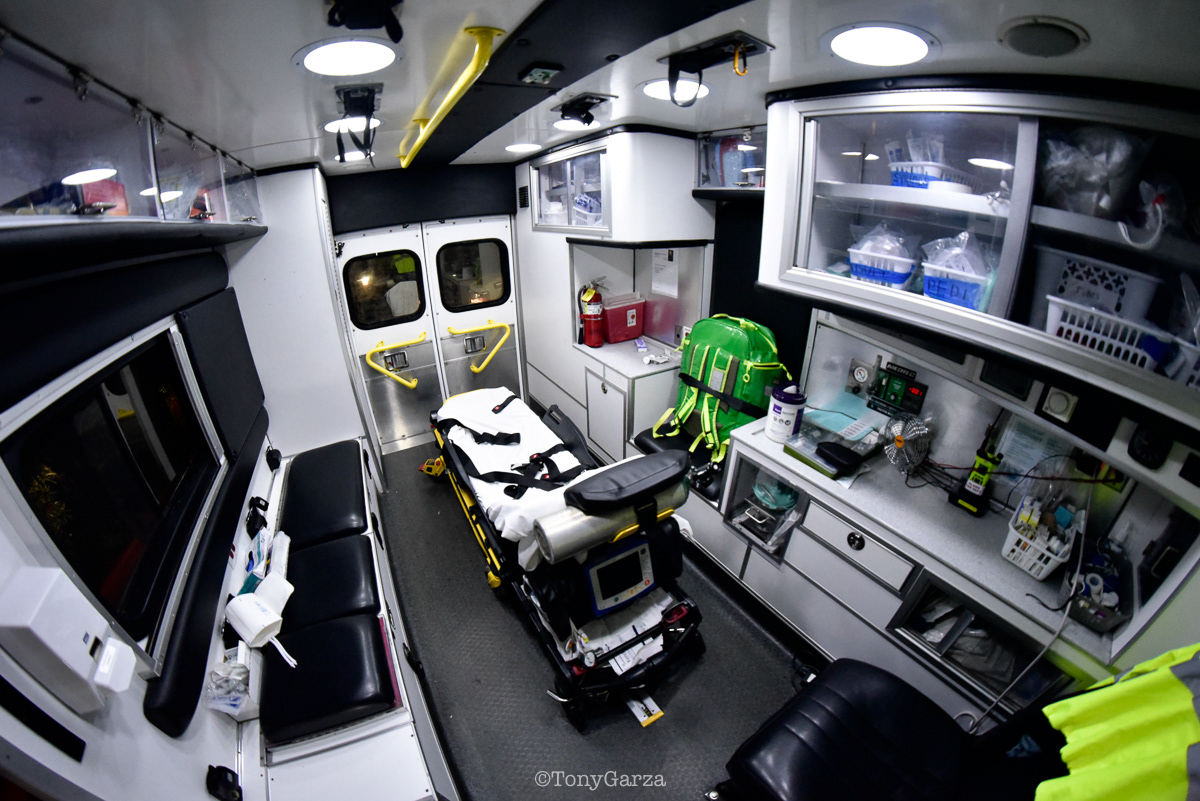
When you’re dying and you need a medic, which medic do you believe you deserve? A minimal-effort medic or a max-effort medic? Your answer to that question determines everything: • How you go about becoming a medic • How you show up as a working medic • How you live out your entire career as a medic Reflective questions like this one are used in EMS for a reason. They’re asked in class, during clinical, in the field, and after critical calls. They force you to be honest with yourself. They ask: “Am I truly living up to the standard I claim to uphold—the oath, the duty, and the honor?” Because max effort isn’t luck. It’s intentional. It’s disciplined. It’s the commitment to show up prepared, act decisively, continue learning, do the right thing, do no harm, and never cut corners. It’s the mindset that every patient matters, that you must do everything possible, that every call is someone’s life in your hands, and that your actions can make the difference between life and death. Max effort is a habit, a responsibility, and a standard you carry with pride—always striving to be the medic you would want saving you or your loved ones.
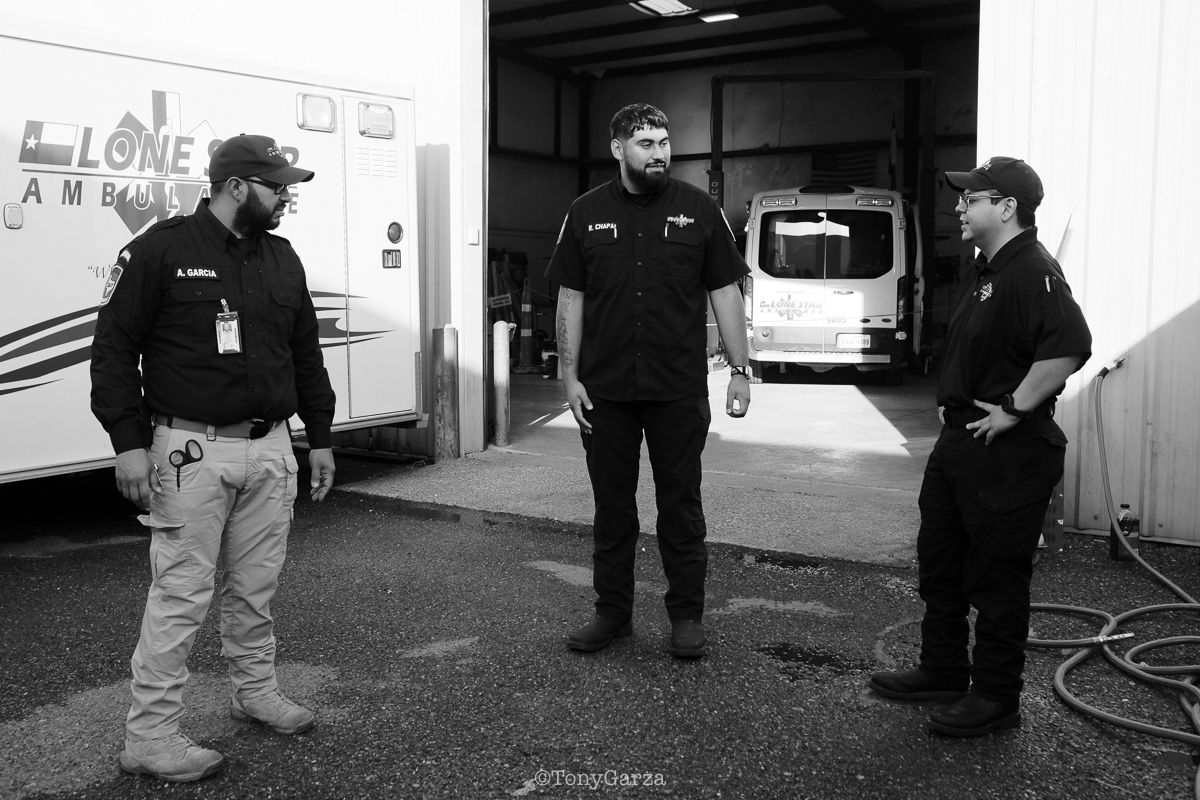
The Gathering: Before, during or after 12 or 24 hours A need to share What is seen What is death with. It’s necessary A psychological release To be ok To keep going To be human
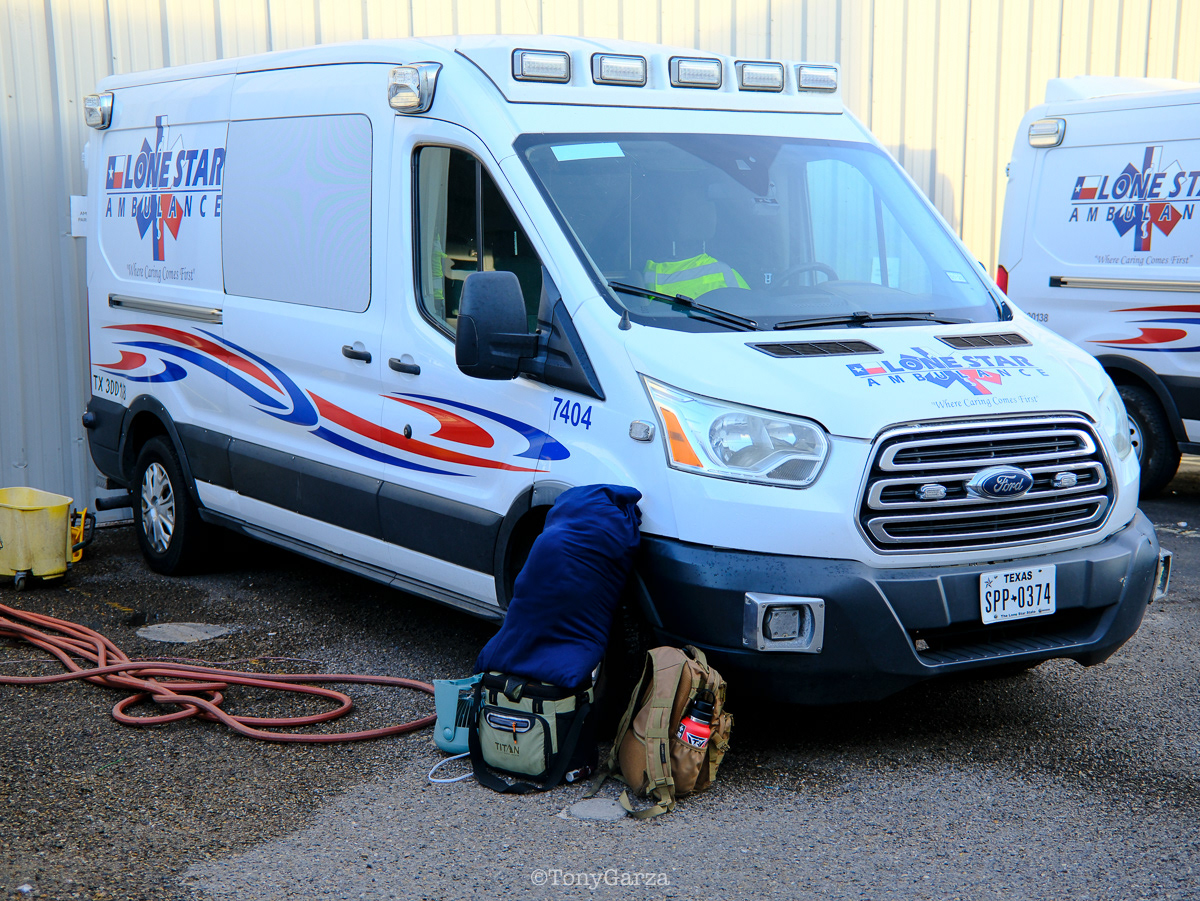
Any comfort will help in a 24-hour shift. The inconvenience, if any, of carrying so much is outweighed by the benefits it provides to a medic on shift. Resting time, if any, even if only for 5 minutes, is essential and will be enhanced with the right comfort items. 5 minutes can feel like 30 minutes. No book, magazine, video, or photograph will ever show you this. To understand, you must experience it. You have to be in EMS.
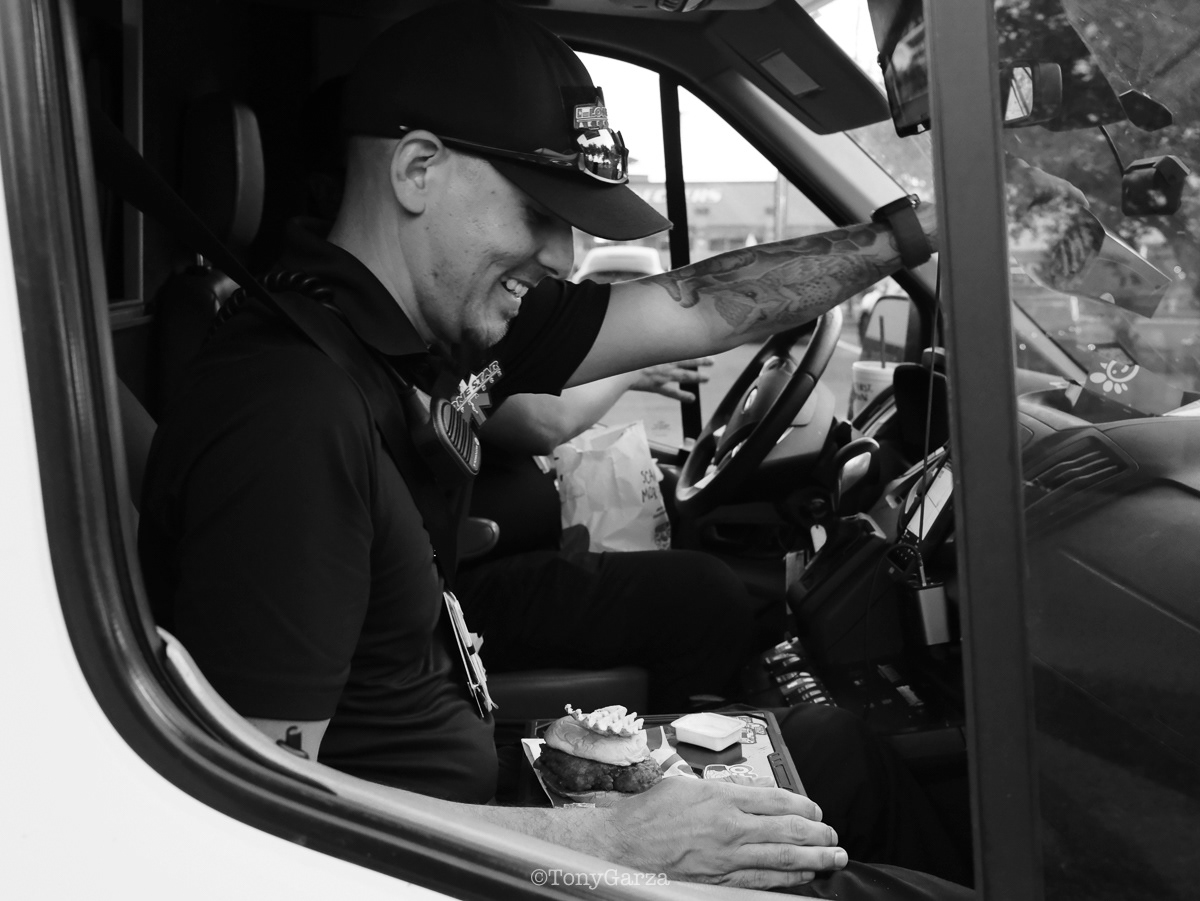
A meal is more than just a meal for the medic; it means staying well so that others may live. Eating a meal not only gives one the energy to work long shifts, but it is also one of the simplest ways to boost morale, which is important in life and especially in demanding occupations. Although severe adversity helps to strengthen mental fortitude, excessive adversity can “burn out” even the most resilient minds. Morale is critical at that point. Most people outside of EMS can sit and eat a full meal uninterrupted, which has become an overlooked comfort. However, in EMS, it is a blessing.
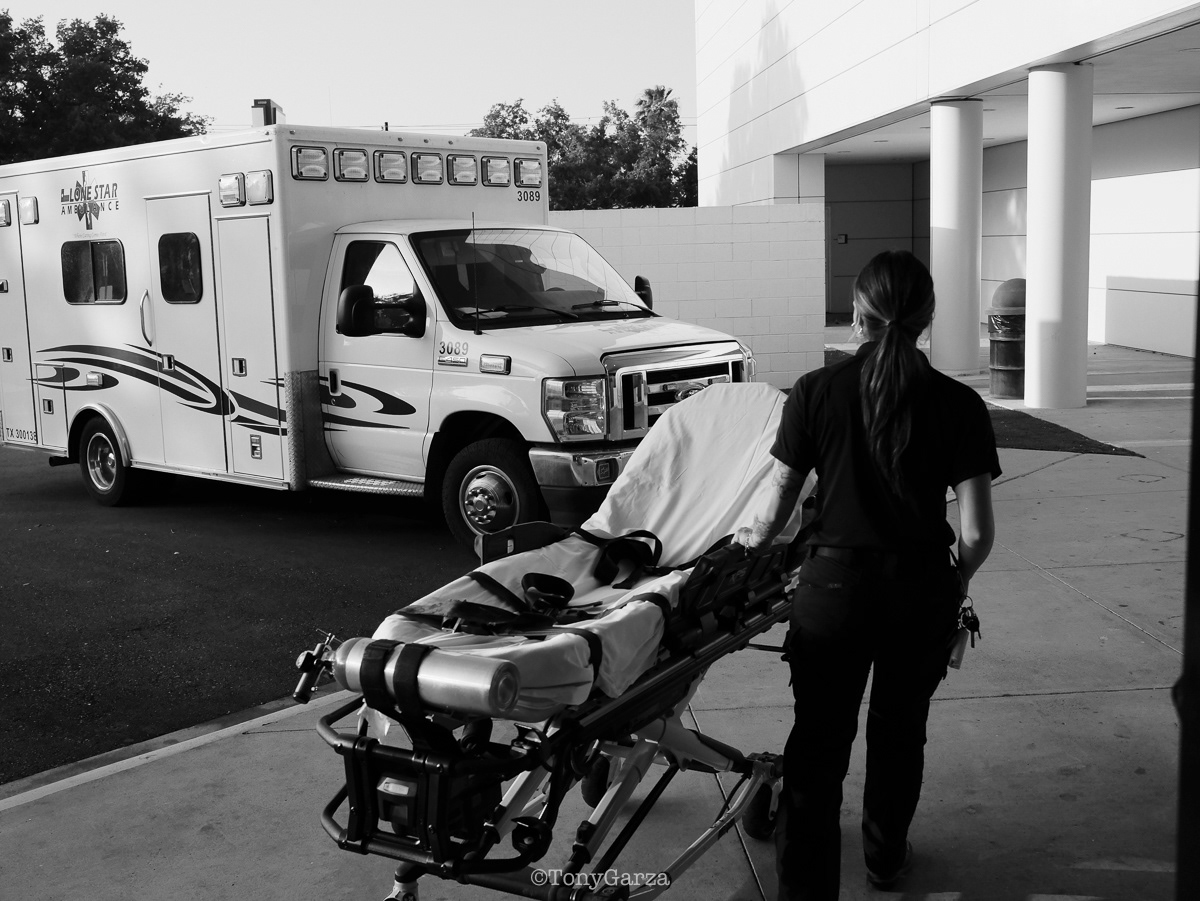
Medics who serve on the front lines often become so exposed that they lose sight of the value of their role in society. This effect occurs naturally. Seconds and minutes are the battleground on which the war against illness and death is waged. It’s a beautiful war. Don’t forget that we are doing this so others may live.